
How should abnormal chlorine readings be escalated?
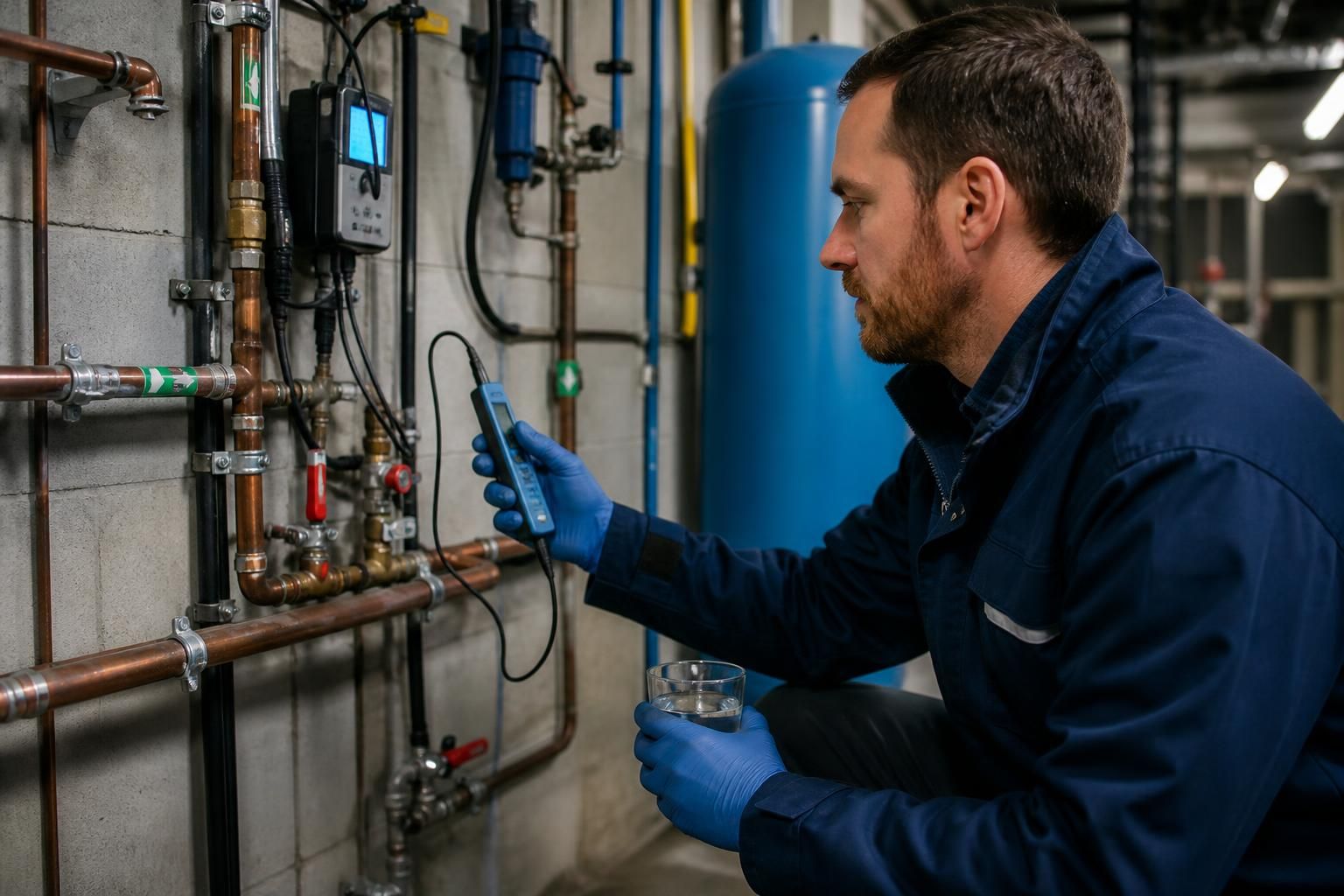
Escalation of an abnormal chlorine reading is a documented, risk-based decision process that determines whether the result presents an immediate user risk, requires investigation by site personnel or needs specialist water hygiene input. The response should be based on the type of system, the intended chlorine range, the location tested, the reliability of the result and the potential exposure of building users.
Start with the site’s defined operating limits. There is no single chlorine value that is suitable for every water system. Interpretation depends on whether the result relates to mains water, a stored cold-water system, hot-water services, a dosing arrangement or another managed process. The site’s water safety plan, control scheme and monitoring schedule should identify the expected range and the point at which a result becomes an alert, action level or emergency condition.
A result outside the expected range should be treated more seriously where it is accompanied by a sudden change, repeated failure, loss of disinfectant at a remote outlet, evidence of dosing equipment malfunction, unusual appearance or odour, or a known change in water demand. A zero or very low residual in a system that relies on chlorine control may require urgent technical assessment. Conversely, an unusually high result may create a chemical exposure concern and should not be corrected by making unplanned adjustments to dosing equipment.
Use a clear escalation route. The site’s responsible person or water safety lead should make the initial risk decision and involve the appropriate parties according to the control scheme. Depending on the circumstances, this may include:
- the facilities or engineering team, where plant, dosing, storage or circulation may be involved;
- the competent water hygiene provider, where specialist interpretation, sampling or remedial advice is required;
- the building operator, landlord, managing agent or relevant department responsible for communicating restrictions to users;
- the water undertaker or other external authority where the cause may relate to the incoming supply or wider network; and
- public health, environmental health or other relevant authorities where the risk assessment indicates that formal notification is appropriate.
Responsibility should be assigned rather than left to whoever happens to observe the result. The escalation record should show who reviewed the finding, what information was considered, which controls were selected and who is responsible for completing each action.
Separate immediate protection from technical investigation. If the result indicates a credible risk, the responsible person may need to restrict access to affected outlets, prevent use for activities that could create exposure, provide an alternative supply or apply another control identified in the site’s procedures. The extent of any restriction should reflect the affected part of the system, the result’s reliability and the likely route of exposure. Do not rely on dilution, informal flushing or changes to chemical dosing as a substitute for a controlled assessment.
The technical investigation should consider the dosing system, chemical concentration and storage, injection points, pumps, alarms, flow patterns, dead legs, tank condition, temperature, recent maintenance and any changes in occupancy or water use. Low readings can result from inadequate dosing, excessive demand, stagnation or poor distribution. High readings can result from over-dosing, faulty control equipment or incorrect chemical preparation. A competent person should determine which explanation is supported by the evidence before corrective work is authorised.
Confirm the result using an appropriate sampling approach. The follow-up should use suitable equipment, a defined method and sampling points that can distinguish a local issue from a wider system problem. Depending on the circumstances, this may involve checking the incoming supply, storage or treatment point, representative outlets and locations where previous results have been abnormal. If the consequence of the result is significant, independent or laboratory analysis may be appropriate rather than relying solely on a field reading.
Escalation is not complete when a second reading falls within range. The site should establish why the abnormal result occurred, confirm that the corrective action addressed the cause and define the evidence needed to return the affected part of the system to routine monitoring. Persistent or recurring results should trigger a review of the control scheme, sampling locations, alarm settings, maintenance arrangements and risk assessment.
Keep an auditable record. The file should link the original result to the review, communications, decisions, work orders, follow-up results and closure approval. Include the sampling date and time, exact location, chlorine type and units, test method or equipment, relevant system conditions, the applicable operating limit, people notified and any restrictions placed on use. This evidence enables the water safety lead to demonstrate that the abnormal reading was assessed proportionately and that unresolved risks were not treated as routine monitoring faults.
A competent water hygiene provider can support the escalation by reviewing the site information, checking the suitability of the monitoring approach, undertaking or arranging further testing and advising on remedial measures. The provider’s role should complement, not replace, the site’s dutyholder arrangements: the organisation responsible for the premises remains responsible for applying its water safety procedures, communicating decisions and ensuring that actions are completed.
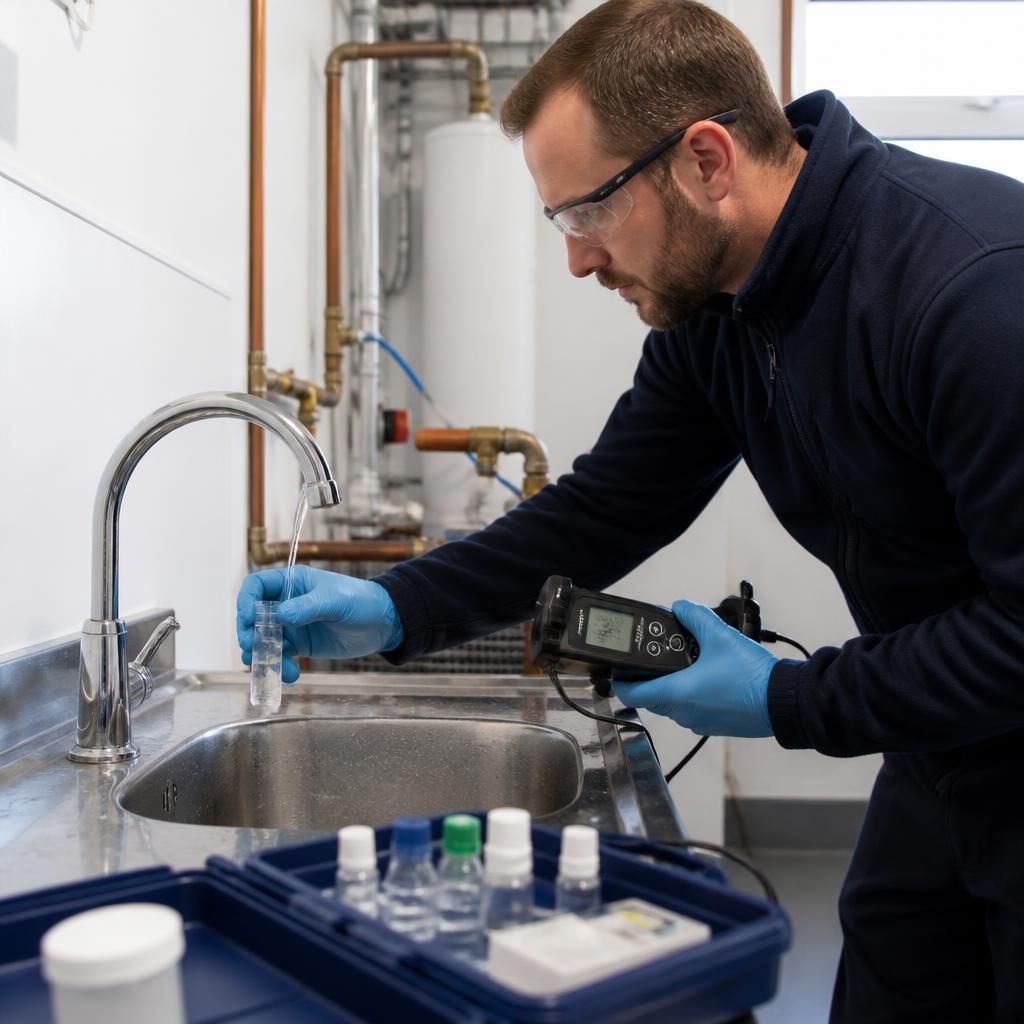
Before escalating an abnormal chlorine reading, check whether the result is technically reliable. Confirm that the instrument or test kit was suitable for the chlorine type being measured, within its calibration or verification period, and used with in-date reagents. Record any factors that could affect the result, such as a delayed sample, an unclean vessel, unusual water temperature, turbidity or a reading outside the equipment’s measurement range.
These checks should not be used to dismiss a potentially hazardous result. Where the reading is credible, the responsible person should act on it while arranging confirmation. Where its reliability is uncertain, record the limitation, obtain a properly collected repeat sample and escalate the uncertainty itself if users could be exposed before the result is resolved.
Discuss an abnormal chlorine reading with our water hygiene team
If an abnormal chlorine reading remains unexplained or requires specialist interpretation, discuss the result and supporting records with our water hygiene team. We can help identify the information needed for a proportionate technical review and next steps.