
Which chlorine monitoring method suits our water system?
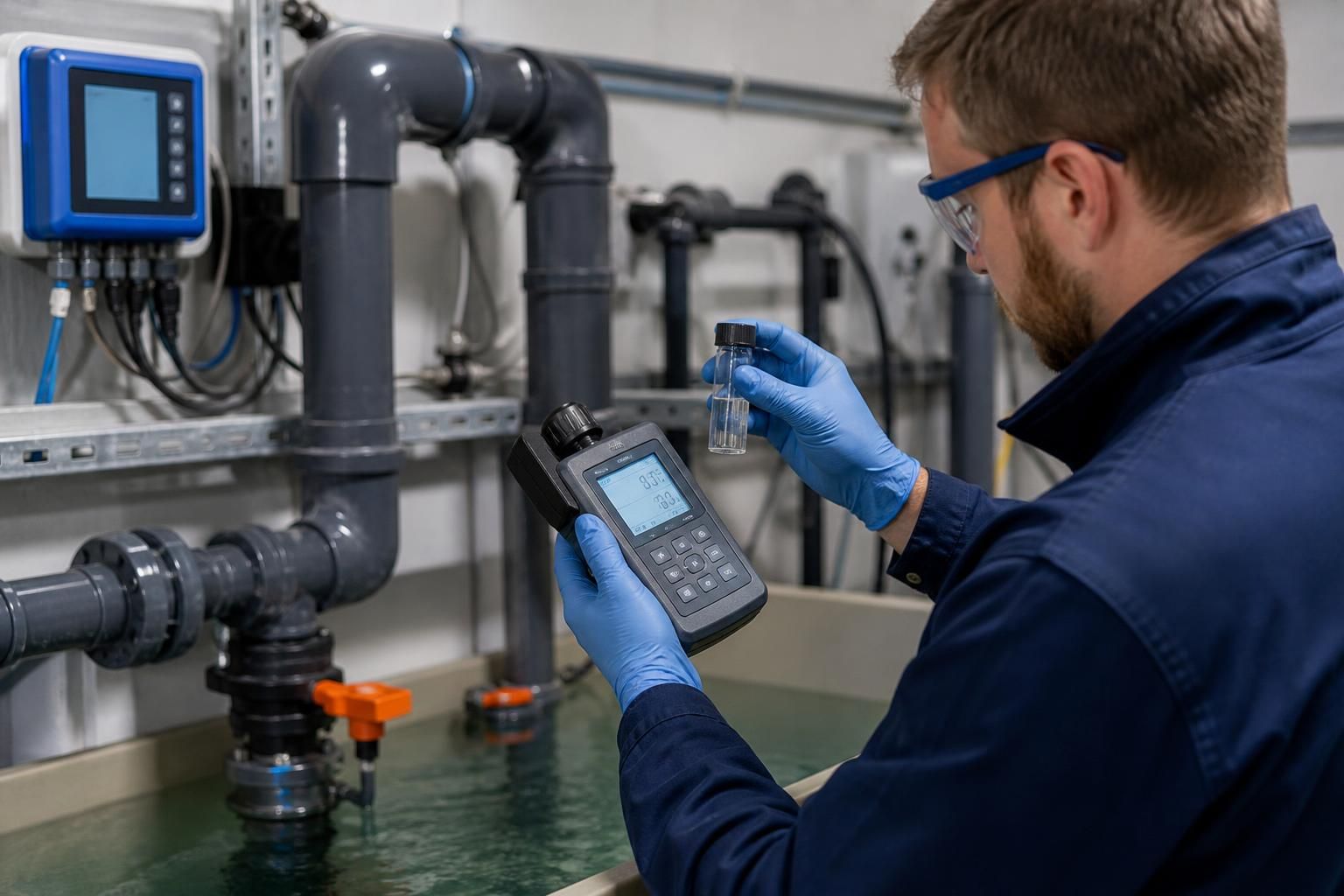
The most suitable method is the one that measures the relevant disinfectant at a representative point and produces information that can support the required operational decision. For many systems, this means using a properly controlled manual DPD test for routine verification, an online analyser where continuous visibility is necessary, or both with results checked against one another.
Start by defining what must be measured. “Chlorine” may refer to free chlorine, total chlorine, or another disinfectant such as chlorine dioxide. Free chlorine is commonly used to assess the disinfectant residual available in the water. Total chlorine includes free chlorine and combined chlorine. A method that measures the wrong parameter can give a misleading impression of system performance, so the selected instrument and test procedure must match the treatment process and the control limit being applied.
Manual DPD testing is often appropriate where samples can be collected safely and consistently by trained personnel. DPD reagents produce a colour change, which may be assessed with a comparator or photometer. This approach can provide useful free- and total-chlorine results without installing a permanent instrument. It is particularly practical for periodic checks, commissioning, investigation work and verification of an online instrument.
Manual testing is only as reliable as the sampling and test technique. The sample point should represent the water being assessed, the sample should be tested promptly, and the correct reagent, sample volume and reading procedure should be used. Reagents must be within their usable date and stored appropriately. Poorly rinsed cells, dirty equipment, incorrect sample handling and subjective colour matching can all affect the result. A written procedure and suitable training reduce these sources of variation.
Online monitoring is more suitable when the system needs regular measurement without waiting for a person to collect a sample. Online analysers may use amperometric sensors or reagent-based colorimetric measurement. The appropriate technology depends on the disinfectant, expected concentration range, water chemistry and the level of maintenance the site can support.
- Amperometric systems measure the disinfectant electrochemically and can provide frequent readings. They normally require a controlled sample flow, clean measurement surfaces and attention to calibration, sensor condition and the effects of pH or temperature.
- Online colorimetric systems use reagents to determine concentration. They can be useful where a reagent-based measurement is appropriate, but require reagent replenishment, cleaning and checks on the sample line and optical components.
- Portable photometers provide a more objective manual reading than visual colour comparison, while retaining the flexibility of collecting samples at different points in the system.
- Test strips and simple visual kits may be useful for basic screening, but they generally provide less control over sampling and interpretation than a documented DPD procedure or a maintained analyser.
An online instrument should not be selected solely because it produces frequent readings. Its sample line, flow cell, waste arrangement, power supply, communications and maintenance access must be suitable for the installation. Water with suspended matter, unusual colour, high mineral content or a tendency to foul surfaces may require additional assessment before a technology is chosen. The analyser should also be installed at a location that reflects the part of the system being controlled; a reading from the incoming supply will not necessarily represent conditions at a distant outlet.
Use a manual method when the main requirement is documented verification. This may apply to a relatively stable system with defined sampling points, competent personnel and no need for an immediate response to changing residuals. The monitoring schedule should reflect the system assessment rather than relying on a convenient but unrepresentative location. Results should be recorded with the date, time, sampling point, parameter, method, result and any relevant observations.
Use an online method when the value of continuous information justifies the additional control arrangements. This is particularly relevant where residuals can change materially during operation, where a failure could affect a significant water system, or where operators need a trend rather than isolated readings. The analyser should be connected to a clear review process. A displayed value without defined actions, maintenance and verification is not a complete monitoring programme.
A combined arrangement can be the strongest option when each method has a distinct role. The online analyser can show developing change and support operational decisions, while periodic DPD testing can help confirm that the analyser remains credible. Results should not be expected to match exactly: differences can arise from sampling location, timing, method characteristics and instrument condition. Investigations should compare like with like and consider whether the samples were taken at the same point and under similar flow conditions.
Before choosing, assess the following:
- which disinfectant and chlorine fraction must be measured;
- where the result needs to represent conditions in the system;
- the normal and abnormal operating range;
- how quickly a change needs to be identified;
- whether samples can be collected safely and consistently;
- the available arrangements for calibration, cleaning, reagent replacement and fault checking;
- how results will be recorded, reviewed and escalated; and
- how the method will be independently checked or validated.
The chosen method should be documented within the water safety management arrangements, including its purpose, sampling or measurement location, operating procedure, acceptance criteria, maintenance requirements and response to an unreliable result. A risk assessment and compliance audit can help identify whether the existing method measures the right parameter and provides sufficient evidence. Where the consequences of an incorrect reading are significant, technical advice can help align the monitoring method with the design and use of the water system.
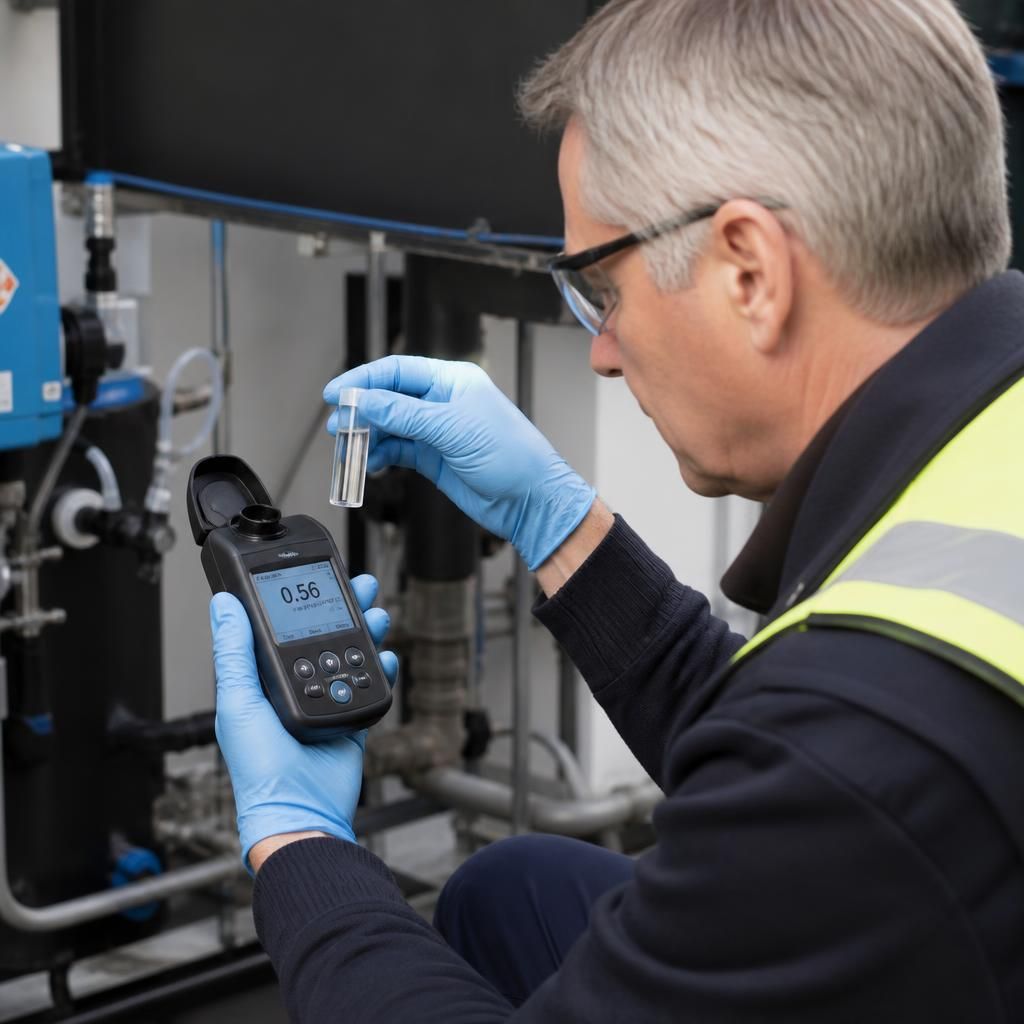
The selected chlorine monitoring method should measure accurately across the range that matters for the water system, including normal operation and the levels at which action is required. A method may be unsuitable if its measuring range is too narrow, its resolution is insufficient for meaningful decisions, or results become unreliable near the system’s control limits.
When comparing methods, check that:
- the expected chlorine concentration falls comfortably within the stated measuring range;
- the method can distinguish a normal result from a result requiring investigation;
- the water’s colour, turbidity, temperature and chemical composition will not cause unacceptable interference;
- the procedure produces repeatable results when used by different competent operators; and
- unexpected readings can be checked using a suitable independent method.
This assessment is especially important where a small numerical change could alter an operational decision. The method should be evaluated using representative system water rather than selected only from laboratory specifications. If the results are affected by the water matrix or the instrument’s operating range, the monitoring arrangement may need a different technique, additional controls or technical review.
Discuss the right chlorine monitoring method for your water system
Discuss your water system with Blue Fish Water Management Ltd to identify which chlorine monitoring method best fits its operational and compliance requirements.