
When is continuous chlorine monitoring appropriate for a water system?
Continuous chlorine monitoring is appropriate where chlorine residual can vary significantly or where consistent control is important for protecting water quality, such as larger, complex or high-use commercial water systems. It provides ongoing readings that can support timely investigation and corrective action, but should be selected through a site-specific assessment alongside suitable sampling, maintenance and review procedures.
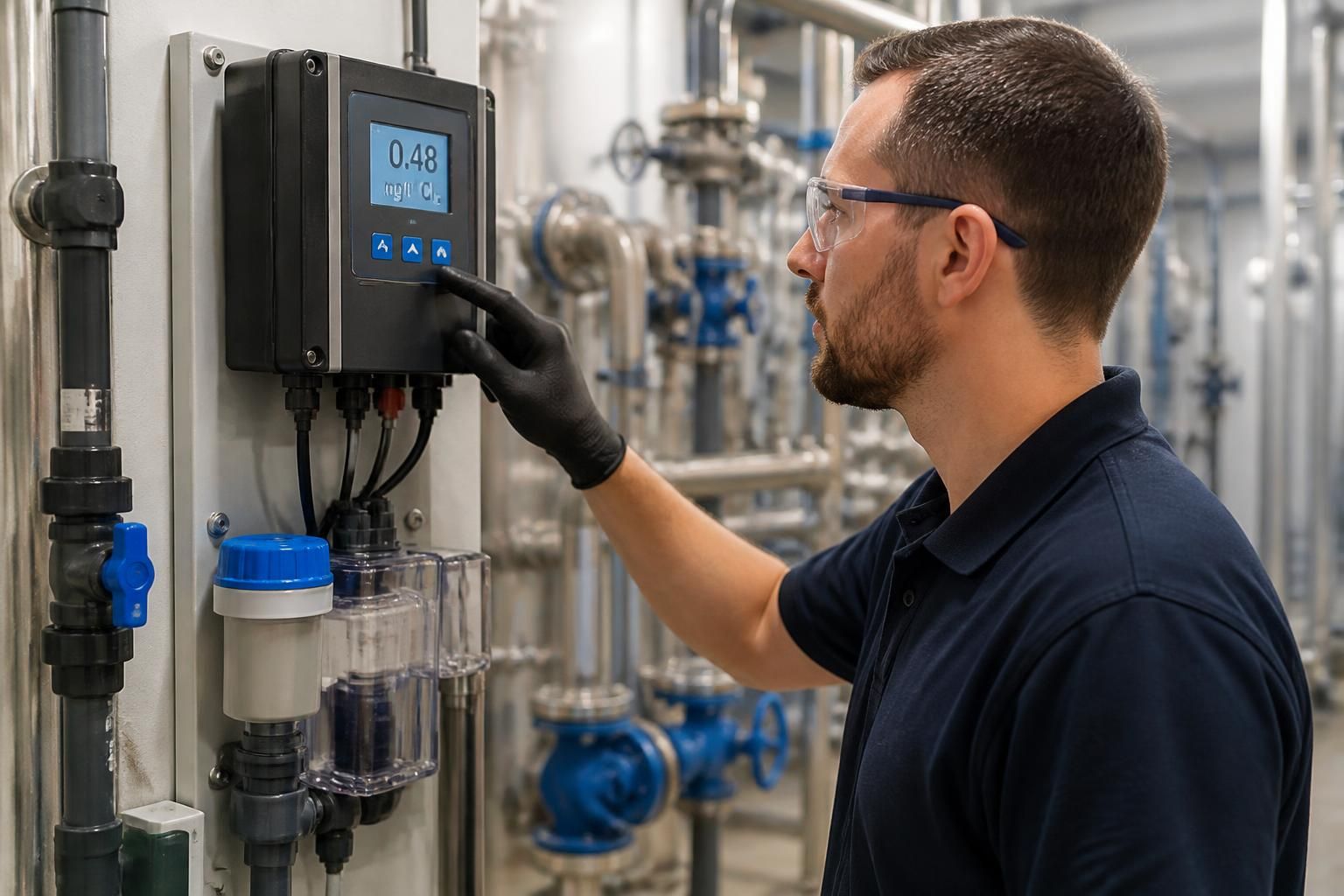
Continuous chlorine monitoring is appropriate when maintaining a defined disinfectant residual is an important part of the water safety control strategy and occasional manual samples would not provide enough information about changes between sampling points. The decision should follow a documented risk assessment, not be based solely on the size or type of a premises.
Situations that may justify continuous monitoring include:
- water systems where chlorine residuals are known to fluctuate because of variable demand, changing flow patterns, extended storage or intermittent use;
- systems with several treatment stages, storage arrangements or distribution zones where a change in one part of the system may affect downstream water quality;
- premises where the consequences of inadequate disinfection could be significant, such as healthcare, care, hospitality, education or industrial settings, subject to the findings of the site risk assessment;
- systems using chemical dosing or another disinfection process that requires regular confirmation that the intended residual is being maintained;
- supplies affected by changes in source-water quality, temperature, organic demand or other conditions that can increase chlorine consumption; and
- sites where manual sampling alone cannot give sufficient assurance between planned visits or operational checks.
Monitoring is particularly useful where the result is linked to a clear operational decision. For example, a falling residual may require investigation of dosing, flow, storage, stagnation, contamination or instrument condition. A persistently high reading may indicate over-dosing, poor control or a problem with the measurement arrangement. The value of continuous monitoring therefore depends on how results are reviewed and acted upon, rather than on the presence of a sensor by itself.
It may not be proportionate in every system. If a risk assessment shows that disinfectant levels are stable, the system is straightforward to operate and a suitable programme of periodic sampling provides adequate evidence, continuous instrumentation may add complexity without improving control. Equally, installing a monitor cannot compensate for poor system design, inadequate cleaning, dead legs, inappropriate storage or a failure to manage temperature and stagnation. These underlying issues still need to be addressed.
The type of disinfectant and the purpose of the measurement must also be considered. An instrument intended for free chlorine will not automatically provide meaningful control of chloramine, chlorine dioxide or another treatment parameter. The selected monitor should be compatible with the water chemistry, expected concentration range, temperature, pressure and installation point. Where the disinfectant residual changes through the system, more than one monitoring location may be necessary to distinguish a dosing problem from loss of residual in storage or distribution.
Before installation, the responsible person should establish:
- which disinfectant parameter is being controlled and the operating range that represents acceptable performance;
- where measurement will best represent the risk, including whether readings are needed at treatment, storage and representative points of use;
- how samples will be taken for comparison with the instrument;
- how the monitor will be cleaned, calibrated, maintained and protected from fouling or loss of flow;
- what will happen if readings are outside the defined range or the instrument stops reporting; and
- who is competent to review results, investigate deviations and authorise corrective action.
Continuous readings should be checked against appropriately taken manual samples during commissioning and at intervals defined by the monitoring procedure. This helps identify sensor drift, fouling, sampling errors and differences caused by the location or method of measurement. The records should show the readings, alarm events, checks, maintenance, calibration and any investigation or remedial action. A trend is often more informative than an isolated result because it can reveal gradual loss of control before a single sample would necessarily identify it.
For legionella control, continuous chlorine monitoring is one possible control measure, not a substitute for a wider water safety programme. It should sit alongside suitable system management, temperature control where applicable, cleaning and disinfection arrangements, risk assessment, planned sampling and review. Where the risk assessment identifies a need for continuous monitoring, the requirement should be written into the control scheme with defined responsibilities and escalation arrangements.
In practice, the appropriate choice is the one that produces reliable, representative information and supports a proportionate response. A site-specific assessment can determine whether continuous chlorine monitoring is necessary, where it should be installed and what supporting checks are needed to demonstrate that the water system remains under control.
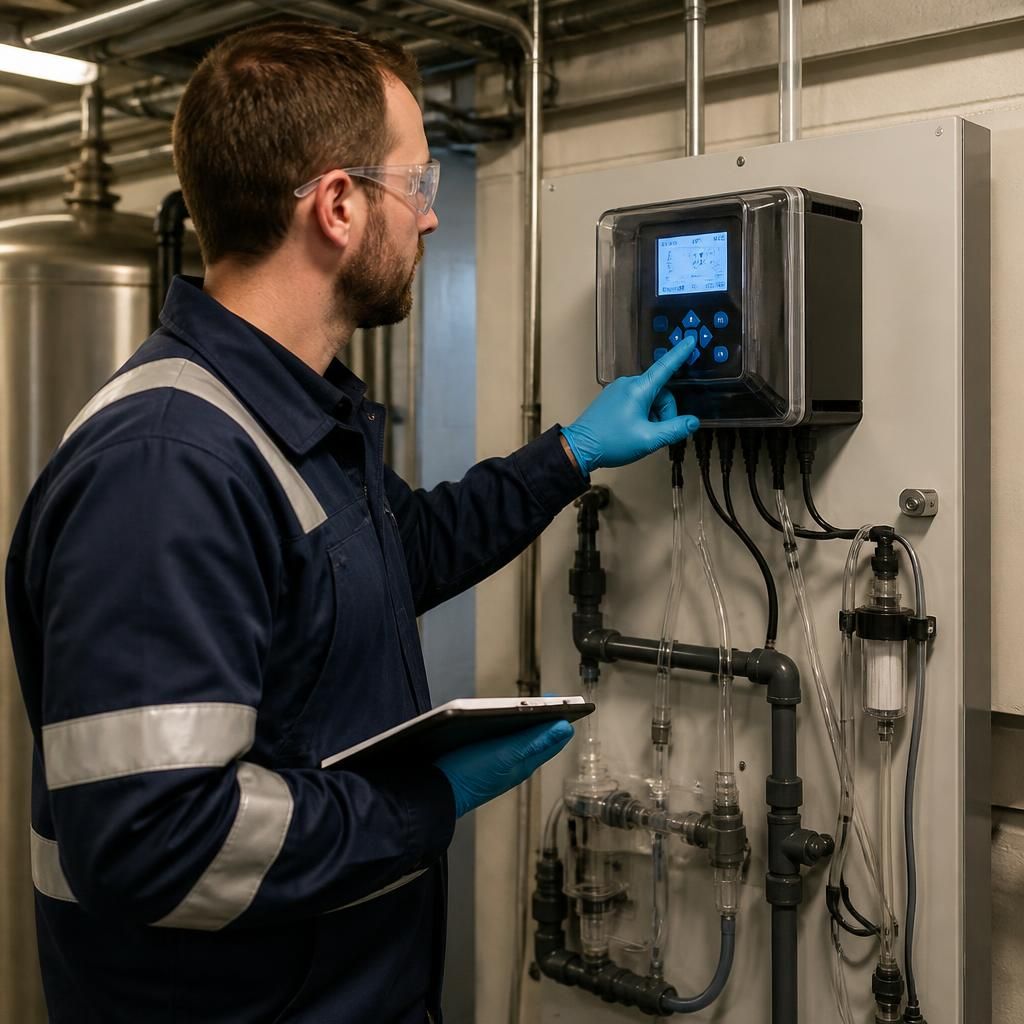
Continuous chlorine monitoring is most appropriate when the measurement has a defined control purpose at a specific point in the system. A reading at a treatment outlet, for example, may confirm dosing performance without demonstrating that an adequate residual is reaching a remote storage tank or outlet. The monitoring arrangement should therefore reflect the part of the system where loss of control is most likely or where evidence is needed.
This distinction is important when interpreting results. A monitor provides information about conditions at its installation point; it does not, by itself, confirm the condition of every part of the distribution network. The monitoring plan should state what each reading demonstrates, what it cannot demonstrate and how the information fits with the wider water safety controls.
Discuss whether continuous chlorine monitoring is appropriate for your water system
Discuss your water system with Blue Fish Water Management Ltd to assess whether continuous chlorine monitoring is a proportionate control measure and how its results should be incorporated into your water safety arrangements.