
What records should be retained after a legionnaires inspection?
After a Legionnaires’ inspection, retain the current risk assessment, inspection findings, water testing results, monitoring records and details of any remedial actions taken. Keep these records together with evidence of responsible-person training and follow-up checks, so the organisation can demonstrate how identified risks were managed and ongoing control maintained.
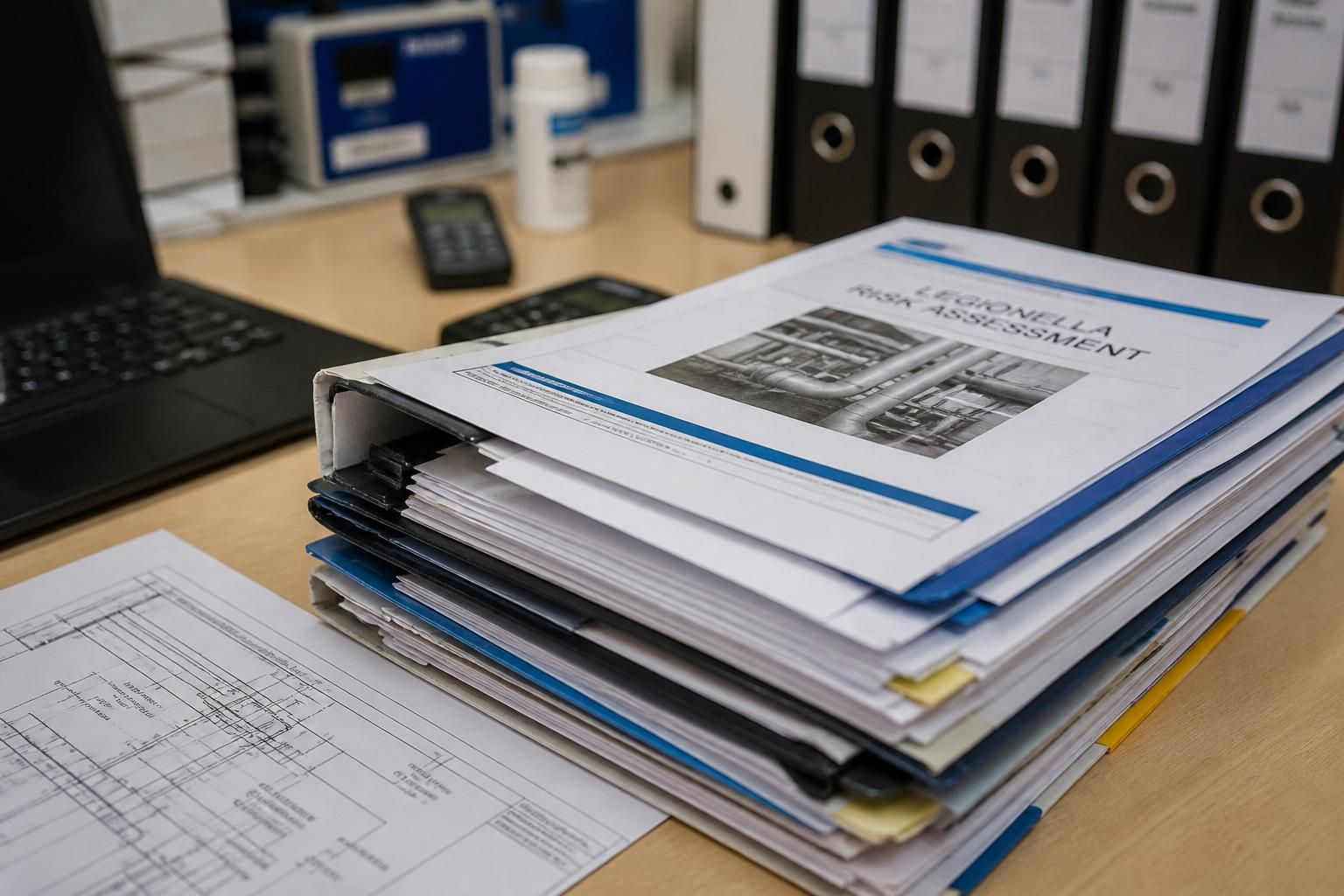
Records should be retained for the periods set out in the organisation’s control arrangements and applicable guidance, with enough detail to show what was inspected, who made decisions, when actions were completed and why the system was considered adequately controlled. A post-inspection record should therefore be a traceable evidence file, not just a short inspection certificate.
For many workplaces, the relevant records include monitoring, inspection, testing and checking results, together with evidence of remedial work. HSE guidance associated with Legionnaires’ disease control commonly refers to retaining these records for at least five years. Risk assessments and written control arrangements should remain available while current and should also be retained for an appropriate period after they are superseded. The organisation should confirm the periods that apply to its sector, contractual obligations and internal document-retention policy.
The retained file should also provide the background needed to interpret the inspection. This may include:
- the written scheme for controlling the risk from the water systems;
- an up-to-date asset register identifying relevant tanks, calorifiers, outlets, dosing equipment and other system components;
- current schematic drawings or descriptions showing how water flows through the system;
- the date of the inspection, the areas and assets examined, and any limitations on access or inspection;
- the name, role and competence details of the person or organisation carrying out the work;
- the version of documents used, including superseded assessments or schemes where they explain earlier decisions;
- records of changes to the water system, occupancy, use, equipment or control measures that could alter the risk; and
- communications that record significant decisions, responsibilities, agreed deadlines or reasons for accepting a recommendation.
Where an inspection identifies a defect or control failure, retain the complete action trail rather than only the final completion note. This should show the original observation, the risk-based priority assigned to it, the person responsible, the proposed corrective measure, evidence of completion and any subsequent verification. If a recommendation is rejected, deferred or replaced by another control, the reason and authorisation should be documented. That makes the record useful during a later review and helps distinguish an outstanding risk from a closed action.
Laboratory and contractor documents should be kept in their original form where practicable. Test reports should identify the sampling locations, dates, methods, results and any interpretation supplied by the laboratory. Contractor reports should show the scope of work and any exclusions. If information is transferred into a summary spreadsheet or management system, the original report should still be retrievable so that the summary can be checked.
Records need to be managed so that they remain legible, secure and accessible to the people responsible for water safety. Electronic files should have sensible file names, controlled permissions, regular backups and version history. Paper records should be protected from damage and filed against the relevant premises or system. A central index can identify the latest approved document, the date of the next review and any open actions without replacing the underlying evidence.
Retention should continue when responsibility for the premises changes. The outgoing dutyholder should provide the relevant records to the incoming responsible person, including unresolved findings and the reasons for any temporary controls. A handover log can confirm what was transferred and identify documents that are missing. Records should not be destroyed simply because an inspection has been completed; they should be disposed of only under the organisation’s approved retention policy and after checking that no investigation, dispute, enforcement matter or contractual requirement requires them to be kept longer.
At the next review, the responsible person should check that the retained information still describes the actual water system. An inspection record can lose value if assets have been removed, outlets added, control measures changed or responsibilities reassigned without updating the associated documents. Reviewing the file against the current system helps demonstrate continuing control rather than isolated compliance on the inspection date.
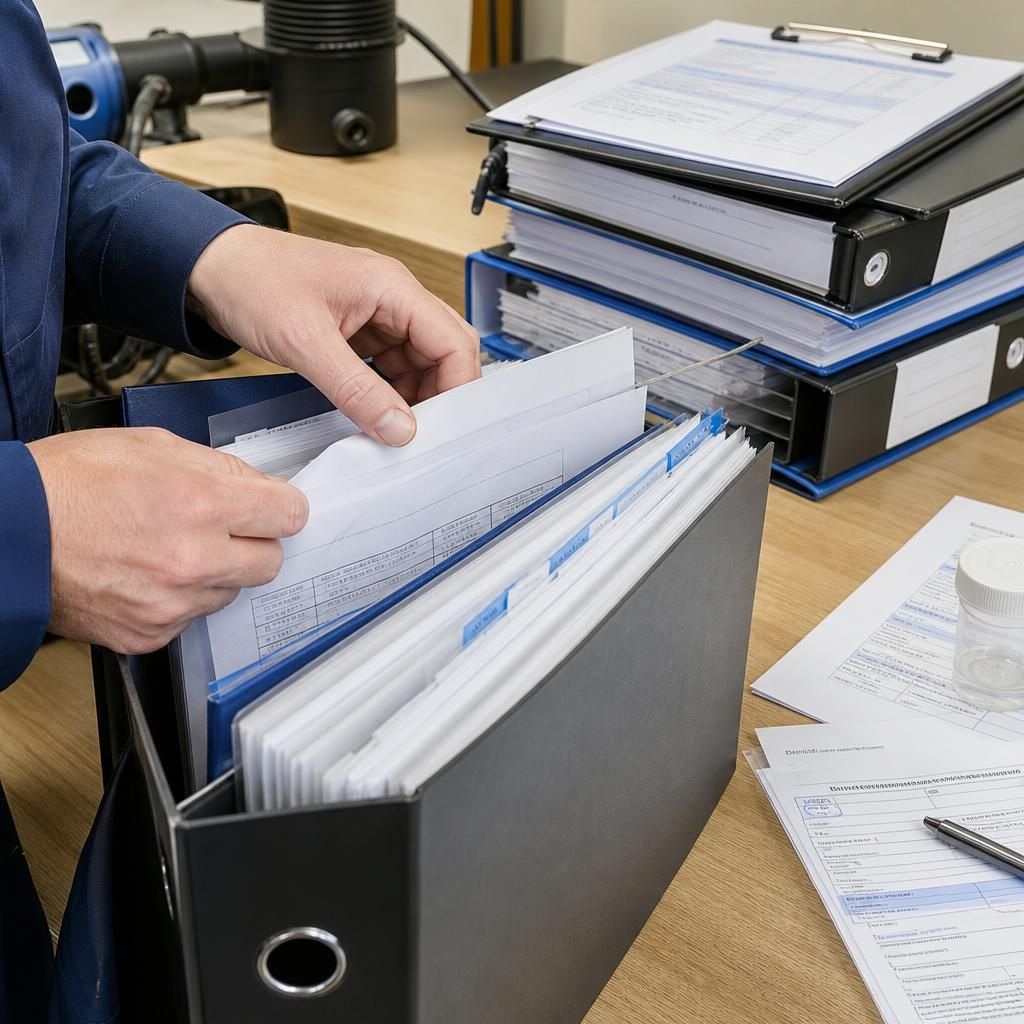
Retain the evidence that supports the inspection conclusion, not only the completed report. Where relevant, this may include dated photographs, instrument readings, inspection notes, sample submission paperwork and calibration records for measuring equipment. Each item should be identifiable by the relevant asset, location and inspection date, so that another competent person can verify how the conclusion was reached.
This supporting evidence is particularly useful where an inspection records that no further action was required. It shows the basis for that decision and provides a meaningful comparison at the next inspection, especially if the condition of equipment or the surrounding area changes.
Need advice on retaining legionella inspection records?
If you need advice on whether your post-inspection records are complete and suitably organised, speak to Blue Fish Water Management Ltd about your documentation requirements and ongoing water safety arrangements.