
Are follow-up actions included in a legionella risk assessment price?
Follow-up actions are not automatically included in every legionella risk assessment price. The assessment may identify recommendations, while remedial works, additional monitoring, retesting or compliance support are often charged separately unless the quotation clearly includes them.
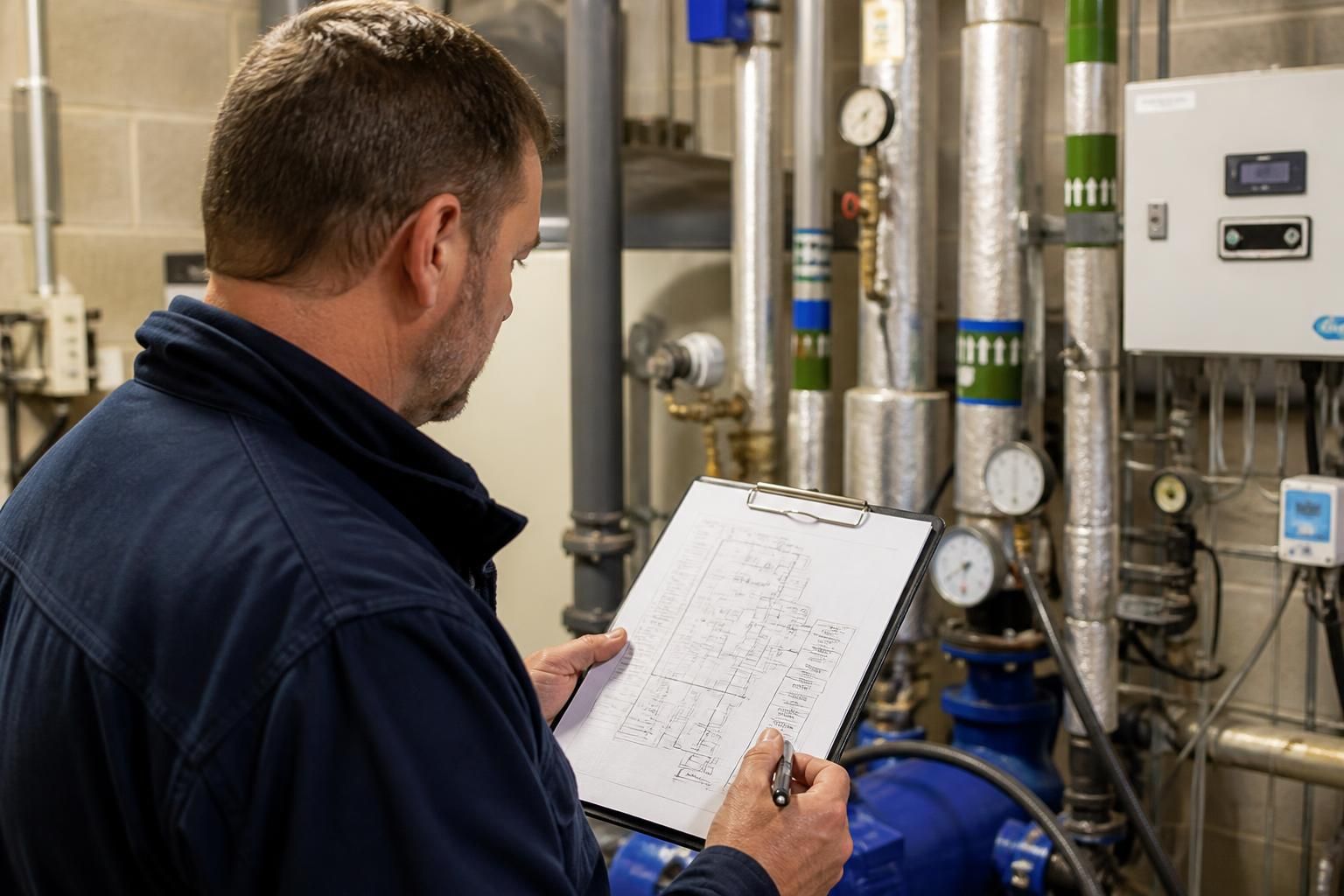
Whether follow-up actions are included depends on the scope of the quotation. A legionella risk assessment normally covers the inspection of relevant water systems, review of management arrangements, identification of hazards and production of a report. The resulting actions may be listed and prioritised within that report without the work needed to complete them forming part of the assessment fee.
The term “follow-up actions” can describe several different services. It may refer to an explanation of the findings, an action plan, a review of completed measures or physical remedial work. These should be separated when comparing prices, because a quotation that includes one type of follow-up may not include the others.
- Recommendations and action planning: The assessor may specify what needs to be addressed, who should take responsibility and the priority of each measure. This is commonly part of the written assessment report.
- Technical advice: Clarification of the findings or guidance on suitable control measures may be included, but the quotation should state whether this covers a brief discussion or more extensive compliance support.
- Remedial works: Measures such as modifying pipework, removing redundant sections, improving insulation, correcting temperature-control issues or repairing system components usually require a separate scope and price.
- Additional monitoring: Extra temperature checks, review visits or longer-term monitoring may be charged separately where they go beyond the inspection included in the assessment.
- Retesting and verification: A further site visit, sample collection or confirmation that a corrective measure has worked may be outside the original fee unless expressly included.
- Document updates and training: Updating written control schemes, records or staff procedures, or delivering training, may be separate services rather than automatic parts of the assessment.
Some providers offer a broader package in which the assessment, action plan and a defined follow-up review are combined. Others price the assessment separately and issue a further quotation after the findings are known. Neither approach is inherently preferable; the important point is that the boundaries are clear before the work begins.
Organisations should check the quotation for specific wording about what happens after the report is issued. Useful questions include:
- Is a prioritised corrective-action schedule included?
- Is there a meeting or review to explain the findings?
- Does the price include a return visit?
- Will completed actions be checked or signed off?
- Are additional samples, retesting or monitoring included?
- Are remedial works priced within the assessment or quoted separately?
- Will the written scheme, logbook or other compliance records be updated?
- What happens if further defects are discovered during follow-up work?
It is also important to distinguish between a recommendation and its completion. An assessment can identify that a control measure is required, but the organisation responsible for the premises remains responsible for deciding how the action is implemented and for maintaining appropriate control arrangements. The assessor’s report should provide enough detail for the responsible person to understand the issue, its significance and the action required.
A clear quotation should therefore describe the deliverables rather than rely on a general phrase such as “full compliance” or “follow-up included”. It should identify the systems covered, the report provided, any included advice or review, and the rates or approval process for work outside that scope. This makes the price easier to compare and reduces the risk of assuming that physical corrective work is included when only recommendations are covered.
Blue Fish Water Management Ltd can help organisations interpret assessment findings and plan proportionate next steps through legionella control, water hygiene and compliance support. Where further work is required, the practical scope should be agreed from the findings, with monitoring, testing, remedial measures and any review activity identified separately where appropriate.

A follow-up allowance in a legionella risk assessment price is only meaningful when the quotation defines what triggers it and what work it covers. Some quotations include a fixed review of the completed assessment actions, while others use a provisional allowance or charge follow-up work at agreed rates.
Before accepting the price, check whether any allowance covers one review only, a set amount of professional time, or specific corrective measures. If the assessment identifies more extensive work, the quotation should explain how additional costs are authorised. This helps the responsible person distinguish between an included follow-up service and an open-ended commitment to carry out remedial work.
Keep the assessment fee, follow-up review and corrective works identifiable in the procurement records. That structure makes it easier to approve necessary expenditure, track which actions remain outstanding and demonstrate how findings have been addressed during future compliance reviews.
Ask what is included in your legionella risk assessment price
Before accepting a quotation, ask Blue Fish Water Management Ltd to clarify which follow-up services are included and which require separate approval. This helps your organisation obtain a clearly defined scope for any assessment, review or corrective work required.