
How does activated carbon media remove chlorine from treated water?
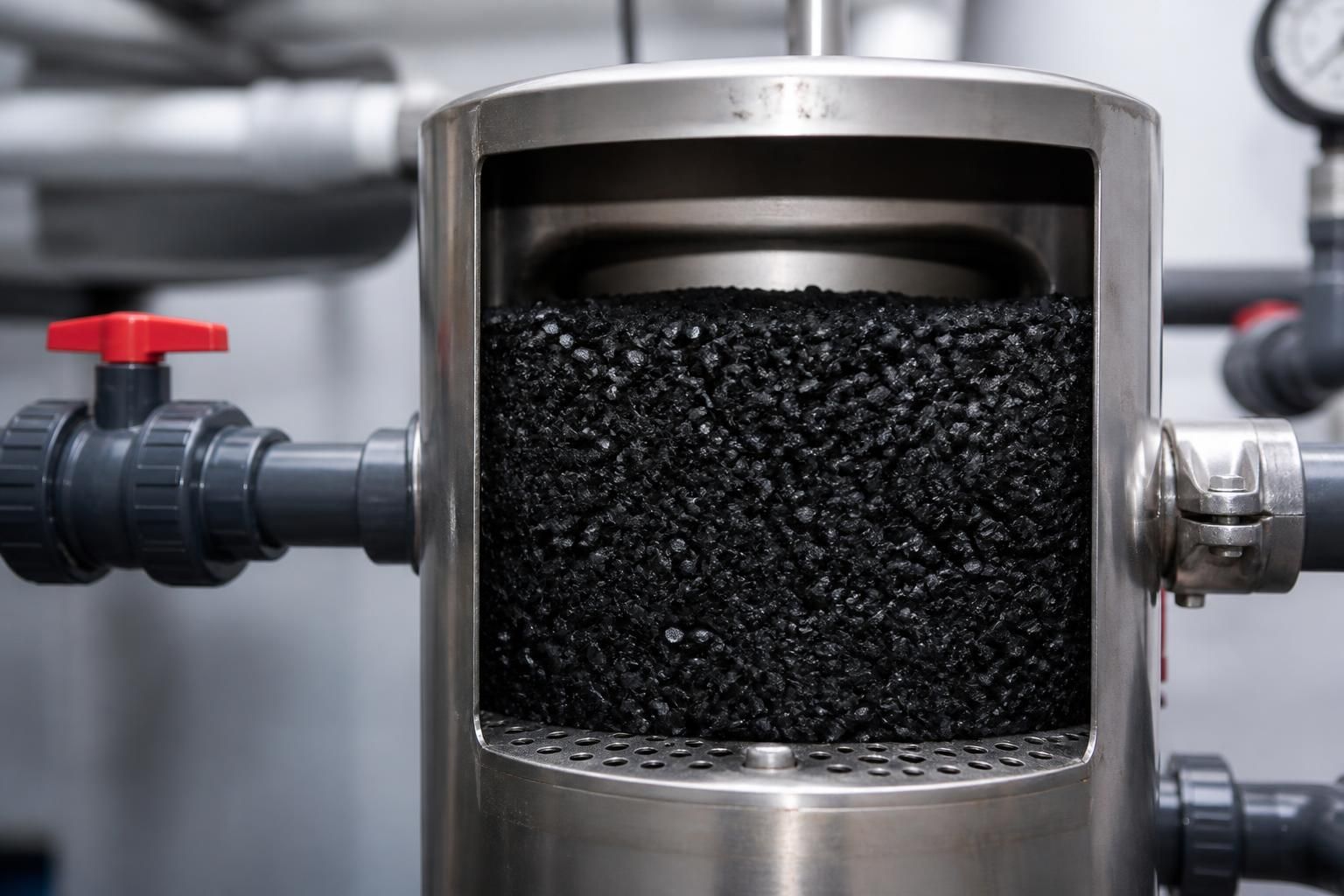
Activated carbon media removes chlorine through a combination of adsorption and surface reaction. As treated water travels through the carbon bed, chlorine-containing compounds reach the carbon’s extensive internal pore structure. Free chlorine is typically reduced at the carbon surface and converted into chloride, while some organic compounds responsible for taste and odour remain held within the pores.
Free chlorine and chloramine behave differently. Standard activated carbon is generally effective for free chlorine, but chloramine is more stable and can pass through a conventional carbon bed unless the media, bed depth and contact time are selected for chloramine reduction. Catalytic carbon, which has been treated to increase its surface reactivity, is often considered where chloramine control is required. The incoming disinfectant should therefore be identified before selecting the media.
The removal process depends on water spending sufficient time in contact with the media. This is commonly assessed as empty bed contact time, or EBCT: the theoretical time water would occupy the carbon volume without the media itself. A high flow through an undersized vessel reduces contact time and can allow chlorine to pass through. Flow should be assessed against the vessel diameter, carbon volume, peak demand and the required treated-water quality, rather than against nominal pipe size alone.
Water quality also affects carbon performance. Suspended solids and high turbidity can block the pores or restrict flow, while organic matter competes for adsorption sites and can use up the media’s capacity. Temperature, pH and the concentration and form of the disinfectant can alter the treatment result. Suitable pre-filtration may be needed where the incoming water contains significant particulate matter.
Carbon does not have unlimited capacity. Over time, adsorption sites become occupied and the media can lose its ability to control chlorine. A chlorine breakthrough test measures the residual disinfectant after the carbon bed and helps show whether the system is still performing as intended. Testing at the inlet and outlet is more informative than relying only on taste or odour, as a water can appear acceptable while still carrying a measurable residual.
Operational controls are important because removing disinfectant can change the microbiological conditions within downstream pipework and storage. Carbon systems should be incorporated into the wider water management plan, with appropriate cleaning, inspection, sampling and replacement arrangements. The bed should also be protected from conditions that encourage fouling or stagnant water. Where the treated water is used in a higher-risk environment, chlorine removal should be considered alongside the system’s temperature control, circulation, maintenance and water hygiene requirements.
Correct media selection therefore involves more than choosing a carbon grade. The assessment should consider the disinfectant type, inlet concentration, flow pattern, contact time, competing contaminants, pre-treatment and the point at which the media will be replaced. UKAS-accredited water testing and documented system monitoring can help verify that the chosen treatment is reducing the intended chlorine residual without creating an unmanaged downstream risk.
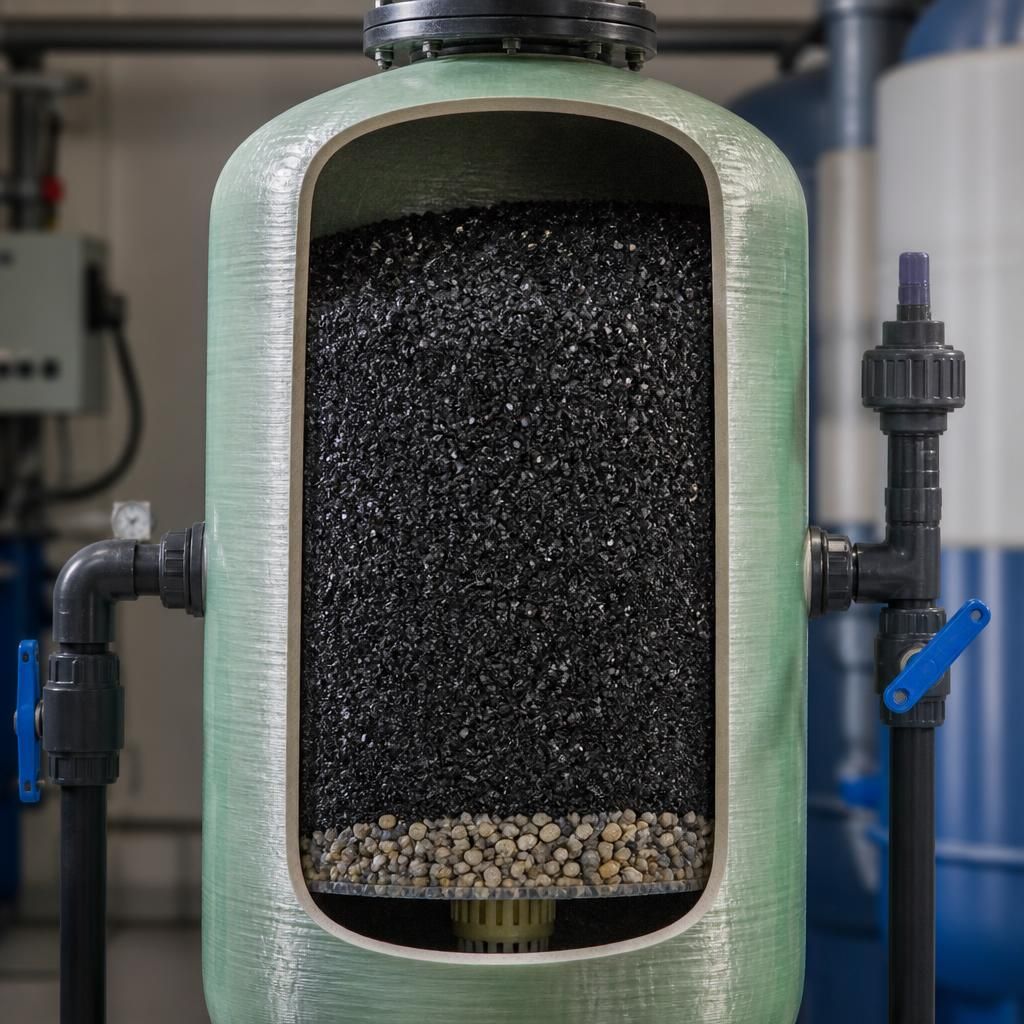
Discuss your activated carbon media requirements
If you are assessing whether activated carbon is appropriate for your treated-water system, discuss your activated carbon media requirements with Blue Fish Water Management Ltd. A system-specific review can help identify the treatment objective and the information needed to determine a suitable approach.