
Which organisations need water hygiene testing?
Organisations responsible for premises with water systems that could expose people to Legionella may need water hygiene testing, particularly in healthcare, care, education, hospitality, housing, workplace and industrial settings. The appropriate testing programme depends on the system, its use and the findings of a competent water hygiene risk assessment.
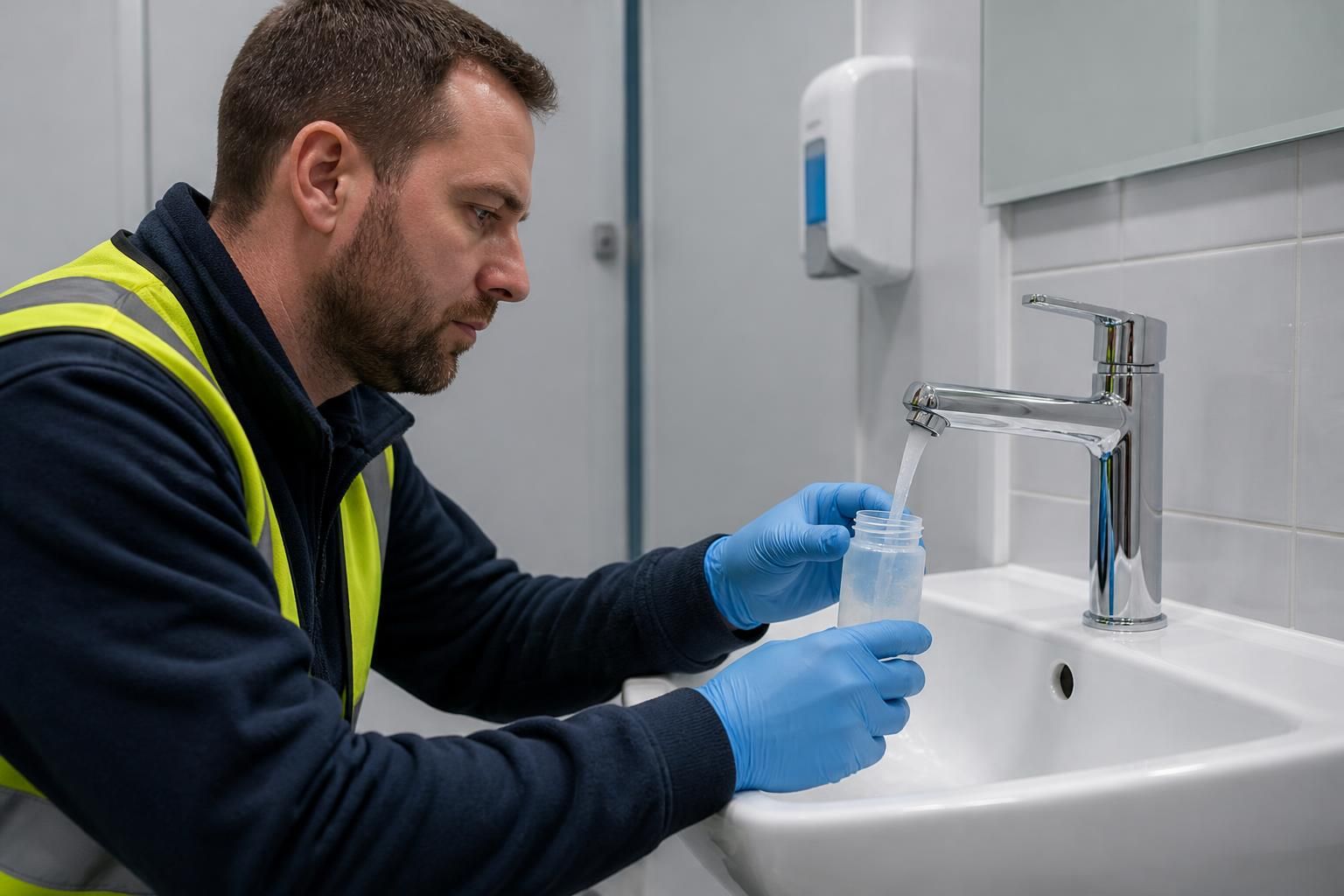
Water hygiene testing is relevant to any organisation that controls premises or water systems where people could be exposed to contaminated water or aerosols. It is not limited to one industry, and there is no universal testing schedule that applies to every building. The need for sampling and analysis should follow a competent Legionella risk assessment, taking account of the system design, temperature controls, usage, vulnerable occupants and previous results.
In practice, testing is most likely to form part of a managed water safety programme where an organisation has a duty to protect employees, residents, patients, visitors or customers. The organisation with control of the premises may hold this responsibility itself, or it may be shared with a landlord, facilities manager, managing agent, care provider, contractor or other appointed dutyholder.
- Healthcare organisations: Hospitals, clinics, treatment centres, dental practices and other healthcare premises may have complex water systems and occupants who are particularly vulnerable to infection. Testing can support control of hot and cold water systems, outlets, storage tanks, showers and specialised equipment.
- Care and supported-living providers: Care homes, nursing homes, sheltered housing and supported-living facilities need to consider both the condition of their water systems and the susceptibility of residents. Sampling may be included in a wider programme of temperature checks, outlet management, cleaning and remedial action.
- Landlords and housing providers: Local authorities, housing associations, property companies and private landlords may be responsible for water hygiene in rented accommodation, communal areas and residential blocks. The required controls depend on the type of property, the water system and how duties are allocated between the owner, managing agent and occupier.
- Workplaces and offices: Employers and facilities teams should consider water hygiene in offices, factories, warehouses, depots and other workplaces, particularly where buildings have stored water, showers, infrequently used outlets, cooling equipment or areas that remain vacant for extended periods.
- Education providers: Schools, colleges, universities, nurseries and boarding facilities can have varied occupancy patterns, multiple buildings and outlets that are not used consistently. These factors can influence stagnation, flushing arrangements and the need for targeted sampling.
- Hotels, accommodation and hospitality businesses: Hotels, hostels, guest houses, holiday accommodation, restaurants and leisure venues may have bedrooms, showers, spas, pools or other facilities that increase the complexity of water hygiene management.
- Industrial and commercial operators: Manufacturing sites, laboratories, processing facilities, retail premises and distribution centres may contain storage tanks, process water systems, showers, cooling systems or other equipment requiring specific controls and verification.
- Leisure and public-use facilities: Gyms, sports centres, swimming facilities, health clubs and entertainment venues should assess systems that produce aerosols or serve changing rooms, showers and spa facilities.
- Construction, vacant and refurbished properties: Newly installed, altered or dormant systems can require careful commissioning, flushing and verification before normal use. A building’s temporary vacancy does not remove the need to manage water hygiene risks.
Testing may be particularly appropriate where a premises contains cooling towers, evaporative condensers, spa pools, showers, spray taps, water features, humidifiers, high-volume storage tanks or other systems capable of producing contaminated aerosols. It may also be considered where temperatures are difficult to control, outlets are seldom used, pipework is redundant or the system has a history of contamination.
Organisations should not arrange sampling simply because they belong to a particular sector. A risk assessment should identify the relevant hazards and specify whether routine sampling, investigation sampling or no routine microbiological testing is appropriate. For example, a straightforward, well-controlled system may require robust monitoring records without frequent laboratory sampling, while a complex system or a building serving vulnerable people may justify more structured testing.
Water hygiene testing can be used to investigate suspected problems as well as to verify ongoing control. Samples may be taken after abnormal temperature results, equipment failure, prolonged stagnation, refurbishment, complaints, illness investigations or remedial work. Results should be interpreted alongside temperature records, inspection findings, maintenance history and the organisation’s written control scheme; a laboratory result should not be treated as a complete assessment of the system on its own.
Responsibility should be documented clearly. The dutyholder or responsible person should know which systems are included, who carries out routine checks, who can authorise remedial work and how results are reviewed. Where a property is leased or managed by several parties, contracts should define the boundaries between owner, occupier, facilities provider and specialist contractor. Shared responsibility should not result in gaps in sampling or record keeping.
Good practice commonly includes a current asset register, schematic information where appropriate, temperature and flushing records, sampling plans, laboratory reports, corrective-action records and periodic review of the risk assessment. Sampling locations should be selected for a reason, such as representing higher-risk outlets, vulnerable users, areas of stagnation or parts of the system affected by a known control issue. The programme should be revised when the building, occupancy, equipment or risk profile changes.
In summary, the organisations most likely to need water hygiene testing are those that control complex water systems, provide accommodation or care, serve vulnerable people, operate aerosol-generating equipment, or have identified weaknesses in system management. The decisive factor is the assessed risk and the organisation’s control of the water system, rather than its industry label alone.
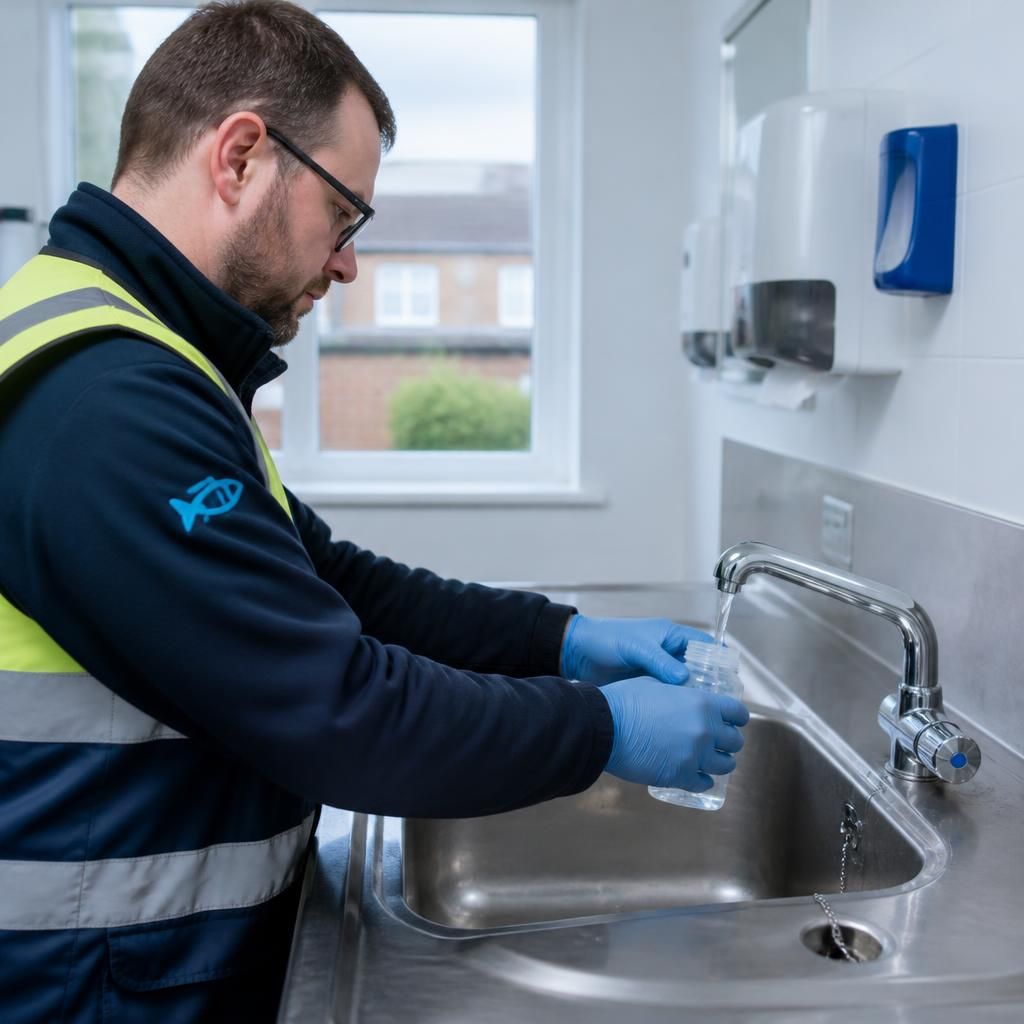
Public-sector organisations and businesses managing estates with multiple buildings may need water hygiene testing for each materially different water system. A result from one site cannot automatically represent another where the buildings differ in design, occupancy, storage, outlet use or maintenance history.
This is particularly relevant to facilities teams, managing agents and outsourced property-service providers coordinating several premises. Their water hygiene arrangements should identify which buildings and systems are covered, where samples are taken and how findings are escalated to the organisation responsible for corrective action.
Discuss your organisation’s water hygiene testing needs
Discuss your organisation’s water hygiene testing needs with Blue Fish Water Management Ltd to identify an appropriate approach for your premises and documented responsibilities.