
When is Legionella water testing required?
Legionella water testing is required when a competent risk assessment identifies it as necessary to monitor or control a significant risk, verify the effectiveness of control measures, investigate suspected contamination or support an outbreak investigation. It is not automatically required at the same interval for every water system; the frequency and scope should reflect the system design, use, condition and vulnerability of exposed people.
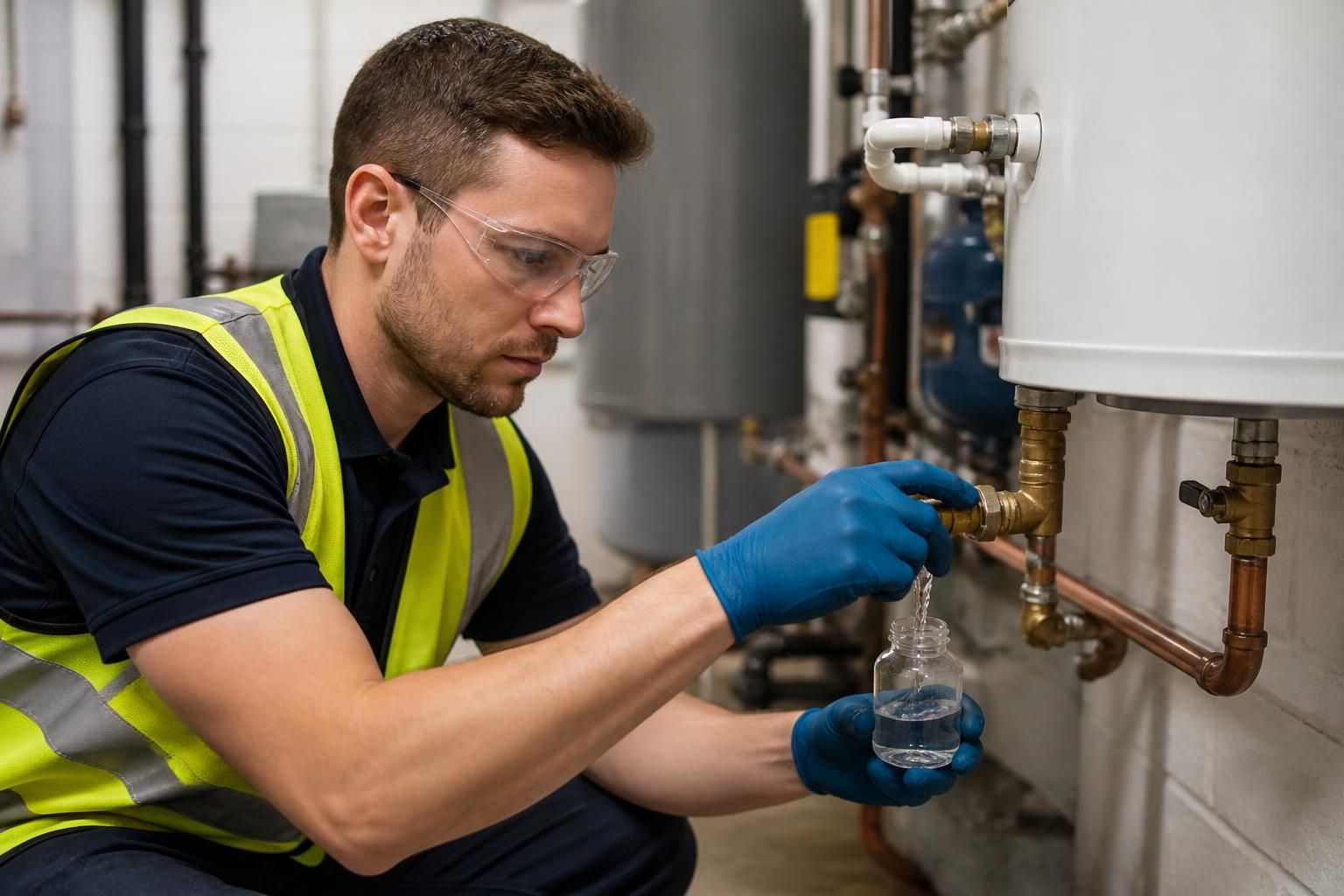
Legionella water testing is required when a competent assessment or written control scheme identifies sampling as necessary to manage a foreseeable risk. UK law does not impose one universal testing interval for every hot and cold water system. The decision should be based on the system’s design, operating conditions, history, how it is used and the vulnerability of people who may be exposed.
The legal basis for testing
Under the Health and Safety at Work etc. Act, the Control of Substances Hazardous to Health Regulations and the Management of Health and Safety at Work Regulations, organisations must assess and control risks from work activities. Legionella is managed within this general duty framework, supported by the Health and Safety Executive’s Approved Code of Practice L8 and HSG274 guidance.
These requirements focus on preventing exposure and maintaining effective control, rather than automatically requiring a laboratory sample from every water outlet. Where testing is necessary to demonstrate that controls are working, the responsible organisation should include it in its written scheme, define the sampling points and set out how results will be reviewed and acted upon.
Situations in which testing may be required
- Higher-risk water systems: Cooling towers, evaporative condensers, spa pools, whirlpool baths and other aerosol-generating systems can require structured microbiological monitoring because they may create conditions that support Legionella growth or spread.
- Complex or poorly understood systems: Large premises, healthcare environments, care settings, hotels, industrial sites and buildings with infrequently used areas may need sampling to investigate or verify control across different parts of the system.
- Vulnerable occupants: The consequences of exposure can be more serious for older people, smokers, people with chronic respiratory disease or compromised immune systems. This may justify a more cautious monitoring strategy.
- Evidence of inadequate control: Testing may be appropriate where temperatures are outside the intended range, disinfectant levels are unsuitable, outlets have low use, tanks or calorifiers are contaminated, or previous results have indicated a problem.
- Commissioning, alteration or recommissioning: New installations, changes to pipework, modifications to plant, changes in occupancy or systems returning to use after prolonged closure should be reviewed before normal operation resumes. Sampling may form part of the verification process.
- Suspected illness or contamination: Positive findings, suspected cases of legionellosis or an outbreak investigation may require targeted sampling alongside advice from relevant public health and health and safety authorities.
- After remedial work: Following cleaning, disinfection, temperature correction, component replacement or other corrective action, samples can help determine whether the intervention has addressed the underlying issue. Testing does not replace confirmation that the control measures themselves are being maintained.
How often should samples be taken?
There is no reliable answer based on building type alone. The risk assessment should establish a proportionate schedule, taking account of the system’s risk category, previous results, seasonal or occupancy changes, control performance and any relevant industry guidance. A low-complexity domestic hot and cold water system may not need routine Legionella culture testing when controls are demonstrably effective. Conversely, a high-risk aerosol-generating system or a site serving vulnerable people may require planned, recurring sampling.
Testing frequency should not be reduced simply because earlier samples were satisfactory. A result represents the condition at the sampled locations and time; it does not prove that every part of a distribution system is free from risk. The sampling plan should therefore be reviewed when results change, controls deteriorate, the building is altered or the population using it changes.
What testing usually involves
- Review the current risk assessment, schematic and written control scheme.
- Identify representative sampling points, including areas where water is stored, recirculated, stagnant or likely to form aerosols.
- Collect samples using a documented method that protects sample integrity and records the location, date, time and relevant water conditions.
- Send the samples to a suitable laboratory, preferably one with appropriate UKAS-accredited testing for the method being used.
- Compare the findings with the site’s action levels, control criteria and previous results.
- Investigate adverse or unexpected results and record the corrective action, responsibility and follow-up verification.
A Legionella result should never be interpreted in isolation. Temperature records, disinfectant measurements where relevant, inspection findings, flushing records, maintenance information and evidence of stagnation all help determine what the result means. A negative sample does not remove the need for routine control, and a positive result does not by itself identify the precise source or establish the level of exposure.
Who decides whether testing is needed?
The dutyholder or responsible person remains accountable for arranging suitable control measures. They may use a competent water hygiene specialist to complete the risk assessment, design the sampling programme, take samples, interpret trends and recommend remedial action. Competence should include knowledge of Legionella risks, the particular water system and the limitations of microbiological testing.
Businesses should retain the risk assessment, sampling plan, laboratory reports, temperature and disinfectant records, maintenance evidence and decisions made in response to results. Clear records demonstrate how the testing requirement was determined and help the next review identify whether the monitoring programme remains appropriate.
For organisations unsure whether their existing programme is proportionate, the sensible starting point is a review of the water system and current control scheme rather than ordering isolated samples without a defined purpose. Blue Fish Water Management Ltd provides risk assessments, UKAS-accredited water testing, monitoring and compliance support for organisations that need a practical basis for deciding when Legionella sampling is justified.
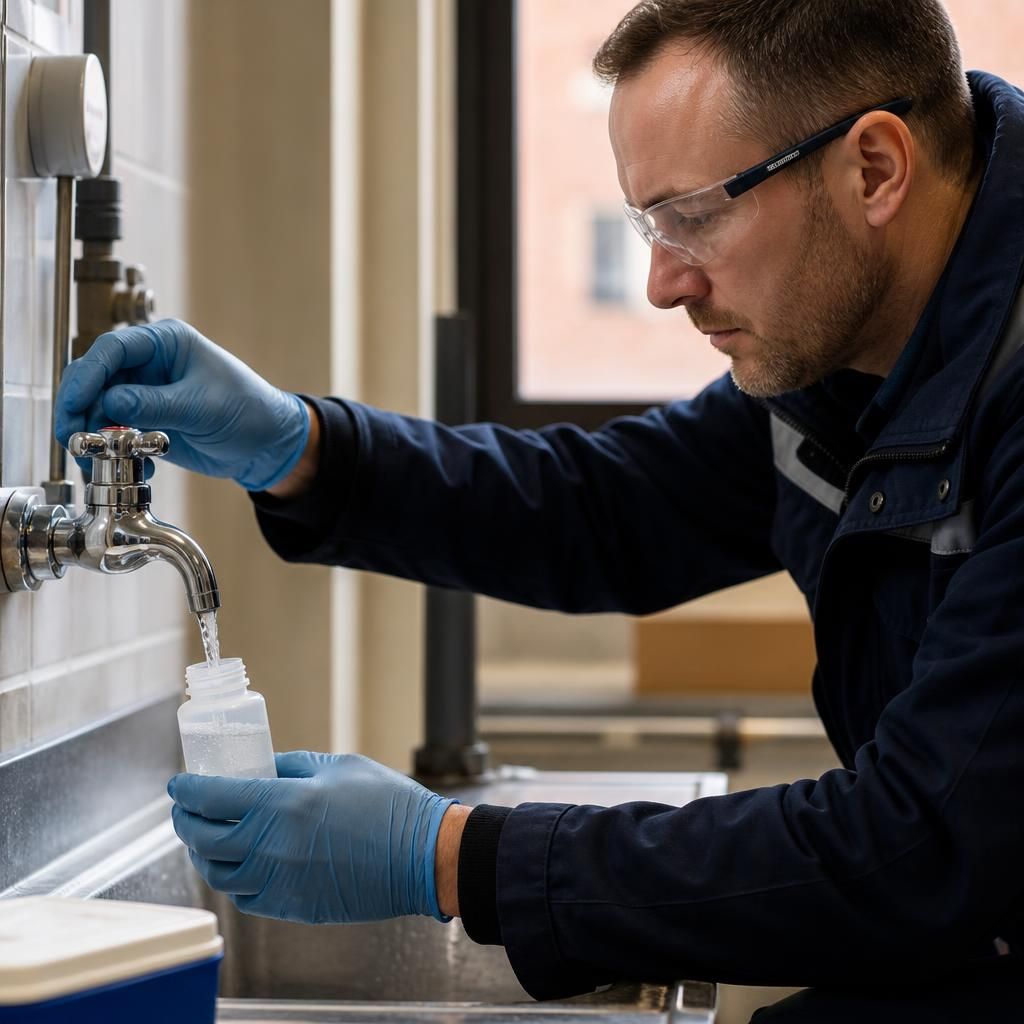
A Legionella water sample is only useful when it is linked to a defined control question. Before arranging testing, the responsible person should know what decision the result may inform, which part of the system is being examined and what action will follow an adverse finding.
- State the reason for sampling, such as checking a suspected problem or verifying a control measure.
- Use sampling locations that relate directly to that reason rather than choosing outlets at random.
- Record relevant conditions at the time of collection, including recent changes, periods of low use or remedial work.
- Agree how the result will be assessed and escalated before the laboratory report is received.
This approach prevents laboratory testing from becoming an isolated compliance exercise. It creates a clear link between the sample, the water system, the risk being managed and the decision taken afterwards.
Review Your Legionella Water Testing Requirements
Arrange a review of your current Legionella water testing requirements with Blue Fish Water Management Ltd, so your sampling decisions are clearly documented against the risks on your site.