
What does water testing reveal about Legionella control?
Water testing reveals whether Legionella bacteria are present in sampled water and can expose control issues such as inadequate temperatures, stagnation or contamination. Interpreted alongside system records and risk assessments, the results show whether existing controls are effective and where corrective action may be needed.
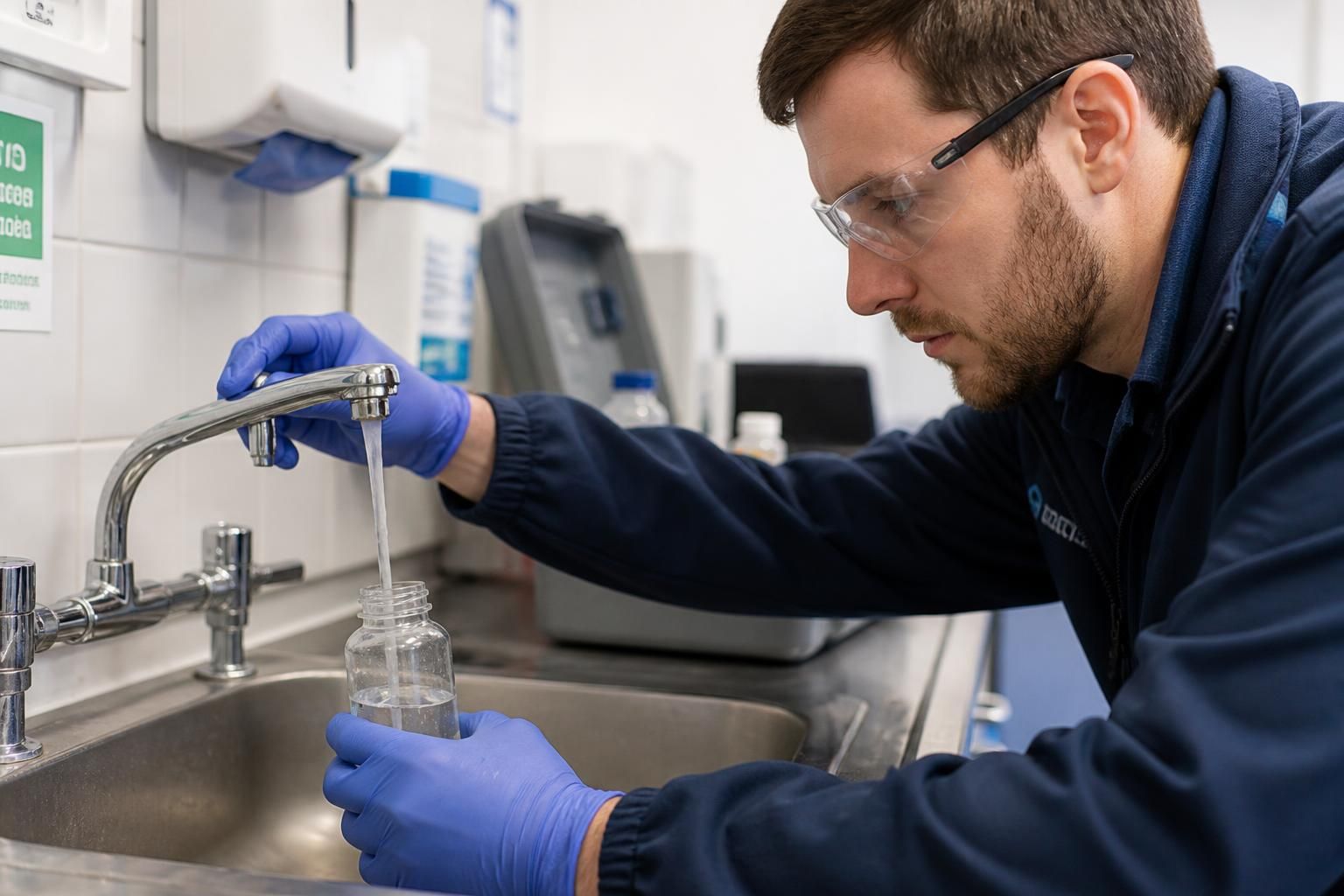
Water testing provides evidence about the microbiological condition of a water system at the locations and times sampled. For Legionella control, it can reveal whether the sampling plan is detecting a consistent pattern, an isolated result, or a wider distribution of bacteria that requires investigation.
The laboratory report usually identifies whether Legionella was detected and, where applicable, records the species or level reported by the laboratory. This information must be considered in context rather than treated as a pass-or-fail verdict. The meaning of a result depends on the outlet sampled, the type of system, the people exposed, the sampling method and the site's existing control measures.
Testing can reveal several important features of system performance:
- Variation between outlets: Results from different points can show whether an issue is confined to one branch, outlet or area, or whether it is present across a broader part of the system.
- Patterns over time: Repeated results can indicate whether conditions are stable, deteriorating or improving after control measures have been introduced.
- Previously unidentified risk areas: A result from a low-use outlet, remote branch or seldom-sampled location may identify a part of the system that is not adequately represented in routine monitoring.
- Evidence of control failure: Unexpected results can prompt a review of water temperatures, circulation, cleaning, flushing, maintenance and the management of infrequently used outlets.
- Whether remedial work has been effective: Follow-up testing can help establish whether the underlying issue has been addressed, although a single follow-up sample should not be used to assume that every part of the system is controlled.
A negative sample means that Legionella was not detected in that particular sample using the laboratory's test method. It does not demonstrate that the whole building or system is free from Legionella. Bacteria may be unevenly distributed, conditions can change between sampling visits, and an outlet that has not been sampled may have different characteristics. For that reason, negative results support a control programme but do not replace risk assessment, monitoring or planned maintenance.
Conversely, a positive result does not by itself explain why Legionella was detected. It is an indication that the site needs a proportionate investigation. The investigation may examine the affected outlet and connected pipework, water temperatures, circulation, storage arrangements, dead legs, outlet use, cleaning records and any recent changes to the system. The level of risk also depends on the people who may be exposed, including those who may be more vulnerable to Legionnaires' disease.
The sampling location is therefore as important as the laboratory result. A sample taken from a sentinel outlet may provide useful information about part of a distribution system, while a sample from a storage vessel or return line answers a different question. Sampling plans should reflect the system design, foreseeable exposure routes and the findings of the site's water hygiene risk assessment. Randomly collecting samples without a clear purpose can produce data that is difficult to interpret and may leave higher-risk points unexamined.
Reliable interpretation also depends on how the sample is collected, labelled, stored and transported. The record should normally identify the location, date, time, sample type and relevant site details, with enough information to connect the result to the correct part of the water system. Poorly documented samples can make it difficult to compare results or demonstrate what was actually tested. A clear chain of custody is particularly important where results may support compliance records, an investigation or decisions about remedial work.
Results should be reviewed alongside the site's wider evidence rather than filed in isolation. Useful comparisons include:
- temperature monitoring and evidence that control temperatures are being maintained;
- records of flushing for outlets with limited use;
- cleaning, disinfection and maintenance records;
- changes to occupancy, building use or water demand;
- alterations to tanks, cylinders, heaters, pumps, valves or distribution pipework;
- previous laboratory reports and the reasons for any earlier remedial actions.
This combined review can expose compliance gaps that a laboratory report alone cannot. For example, a site may have test results but no documented rationale for the sampling locations, incomplete monitoring records, overdue follow-up actions or evidence that parts of the system are not being managed as described in the written control scheme. Testing is consequently both a water-quality check and a way of assessing whether the management process is producing usable evidence.
Where results indicate a concern, the response should be based on the complete risk picture. Possible steps include checking the original sample and laboratory information, reviewing the relevant system section, increasing monitoring, carrying out cleaning or disinfection, correcting system defects and taking follow-up samples. The appropriate action depends on the result, the system, the exposure risk and the applicable guidance; there is no responsible substitute for interpreting the findings in context.
For organisations responsible for premises, the most useful outcome of testing is not simply a report showing detection or non-detection. It is a defensible understanding of where risk may exist, how well controls are operating, what evidence is missing and which actions should be recorded and tracked. Properly planned water testing therefore helps turn Legionella control from a collection of isolated samples into an evidence-based management process.
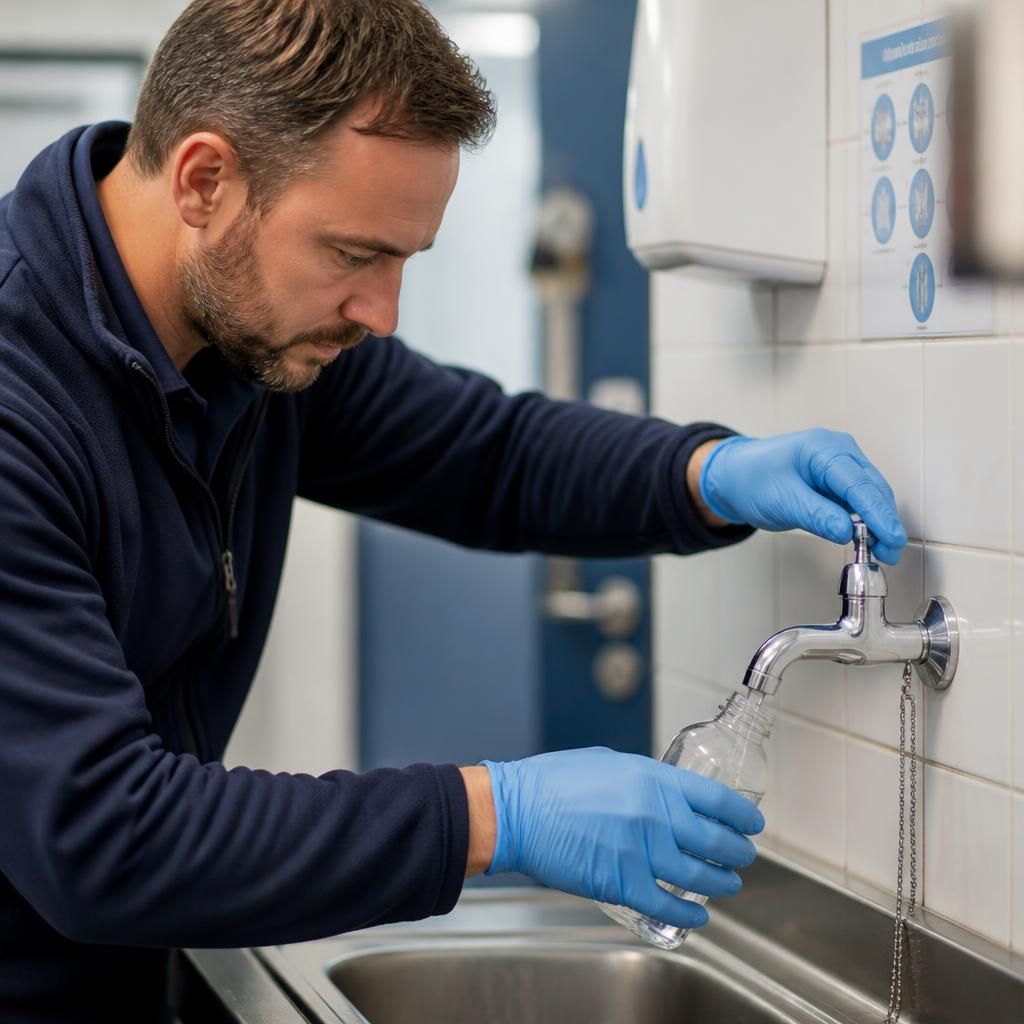
The way water is drawn can change what a Legionella test reveals. A first-draw sample may reflect water that has been standing at the outlet or within nearby fittings, whereas a post-flush sample may provide information about water further within the distribution system. These samples are not interchangeable and should only be compared when the sampling method is clearly recorded.
Where the sampling plan supports it, differences between sample types can help investigators assess whether a finding may be associated with a local outlet or indicate a wider system issue. This gives the result greater practical value than a laboratory report considered on its own, while still requiring the system design, risk assessment and other control evidence to be reviewed together.
Need help interpreting your Legionella water testing results?
If you need help interpreting a Legionella water testing report, speak to Blue Fish Water Management Ltd about the findings and the next steps for your site’s control programme.