
What does Legionella water sampling involve?
Legionella water sampling involves collecting representative water samples from selected points in a hot and cold water system, using controlled procedures to avoid contamination. The samples are then sent to a competent laboratory for analysis, with the results interpreted alongside system conditions and monitoring records.
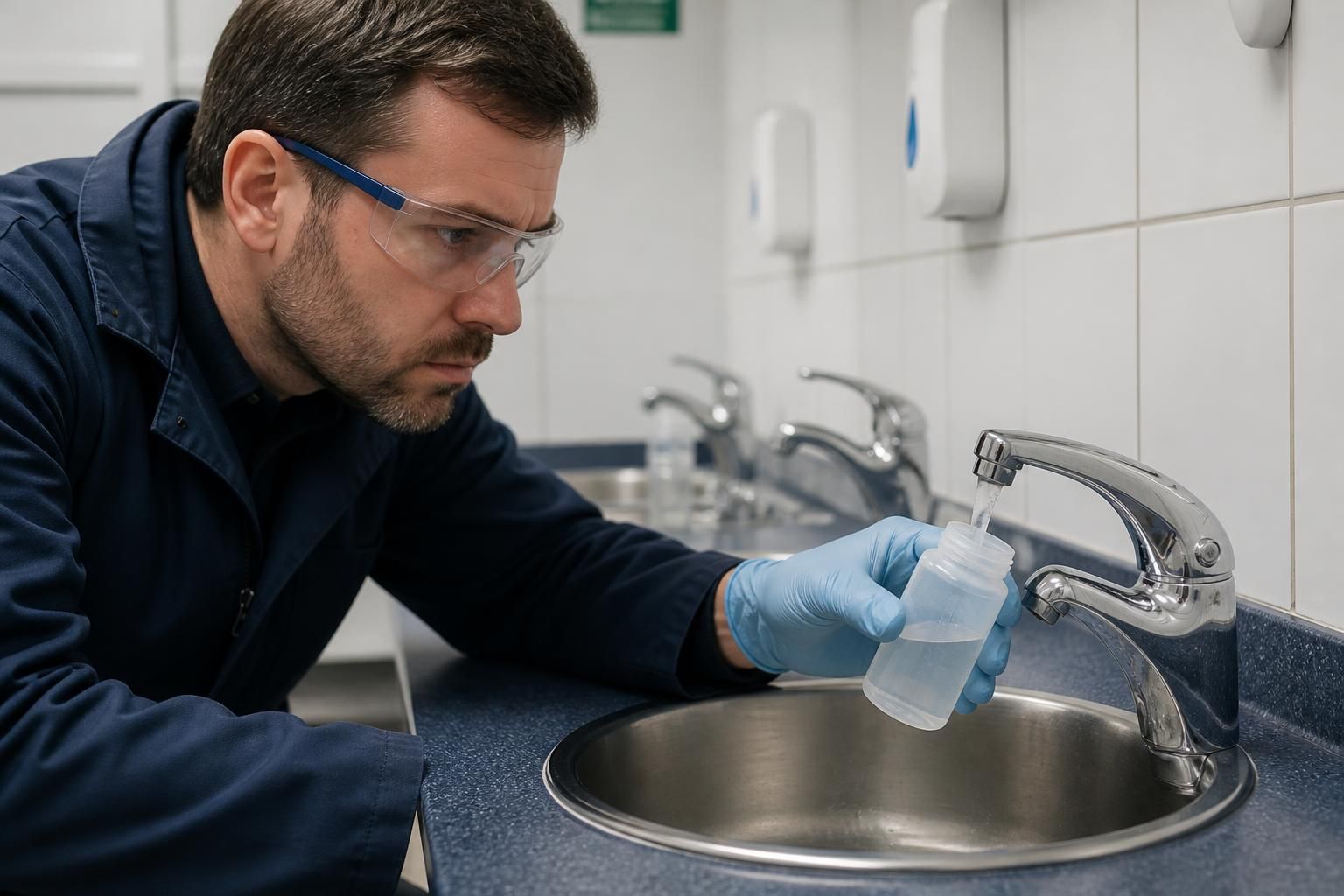
Legionella water sampling is a planned process for selecting representative points in a water system, collecting samples without altering their condition, and having them examined using an appropriate laboratory method. The findings are assessed with information such as outlet temperatures, usage patterns, system design and control records, because a laboratory result is only one part of understanding Legionella risk.
Planning the sampling exercise
Before samples are taken, the person responsible for the water system should identify what the sampling is intended to establish. The purpose may be routine verification, investigation of an elevated result, validation after remedial work, or assessment of a particular risk such as infrequently used outlets or aerosol-generating equipment. The sampling plan should reflect the system’s layout and risk profile rather than relying on a fixed selection of convenient taps.
Points may include sentinel hot and cold outlets, showers, seldom-used outlets, storage tanks, calorifiers, hot water return circuits and other locations where water can stagnate or temperatures may support bacterial growth. Additional points may be selected where there are dead legs, poor circulation, areas of low occupancy, blending valves or a history of control problems. Sampling should cover relevant parts of the system while avoiding an assumption that one outlet represents every branch or building.
Preparing each sample point
Sampling staff use a method designed to minimise contamination and preserve the condition of the water at the time of collection. The outlet may need to be inspected and prepared, with removable fittings, hoses or shower components considered where they could affect the sample. The procedure should be consistent and documented, since cleaning, disinfecting or extensively flushing an outlet immediately beforehand can change what the sample represents.
Depending on the investigation, a sample may be taken before routine flushing or after the outlet has been allowed to run under a defined procedure. These approaches answer different questions. A pre-flush sample can provide information about water held at the outlet, while a post-flush sample can help assess water arriving from the wider distribution system. The method used should be recorded so that results are not compared without considering how the samples were obtained.
Relevant observations are normally recorded at the time of collection. These can include the outlet identity, location, type of fitting, whether it is used regularly, water temperature, the condition of the outlet and any unusual appearance or odour. For hot water systems, temperatures at selected points can help indicate whether storage, distribution and return arrangements are operating as intended. For cold water systems, the sample plan may consider incoming supply, stored water, warming in pipework and points where water remains unused.
Labelling and transport
Each container must be clearly linked to its sample point and sampling record. Information commonly includes the date and time, location, sample type and requested analysis. Samples are handled and transported in accordance with the laboratory’s requirements so that their condition is not compromised before examination. Documentation provides a chain of custody, showing who collected, handled and received each sample and helping the recipient distinguish genuine system findings from possible sampling or handling issues.
Laboratory examination
The laboratory selects a suitable analytical method for the purpose of the work. Legionella culture is commonly used to detect and quantify viable organisms, with the result reported in colony-forming units per litre where appropriate. Other methods may be considered for specific investigations, but their scope, limitations and interpretation differ from culture-based testing.
A laboratory report should be read carefully rather than reduced to a simple pass-or-fail statement. It may identify whether Legionella was detected, provide an estimated concentration or reporting category, and note limitations such as an unsuitable sample, interference or a result requiring confirmation. The significance of a result depends on the type of system, who may be exposed, the potential for aerosol generation and the effectiveness of existing control measures.
What happens when results are received
Results should be reviewed alongside the written scheme, risk assessment, temperature records, inspection findings, cleaning and disinfection history, and previous laboratory results. A negative result does not prove that Legionella is absent from every part of a system, because sampling examines selected points at a particular time. Conversely, a positive result should be investigated in context rather than treated as evidence that every outlet has the same condition.
Where results or observations indicate inadequate control, the response may include checking temperatures and circulation, increasing monitoring, investigating stagnation, cleaning components, carrying out remedial disinfection or taking further samples. The appropriate action depends on the result, system design and exposure risk. Follow-up sampling can help establish whether corrective measures have addressed the identified issue, but it does not replace ongoing control and maintenance.
For organisations, a complete sampling record should retain the sampling plan, point schedule, field observations, laboratory report, chain-of-custody information, interpretation and any actions taken. Keeping these records together creates an auditable evidence trail and supports the responsible person in demonstrating that Legionella control is being monitored and reviewed systematically.
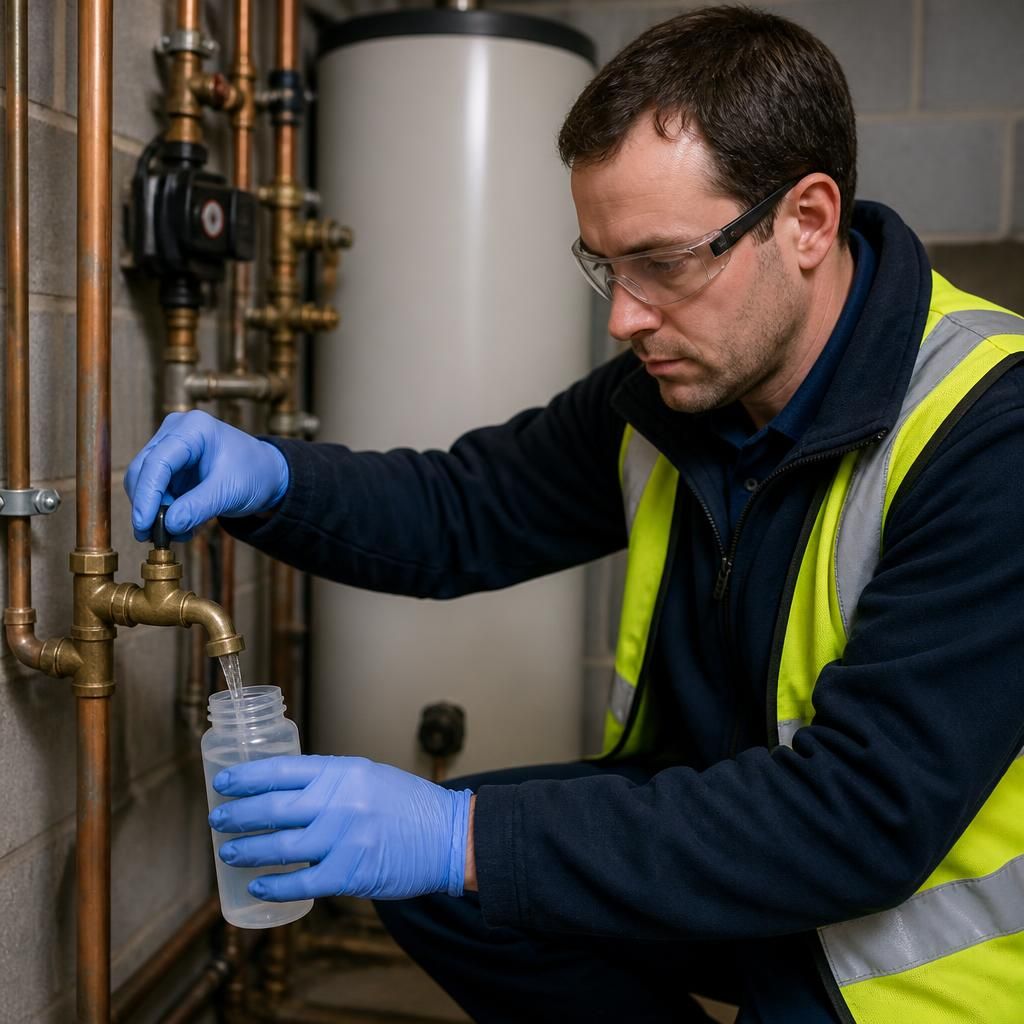
A Legionella water sample measures organisms present in the water at a specific location and time; it does not directly measure contamination attached to surfaces, fittings, tanks or pipework. Legionella can be associated with biofilm and sediment, so a result from flowing water may not describe every source within the system.
Where inspection suggests contamination in a tank, outlet fitting or other component, a competent investigation may consider additional evidence, such as examination of the component or a supplementary swab. These findings should be interpreted separately from water results, because each sampling method answers a different question. The laboratory report and site observations should therefore be reviewed together when deciding whether further investigation or remedial work is appropriate.
Discuss your Legionella water sampling requirements
Discuss your Legionella water sampling requirements with Blue Fish Water Management Ltd to identify an appropriate sampling approach for your water system and compliance needs.