
What Should a Water Testing Laboratory Report Include?
A water testing laboratory report should identify the sample, collection details and analytical methods, then present the test results with units, detection limits and any relevant reference or action levels. It should also state the laboratory’s details, quality or accreditation information, and clearly explain whether the findings indicate a result requiring further investigation or control measures.

A complete water testing laboratory report should provide a traceable, reviewable record of what was examined, how the work was controlled and what the findings mean for the water system. It should contain enough information for a responsible person, consultant or auditor to understand the result without relying on an unexplained verbal summary.
Report control information is an important starting point. This normally includes a unique report or job reference, the issue date, the number of pages and the identity of the person who authorised the report. If a report is amended, the revised version should be clearly identified, with the change explained. This prevents an old result being used accidentally when several samples or report versions relate to the same site.
The report should also define the scope of the laboratory work. It should make clear which parameters were requested, which were actually examined and whether any requested analysis was unavailable, cancelled or excluded. Where a laboratory has used a subcontractor, that arrangement and the relevant part of the work should be transparent. Any departures from the planned procedure, such as an unsuitable sample container or a delay affecting analysis, should be recorded rather than hidden in a general comment.
Information about sample receipt helps the reader judge whether the result can be relied upon. A well-controlled report may record when the laboratory received the sample, whether the container and seal were acceptable, and whether the sample was received in a condition suitable for examination. If a problem could have affected the finding, the report should explain its possible significance and apply an appropriate qualification to the result.
Quality control information is also relevant, particularly where the result will support a compliance decision or an investigation into a water system. The report may refer to internal control checks, method performance, contamination controls or other quality checks undertaken during the analysis. It should identify any failed control or technical issue that affects interpretation. A result should not appear definitive if the laboratory has identified a limitation that could materially alter its meaning.
For microbiological testing, the report should distinguish clearly between a detected organism, an enumeration or concentration, and a result below the laboratory's reporting threshold. Terms such as “not detected”, “less than” and “estimated” do not necessarily mean the same thing. In legionella testing, the report may need to state the organism grouping or species information available from the examination, together with any qualifiers that limit what can be concluded. The wording should not imply that a non-detect result proves that an organism is permanently absent from the system.
Results are most useful when they can be linked to the operational context of the water system. A report may therefore include the relevant building, outlet, system or sampling point reference, provided these details are controlled consistently with the sampling records. Where repeat testing has taken place, a clear comparison with earlier reports can help identify whether findings are isolated, recurring, increasing or reducing. Trend information supports investigation, but it does not replace an assessment of the system's design, use, temperature control, maintenance and management arrangements.
A report should separate laboratory evidence from professional judgement. The laboratory can explain the technical meaning and limitations of its findings, while a competent water safety adviser or responsible person may need to decide whether further sampling, remedial work, operational changes or a review of the risk assessment is appropriate. A positive result should not be treated as a complete diagnosis of the system, and a negative result should not be used as the sole basis for assuming that all legionella controls are effective.
Before accepting a report, the reader should check that:
- the report reference and issue status match the associated sampling records;
- the requested tests and any exclusions are clear;
- sample receipt or technical problems are disclosed;
- the result terminology and qualifiers are understandable;
- any organism identification or quantification is described precisely;
- quality-control exceptions or limitations are explained; and
- the report distinguishes measured evidence from recommendations requiring wider system assessment.
For commercial premises, retaining the report with the water safety plan, monitoring records and corrective-action documents creates a more useful audit trail than storing the result alone. Where the wording is unclear, an experienced water hygiene professional can explain the technical limitations and place the laboratory finding in the context of the building's risk assessment and control regime.
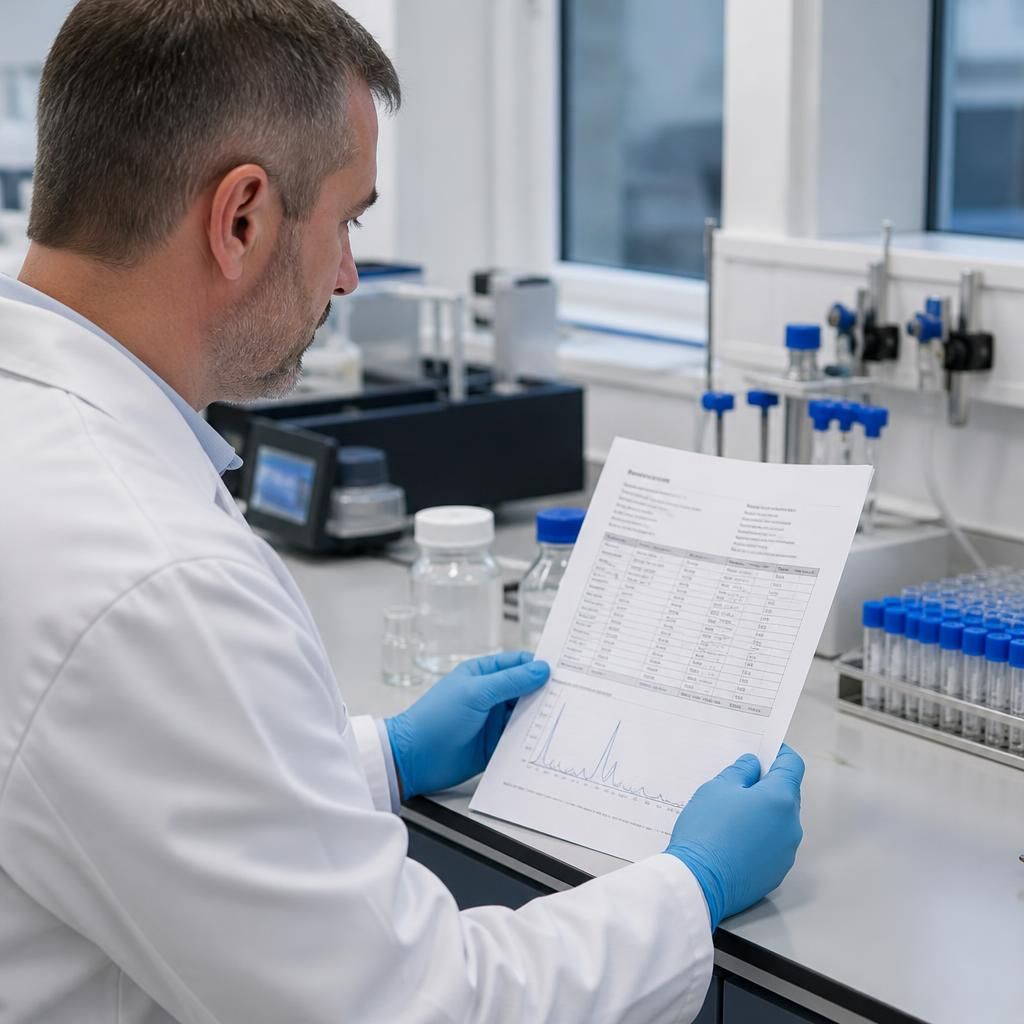
A water testing laboratory report describes the sample examined; it does not automatically represent every outlet, storage vessel or branch of the building’s water system. The scope of the sampling plan therefore matters when the findings are reviewed. A result from one outlet may identify an issue at that location without proving that the same condition exists throughout the premises.
When reading the report, compare the locations tested with the areas identified in the water safety plan and note any parts of the system that were not sampled. This helps the responsible person decide whether the existing evidence is sufficient or whether additional samples are needed to investigate a wider pattern.
Need Help Interpreting a Water Testing Laboratory Report?
If a laboratory report is unclear or its findings need to be considered alongside wider water system controls, speak to Blue Fish Water Management Ltd for practical guidance on the appropriate next step.