
What Happens After a Positive Legionella Water Test?
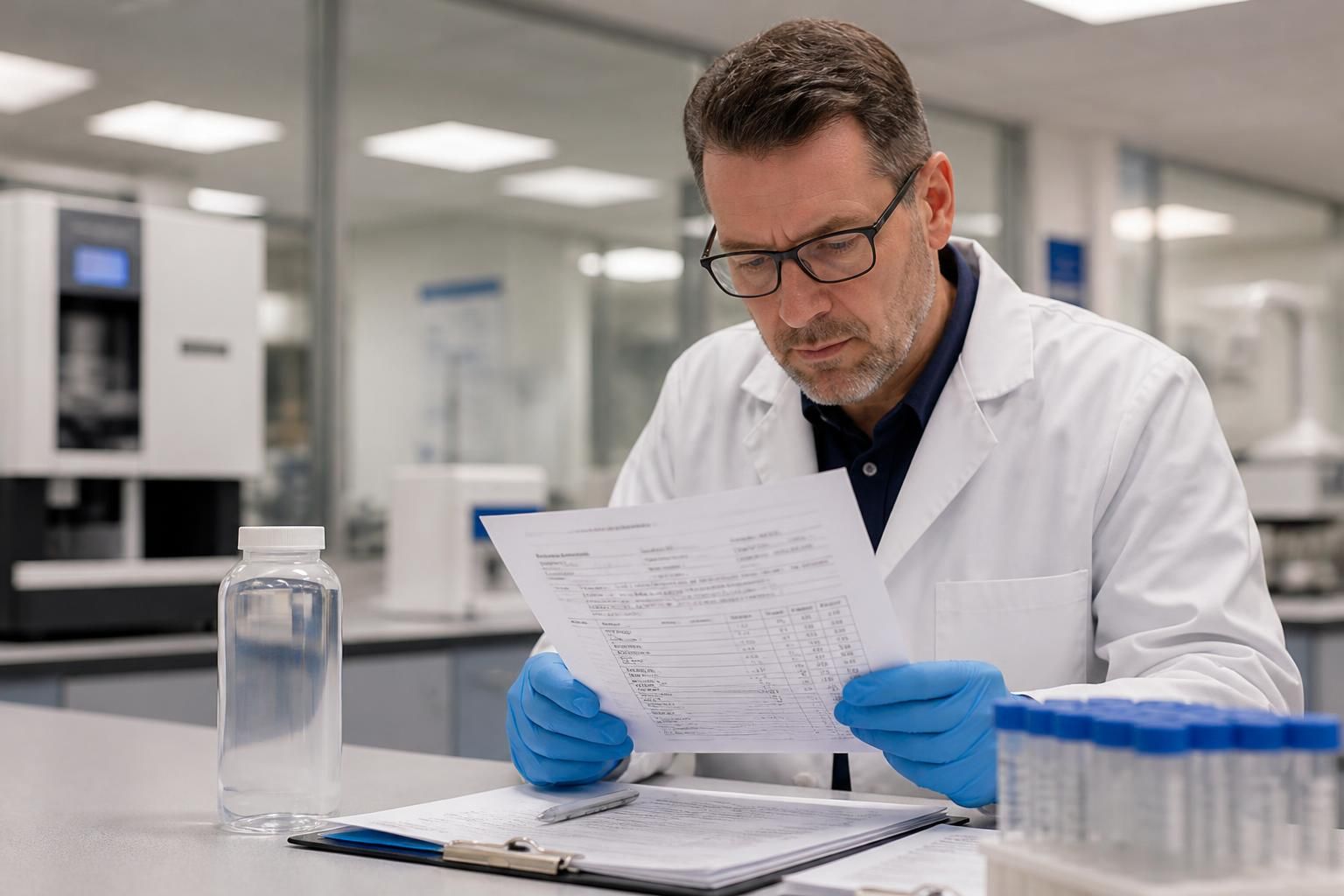
A positive legionella water test means that legionella bacteria have been detected in the submitted sample. It does not, by itself, show the level of risk throughout the whole water system, confirm the source of contamination or diagnose illness. The result should therefore be assessed alongside the sample location, bacterial count, system design, temperature records, usage patterns and the vulnerability of people who may be exposed.
1. Validate and interpret the result
The first step is to check the laboratory report carefully. This includes confirming the sampling point, date and time of collection, sample type, test method, reporting units and any comments from the laboratory. The result should be compared with previous results and with the site’s water safety management arrangements.
A single positive sample may indicate local contamination, while results from several outlets or storage vessels can suggest a wider system problem. A low-level finding is not automatically harmless, and a higher result does not provide enough information on its own to determine the exact action required. Interpretation should be undertaken by a competent person who understands the system and the relevant UK guidance.
2. Identify who may be exposed
The investigation should consider how people could come into contact with contaminated water. Legionella presents the greatest concern where water can be released as fine aerosol, such as from showers, spray taps, spa equipment or other aerosol-generating outlets. The assessment should also consider people who may be more susceptible to serious infection, including older individuals, smokers and those with certain underlying health conditions or weakened immune systems.
Depending on the result and the circumstances, proportionate precautions may include taking an affected shower or outlet out of use, preventing aerosol generation, restricting access to a contaminated area or using an alternative water supply. A positive result does not automatically mean that an entire premises must close. Controls should be based on the evidence and documented by the responsible person and competent adviser.
3. Check the water system for likely causes
The investigation should trace how water moves through the system and identify conditions that allow legionella to grow. Relevant checks include:
- hot-water storage and distribution temperatures;
- cold-water temperatures and the condition of storage tanks;
- infrequently used outlets, dead legs and redundant pipework;
- areas of stagnation, low flow or poor circulation;
- scale, sediment, biofilm or corrosion within tanks, calorifiers and pipework;
- thermostatic mixing valves and other components that can create favourable growth conditions;
- recent alterations, shutdowns, maintenance work or changes in building occupancy; and
- whether flushing, temperature checks, cleaning and other control tasks have been completed as specified.
This stage is important because treating the water without correcting the underlying cause may lead to recurring positive results. The investigation should record what was examined, what was found and why the selected corrective action is considered suitable.
4. Complete appropriate remedial work
Remedial action depends on the system and the significance of the result. It may involve thermal disinfection, chemical disinfection, cleaning and disinfecting storage tanks, removing redundant pipework, repairing circulation faults, improving insulation, correcting temperatures or restoring an effective flushing regime. Components such as showerheads, hoses, strainers and mixing valves may also require cleaning, disinfection, replacement or closer monitoring.
Disinfection should be planned and controlled rather than treated as a substitute for system management. Occupants and relevant contractors may need clear instructions about restrictions, safe use and the return of outlets to service. Any work affecting water quality or building operations should be recorded, including the method used, the parts of the system treated and any verification checks completed afterwards.
5. Arrange follow-up sampling
Follow-up samples are used to determine whether the remedial measures have controlled the problem. The timing and locations should be decided by a competent person and should reflect the nature of the intervention. Sampling too soon, before the system has stabilised, may not provide a meaningful indication of ongoing control.
Samples should be collected using a suitable method and submitted to a laboratory competent to perform the required legionella analysis. The follow-up plan may include the original positive outlet, representative points elsewhere in the system and locations selected during the investigation. A negative result is useful evidence, but it should not be treated as proof that the system can no longer support legionella growth. Routine control measures and risk-based monitoring still need to continue.
6. Update the water safety documentation
The outcome should be reflected in the water hygiene records and, where necessary, the legionella risk assessment. Records should normally include the laboratory report, investigation findings, decisions made, remedial work, disinfection records, follow-up results and any changes to control procedures.
The responsible person should also review whether roles, training, monitoring frequencies and escalation arrangements remain suitable. If the result exposed weaknesses in temperature management, flushing, contractor oversight or record keeping, those weaknesses should be addressed rather than simply noted.
7. Consider health and regulatory actions
If anyone develops symptoms that could be associated with legionnaires’ disease after potential exposure, they should seek medical advice and explain the possible exposure to legionella. A water test cannot establish whether an individual has been infected. Suspected cases and any required notifications should be handled through the appropriate healthcare and public health channels.
For workplaces and other managed premises, the response should align with the organisation’s legal duties and the principles set out in relevant UK health and safety guidance, including the control of legionella in water systems. Where the result is complex, widespread, recurrent or associated with vulnerable occupants, specialist advice can help determine the investigation, remedial programme and evidence needed to demonstrate effective control.
In practical terms, the correct response is not simply to repeat the test. The result should lead to a proportionate assessment of exposure, targeted control of affected outlets, investigation of the system, properly recorded remedial work and evidence-based follow-up. A competent water hygiene provider can support this process through laboratory testing, compliance review, system monitoring and technical remedial advice.
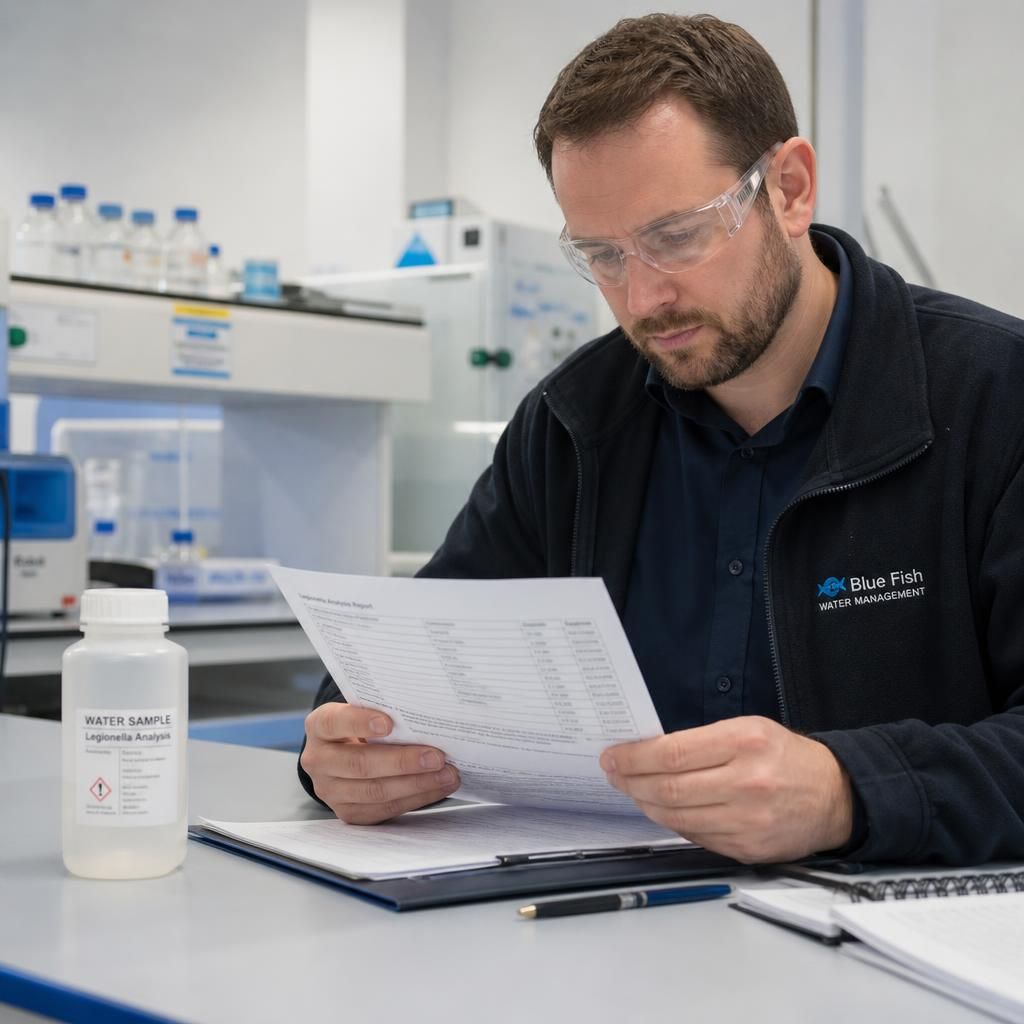
After a positive legionella result, responsibility for each action should be assigned clearly. The responsible person should ensure that site staff, maintenance teams, cleaning contractors and relevant managers understand which outlets or areas are affected, what temporary controls apply and who must authorise their return to service.
A clear handover is particularly important where several people manage the water system. Instructions should be recorded with the investigation and remedial-work documents, including any restrictions, completion checks and outstanding actions. This creates a consistent operational response and reduces the risk of an affected outlet being used before the agreed controls have been completed.
Discuss Your Positive Legionella Test
If you need help deciding how to proceed after a positive legionella water test, discuss the result with Blue Fish Water Management Ltd. Their specialists can advise on the next steps for your premises and the evidence needed to support your water safety arrangements.