
How Are Water Testing Samples Collected for Laboratory Analysis?
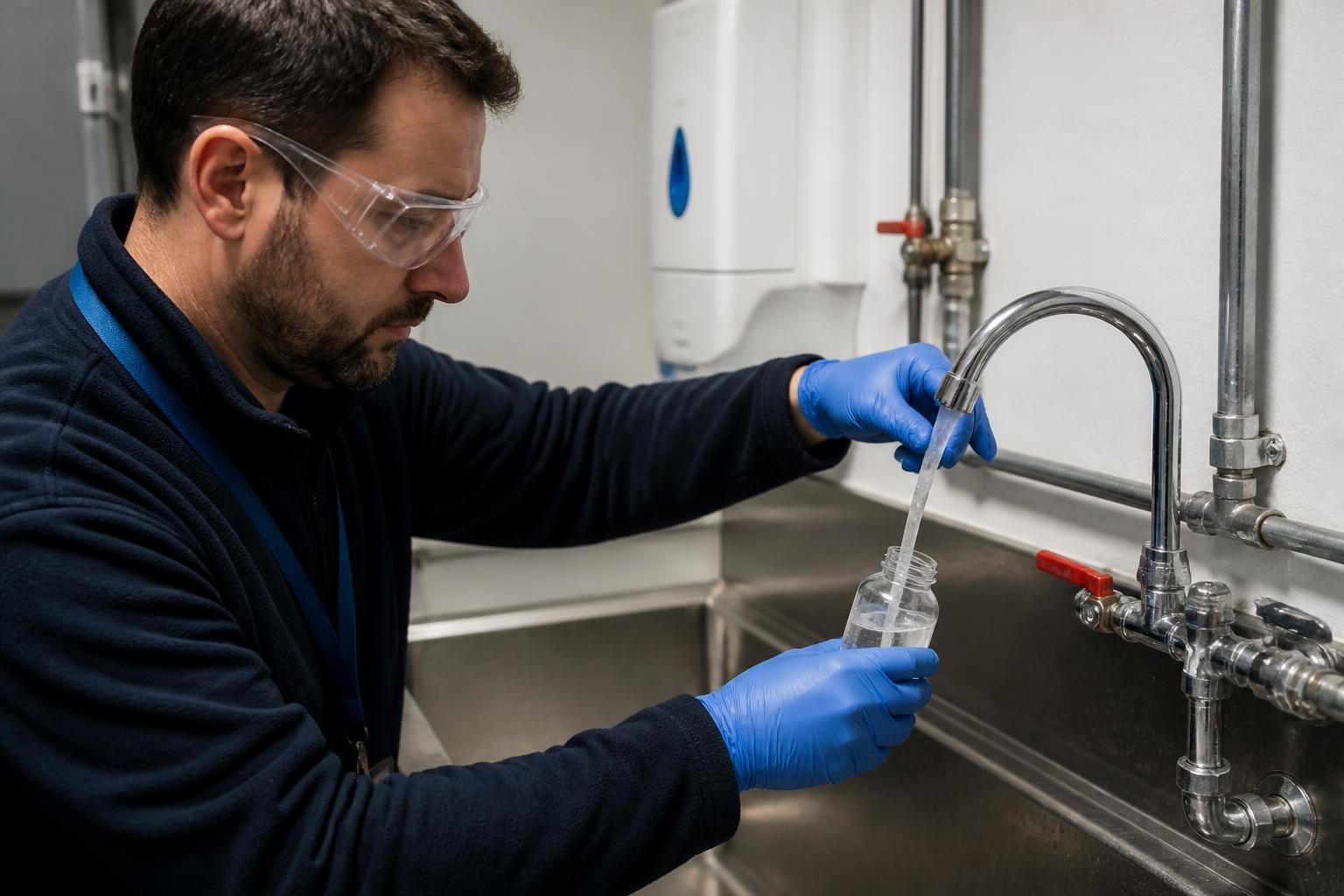
Water testing samples are collected through a planned, documented process that links each bottle to a specific point in the water system. The aim is to obtain a sample that reflects the condition being investigated, while also recording enough information for the laboratory to assess it correctly.
Before sampling begins, the sampler normally reviews the purpose of the investigation and the system layout. This determines which outlets or components should be included. A routine monitoring programme may cover representative hot and cold outlets, storage vessels, calorifiers, return loops, showers or points that are used infrequently. An investigation may instead focus on locations associated with a temperature problem, suspected stagnation, previous positive results or a particular part of the distribution system.
The sampling method depends on what the test is intended to show. A sample taken immediately as water first leaves an outlet can provide information about water held within the fitting, hose or local pipework. A sample collected after the outlet has run for a specified period may give a better indication of water in the wider distribution system. For legionella investigations, both approaches may be relevant, but the choice should follow the sampling plan and the laboratory's technical instructions. These samples should not be treated as interchangeable because they answer different questions.
Sampling personnel may also take measurements at the outlet before or alongside the sample collection. Depending on the investigation, these can include water temperature, disinfectant residual, pH, appearance and flow conditions. The sampler should record whether the outlet is hot or cold, whether a thermostatic mixing valve or other fitting is present, and whether the point has been used, cleaned or altered recently. Such observations help the laboratory and water safety adviser interpret a result in its operational context.
Different analyses require different containers and handling arrangements. Microbiological samples generally use containers prepared for that purpose, while chemical testing may require a different bottle, preservative or minimum volume. Some containers include a substance that neutralises residual disinfectant so that it does not continue affecting the sample after collection. The sampler must not decant water between containers or combine samples unless the method specifically permits it, as this can alter the result or introduce contamination.
For a reliable record, every sample is linked to information such as:
- the site, building or water system;
- the exact outlet or sampling location;
- the date and time of collection;
- the type of sample and the requested analysis;
- relevant temperature or system observations; and
- the sampler's identification and any associated sample reference.
This information forms part of the chain of custody. It allows a reported result to be traced back to the correct location and helps distinguish a genuine change in water quality from a labelling or recording error. Where several samples are collected during one visit, clear sequencing is particularly important.
Samples are kept within the conditions specified for the particular analysis and sent with the accompanying request information. The laboratory will normally check the container, sample volume, identification, condition and associated paperwork when the samples arrive. A sample may be queried or rejected if it is damaged, leaking, incorrectly identified, outside the method's acceptance requirements or unsuitable for the requested test. In that situation, recollection may be necessary rather than relying on a result of uncertain validity.
Collection technique also matters. The outlet may need preparation in accordance with the sampling protocol, but cleaning, disinfection or removal of an attachment can change what the sample represents. Aerators, hoses, showerheads and filters should therefore only be removed or treated where the agreed method requires it. The sampler should avoid touching the inside of the container or lid and should prevent contact between the bottle and the outlet. These controls protect the sample from external contamination without masking the condition that the investigation is intended to assess.
For legionella testing, the selected locations and collection approach should be consistent with the site's risk assessment and water safety plan. A single result represents the sampled point at the time of collection; it does not automatically describe every outlet or prove that the whole system has the same condition. Results are therefore considered alongside the sampling locations, system temperatures, usage patterns, previous results, control measures and any remedial work.
A well-designed sampling schedule can include baseline monitoring, follow-up samples after remedial work and additional sampling where results or system changes indicate a need. Repeating the same method at comparable locations makes trends easier to assess. If the purpose, locations or collection method changes, the results may not be directly comparable, so the change should be recorded and explained.
For commercial premises, sampling is best managed as part of the wider water hygiene programme rather than as an isolated laboratory task. A competent water safety professional can help define the sampling objectives, select appropriate points, specify the analyses and review whether the laboratory findings support further investigation or control measures.
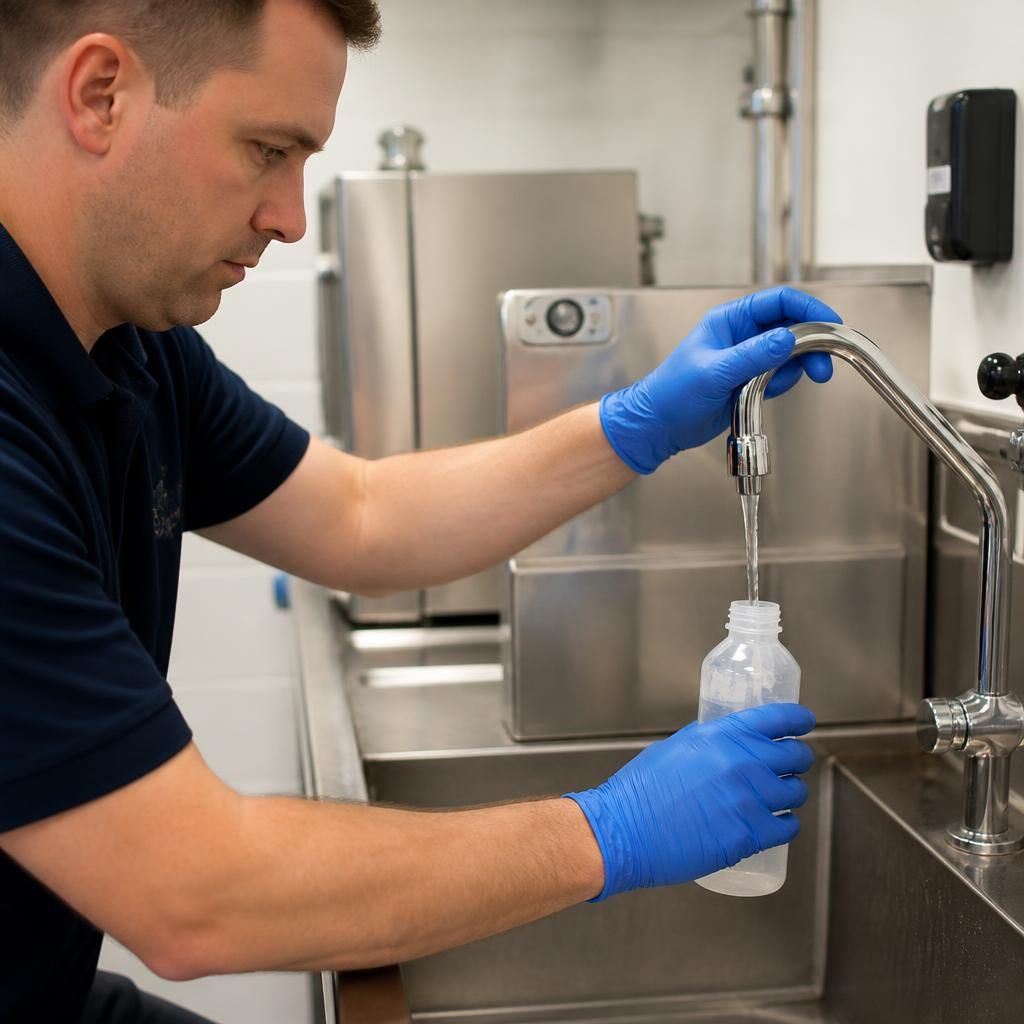
For investigations where sample integrity is particularly important, the sampling plan may include quality-control samples alongside the water samples themselves. A field blank contains sterile water that is handled at the sampling location but is not taken from the building’s water system. If it later shows contamination, the sampling equipment, handling process or surroundings may need to be examined.
Duplicate samples can also be collected from the same location using the same method. Comparing their results helps identify unusual variation or a possible collection issue. These controls are selected according to the purpose of the investigation and the laboratory method; they are not a substitute for sampling the outlets identified in the water safety assessment.
Discuss Your Water Testing Requirements
Discuss your water testing requirements with Blue Fish Water Management Ltd to identify an appropriate laboratory analysis and sampling approach for your commercial water system.