
When is professional support needed for a legionnaires test kit?
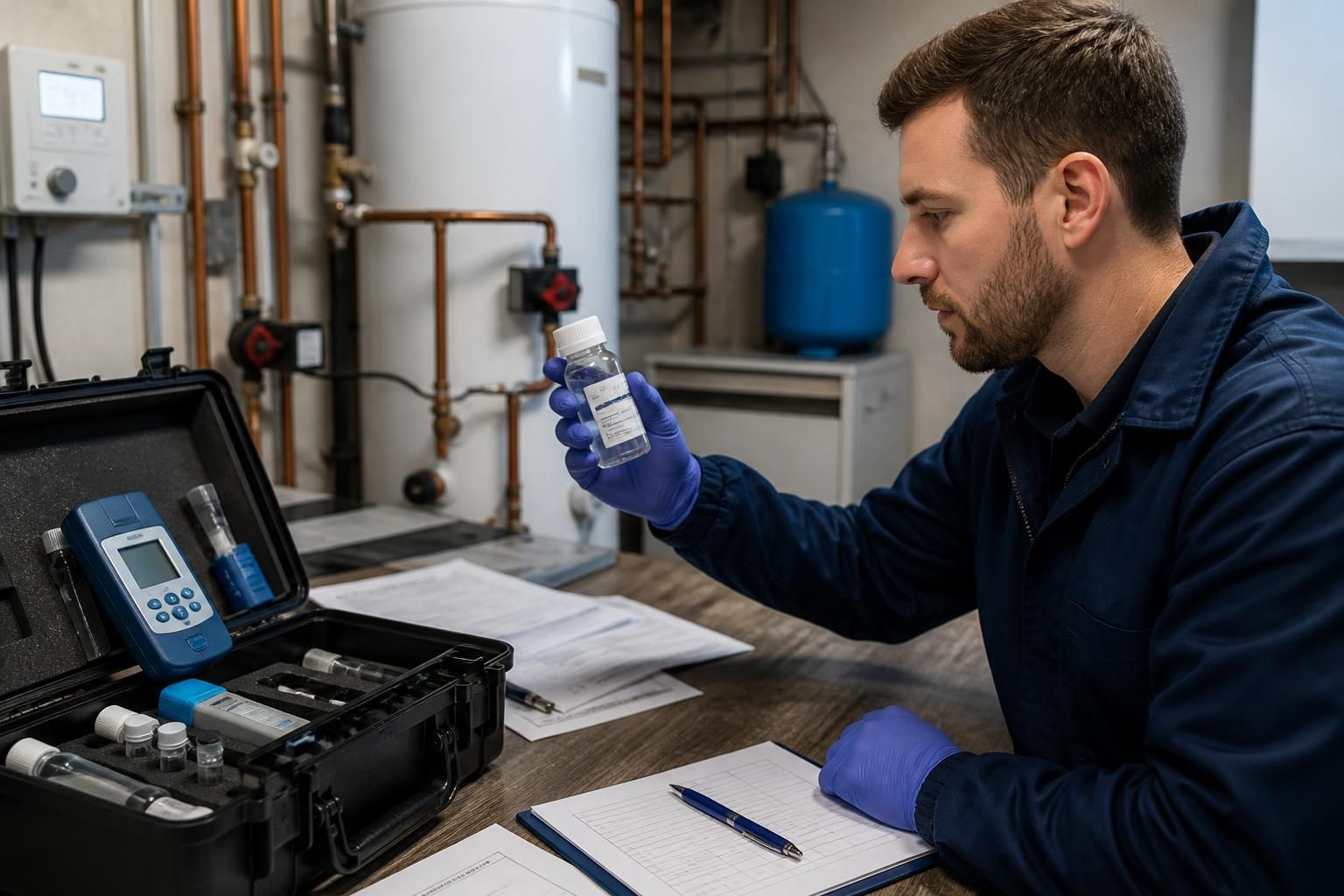
Professional support is needed when a legionella test kit cannot provide the evidence required to make a safe, defensible decision about a water system. A trained water hygiene professional can determine whether testing is appropriate, plan representative sampling, arrange suitable laboratory analysis and relate the findings to the system’s risk assessment and control measures.
Expert input is particularly important in the following situations:
- The test is being used for compliance purposes. A kit result may be useful for screening or indicating that further investigation is warranted, but it may not meet the evidential, sampling or reporting requirements expected for regulatory compliance, client assurance or formal risk management. Professional advice can establish what type of test and report is appropriate.
- Samples need to represent the whole system. Legionella risk can vary between incoming water, storage tanks, calorifiers, distribution outlets, showers, low-use outlets and areas where water temperatures are difficult to control. Selecting convenient sample points alone may give a misleading picture. A specialist can develop a sampling plan based on the system design and usage.
- The property or installation has higher-risk features. Large or multi-building premises, healthcare and care settings, accommodation, industrial processes, spa facilities, cooling systems and sites with vulnerable occupants may require a more structured assessment than a basic kit can provide.
- A test result conflicts with other evidence. For example, a result may not fit the recorded temperatures, maintenance history, water usage or previous laboratory findings. This should prompt a review of sampling technique, test limitations and system conditions rather than an unsupported conclusion that the water is safe.
- There is a suspected case of legionellosis or an investigation by an authority. Testing should be coordinated with the relevant responsible persons and competent advisers. A kit used independently is unlikely to provide the complete environmental evidence needed for an investigation.
- Remedial work may be required. Where findings lead to disinfection, temperature changes, alterations to storage or removal of redundant pipework, professional input helps ensure that the proposed action addresses the underlying risk and that verification testing is suitable afterwards.
Sampling technique is another reason to seek assistance. The result depends on more than the device or test method. The sample point, flushing or non-flushing procedure, container handling, labelling, transport conditions and time between collection and analysis can all affect its reliability. A specialist can document these details and identify when a sample should be repeated.
It is also important to distinguish a screening result from a quantified laboratory result. Some kits provide an indication that a target organism or condition may be present; they do not necessarily identify the species, measure the concentration accurately or show how risk is distributed throughout the system. Where a numerical result, confirmation or formal record is required, professional support should include an appropriately selected laboratory service and a report explaining the findings.
Before relying on a kit, the responsible person should consider:
- what decision the result is intended to support;
- whether the method is suitable for the water system and sample type;
- who will take the sample and whether they are competent to do so;
- whether the result will be accepted by the client, regulator, auditor or other relevant party;
- what action will follow each possible result; and
- how the outcome will be recorded within the water safety management arrangements.
Professional help is therefore not limited to interpreting a positive finding. It may be needed before testing, to select a defensible method and sampling plan, and afterwards, to assess the result alongside system conditions, control records and the findings of the legionella risk assessment. This approach prevents a single kit result from being treated as proof that an entire water system is safe or unsafe without sufficient supporting evidence.
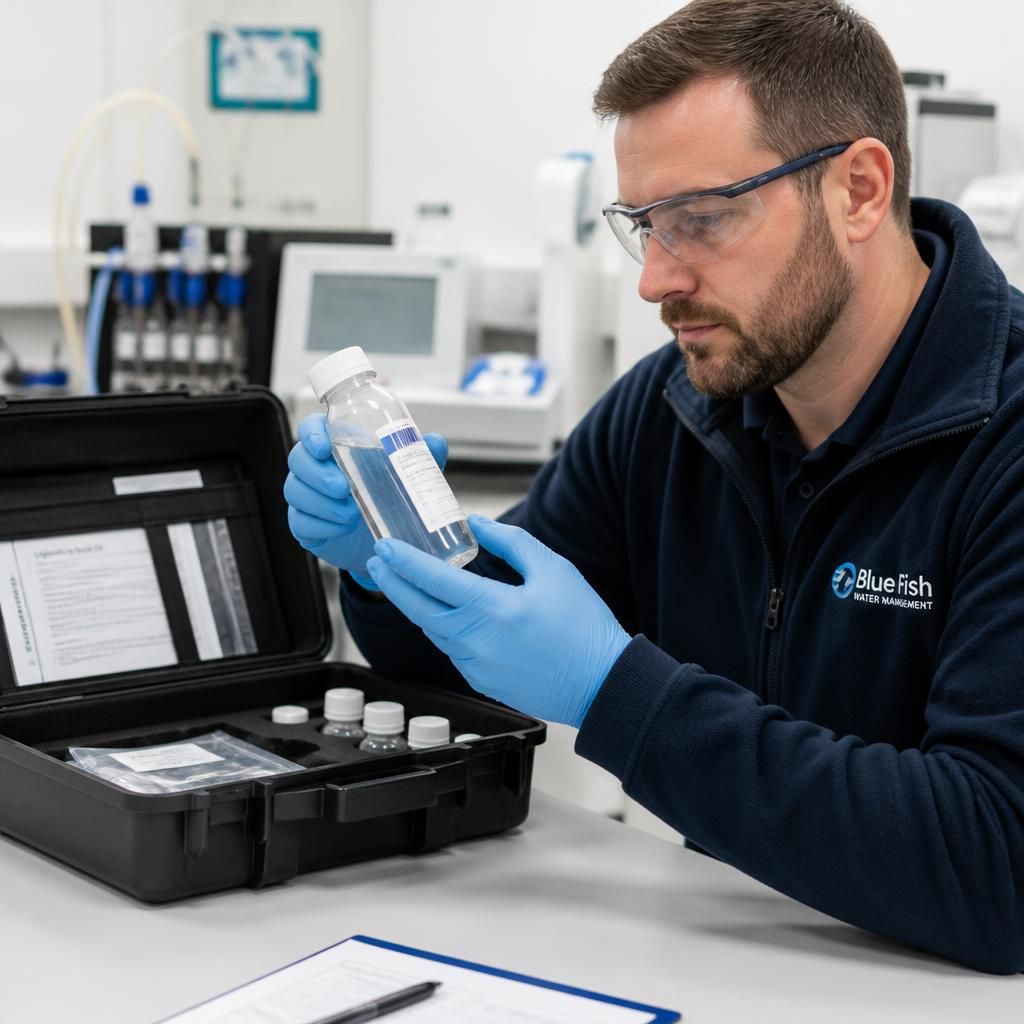
Professional support is advisable when there is doubt about the condition or validity of the legionnaires test kit itself. Expired reagents, incorrect storage, damaged components or a failed control can make a result unreliable, even when the sampling procedure appears to have been followed correctly.
A water hygiene specialist can check the kit’s instructions, expiry information, storage history and control requirements before deciding whether the result can be considered. If these checks identify a problem, the appropriate response may be to invalidate the test and use a suitable alternative rather than interpreting a doubtful result as evidence about the water system.
Need help interpreting a legionnaires test kit?
If you are unsure whether a legionnaires test kit can support a safe, defensible decision, speak to Blue Fish Water Management Ltd about the appropriate next step. Professional advice can help determine whether further assessment or formal testing is needed.