
Can a legionnaires test kit confirm whether water is safe?
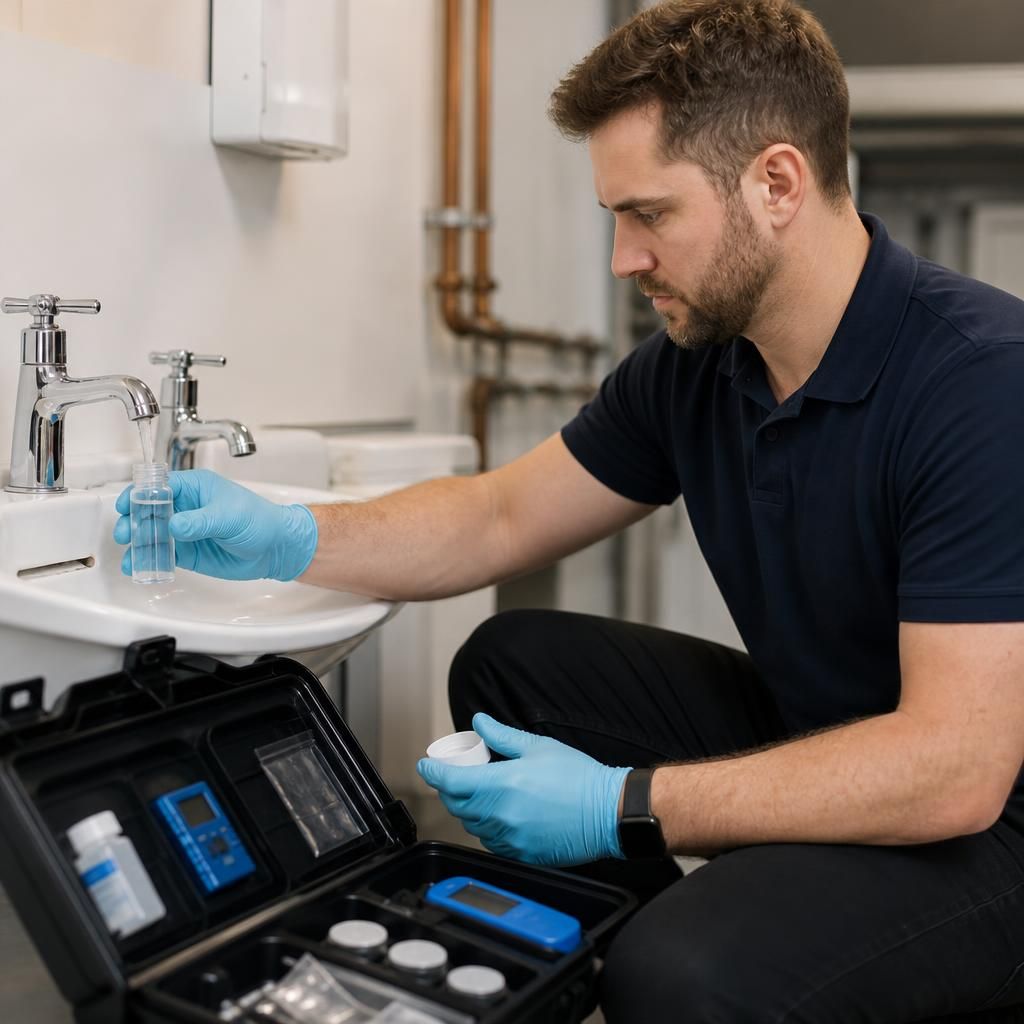
No. A legionnaires test kit may indicate whether Legionella is present in a particular water sample, but it cannot by itself confirm that an entire water system is safe. Reliable assurance also depends on appropriate sampling, laboratory analysis where required, interpretation of results and effective control of the system.

A negative or low-level result from a legionella test kit does not establish that water is safe. It describes the sample tested under the conditions and method used. Legionella can be unevenly distributed within a system, so a result may not represent other outlets, storage vessels, pipework or areas where biofilm has developed.
What a test result can tell you
Depending on the kit, testing may indicate the presence of Legionella organisms, detect genetic material, or identify a particular type of Legionella. These methods are not interchangeable. Some rapid tests have a narrower detection range than laboratory culture, while molecular methods may detect DNA from organisms that are no longer viable. The test method, sample volume, detection limit and handling conditions all affect what the result means.
A positive result can therefore require further investigation rather than being treated as a complete description of the system. A negative result can also be misleading if the sample was taken from an unsuitable location, collected after recent flushing or disinfection, delayed in transit, or affected by sampling technique. Results should be interpreted alongside the test kit’s instructions and the purpose of the sampling exercise.
Why one sample is not a system-wide assessment
Legionella risk is influenced by the condition and operation of the whole water system. Relevant factors include:
- water temperatures and whether hot and cold water are being maintained appropriately;
- low-use outlets, dead legs, redundant pipework and areas of stagnation;
- storage tanks, calorifiers, showers, taps and other aerosol-generating outlets;
- scale, sediment, corrosion and biofilm that can provide favourable conditions for bacteria;
- the effectiveness and consistency of control measures; and
- the vulnerability of people who may be exposed.
A test kit does not inspect these conditions or confirm that control measures are working. Water can also present a management risk even when Legionella is not detected in one sample, because conditions may allow growth between sampling points or at a later date.
What provides stronger assurance
Meaningful assurance comes from combining test results with a suitable legionella risk assessment and documented control programme. Sampling should be planned around the system design, use, risk areas and assessment findings rather than carried out at convenient outlets alone. Samples should be collected using an appropriate method, labelled accurately and handled in accordance with the laboratory or test procedure.
Where a reliable determination is required, samples may need to be submitted to a competent laboratory using an appropriate recognised method. Professional interpretation is particularly important where results are unexpected, exposure could be significant, the system is complex, or remedial action may be required. Laboratory findings should be considered with temperature records, maintenance information, inspection findings and any history of contamination or control failure.
How to respond to the result
- Do not treat a negative result as permission to stop routine monitoring or maintenance.
- Check whether the sample location and method were suitable for the question being investigated.
- Review the result against previous findings and the system’s risk assessment.
- Investigate positive, unexpected or inconsistent results before deciding on corrective action.
- Record the sample point, date, method, conditions, result and any action taken.
- Reassess the system after remedial work or a significant change in operation.
In practice, a legionnaires test kit is best regarded as one source of evidence within a wider water safety process. It can support investigation and monitoring, but confirmation that a system is being managed safely depends on competent assessment, suitable control measures, representative evidence and ongoing review.
A legionnaires test kit assesses a water sample; it does not assess whether anyone has been exposed to Legionella or whether a person has developed an infection. Environmental testing and medical diagnosis are separate processes, so a test result must not be used to confirm or rule out illness.
This distinction is important when reviewing an incident or suspected exposure. A detected organism does not show that a particular person became ill, while a non-detected result cannot establish that exposure did not occur. Any health concerns should be managed through appropriate medical advice, while the water system is investigated through the relevant safety and testing procedures.
Need help interpreting a Legionella test kit result?
If you are unsure how to interpret a Legionella test kit result, speak to Blue Fish Water Management Ltd about the evidence needed to assess your water system and decide on appropriate next steps.