
What can legionella water testing kits tell facilities teams?
Legionella water testing kits can provide an indication of conditions that may support bacterial growth, such as water temperature, disinfectant levels and other system parameters. They support routine checks and early investigation, but do not replace validated laboratory analysis when reliable legionella identification or compliance evidence is required.
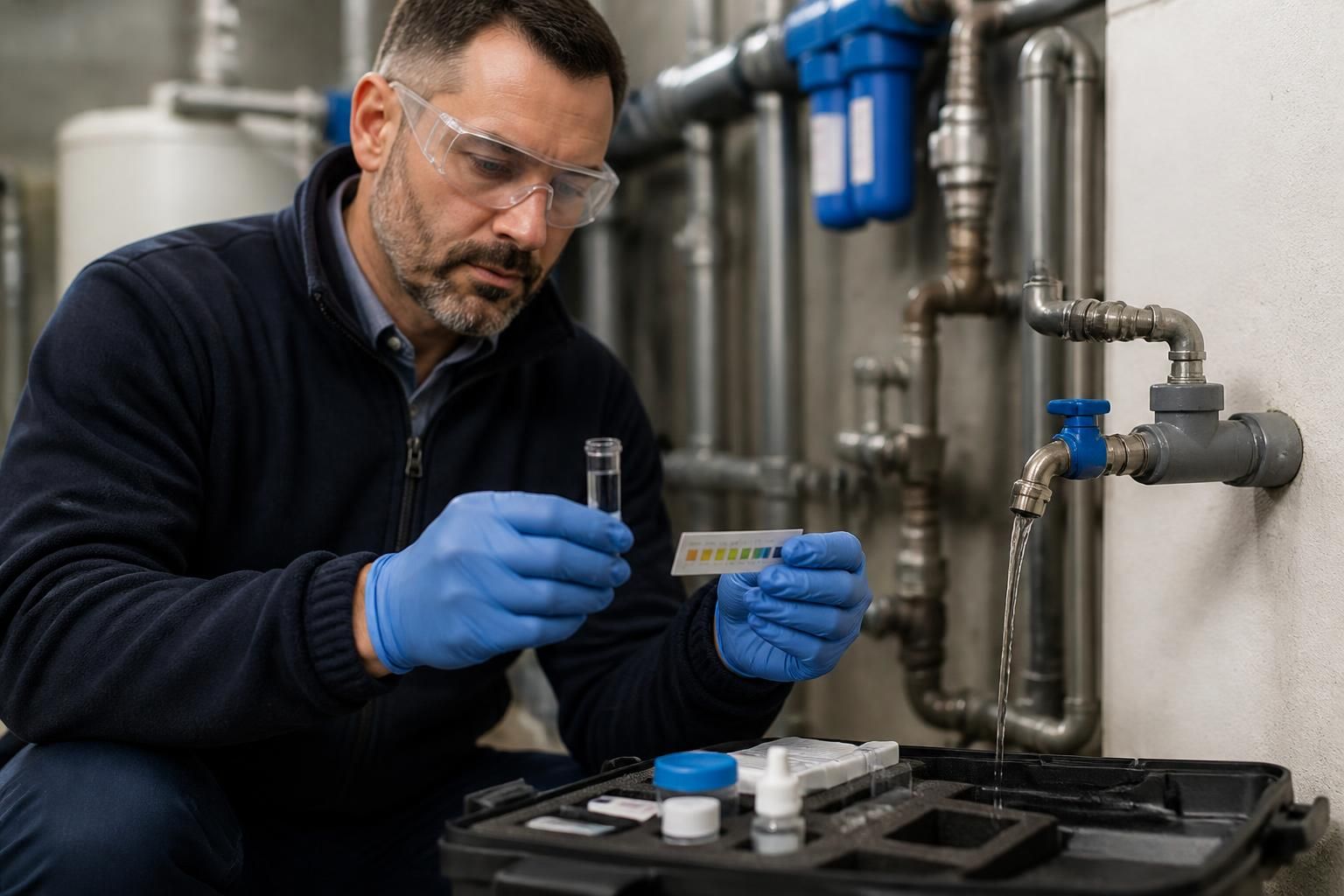
Legionella water testing kits give facilities teams a snapshot of water-system conditions and help identify changes that may warrant investigation. Their main value is operational: they can show whether controls appear to be holding steady, highlight unusual results and support decisions about follow-up sampling or remedial action. They do not, by themselves, establish whether a system contains Legionella or provide definitive compliance evidence.
They can help teams understand:
- whether conditions at a particular outlet or part of the system differ from the expected operating profile;
- whether readings are changing over time rather than remaining consistent;
- whether control measures may not be working as intended;
- whether a storage vessel, distribution route or outlet needs closer examination; and
- whether further investigation should be prioritised within the water safety plan.
The result is only meaningful when it is linked to the location, outlet type, system design and operating conditions. A single reading taken without that context can be misleading. For example, an unusual result may relate to local stagnation, infrequent use, a recently altered control setting, sampling technique or a genuine change in system performance. Facilities teams should therefore record the point sampled, date, relevant system conditions and any maintenance or remedial work taking place at the time.
Repeated measurements are generally more useful than an isolated result. A properly maintained record can reveal trends, such as gradual drift from expected conditions or recurring variation at one part of a building. Trend information helps the responsible person decide whether to inspect outlets, review flushing arrangements, check control equipment, revisit maintenance procedures or obtain a more detailed assessment. It can also provide evidence that monitoring tasks have been carried out, although a monitoring record is not the same as proof that Legionella is absent.
What the kits cannot reliably tell you
Most field kits are not a substitute for a laboratory method designed to detect and identify Legionella. A reassuring field reading cannot rule out contamination, and an adverse indication does not necessarily confirm the presence of Legionella. Nor can a kit alone explain the source of a problem, determine the extent of colonisation or demonstrate that every relevant part of a complex water system is under control.
Facilities teams should also avoid treating a kit result as a pass-or-fail judgement unless the method, equipment and interpretation criteria specifically support that use. Results may be affected by sample handling, reagent condition, timing, temperature, user technique and the point selected for sampling. Instructions supplied with the kit should be followed consistently, and any limitations should be documented alongside the result.
When laboratory testing is needed
Laboratory analysis is appropriate where the organisation needs reliable evidence about Legionella, where a risk assessment identifies a need for microbiological monitoring, or where field results and system observations indicate a concern. Samples should be taken using a defined procedure and submitted to a suitably competent laboratory. UKAS-accredited water testing can provide a more robust basis for interpreting microbiological findings and supporting compliance records than an informal field check alone.
A practical approach is to use kits as part of a wider control process rather than as a standalone answer:
- Define what is being checked and why, based on the water safety plan and risk assessment.
- Use consistent sampling points and methods so that results can be compared.
- Record the result with the system context, operator details and any relevant maintenance activity.
- Compare the finding with previous records and investigate unexplained changes.
- Escalate concerns for competent review and arrange laboratory testing where confirmation is required.
- Document the decision, corrective action and subsequent verification.
In this role, a legionella water testing kit is a screening and monitoring aid. It can improve visibility of day-to-day system performance and help facilities teams decide where attention is needed, but it should sit alongside a current risk assessment, appropriate control measures, competent oversight and validated testing where the evidence needs to be dependable.
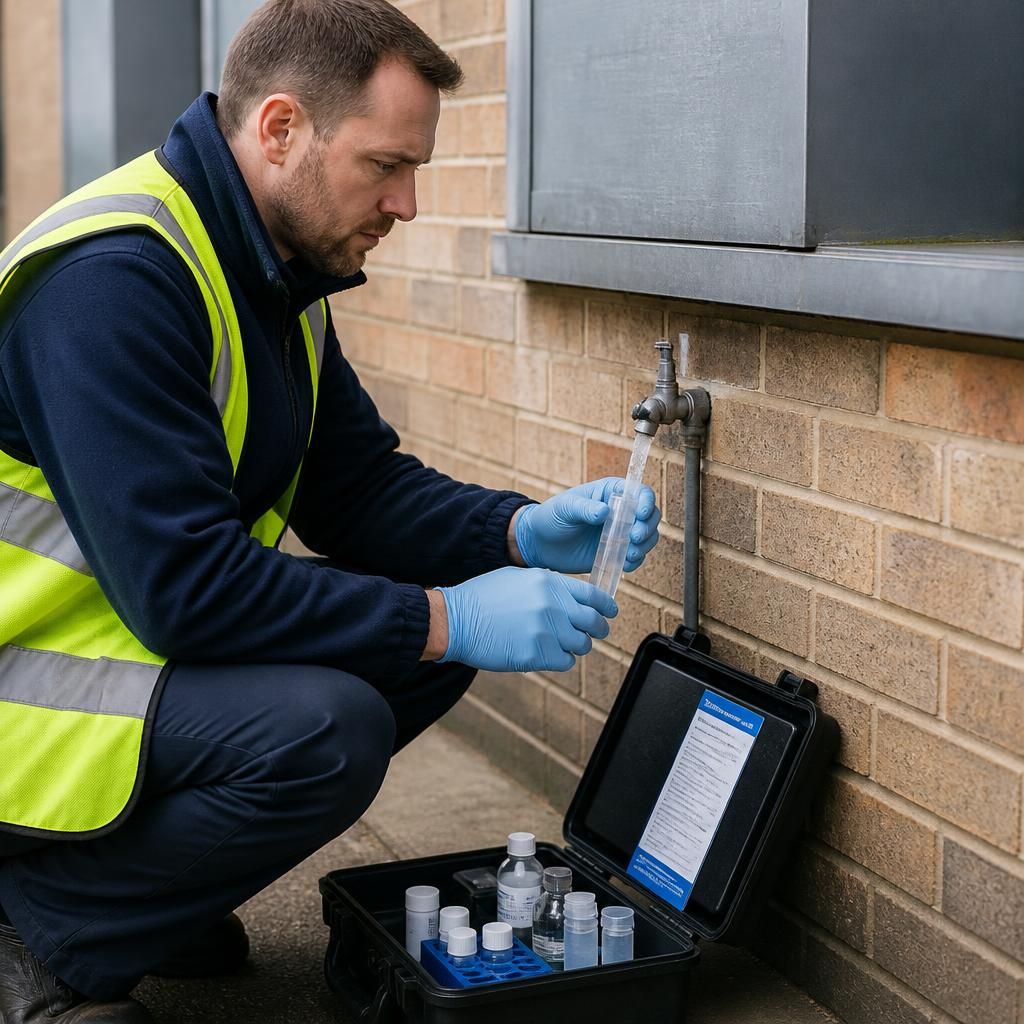
The most useful information from a legionella water testing kit is whether a change to the water system appears to have altered its operating conditions. Facilities teams can use readings taken before and after maintenance, refurbishment, changes in occupancy or adjustments to control equipment to check whether the system is behaving as expected.
This comparison is particularly valuable when reviewing assumptions in the water safety plan. A result that differs from the established pattern may prompt the responsible person to examine whether the change has affected storage, circulation, outlet use or control settings. The kit does not explain the cause, but it can help identify when an assumption needs to be tested rather than accepted.
- Use the same sampling locations where a direct comparison is required.
- Note any system changes that could affect the reading.
- Separate genuinely comparable results from readings taken under different conditions.
- Refer unexplained changes for competent review before altering control measures.
Used in this way, kit data supports informed review of the water safety plan without turning a single field reading into a definitive statement about Legionella risk.
Discuss your legionella testing requirements
Discuss your legionella testing requirements with Blue Fish Water Management Ltd to identify an appropriate approach for your sites and water safety plan.