
How are legionella testing kits incorporated into a water safety plan?
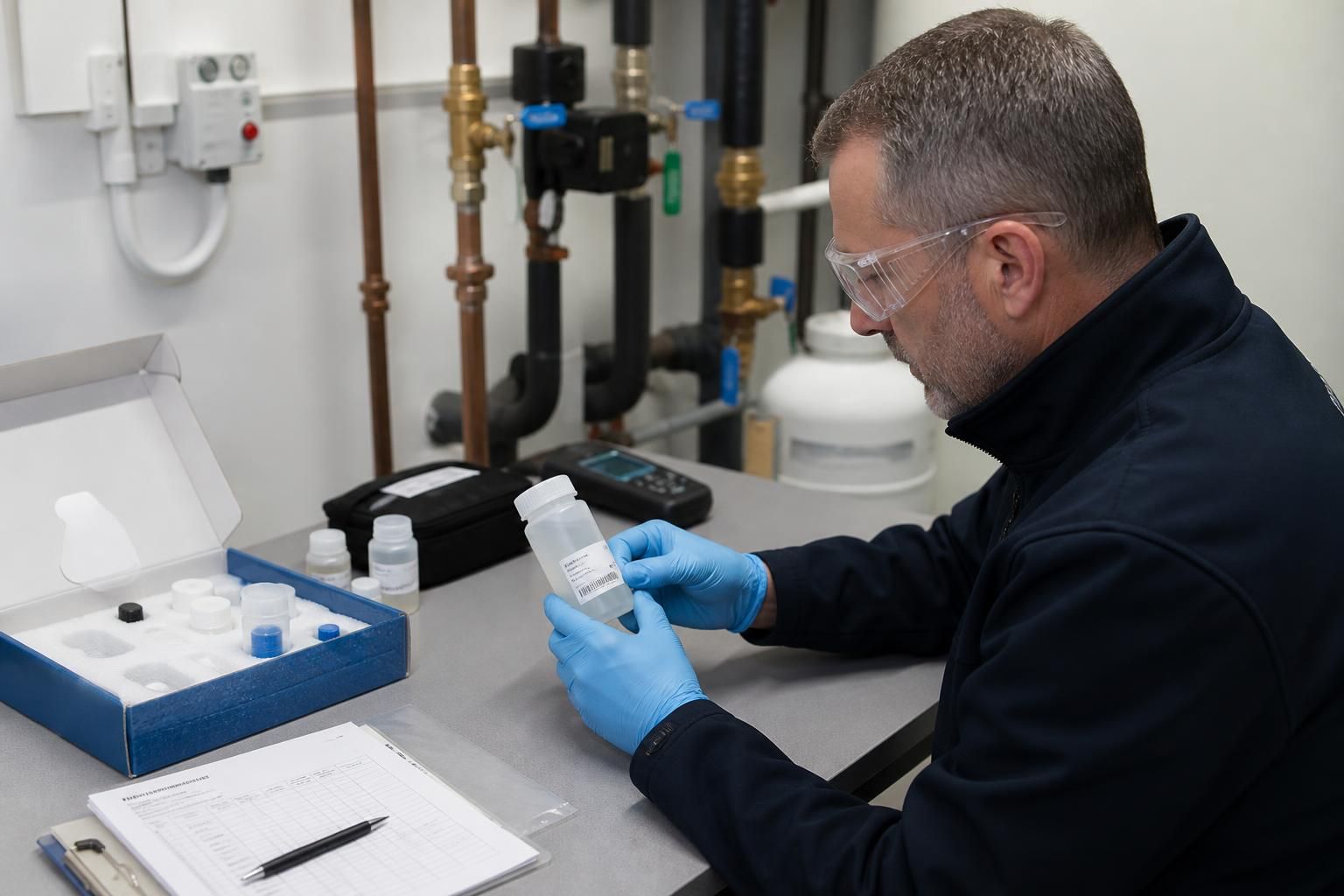
A legionella testing kit should be incorporated into a water safety plan as a controlled sampling tool, not as a stand-alone method of proving that a system is safe. Its use needs to be justified by the system risk assessment, assigned to suitable sampling points, supported by documented procedures and connected to clear decisions when results or site conditions indicate a concern.
Start with the risk assessment. The responsible person should first understand how the water system operates and where conditions could allow legionella to grow or spread. This includes reviewing hot and cold water services, storage tanks, calorifiers, outlets, showers, dead legs, infrequently used outlets, thermostatic mixing arrangements and any vulnerable people who may be exposed. The assessment should then identify which locations require routine observation, temperature checks, environmental sampling or more detailed investigation.
A testing kit is appropriate only when it answers a defined monitoring question. For example, a plan may use a kit to support an initial indication of possible contamination, investigate an unexpected change in water quality or provide additional information when temperature control is proving difficult. Using kits indiscriminately across every outlet can create large volumes of data without improving control of the underlying risks.
Build sampling into the written control scheme. The water safety plan should state:
- which kit or testing method is authorised for the task;
- which sampling points are included and why they were selected;
- how often samples are taken, based on the risk assessment and system history;
- who is trained and authorised to collect, label and handle samples;
- what site information must be recorded alongside each result;
- who reviews the findings and decides whether further action is needed; and
- when a sample must be referred to a competent laboratory or specialist.
The procedure should also cover preparation of the sampling point, avoidance of contamination, sample volume where relevant, storage, transport, kit expiry dates and the reading or processing window specified by the method. If these details are not controlled, results may be difficult to compare and may not provide reliable evidence about the system.
Use kits alongside other controls. Legionella management depends on controlling the conditions that influence bacterial growth and exposure. Testing should therefore sit alongside temperature monitoring, inspection of storage and distribution components, checking outlet use, flushing arrangements, cleaning and disinfection records, maintenance activity and review of changes to the system. A test result cannot compensate for poor temperature control, neglected outlets, inadequate cleaning or an incomplete understanding of the system layout.
For this reason, the person taking a sample should record relevant observations at the time. These may include unusual outlet temperatures, low or absent flow, visible scale or biofilm, recent maintenance, a change in occupancy, an outlet that has been out of use or any alteration to the water system. Context helps the reviewer determine whether a result reflects a local issue, a sampling problem or a wider control failure.
Separate screening from confirmation. Some kits provide an indication that further investigation may be appropriate; they do not necessarily identify legionella to the standard required for formal compliance evidence. The water safety plan should define when a presumptive or unexpected result must be checked using a recognised laboratory method. Referral may also be appropriate where there is a suspected outbreak, a high-risk healthcare or care setting, a significant system change, repeated adverse findings or uncertainty about the kit's suitability.
Laboratory samples should be collected and managed in accordance with the relevant sampling procedure, with clear identification of the site, location, date, time and sampler. A documented chain of custody may be needed where the result could form part of an investigation or regulatory evidence. The plan should avoid presenting an informal kit result and a laboratory result as directly interchangeable unless the methods have been shown to provide comparable information.
Define the response before testing begins. A useful plan does not simply record a result as pass or fail. It explains what each type of finding means and what action follows. Depending on the circumstances, actions may include checking the sampling method, repeating a sample, inspecting the outlet, reviewing temperature records, increasing monitoring, flushing an infrequently used outlet, cleaning or disinfecting equipment, investigating the wider system or obtaining specialist laboratory advice.
Actions should have an owner and a target completion point within the organisation's control system. The record should show the original finding, the assessment of its significance, the corrective work completed and the evidence used to close the issue. Where a result suggests an immediate risk to exposed individuals, the responsible person should follow the site's established escalation and incident procedures rather than waiting for routine monitoring to provide more information.
Review patterns, not isolated results. Trend review can reveal gradual deterioration that a single sample might not show. The reviewer should compare findings with previous results from the same location, related outlets and relevant operational records. Repeated indications at one outlet may point to a local defect or poor use, while similar findings across several areas may require examination of storage, distribution or treatment arrangements.
Results should also be reviewed after significant events, such as refurbishment, changes to occupancy, alterations to water services, prolonged shutdown, changes in use or remedial work. The water safety plan may need updating when the system changes, when a sampling point is no longer representative or when monitoring shows that the original controls are not working as intended.
Assign competent oversight. Routine collection can be delegated only where the individual understands the equipment, sampling method, contamination risks, recording requirements and escalation process. A competent person should oversee the programme, check that the chosen method remains suitable and interpret results in the context of the whole water system. Training records and periodic checks of sampling practice help demonstrate that the process is being applied consistently.
For complex systems or difficult findings, independent technical input can help determine whether the problem is confined to a particular outlet or indicates a broader failure in control. A specialist water hygiene provider can support the review of sampling arrangements, investigation of results, laboratory submissions, compliance documentation and remedial recommendations. The responsibility for implementing and maintaining the water safety plan should, however, remain clearly assigned within the organisation.
In practice, the strongest arrangement is a documented cycle: assess the risks, select suitable sampling points, collect samples consistently, record the surrounding conditions, review results with other monitoring evidence, take proportionate action and revise the plan when circumstances change. This makes a legionella testing kit one useful component of a managed water safety system rather than an isolated test whose meaning is considered only after a result has been produced.
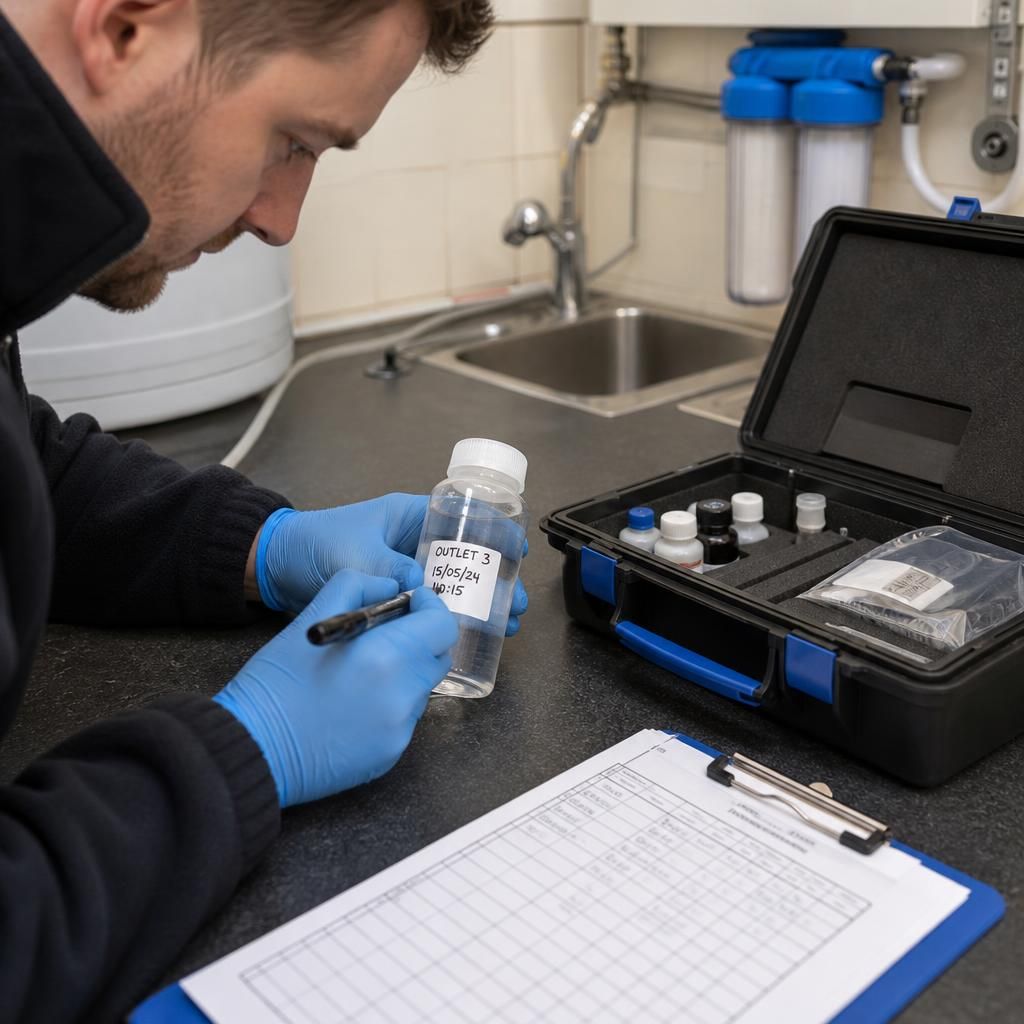
Quality assurance should cover the testing kit as well as the water system. The water safety plan should identify the approved method and specify how its reliability is checked during use, so that an unusual result is not accepted or dismissed without examining the test process.
Useful quality records may include:
- the kit identification, batch or lot reference and expiry date;
- storage conditions and any evidence of damage or deterioration;
- the person carrying out the test and the date of testing;
- any control checks required by the method;
- deviations from the written procedure; and
- the reason for repeating a test or referring a sample for laboratory analysis.
This information gives the competent reviewer context when results change or appear inconsistent. It also helps distinguish a genuine change in water conditions from an issue with storage, handling, equipment or technique. Periodic review of these records can show whether the chosen kit remains appropriate for its defined role in the water safety plan.
Need help incorporating testing kits into your water safety plan?
If you need help defining the role of testing kits within your water safety plan, Blue Fish Water Management Ltd can review your sampling arrangements and advise on suitable next steps.