
Are legionella testing kits suitable for every water system?
No. Legionella testing kits are not suitable for every water system because the appropriate sampling method depends on the system’s design, complexity, water uses and monitoring objectives. They may support selected checks, but they do not replace a properly planned sampling programme, competent interpretation or UKAS-accredited laboratory testing where formal results are required.
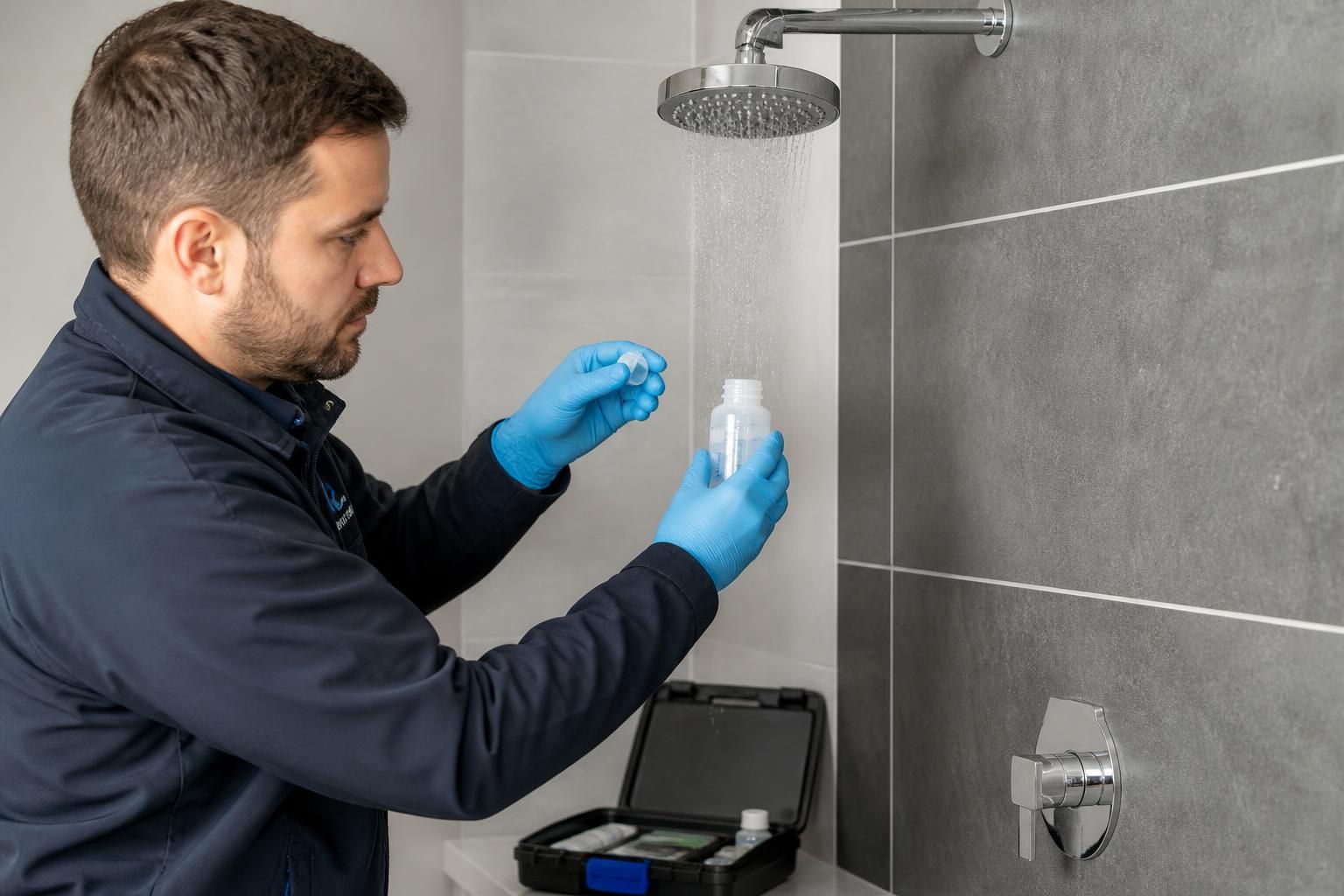
Suitability depends on what the kit is intended to do. A legionella testing kit may be appropriate for collecting a sample, carrying out a limited screening test or supporting an investigation, but those uses are not interchangeable. The design and operating conditions of the water system determine whether a kit can produce useful information and whether the result is suitable for a formal compliance decision.
Simple systems may be easier to sample, but they still require a defined method. A domestic hot- and cold-water system with accessible outlets can often be sampled at representative points, provided the sampler understands which outlets, temperatures and usage patterns are relevant. A kit may assist with collecting water for laboratory analysis, recording sample details and maintaining suitable conditions during transport. It does not, by itself, confirm that the chosen outlet represents the wider system.
More complex systems present additional limitations. Hotels, hospitals, care settings, schools, industrial premises and large commercial buildings may contain multiple storage tanks, secondary returns, blending valves, showers, low-use outlets, thermostatic mixing valves, dead legs or separate water circuits. A single kit used at one convenient tap can therefore give an incomplete picture. Sampling may need to cover different parts of the system and may include both sentinel outlets and locations selected because they have particular risk characteristics.
Specialist systems need particularly careful consideration:
- Cooling towers and evaporative cooling systems: sampling must account for the circulating water, water treatment regime, system condition and points where exposure could occur. A general-purpose domestic water kit may not be suitable.
- Spa pools and pools with air or water agitation: the warm, aerated environment and treatment controls create different sampling and interpretation requirements from a standard hot-water system.
- Industrial and process-water systems: the water chemistry, temperature, access arrangements and non-domestic uses may require a method selected specifically for that installation.
- Healthcare and care environments: vulnerable occupants can make sampling strategy, interpretation and follow-up particularly important. Testing should sit within the site's wider water safety arrangements.
- Decorative water features and other aerosol-generating systems: the relevant risks may relate to circulation, stagnation and aerosol production rather than simply the nearest accessible outlet.
The type of result required is also important. Some products are designed for rapid indication, while others are intended to collect samples that a laboratory will analyse. A rapid result can help identify whether further investigation may be warranted, but it may not provide the same level of specificity, sensitivity or documented quality control as a validated laboratory method. A negative screening result should not automatically be treated as proof that a system is free from legionella, particularly where sampling coverage is limited or conditions are changing.
Before using a kit, facilities teams should check:
- what organisms or indicators the method detects;
- whether the method is suitable for the water type and system being assessed;
- which sample volume, container and preservative requirements apply;
- how samples must be labelled, stored and transported;
- whether the sampling point and flushing procedure are specified;
- what quality controls apply to the test; and
- how the result will be interpreted alongside temperatures, disinfectant levels, usage, maintenance records and previous findings.
Sampling technique can affect the result as much as the kit itself. The sampler may need to distinguish between a representative routine sample and a targeted sample taken from a suspected problem area. Outlet cleaning, flushing, removing attachments, recording temperature and documenting the condition of the point can all affect how the result should be understood. If these details are not recorded, comparing results over time becomes less reliable.
Testing is therefore only one part of assessing a water system. A result should be considered alongside the written risk assessment, control scheme, monitoring records, remedial work and any changes to system use. An unusual result, a deterioration in control or a change in occupancy may call for additional sampling or technical investigation rather than reliance on another quick test.
For formal reporting, contractual requirements or decisions affecting higher-risk premises, the sampling plan and analytical method should be agreed with a competent water hygiene professional and the laboratory carrying out the analysis. Blue Fish Water Management provides legionella risk assessments, water testing, compliance audits, system monitoring and remedial advice, helping organisations select an approach that reflects the system rather than treating one testing kit as suitable for every application.
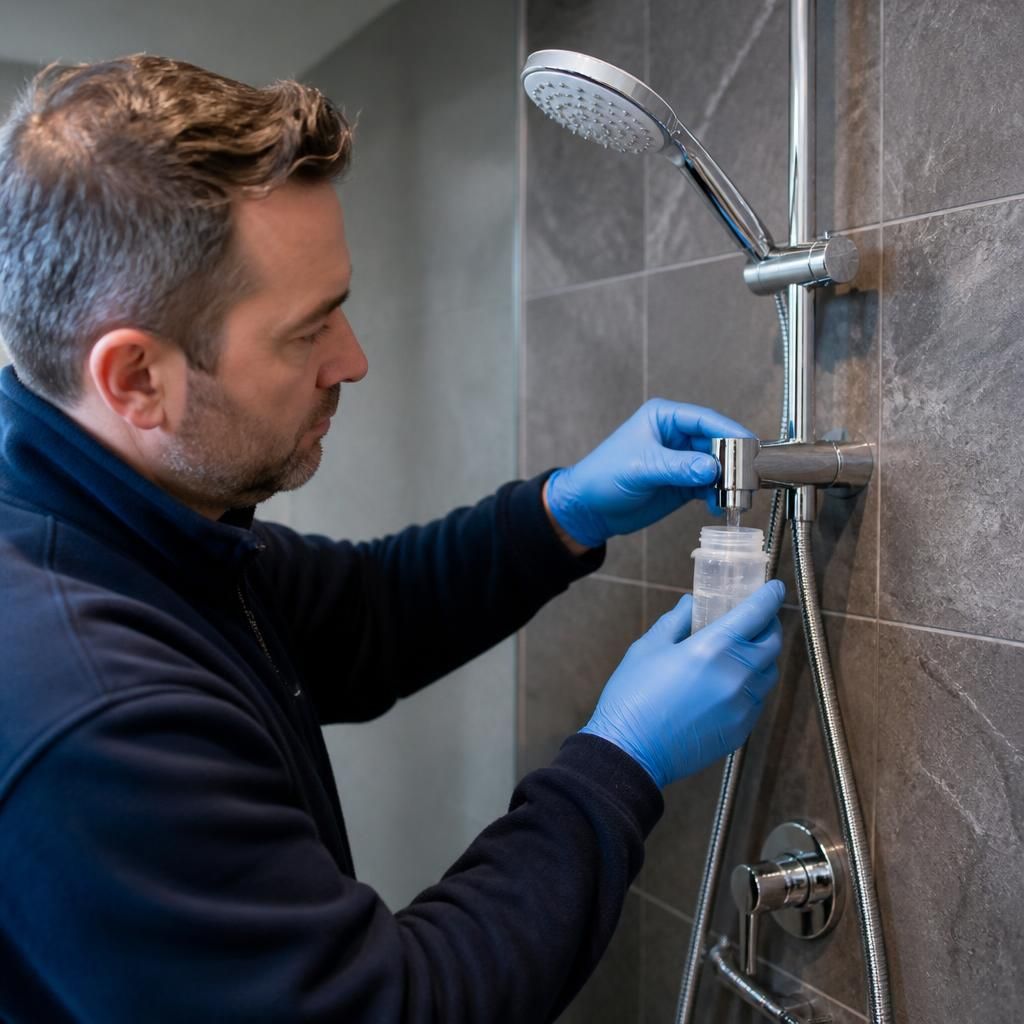
A legionella test result does not, by itself, define the level of risk posed by a water system. A positive result confirms that legionella was detected in the sample examined, but it does not explain the source, extent of contamination or likelihood of exposure. Equally, a negative result only describes the sample tested at that particular location and time.
Interpretation must therefore consider how the water is used and whether it can generate inhalable droplets, such as through showers, sprays or aeration. It should also take account of the people who may be exposed, the system’s operating controls and any evidence of stagnation or deterioration. This is why a test kit can provide useful evidence without being capable of determining the appropriate remedial response on its own.
Discuss the right testing approach for your water system
Discuss your water system with Blue Fish Water Management to determine whether a testing kit is appropriate and what sampling approach is required. Our team can advise on suitable testing, interpretation and any further assessment needed.