
Which water testing option suits your compliance needs, system condition and budget?
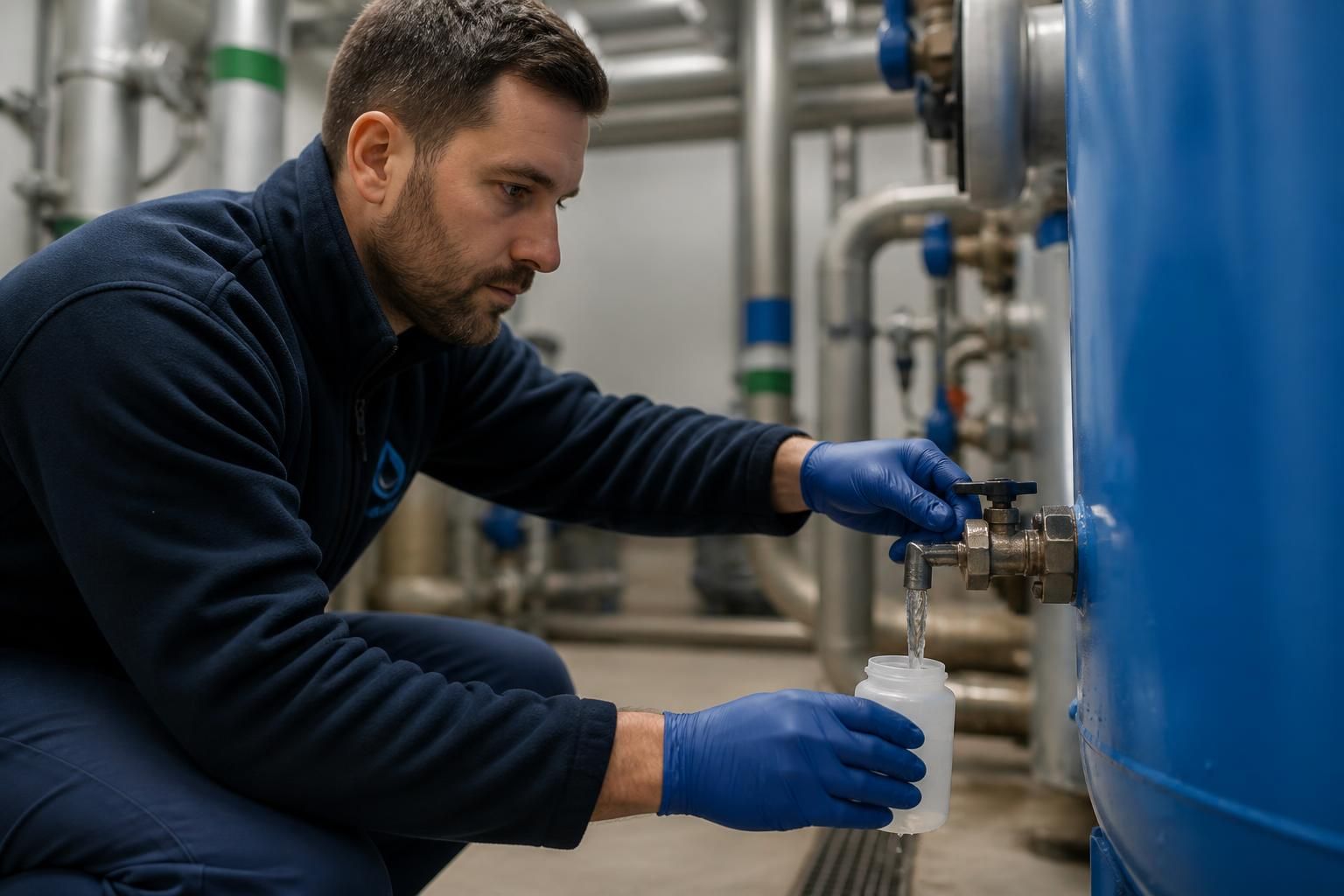
The most suitable water testing option is the one that produces evidence proportionate to the site’s risk, system condition and compliance responsibilities. In practice, this may mean focused legionella sampling, a wider microbiological and chemical testing programme, or an investigative package supported by a review of the water system and its management controls.
Start with the compliance purpose. Testing should answer a defined question rather than generate results without context. For example, a programme may be intended to verify routine control measures, support a legionella risk assessment, investigate an unusual result, demonstrate control after remedial work, or provide evidence for a landlord, facilities team, auditor or enforcing authority. The purpose affects the number and type of samples, the locations selected and the interpretation required.
- Routine verification: suitable where the system has been assessed, documented and operating under established control measures. Sampling normally focuses on representative high-risk or sentinel outlets and relevant water systems.
- Baseline assessment: useful where testing history is limited, records are incomplete or responsibility for a site has changed. The initial scope may be broader so that future results have a meaningful point of comparison.
- Investigative testing: appropriate after an adverse result, suspected exposure, system alteration, temperature control concern, stagnation issue or unexplained change in water quality. It should be linked to an investigation rather than treated as a standalone laboratory exercise.
- Post-remedial verification: used to assess whether corrective work has addressed the relevant control issue. The timing and sampling plan should reflect the work completed and the system’s operating conditions.
Match the scope to the system. A simple domestic hot and cold water arrangement will not require the same approach as a healthcare estate, hotel, care setting, manufacturing site, rental portfolio or premises with storage tanks, showers, blended outlets, cooling systems or other specialist equipment. Complexity matters because water can stagnate, circulate unevenly or be affected by different temperatures, materials and usage patterns in separate parts of the installation.
Sampling locations should therefore be selected from the system’s risk profile, not merely from the easiest outlets to access. A sound plan considers storage vessels, return loops, low-use outlets, dead legs, representative points of use, areas with vulnerable occupants and locations associated with previous findings. Where the system has been modified or poorly documented, a site survey or review of schematic drawings may be needed before the final testing scope is agreed.
Choose parameters that answer the question. Legionella analysis may be central to the programme, but it is not always the only useful evidence. Depending on the system and reason for testing, the scope may include other microbiological indicators, temperature observations or chemical parameters relevant to corrosion, scaling, treatment, contamination or water quality. Adding tests without a clear interpretation plan can increase cost without improving the management decision, whereas omitting a relevant parameter can leave the investigation incomplete.
Use system condition to set the level of detail. A well-documented system with consistent monitoring records and no material changes may justify a focused programme, provided the risk assessment supports that approach. A system with poor records, intermittent use, alterations, recurring results or uncertain control may require wider sampling and additional technical investigation. Testing alone cannot compensate for inadequate monitoring, poor maintenance or an unresolved design problem; laboratory findings need to be considered alongside temperatures, usage, control measures and the physical condition of the installation.
Keep the budget proportionate, not simply minimal. The lowest initial price is not necessarily the lowest-cost compliance option if it produces inconclusive results or requires repeat visits. Conversely, a comprehensive package may be unnecessary where the system is understood and the testing objective is narrow. A practical budget comparison should consider:
- the number and type of samples;
- site access, travel and sampling requirements;
- laboratory analysis and any additional parameters;
- sample collection, documentation and result interpretation;
- the need for a system survey, risk review or follow-up investigation;
- potential repeat sampling after remedial work; and
- the quality of the report and evidence needed for internal or external review.
A staged approach can help where information is incomplete. The first stage may establish the system’s condition and collect representative evidence. The findings can then determine whether routine monitoring is sufficient or whether further sampling, remedial work or a revised control strategy is appropriate. This is more defensible than reducing the scope arbitrarily and discovering later that important parts of the system were not examined.
Check how results will be handled. A suitable testing service should make clear who selects the sampling points, how samples are identified and transported, which laboratory methods are used, and how results are reported. The report should distinguish laboratory findings from professional interpretation and identify any recommended next steps. Results should be compared with applicable UK guidance, the site’s risk assessment and the operating history of the system rather than read in isolation.
For a site manager or procurement team, the most useful brief includes the property type, water systems present, known high-risk areas, testing history, recent alterations, previous adverse results, the compliance purpose and the available records. Asking providers to price the same defined scope makes quotations easier to compare. It is also reasonable to ask what is included in sampling, laboratory analysis, reporting, interpretation and any follow-up recommendations.
In summary, a focused option suits a documented and stable system when the compliance objective is clear; a broader option is more appropriate where system condition, history or risk is uncertain; and an investigative package is needed when results or operating conditions indicate a specific concern. The right choice is therefore the smallest scope that can answer the compliance question reliably, while allowing additional work where the evidence shows it is necessary.
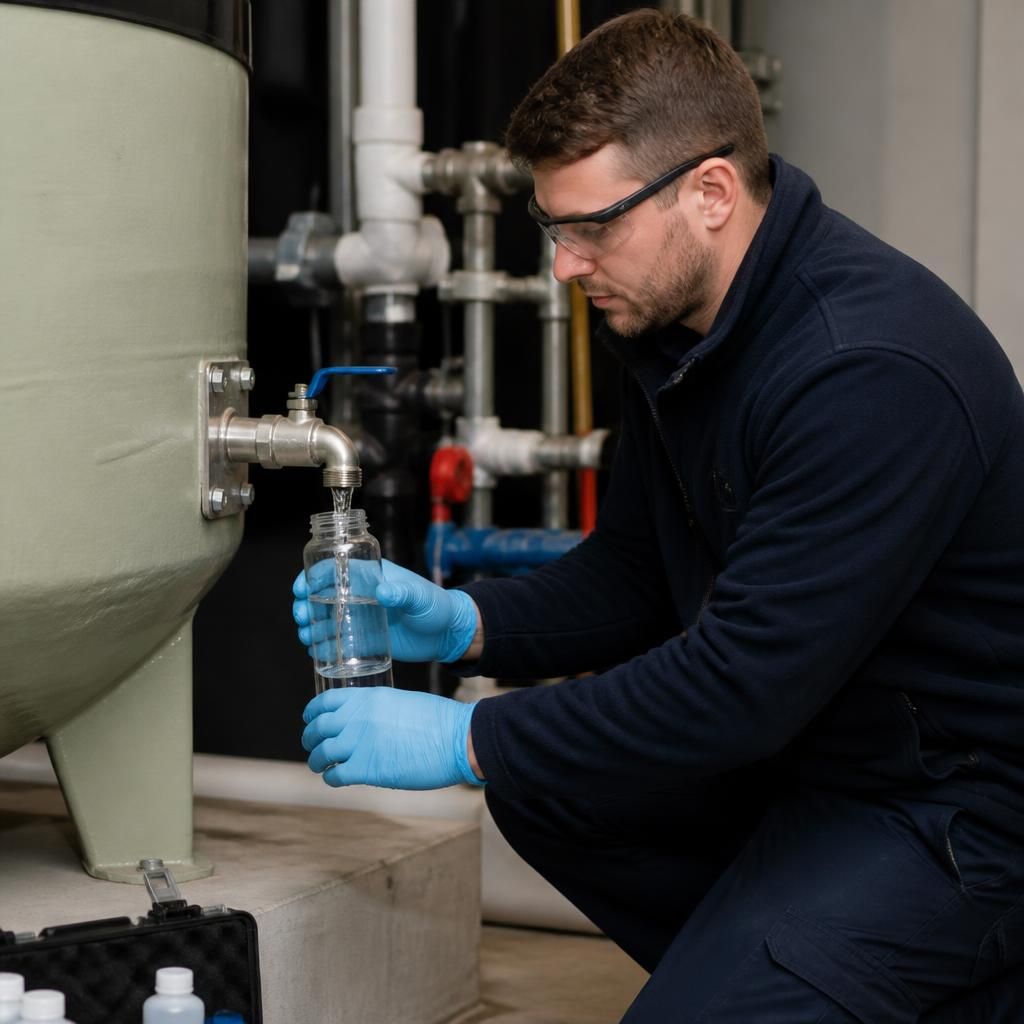
Sample quality is part of the water testing option, not a separate administrative detail. A laboratory result is only useful if the sample represents the system and has been collected, identified, stored and transported correctly.
When comparing testing options, check how the provider manages:
- sample point selection and the reason each location is included;
- sample identification and traceability from collection to laboratory;
- collection procedures appropriate to the outlet and water system;
- transport arrangements and the condition of samples on receipt; and
- recording of relevant observations, such as outlet type, system area and sampling conditions.
This information helps distinguish a properly controlled testing programme from a laboratory-only service. It also makes results easier to relate to the correct part of the installation and to compare with previous or future findings. For a complex or changing system, clear sample records may be as important to the compliance decision as adding more test parameters.
Discuss your water testing options
Discuss your site’s compliance objective and system condition with Blue Fish Water Management Ltd to identify a proportionate water testing option. Request a tailored quote based on the sampling scope, analysis and reporting your site requires.