
Which legionella testing approach suits a complex water system?
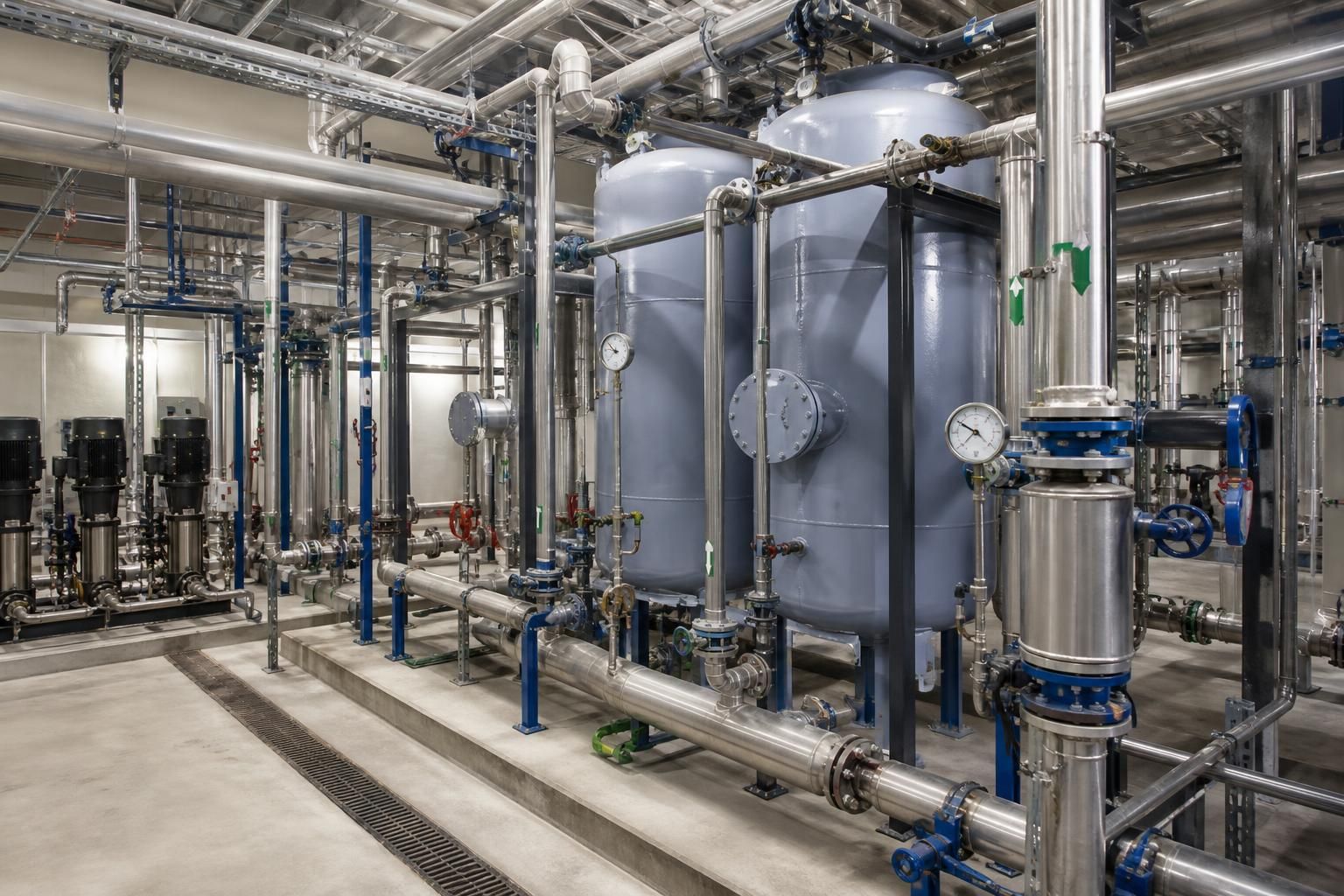
The most suitable approach for a complex water system is a phased programme: establish how the system operates, select samples that test the areas of greatest risk, use an appropriate laboratory method, and review the findings alongside temperature and other control records. A single sample or fixed outlet list cannot reliably represent a system with multiple storage vessels, return loops, treatment devices, infrequently used outlets or separate water circuits.
Before sampling begins, the assessor should understand the system’s configuration and use. This normally includes reviewing schematic drawings, asset registers, previous results, maintenance records and records of control parameters. A site inspection can then identify features that may not appear on drawings, such as redundant pipework, poorly used outlets, uninsulated sections, localised hot or cold spots, flexible hoses, thermostatic mixing valves and areas where flow is restricted.
The sampling plan should be linked to the hazards identified during that review. Depending on the system, useful locations may include:
- incoming water and stored water;
- calorifiers, hot-water storage vessels and representative flow and return points;
- sentinel outlets close to and distant from hot-water plant;
- cold-water outlets in different branches or risers;
- showers, spray-producing outlets and outlets used by people who may be particularly vulnerable;
- low-use or seldom-used outlets, dead legs and sections affected by poor circulation;
- points before and after treatment equipment; and
- cooling-system locations selected according to the equipment design and its water-treatment regime.
Sampling every outlet is not automatically the most informative option. A representative selection may provide better evidence when it covers different branches, temperatures, uses and hydraulic conditions. However, targeted samples are important where the assessment identifies a local concern. The selected points, reasons for including them and any limitations should be documented so that later results can be compared consistently.
Routine sampling is generally used to verify that established controls remain effective. It should be supported by operational monitoring, which may include hot- and cold-water temperatures, disinfectant or biocide levels, pH, flow conditions and evidence that outlets and treatment equipment are being maintained. The exact parameters depend on the type of system. Legionella results should not be considered in isolation: a negative result from one sample does not demonstrate that the whole system is free from contamination, while a positive result needs to be assessed in relation to the sampling point, system users and other control information.
Initial or baseline testing can be appropriate when a system is newly assessed, substantially altered, taken back into use or poorly documented. It provides evidence about current conditions and may reveal that the planned routine sampling locations need to be revised. For systems with a history of unsatisfactory results, the better approach may be a more detailed investigation rather than simply increasing the number of routine samples. Investigative sampling can help distinguish a localised issue from a wider distribution problem by examining upstream and downstream points, storage and return sections, and outlets with different patterns of use.
Repeat testing is also useful after remedial work, cleaning and disinfection, changes to water treatment or correction of a control failure. The timing and extent of this testing should reflect the work undertaken and the risk assessment. Sampling too early, before the system has returned to its normal operating condition, may produce results that do not represent ongoing performance. Conversely, postponing verification where there is a significant control concern may leave people exposed to an unmanaged risk.
Culture-based analysis remains an important method because it can detect viable legionella organisms and is commonly used for formal water-system investigations and routine verification. Other methods, including molecular testing, may provide additional information or support faster investigation in some circumstances, but their results are not interchangeable with viable-organism culture results. The test method, sample type, laboratory instructions and reporting format should therefore be agreed before samples are taken.
Sample quality affects the value of the result. Samples need to be collected using a consistent procedure, clearly identified, protected from unsuitable conditions and transported within the laboratory’s specified requirements. The sampler should record relevant information at the point of collection, such as the outlet, whether it was flushed, water temperature, disinfectant readings where relevant and any unusual site conditions. Without this context, it becomes harder to determine whether a result reflects the system or the sampling process.
Results from a complex system should be reviewed by someone able to relate them to the risk assessment and operating records. The review should consider whether findings are isolated or repeated, whether nearby points show a similar pattern, whether control parameters were within their expected range and whether the affected area serves people at increased risk. It should also identify practical next steps, which may include checking the original sample, increasing targeted monitoring, improving circulation, removing redundant pipework, cleaning or disinfecting parts of the system, correcting temperature control or reviewing the written control scheme.
A suitable testing programme is therefore one that can change when the evidence changes. Routine samples confirm ongoing control; investigative samples answer a specific question; and follow-up samples check whether corrective action has addressed the underlying problem. For a complex installation, this documented, risk-led approach is more useful than treating legionella testing as a standalone laboratory exercise.
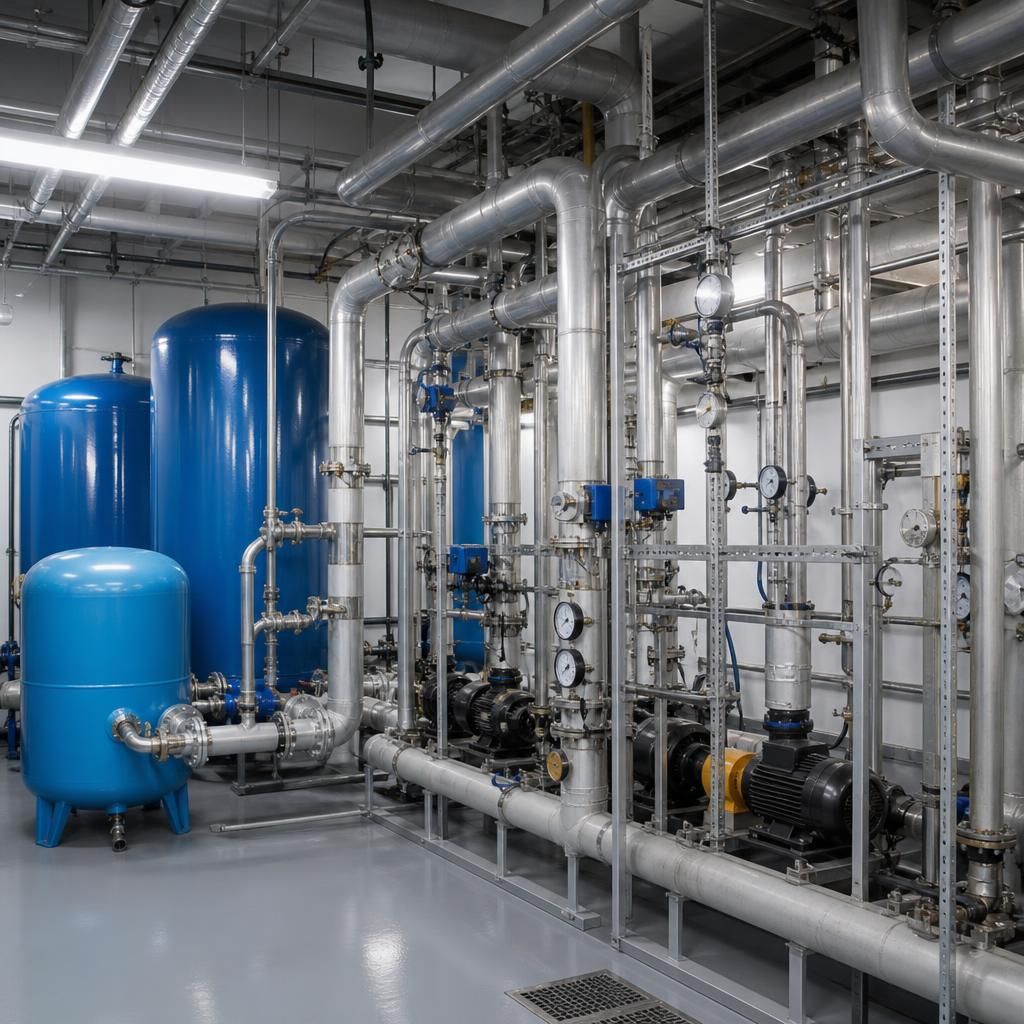
A complex site should not automatically be treated as one sampling population. Separate hot-water, cold-water, cooling or process-water circuits may have different designs, uses, control measures and exposure routes, so the testing approach should identify which system each result relates to.
Results should be reported against the relevant circuit, plant area and outlet group rather than combined into one site-wide conclusion. This makes it easier to distinguish a localised finding from a wider control issue and prevents satisfactory results from one water system obscuring a concern in another. The written testing programme should therefore define the systems covered, the locations assigned to each system and how findings from each will be reviewed.
Discuss testing for your complex water system
Discuss your complex water system with Blue Fish Water Management Ltd to identify an appropriate legionella testing programme and clarify the information needed before commissioning.