
When is repeat legionella sampling needed?
Repeat legionella sampling is needed when an initial result is positive or unsatisfactory, control measures change, or a risk assessment identifies increased risk. It may also form part of routine monitoring where the water system, occupancy or previous results justify ongoing sampling, with the frequency set by the responsible person and competent advice rather than a universal timetable.
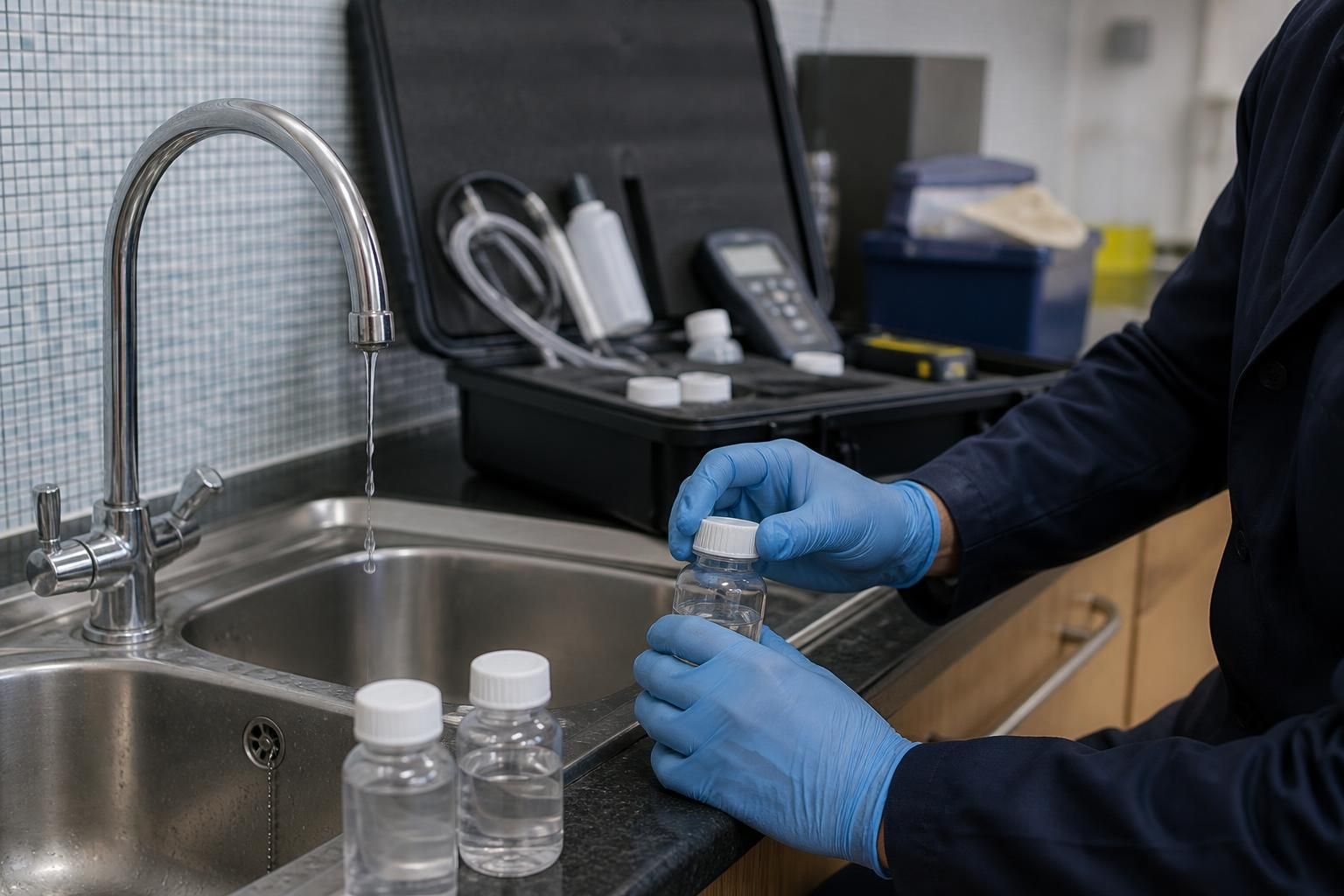
Repeat legionella sampling is needed when a result, change in circumstances or review of the water safety plan indicates that one sample cannot provide sufficient assurance. The timing should be proportionate to the level of risk, the type of water system, the people exposed and the action taken in response to earlier findings.
After a positive or unsatisfactory result, the responsible person should not treat repeat sampling as an isolated laboratory exercise. The result should be assessed alongside the system’s temperature records, history of control, maintenance activities and the susceptibility of building occupants. The source of the problem should be investigated and corrective measures may include cleaning and disinfection, improving temperature control, removing dead legs, reducing stagnation or reviewing outlet use.
Further samples are normally taken after corrective work to assess whether control has been restored. Sampling too early may reflect conditions before the system has stabilised, while delaying follow-up may leave people exposed to an avoidable risk. The sampling date should therefore be agreed with a competent water hygiene professional and recorded with the remedial action, the responsible person’s decision and the laboratory result.
A result that is below the laboratory’s reporting threshold does not, by itself, prove that legionella is absent from the whole system. Samples represent specific points at a particular time. Repeat sampling may therefore need to cover the outlets or system areas most relevant to the original finding, together with additional points where the risk assessment identifies possible stagnation, low temperatures or poor circulation.
Changes to the system or its use can also justify additional sampling. Examples include:
- alterations to hot or cold water services, storage vessels, calorifiers, pumps or distribution pipework;
- extended periods of low occupancy or limited outlet use;
- changes in water temperature, flow, treatment or disinfection arrangements;
- recommissioning a system after closure, refurbishment or prolonged shutdown; and
- a change in the occupants, particularly where more vulnerable people may be exposed.
In these circumstances, sampling should support a documented review rather than replace it. The risk assessment may require checks before reopening, after flushing or disinfection, and again once normal use has resumed. The appropriate points and timing depend on the system’s design and the nature of the change.
Routine repeat sampling may form part of the written control scheme where the assessment indicates that temperature checks and other control measures do not provide enough assurance on their own. It is more likely to be considered for complex systems, buildings with vulnerable occupants, systems with a history of positive results or situations where control is difficult to maintain. There is no single sampling interval that is suitable for every premises. A competent person should define the frequency, locations and action levels, then review them when circumstances or results change.
Sampling should also be repeated when trends suggest deteriorating control, even if individual results have not triggered urgent remedial work. A sequence of detections, rising results, recurring findings at the same outlets or unexplained variation between sampling rounds may indicate that the control scheme needs investigation. Reviewing results over time is more informative than relying on a single report.
Every repeat sample should be traceable. Records should identify the sampling locations, dates, conditions at the outlets, laboratory findings, related temperature or monitoring data, remedial work and any decision to alter the sampling programme. Testing should be undertaken by a competent laboratory using an appropriate method; UKAS-accredited water testing can support confidence in the testing process, but accreditation does not remove the need for sound risk assessment and effective control.
The responsible person remains accountable for arranging suitable follow-up and ensuring that actions are completed. Where the result is significant, the system is complex or remedial work has not resolved the issue, specialist advice should be obtained rather than repeatedly collecting samples without addressing the underlying cause.
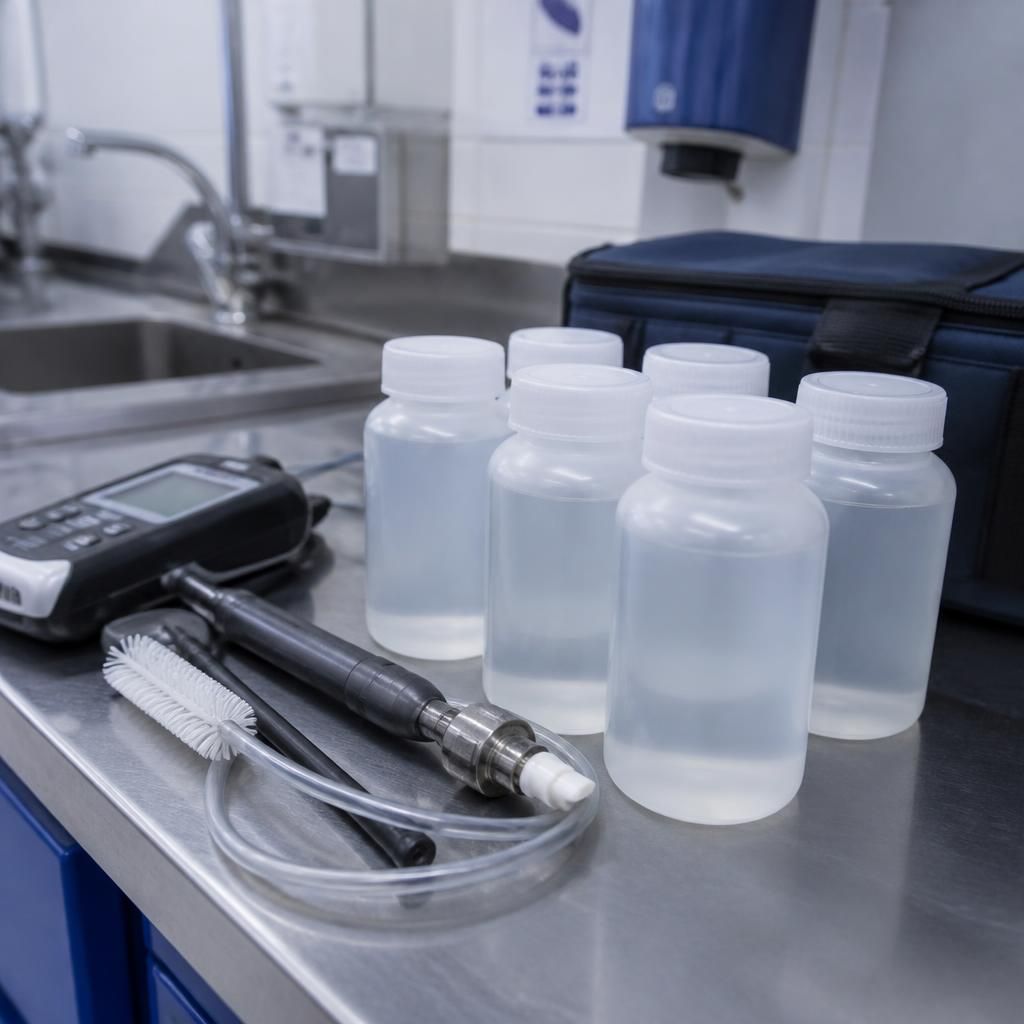
Repeat sampling should not delay proportionate control measures where a result indicates a potentially significant risk. The responsible person should follow the written control scheme, obtain competent advice and determine whether restrictions on outlet use, additional flushing or other precautions are appropriate while the cause is investigated.
Sampling is most useful when it verifies a defined decision, such as whether remedial work has restored control or whether a recurring finding needs further investigation. The purpose, locations, relevant system conditions and action to take if legionella is detected again should be agreed before samples are collected. This makes the result easier to interpret and helps prevent repeated testing without progress on the underlying water safety issue.
Discuss your repeat legionella sampling requirements
Discuss your repeat legionella sampling requirements with Blue Fish Water Management Ltd to determine the most appropriate follow-up approach for your premises. Their team can help review your existing findings and identify the next steps for your water safety plan.