
What should a business review before commissioning legionella testing?
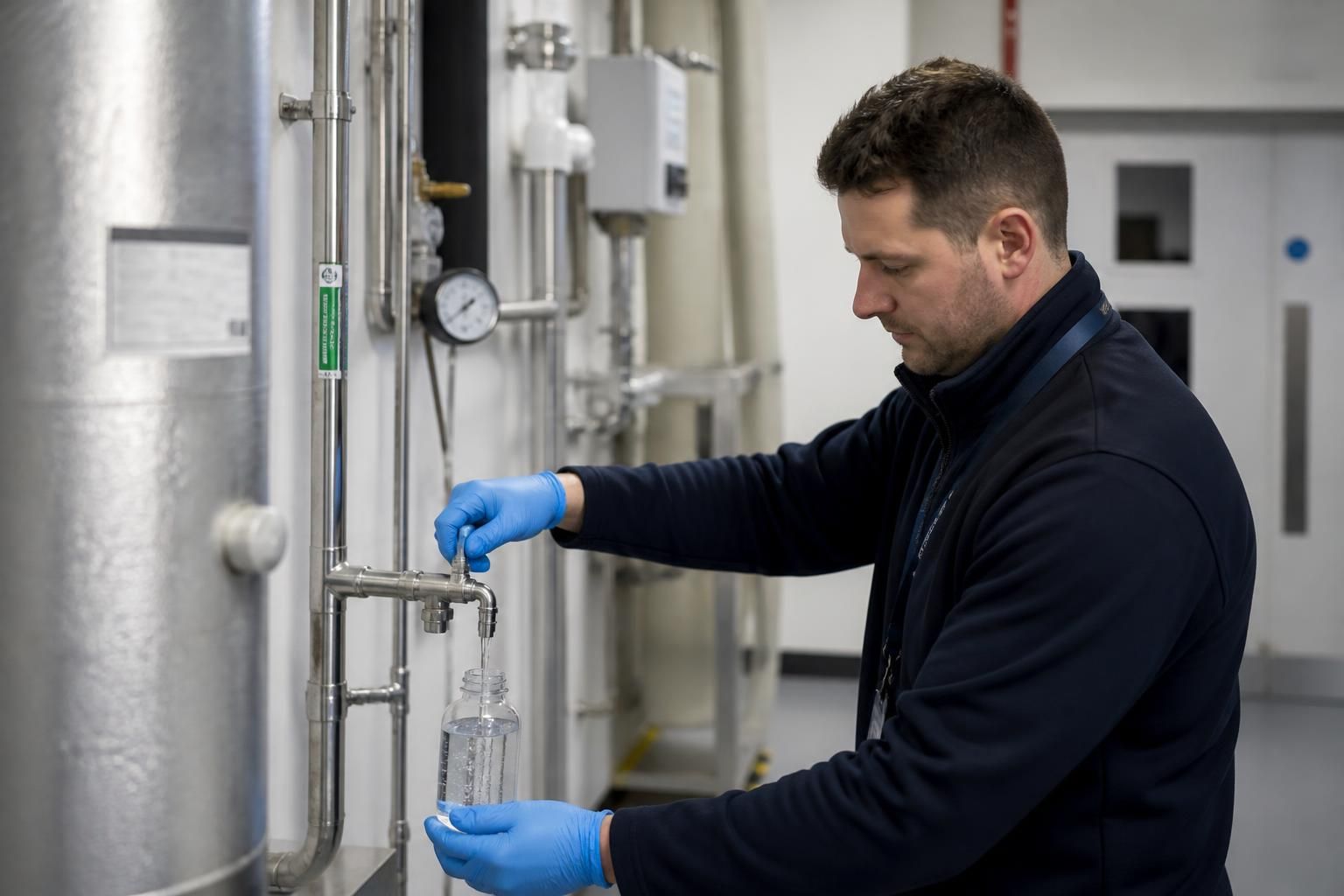
Before commissioning legionella testing, a business should confirm that the proposed service fits the purpose of the investigation, the control regime for the water system and the decisions that will follow the results. Testing should provide useful evidence within the organisation’s wider legionella management arrangements; it is not a substitute for a risk assessment, written control scheme or competent day-to-day management.
Start with the reason for testing. The requirement may arise from routine monitoring, a change to the system, a suspected loss of control, a complaint, an outbreak investigation or verification after remedial work. Each situation can require a different selection of locations, sample types, timing and follow-up. The quotation should state which objective it addresses and whether the proposed work is intended to establish a baseline, investigate a concern or confirm that corrective action has been effective.
Check that the proposal reflects the current system. Give the provider accurate information about the water services, occupancy, vulnerable users, outlets, storage arrangements, temperature-control measures and any areas that are difficult to access. Recent alterations, periods of low use, changes in occupancy and known dead legs may affect how results are interpreted. If the information supplied is incomplete or out of date, ask how the provider will verify the system before samples are taken.
Clarify how the work fits the responsible person’s duties. Under the principles set out in HSE’s Approved Code of Practice L8 and HSG274, the dutyholder or appointed responsible person remains accountable for controlling the risk. A testing contractor can collect and analyse evidence, but the business should establish who will:
- approve the sampling plan and provide access to relevant areas;
- review results against the system’s risk profile and control records;
- decide whether further investigation or remedial work is needed;
- record actions, responsibilities and completion dates; and
- escalate significant findings through the organisation’s health and safety process.
This division of responsibility should be clear in the quotation or service agreement. Avoid commissioning testing on the assumption that a laboratory result alone demonstrates compliance.
Review the proposed timing and site conditions. Results can be affected by recent disinfection, flushing, temperature changes, alterations in use and other interventions. Ask whether samples need to be taken before or after a particular control activity, and whether the service includes any restrictions on using outlets immediately before sampling. For a multi-building estate, agree how sites, floors, plant rooms and representative outlets will be identified so that the records remain traceable.
Understand what happens when a result is unsatisfactory. The contract should explain how the provider will communicate significant findings, whether interpretation is included, and when additional investigation is treated as a separate service. It should also distinguish between an isolated result and evidence of a wider control failure. Depending on the circumstances, follow-up may involve reviewing temperatures and maintenance records, checking the distribution system, increasing monitoring, carrying out cleaning or disinfection, or taking confirmatory samples. These actions should be based on the risk assessment rather than an automatic response to one result.
Examine the commercial scope carefully. Compare quotations on a like-for-like basis, checking whether they include travel, access arrangements, sample collection, analysis, interpretation, certificates, record updates and any necessary return visits. Confirm the charge for additional samples, urgent investigations, aborted visits and post-remedial verification. The lowest initial price may not represent the lowest overall cost if important stages are excluded or if the proposal does not address the reason for testing.
Ask how records will support future audits. Useful records normally link each result to the date, exact location, outlet or system reference, sample type, relevant control information and any action taken. Confirm the format in which records will be supplied and how amendments, repeat samples and remedial evidence will be linked to the original finding. This makes it easier for the responsible person to demonstrate a controlled process during an internal review, client audit or inspection.
Finally, check that the provider can explain its findings in the context of the system rather than simply forwarding laboratory results. A sound commissioning decision considers technical suitability, defined responsibilities, practical access, follow-up arrangements, record quality and the full cost of the required work. Those points help ensure that testing produces evidence the business can act on and retain within its legionella control documentation.

Where testing will be repeated, ask the provider how it will make results comparable over time. A useful proposal should identify consistent reference points, sample types and reporting conventions, while recording any changes to the water system, occupancy, outlet use or control measures that could affect the comparison.
Trend information can help show whether control measures are stable, deteriorating or improving, but results from different locations or sampling conditions should not be treated as a direct sequence. Before commissioning, agree how new, inaccessible or altered outlets will be documented so that later findings can be interpreted against the correct baseline.
Get advice on commissioning legionella testing
Speak to Blue Fish Water Management Ltd to review your legionella testing requirements and identify the information needed for a suitable quotation.