
Which legionella testing approach suits your compliance responsibilities?
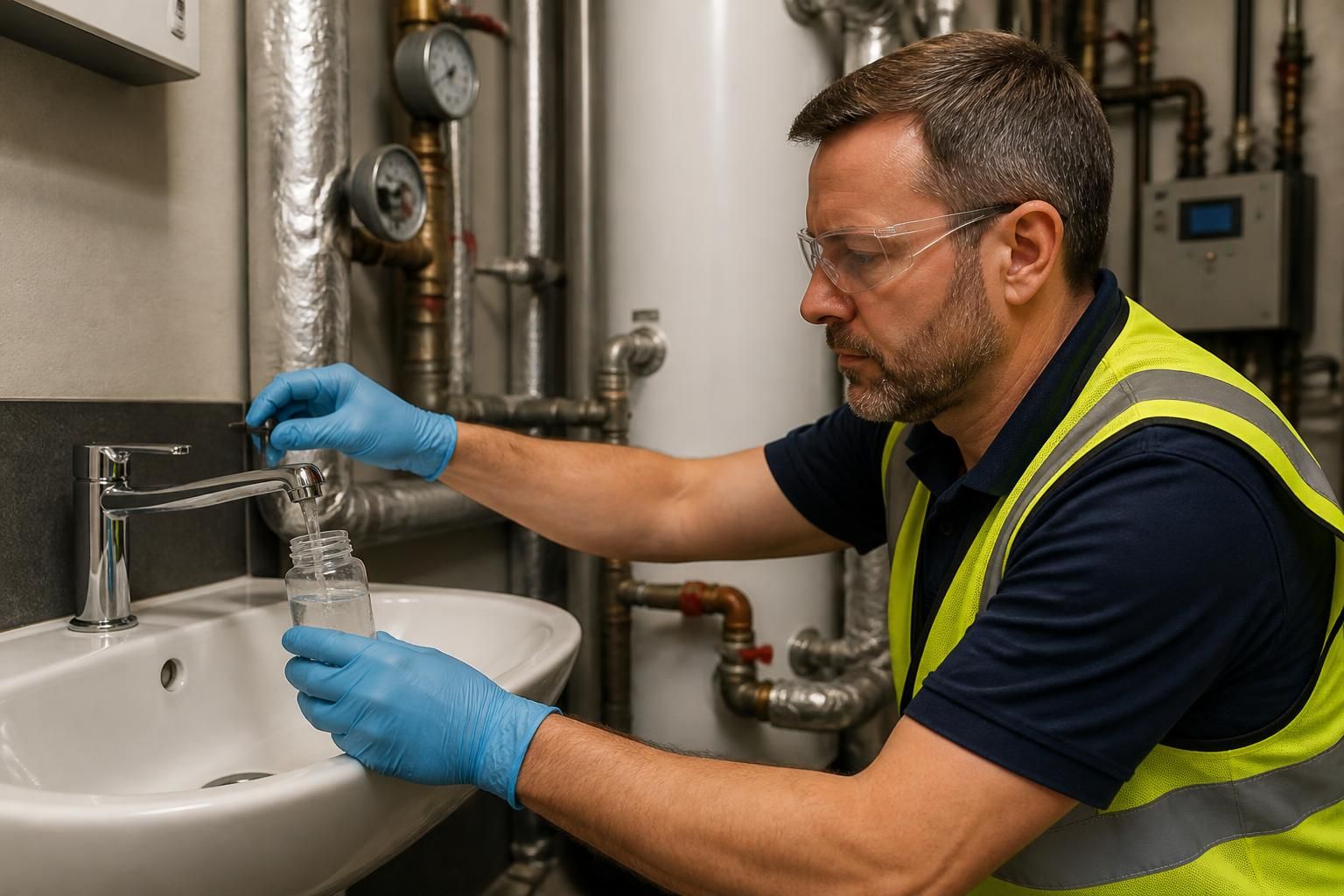
The most suitable legionella testing approach is the one that matches the duty holder’s risk assessment, water system design, occupants and control measures. In practice, this usually means combining documented operational monitoring with targeted microbiological sampling, rather than relying on a single test intended to cover every responsibility.
Risk-based routine monitoring is the foundation for many managed water systems. It can include recording hot and cold water temperatures, checking sentinel outlets, confirming that seldom-used outlets are flushed and verifying that tanks, calorifiers and other relevant components remain in suitable condition. These checks help demonstrate that control measures are being applied and can identify changes that require further investigation.
Routine monitoring is not the same as laboratory testing. Temperature records and inspection findings show whether conditions are consistent with control, while a water sample provides information about legionella detected at a particular location and time. A competent person should decide whether laboratory analysis is justified, which outlets should be sampled and how the results should be interpreted alongside the wider risk assessment.
Targeted microbiological sampling is often appropriate when there is a defined reason to investigate. Examples include:
- evidence that temperatures or other control parameters are outside the expected range;
- areas of low use, stagnation or poor circulation;
- outlets or plant that present a higher exposure risk;
- changes to the system, occupancy or operating arrangements;
- suspected contamination or a previous unsatisfactory result; and
- verification following cleaning, disinfection or other remedial work.
Targeted sampling can provide more useful evidence than taking a large number of samples without a clear purpose. The sampling locations should represent the parts of the system where growth or exposure is most plausible, rather than being selected solely for convenience. Samples may be taken from outlets, storage tanks, calorifiers or other points identified through the system assessment.
A broader baseline survey may suit a complex, poorly documented or newly acquired system. This approach can establish how different parts of the installation are performing and help identify dead legs, low-use outlets, temperature issues or areas requiring remedial attention. It may be considered where the asset information is incomplete, the system has undergone significant alteration or the existing monitoring history is not sufficiently reliable.
For a straightforward, well-controlled system, a proportionate programme may involve operational checks supported by periodic or event-driven laboratory sampling. A large healthcare, residential, leisure or industrial installation may require a more structured programme because it can contain multiple loops, storage arrangements, outlets and groups of people with different levels of susceptibility. The presence of vulnerable individuals is particularly relevant when deciding how much evidence is needed and how quickly a concerning result should be investigated.
Post-remedial testing should be designed around the work carried out and the reason for it. If a local outlet has been addressed, sampling may focus on that outlet and connected pipework. If disinfection or modifications affect a wider section, the sampling plan should provide evidence from representative points throughout the affected area. Testing should not be treated as proof that a system will remain controlled indefinitely; continued monitoring is needed after the immediate issue has been addressed.
When selecting a testing approach, the duty holder should be able to explain:
- which responsible person or organisation has defined the testing requirement;
- what the system assessment identified as the relevant hazards;
- why particular outlets and sampling points were chosen;
- which laboratory method and reporting process will be used;
- how results will be assessed against the site’s control strategy; and
- what actions will follow an adverse, elevated or inconclusive result.
Laboratory results should be read in context. A negative result does not remove the need for effective temperature control, maintenance, flushing and record keeping, while a detected result should be considered with the sample location, system conditions, previous findings and the possibility of localised contamination. Professional interpretation is therefore as important as the act of collecting the sample.
Blue Fish Water Management can help organisations compare routine monitoring, targeted sampling and broader testing requirements through legionella risk assessments, UKAS-accredited water testing, compliance audits and system monitoring. The appropriate programme should leave a clear audit trail showing why the approach was chosen, what evidence was collected and how any resulting actions were managed.
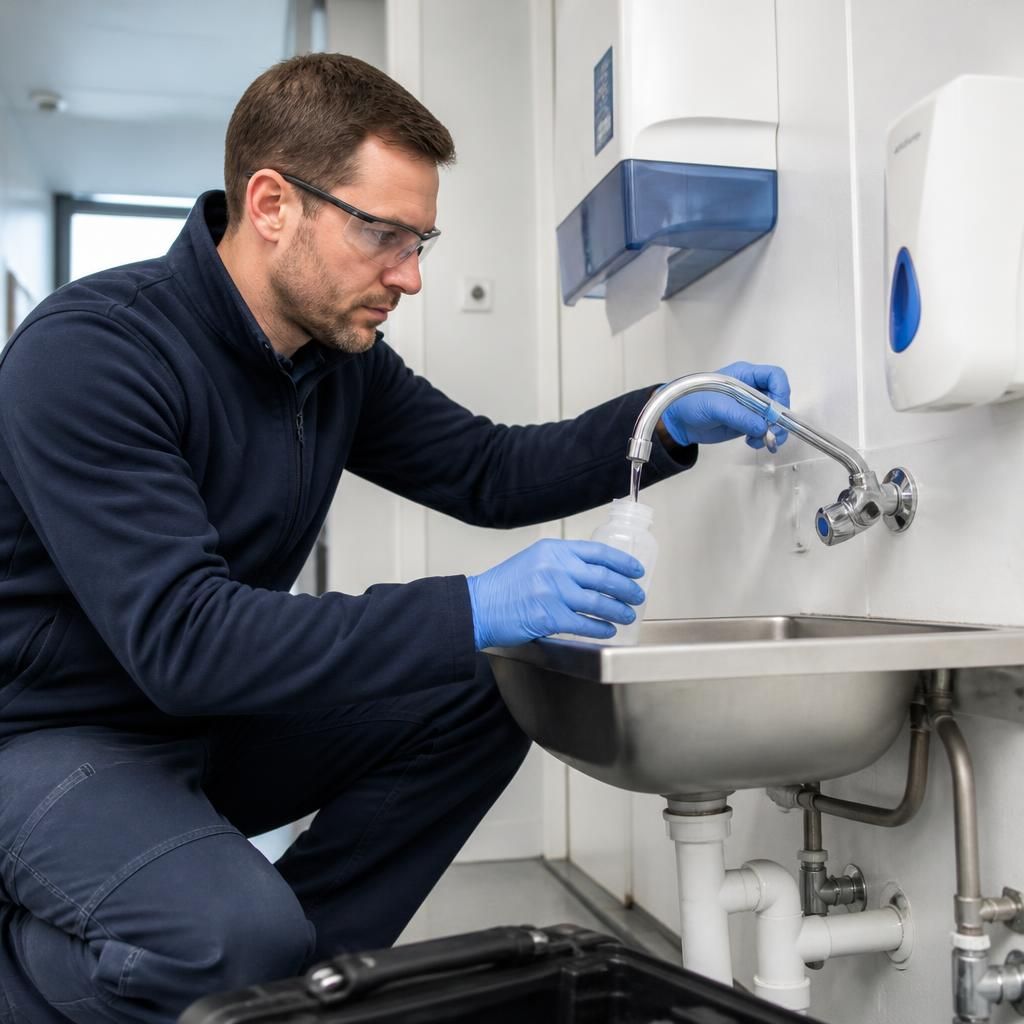
The reliability of a legionella testing approach depends not only on which outlets are sampled, but also on how each sample is collected, identified and handled. A result is more useful for compliance decisions when the sample location, collection conditions and relevant system information are recorded accurately.
Sampling records should link each container to a specific outlet or plant item and note factors that could affect interpretation, such as recent flushing, temperature conditions or remedial work. Samples should then be handled in accordance with the laboratory’s requirements so that transport or collection issues do not undermine the evidence.
This supporting information helps the duty holder distinguish a meaningful change in system conditions from an isolated or unreliable result. It also gives the investigating professional a sound basis for deciding whether further sampling, operational changes or remedial action is appropriate.
Discuss your legionella testing approach
If you need to review whether your legionella testing approach reflects your organisation’s compliance responsibilities, speak to Blue Fish Water Management. Our team can help you assess the evidence required and identify a suitable next step.