
When is repeat legionella testing needed after remedial work?
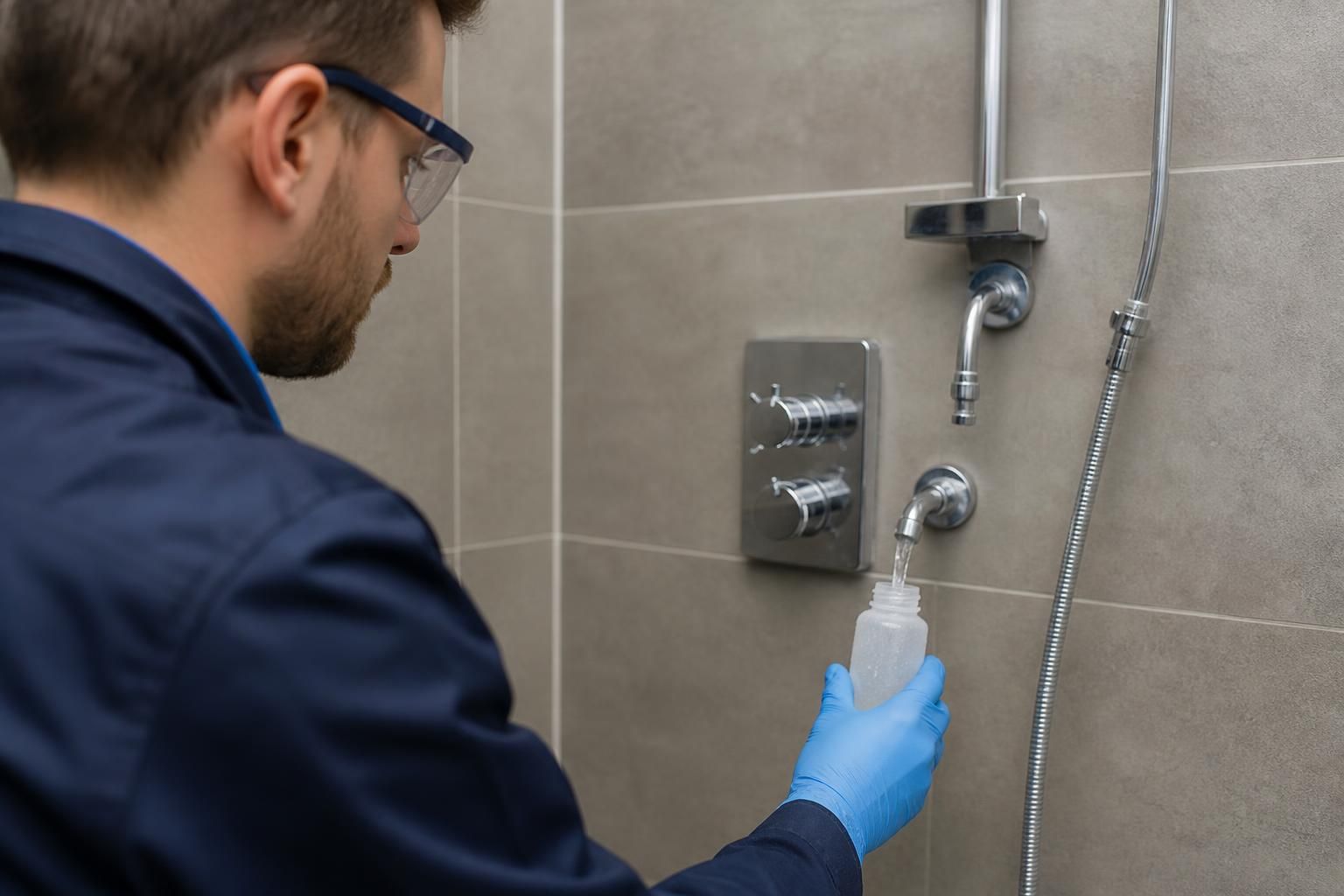
Repeat legionella testing should normally take place after remedial work has been completed, the water system has been returned to its intended operating condition and any required flushing or disinfection has been carried out. There is no universal waiting period or single testing schedule: the responsible person and competent water hygiene professional should set the timing, sample locations and follow-up actions according to the original risk assessment and the work undertaken.
The need for repeat testing depends on whether the remedial work could have altered the conditions that support legionella growth or spread. Testing is particularly relevant after:
- Cleaning, descaling or disinfection of storage tanks, calorifiers, showers or other water system components.
- Changes to hot water storage, distribution temperatures or return temperatures.
- Alterations to pipework, including the removal of dead legs, replacement of outlets or changes to flow routes.
- Repairs that have introduced contamination, disturbed sediment or left parts of the system unused.
- Corrective work following a positive legionella result or a pattern of unsatisfactory results.
- Changes to occupancy, water demand or the way the building is operated.
Where remedial work was limited and did not affect water quality or system operation, immediate repeat sampling may not be necessary. The decision should still be recorded, with the rationale linked to the risk assessment. By contrast, work involving disinfection, contamination or a significant change to the system will usually justify verification testing before the system is treated as fully controlled.
When should samples be taken?
Samples should be taken after the relevant corrective measures have been completed and the system has had sufficient time to operate under normal conditions. Sampling too soon can produce results that reflect the disruption caused by the work rather than the stable condition of the system. Waiting too long can leave an unresolved risk without evidence that the remedial action has worked. The appropriate interval therefore depends on the system, the intervention and the reason for testing.
For a disinfection exercise, the post-treatment sampling plan may include checks that the treatment was completed correctly, followed by microbiological samples used to verify the outcome. For temperature-related remedial work, the system should be operating at its intended settings before samples are collected. If outlets or pipework have been replaced, the sampling plan should consider whether the new components, altered branches or previously stagnant sections could affect the result.
What should be tested?
Repeat testing should cover locations that can demonstrate whether the remedial work addressed the identified problem. This may include the original positive or representative outlets, storage and distribution points, return lines, low-use areas and other parts of the system identified in the risk assessment. Testing every outlet is not automatically required, but sampling too narrowly can miss a localised problem. The scope should reflect the system layout, the sampling history and the nature of the remedial work.
Samples should be collected using a consistent, documented method and submitted to a suitably competent laboratory. Results need to be considered alongside temperature records, inspection findings, control checks and any observations made during the remedial work. A laboratory result is evidence about the sampled points at the time of sampling; it is not, by itself, proof that every part of a complex system is free from risk.
How are the results used?
A satisfactory result supports the conclusion that the immediate corrective action has controlled the issue, provided other control measures remain effective. It should be entered into the water safety records with the sample locations, dates, test method, laboratory report and details of the work completed. The risk assessment and monitoring regime should then be reviewed to confirm that the controls remain appropriate.
An unsatisfactory result does not simply call for another isolated test. It should prompt investigation into possible causes, such as inadequate disinfection, persistent low temperatures, poor circulation, stagnation, biofilm, scale, contaminated components or ineffective flushing. Further remedial work may be required, followed by additional sampling at locations selected to test the suspected cause. Interim measures may also be needed to protect building users while the investigation continues.
A negative or satisfactory sample should not be interpreted as permanent clearance. Legionella risk can return if temperatures drift, outlets remain unused, tanks become contaminated, control checks are missed or the system is changed. Routine monitoring and periodic risk assessment therefore continue after repeat testing. Additional samples may also be justified if control readings deteriorate, complaints indicate a problem, the building use changes or a later inspection identifies a new risk.
For businesses, the important compliance record is the chain of evidence: the original finding, the chosen remedial action, the reason for the repeat-testing plan, the results, any further actions and the review of ongoing controls. A competent water safety professional can help determine whether repeat testing is proportionate, ensure that samples represent the affected parts of the system and translate the findings into practical monitoring requirements.
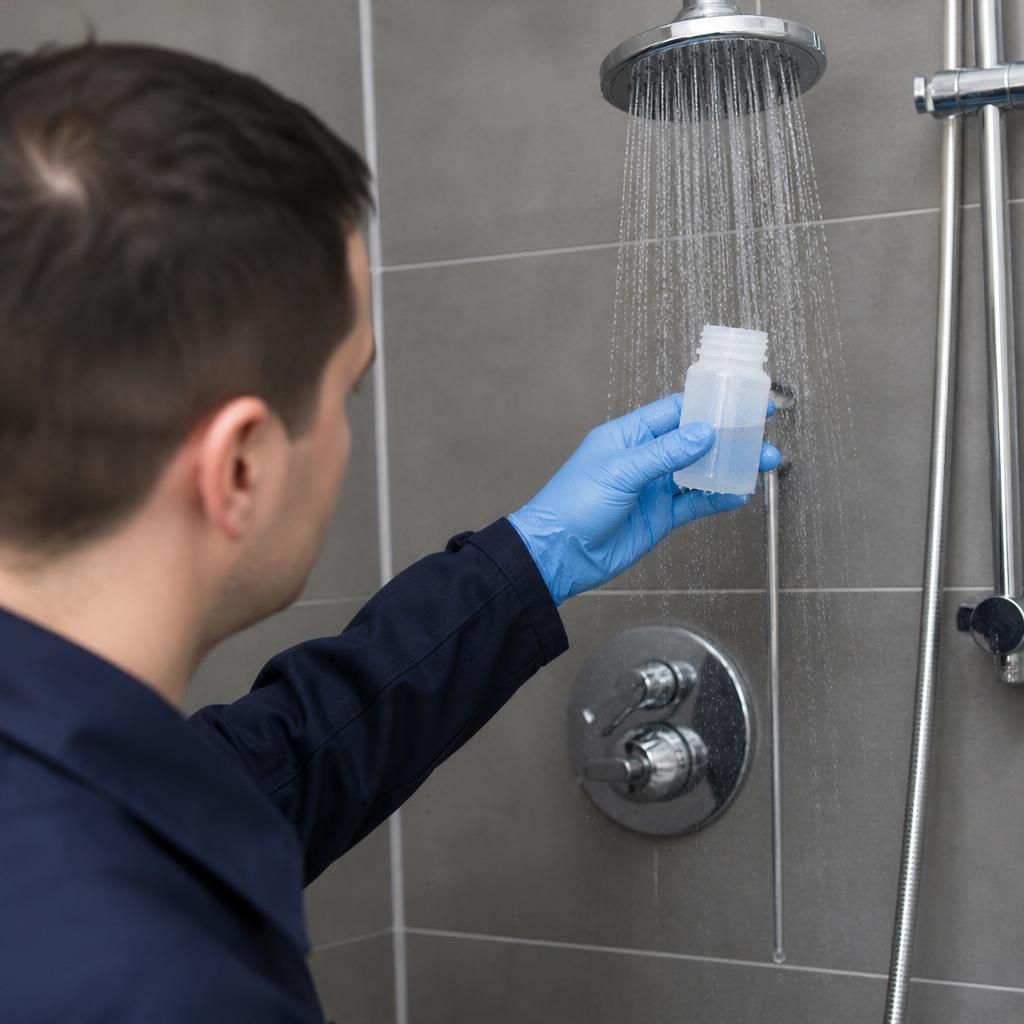
Repeat legionella testing should be planned against a defined decision point, not treated as a standalone pass-or-fail exercise. Before samples are taken, the responsible person should record what the remedial work was intended to achieve, which evidence will demonstrate that objective has been met and who will authorise the system’s return to normal management.
- Identify the controls that must be demonstrated, such as restored temperatures, effective circulation or removal of contamination.
- Set out the action required if the evidence is inconclusive or unsatisfactory.
- Keep the laboratory report with the remedial-work records so the result can be traced to the intervention and sampling plan.
This approach helps prevent a satisfactory result from being given more significance than it deserves. It also makes clear when further technical review is needed, particularly where the remedial work addressed only one part of a wider water-system problem.
Discuss your repeat legionella testing requirements
Discuss your repeat legionella testing requirements with Blue Fish Water Management Ltd to review the remedial work, evidence needed and appropriate follow-up plan for your water system.