
What makes legionella testing cost more for complex water systems?
Legionella testing costs more for complex water systems because they contain more outlets, storage tanks, distribution loops and control points that may need assessment and sampling. Additional access, representative sample selection, system records and interpretation can increase the testing scope compared with a small, straightforward installation.
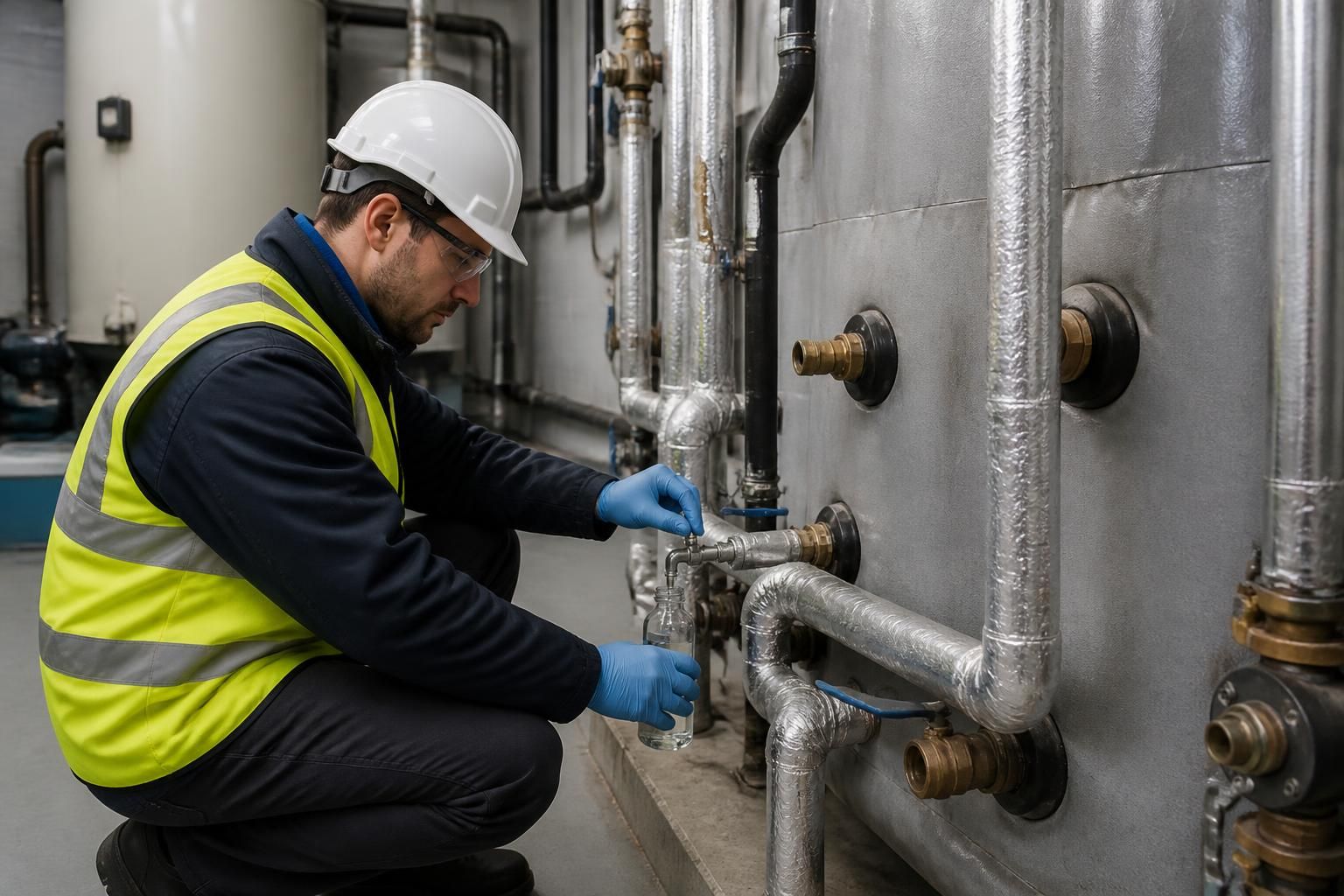
Legionella testing costs more for complex water systems because the work involves greater technical planning, more detailed sampling and more extensive interpretation. The price reflects the scope needed to obtain meaningful evidence about the system, rather than simply the number of water samples sent to a laboratory.
System design affects the testing scope. A complex installation may include multiple hot- and cold-water storage arrangements, secondary return circuits, boosted supplies, specialist outlets, temperature-controlled equipment or areas with different usage patterns. Each feature can create a separate point at which water conditions need to be considered. The testing plan must account for how water enters, is stored, circulated and drawn from the system.
Representative sampling requires professional judgement. Testing every outlet is not normally the purpose of a risk-based programme. Instead, samples are selected to provide useful evidence from locations such as sentinel outlets, remote sections, low-use areas, storage vessels and parts of the system where temperatures or water movement may be less well controlled. Selecting appropriate locations takes more work where the system has several branches, mixed uses or incomplete records.
Complex buildings may also require samples from different operational areas. For example, accommodation, healthcare-related facilities, industrial processes and commercial premises can have different outlet types and patterns of use. The person arranging the testing may need to coordinate access with facilities teams, tenants, contractors or responsible persons so that the selected locations can be reached and correctly identified.
Access and site conditions can increase the practical workload. Tanks, plant rooms, ceiling voids, restricted areas and remote outlets may not be accessible in the same way as ordinary taps and showers. Safe access arrangements, isolation procedures and site inductions can add to the time required. If an outlet cannot be accessed or a section of the system cannot be confirmed, the limitations may need to be recorded and considered when the results are interpreted.
System records are another important factor. Up-to-date schematics, asset registers, previous test results, temperature records and maintenance information help a tester understand the installation and choose suitable sample points. Where records are incomplete, additional investigation may be needed to establish how the system operates. This can increase the professional time involved even if the eventual number of laboratory samples remains unchanged.
Laboratory and reporting requirements also contribute to the price. Each sample requires correct collection, identification, preservation and transport before it can be analysed. A complex assignment may produce more samples or require results to be matched to a detailed site schedule. The final report may need to distinguish between separate buildings, plant areas, systems or risk zones, rather than presenting a simple list of results.
Interpretation is particularly important where results must be considered alongside system conditions. A laboratory result does not, by itself, explain why an issue has occurred or what should happen next. The report may need to consider factors such as:
- the location and function of the sampled outlet;
- whether the sample represents a storage vessel, circulating system or terminal outlet;
- temperature and water-quality records;
- recent maintenance, disinfection or changes to system use;
- evidence of stagnation, poor circulation or infrequently used outlets; and
- whether further investigation or remedial action should be considered.
This is why a single laboratory price should not be used as the only basis for comparing quotations. One provider may quote for sample collection and analysis alone, while another may include site planning, sample-point selection, results interpretation and a detailed compliance report. The two prices may therefore cover different levels of service.
Repeat work can also affect the overall cost. Additional testing may be appropriate where an initial result requires confirmation, where remedial work has been completed, or where a system has changed significantly. Complex systems may need a carefully planned follow-up programme to establish whether conditions have improved across the affected areas, rather than relying on one isolated sample.
When requesting a quotation, provide the system schematic if available, the number and types of buildings, storage and circulation arrangements, known access restrictions, previous results, recent remedial history and the intended reporting requirements. This allows the testing scope to be defined clearly and helps avoid comparing a limited sampling visit with a broader investigation.
For complex installations, Blue Fish Water Management Ltd can combine UKAS-accredited water testing with practical review of the information surrounding the samples. The appropriate scope depends on the system and its risks; a suitable programme should be proportionate, documented and capable of supporting the responsible person’s wider water-management arrangements.
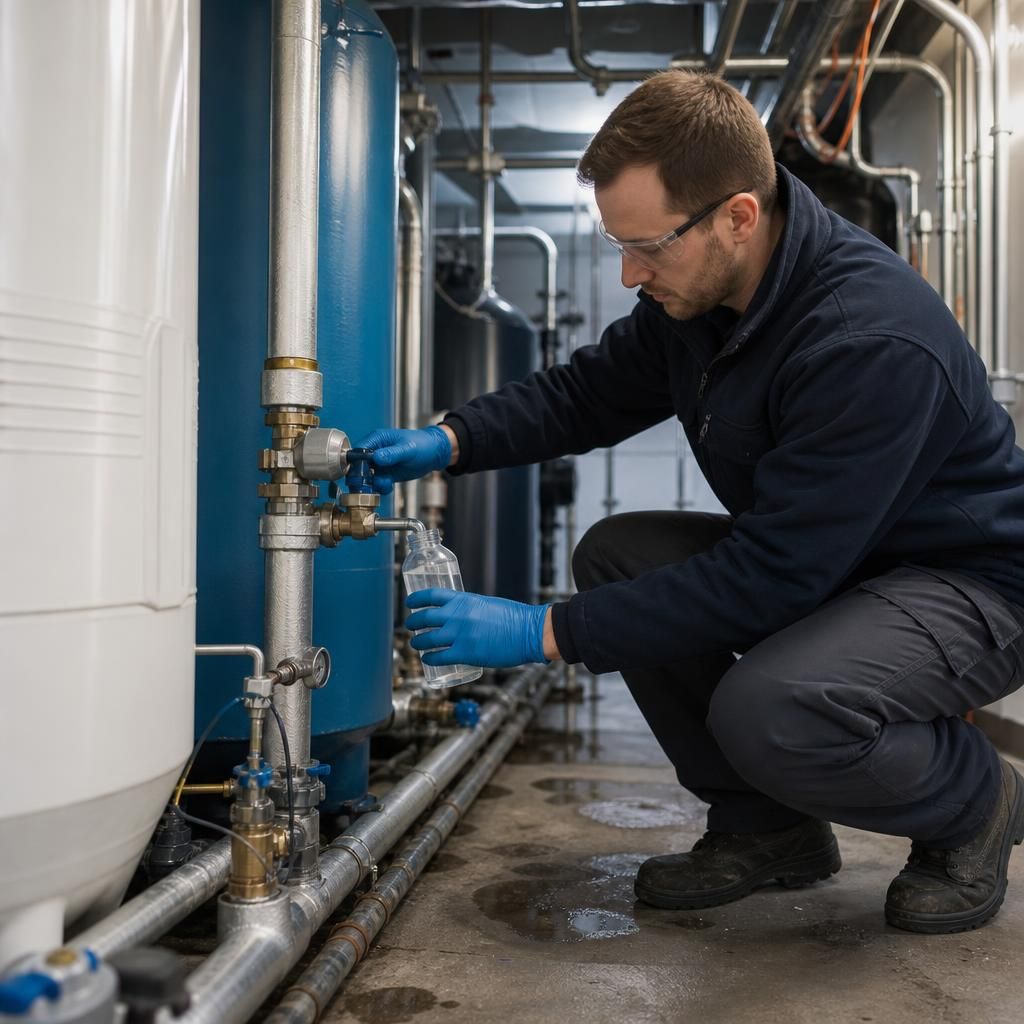
The purpose of the testing can affect the cost as much as the physical size of the water system. A baseline compliance programme, an investigation into an unexplained result and verification after corrective work each require different evidence, sample selection and reporting. Testing designed to answer a specific operational question may therefore involve more professional planning than a routine set of samples.
For example, an investigation may require the tester to compare results with operating conditions, recent changes or particular risk areas. The report then needs to explain what the findings indicate and whether they justify further action. This analytical work is separate from the laboratory charge, so a quotation should identify whether it covers testing only or also includes an assessment of the question the testing is intended to resolve.
Discuss your complex system testing requirements
If your water system includes multiple buildings, storage arrangements or circulation routes, discuss the testing scope with Blue Fish Water Management Ltd before requesting quotations. Sharing available schematics, asset information and previous findings can help establish a proportionate programme for your compliance needs.