
Can one legionella test cover every water outlet?
No. A single legionella test represents only the outlet and water conditions sampled; it cannot demonstrate that every outlet in a building is free from legionella. Testing should follow a risk-based sampling plan that selects appropriate representative outlets and expands sampling where the water system’s design, use or risk profile requires it.
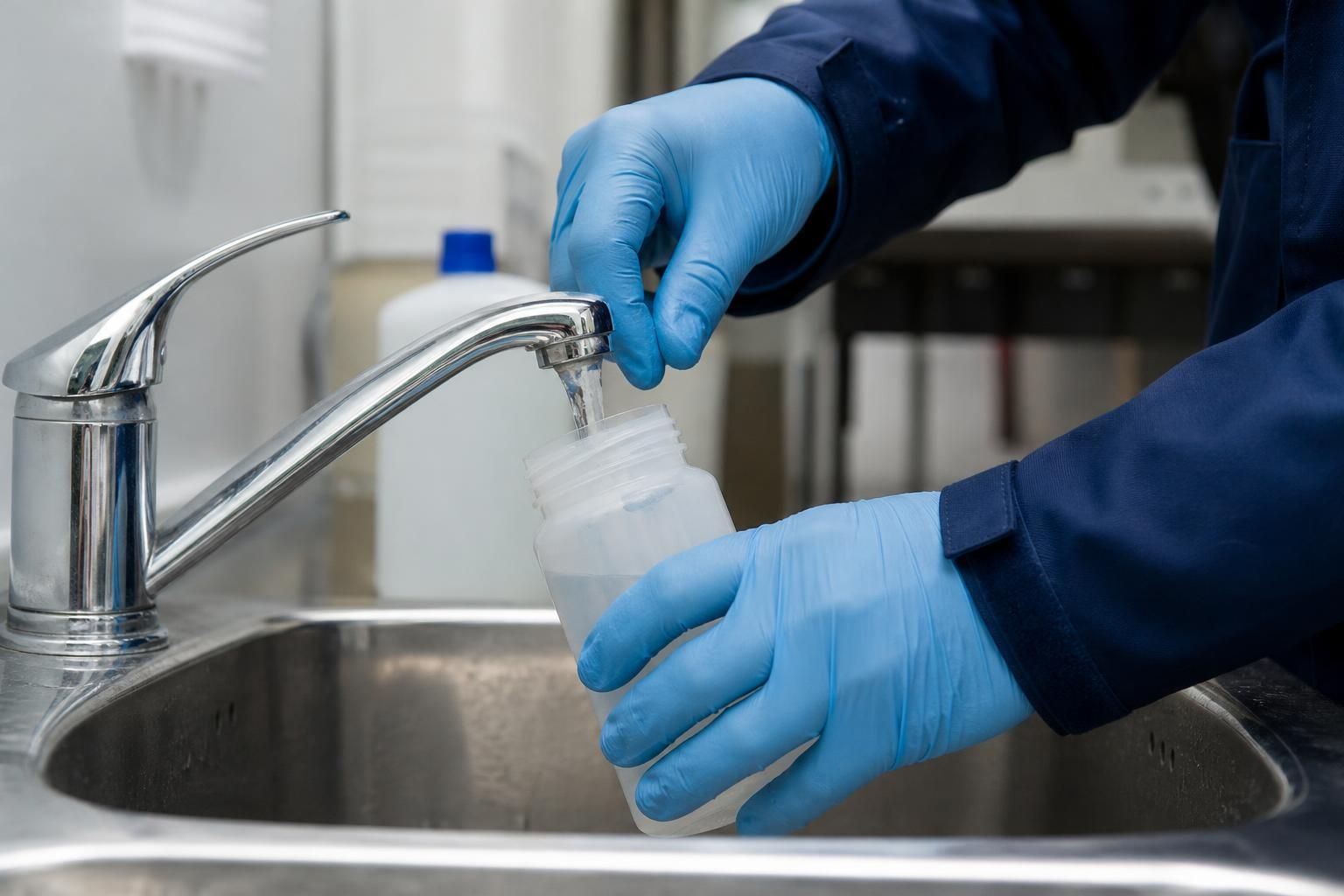
No single legionella sample can verify every water outlet. A laboratory result applies to the sample collected from a particular location, at a particular time, under particular conditions. Whether further outlets need testing depends on the water system’s design, the way it is used, the findings of the risk assessment and any relevant history of contamination or control failure.
Legionella testing is therefore normally planned as part of a wider control strategy rather than treated as a building-wide pass or fail check. The first step is to understand the system, including incoming mains water, storage tanks, calorifiers, hot-water return loops, pipework, thermostatic mixing valves, showers, taps, outlets that are rarely used and any sections that may have stagnation or poor circulation.
Why one outlet does not represent all others
Water conditions can vary substantially within the same premises. Temperature, flow, pipe length, usage patterns, biofilm, scale and localised stagnation may differ between outlets. An outlet close to a hot-water source may therefore produce a different result from a distal outlet, a shower supplied through a thermostatic mixing valve or a little-used tap on another branch of the system.
A negative result from one sample shows that legionella was not detected at that sampling point under the conditions tested. It does not prove that the organism is absent elsewhere, nor does it confirm that the system will remain controlled. Conversely, a positive result at one outlet does not automatically establish that every outlet is affected, although it should prompt appropriate investigation and a review of the control measures.
How a representative sampling plan is developed
A suitable plan should be based on the current risk assessment and an accurate schematic or understanding of the water services. Sampling locations may be selected to include:
- sentinel outlets, such as the first and last outlets on hot-water return circuits where relevant;
- representative hot and cold outlets on different branches of the system;
- showers, spray-producing outlets and other locations where exposure to aerosols is more likely;
- outlets serving higher-risk users or areas with particular vulnerability;
- low-use, infrequently used or previously inaccessible outlets;
- storage vessels, calorifiers, return lines or other system points where sampling is technically appropriate; and
- locations associated with previous abnormal results, remedial work, stagnation or suspected control problems.
The plan should not simply select the most convenient taps. It should explain why each location is included and what part of the system it represents. Where the system is large, subdivided or technically complex, more samples may be needed to produce meaningful information. Sampling may also need to be expanded if the initial results, inspection findings or operational records identify additional concerns.
Outlet sampling and system sampling answer different questions
A sample taken from an outlet can help assess the microbiological condition at that point of use. Additional samples from storage and distribution components can help investigate how contamination may be entering or moving through the system. These results should be considered alongside temperature measurements, flushing records, maintenance information and the condition of tanks, calorifiers and associated equipment.
Sampling technique also affects interpretation. The person taking the sample should use a documented method, record the location and relevant conditions, and ensure that the sample is handled and submitted correctly. Details such as whether an outlet was sampled before or after flushing, whether an aerator was removed and whether the outlet had been used recently can affect what the result represents. Samples should be analysed by a suitably competent laboratory, with the report interpreted in the context of the sampling method and the risk assessment.
When broader testing may be appropriate
Testing beyond the usual representative locations may be justified where there has been a positive result, a suspected outbreak, loss of temperature control, a water-system alteration, prolonged stagnation, a change in building use or remedial work. It may also be appropriate where the initial sampling plan cannot adequately represent all branches, outlet types or areas of the premises.
After remedial action, repeat sampling should be designed to check whether the intervention has addressed the identified problem. That may involve revisiting the original sampling points and adding locations that could have been affected by the same underlying cause. A single clear result at one outlet is not, by itself, evidence that every part of the system has been restored to satisfactory control.
What a compliant approach should document
- the outlets and system components considered;
- the reason each sampling location was chosen;
- the date, time and conditions of sampling;
- the laboratory method and result for each sample;
- any temperature, usage or maintenance information relevant to interpretation;
- actions required in response to results; and
- the person responsible for reviewing results and updating the control plan.
Blue Fish Water Management can support businesses with risk-based legionella sampling, UKAS-accredited water testing, results interpretation and follow-up advice. The appropriate scope is determined from the water system and its risks, rather than from a fixed assumption that one sample can stand for every outlet.
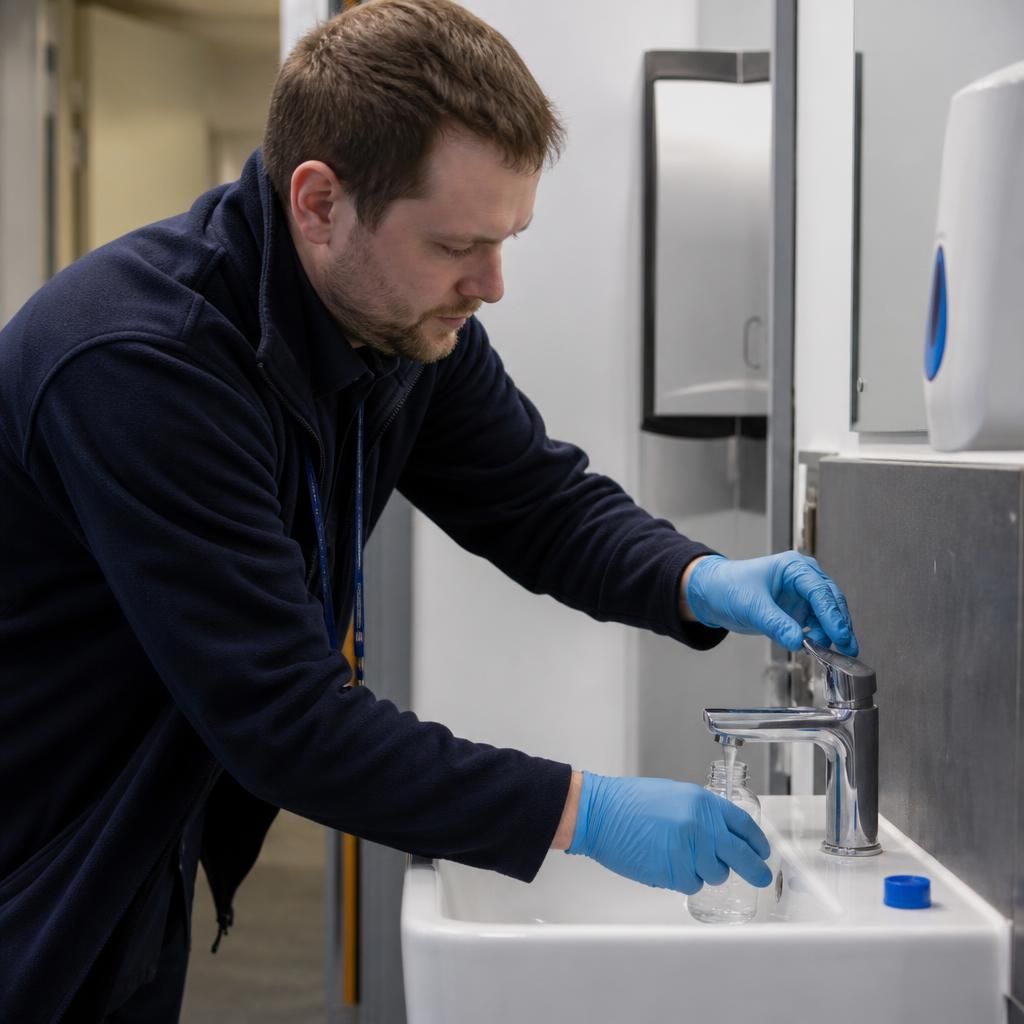
A single legionella test should be treated as evidence for a defined sampling purpose, not as a blanket clearance for the premises. When reviewing the result, identify which outlet or system section it relates to, what other areas the sampling plan covers, and which parts remain outside its scope. This makes the result easier to interpret and helps the dutyholder decide whether additional investigation or control measures are needed.
Discuss your legionella testing requirements
If you need to confirm whether your current sampling plan covers the relevant parts of your water system, discuss your legionella testing requirements with Blue Fish Water Management. Their team can help identify an appropriate next step based on your premises and compliance responsibilities.