
Which water sampling methods suit different system sizes and conditions?
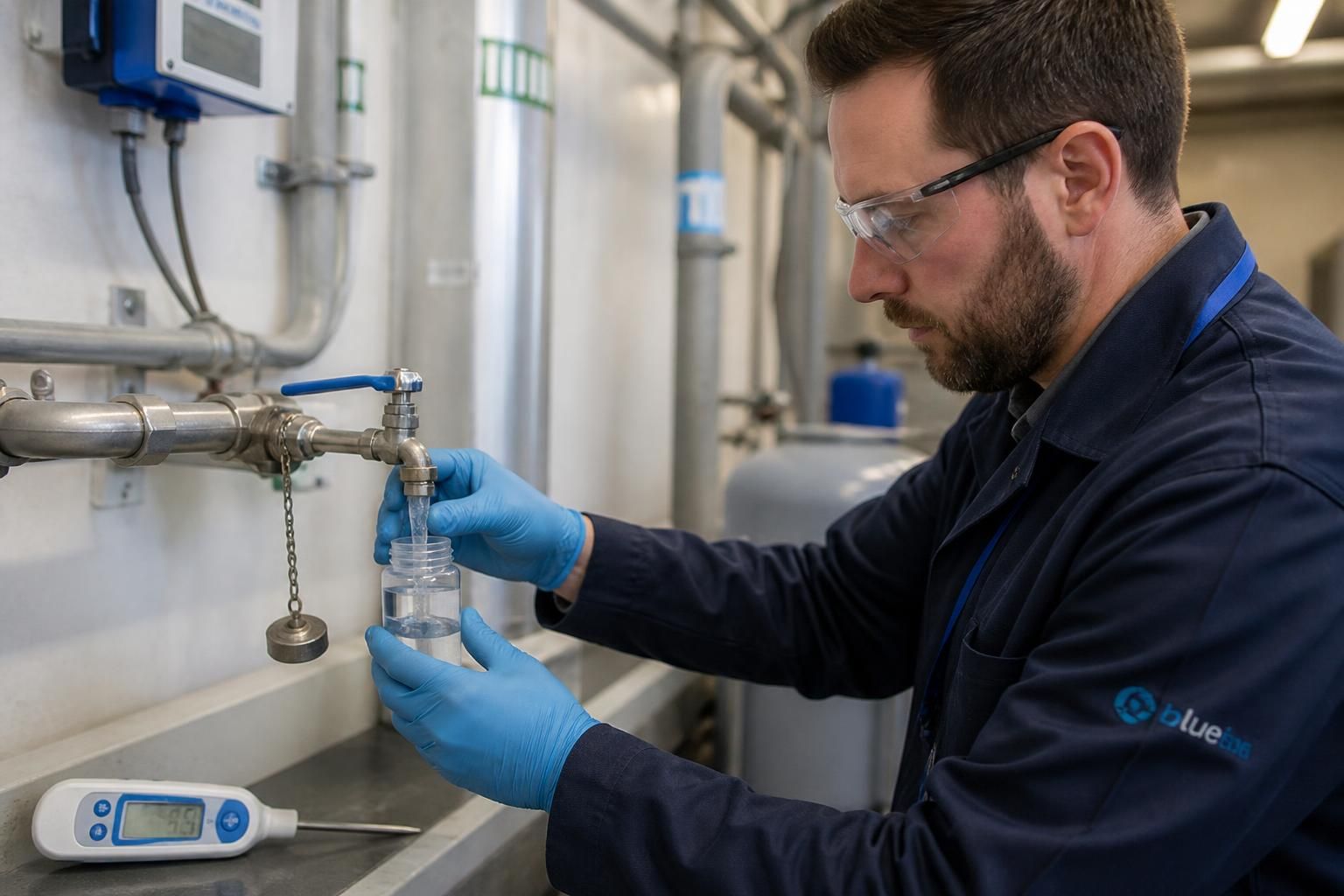
Water sampling methods should be selected according to the system’s configuration, the purpose of the sampling and the conditions that may affect contamination or test results. A sound approach combines representative outlet selection with samples from relevant plant, storage and distribution points, rather than relying on the number of outlets alone.
Small, simple systems: Where a building has a straightforward hot and cold water arrangement with few outlets, sampling can usually concentrate on locations that represent the system’s key risk points. This may include outlets that are infrequently used, the furthest points of distribution, showers, thermostatic mixing valve outlets and points close to hot water storage or generation. The sampling plan should explain why each outlet was chosen, particularly where only a limited number can be accessed.
Larger systems: A larger installation normally needs sampling across separate branches, floors, buildings or operational areas. Samples may be grouped by supply zone so that results can be related to particular parts of the system. Storage tanks, calorifiers, secondary return arrangements and representative outlets should be considered together. Sampling only at frequently used outlets can overlook conditions in lesser-used branches, dead legs or areas with poor circulation.
Complex or multi-building systems: Hospitals, care settings, hotels, educational premises, industrial sites and mixed-use properties may contain several water systems with different temperatures, usage patterns and levels of vulnerability. Sampling should distinguish between systems rather than treating the entire site as one network. Plant-room samples, storage samples and outlet samples can then be compared to help identify whether a finding is associated with the incoming supply, stored water, distribution pipework or a particular outlet group.
Routine monitoring: Routine sampling is used to provide continuing information about water quality and the performance of control measures. Locations should remain sufficiently consistent to make results comparable over time, while the schedule should be reviewed when the system changes or results indicate an emerging issue. Sentinel outlets, return-flow points and representative low-use outlets can be useful where they reflect the system’s operating conditions.
Investigative sampling: When there is an unexplained result, a suspected case, a temperature control failure or a change in water use, investigative sampling should be broader and more diagnostic. Samples may be taken from nearby outlets, upstream and downstream points, storage vessels, calorifiers, return pipework and areas associated with stagnation. The purpose is not simply to obtain more samples, but to establish how contamination may be distributed and which part of the system requires attention.
Sampling affected by temperature: Temperature measurements should be recorded alongside relevant samples because hot and cold water conditions can help interpret laboratory findings. A sample from a hot outlet may be taken before or after the outlet has been run, depending on the investigation’s purpose. These approaches answer different questions: an initial sample can indicate conditions at the outlet, while a flushed sample may provide information about water further back in the branch. The method used should be documented consistently.
Low-use outlets and stagnation: Locations that are rarely used can accumulate stagnant water and may not represent the wider system. They should not automatically be excluded, however, because their condition may be important to risk assessment. The sampler should record the outlet’s use, whether it was flushed before collection and any visible defects, dead legs or flow restrictions that could affect the result.
Storage and plant samples: Storage tanks, calorifiers and associated pipework require sampling points that can be accessed safely and without compromising the vessel or the sample. A plant sample can be particularly useful when outlet results are inconsistent or when contamination is suspected within stored or recirculated water. Sampling from plant should be planned with the system design in mind, since a single point may not represent all parts of a vessel or circulation circuit.
Outlet and environmental conditions: The sampler should note conditions that could influence interpretation, including outlet type, recent use, cleanliness, scale, splash contamination, access restrictions and unusual flow. Samples from showers, spray taps and other aerosol-generating outlets may warrant particular consideration because they can be relevant to exposure risk as well as water quality. The outlet should be handled in a way that avoids introducing contamination during collection.
When access is restricted: In occupied or operational buildings, some outlets may be unavailable or unsuitable for sampling. The alternative locations should be recorded, together with the reason for the change. A convenient outlet is not necessarily a representative one, so substitutions should reflect the same branch, temperature zone or usage pattern where possible.
After remedial work: Sampling after cleaning, disinfection, repairs or changes to temperature control should be planned around the work completed and the risk being checked. Samples may need to cover the treated section, outlets beyond it and any areas that were not included in the intervention. The sampling method, timing, flushing instructions and laboratory requirements should be agreed in advance so that results can be interpreted against the work undertaken.
For every method, accurate records are as important as the sample itself. The sampling point, system or branch, outlet condition, temperature readings where relevant, flushing procedure, date, time, sampler and sample identification should be recorded. Samples should be placed in suitable containers, protected from contamination and transferred to the laboratory under the required conditions. A clear chain of custody links the result to the precise location and method used.
The most useful sampling plan is therefore proportionate but not merely convenient. It should reflect the system’s layout, storage and circulation arrangements, outlet use, temperature control, potential stagnation and any reason for investigating. Where the system is altered or results are difficult to interpret, the plan should be reassessed rather than repeated unchanged.
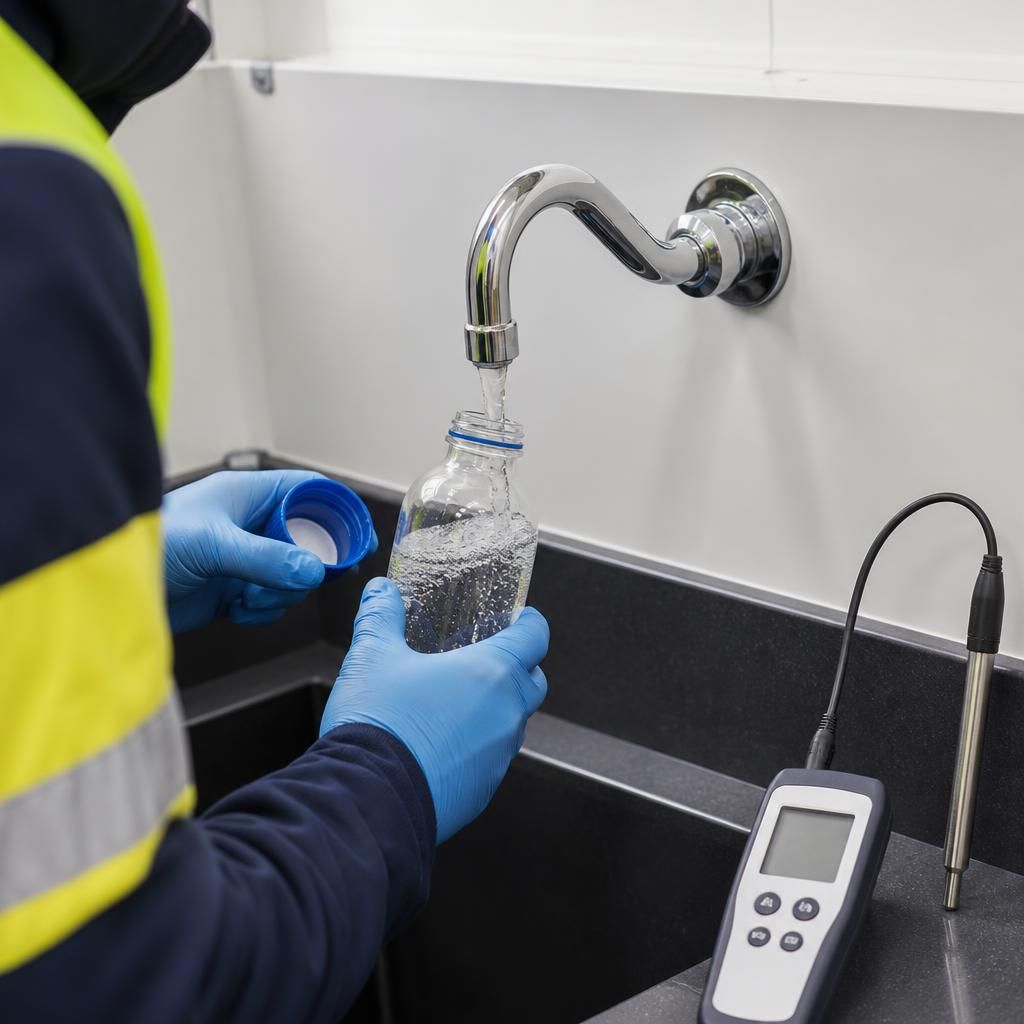
Protecting sample integrity is essential. The method used in the system should be matched by careful collection and handling. The sampler should use the laboratory’s specified container, avoid touching the bottle or cap interior, and label each sample immediately with its precise location and collection details. Samples should not be combined or transferred between containers unless the testing instructions specifically require it.
Delays, unsuitable temperatures or accidental contamination can affect the reliability of a result, particularly when samples are taken from different parts of a large or complex installation. The laboratory’s requirements for storage, transport and submission should therefore be confirmed before collection, so the chosen sampling method produces evidence that can be interpreted with confidence.
Discuss Which Water Sampling Method Suits Your System
If you are unsure which sampling method is proportionate to your system, discuss the layout, operating conditions and testing objective with Blue Fish Water Management Ltd. A review can help establish a sampling approach that produces useful, properly documented evidence for legionella control and compliance.