
Which water sampling approach best suits your system?
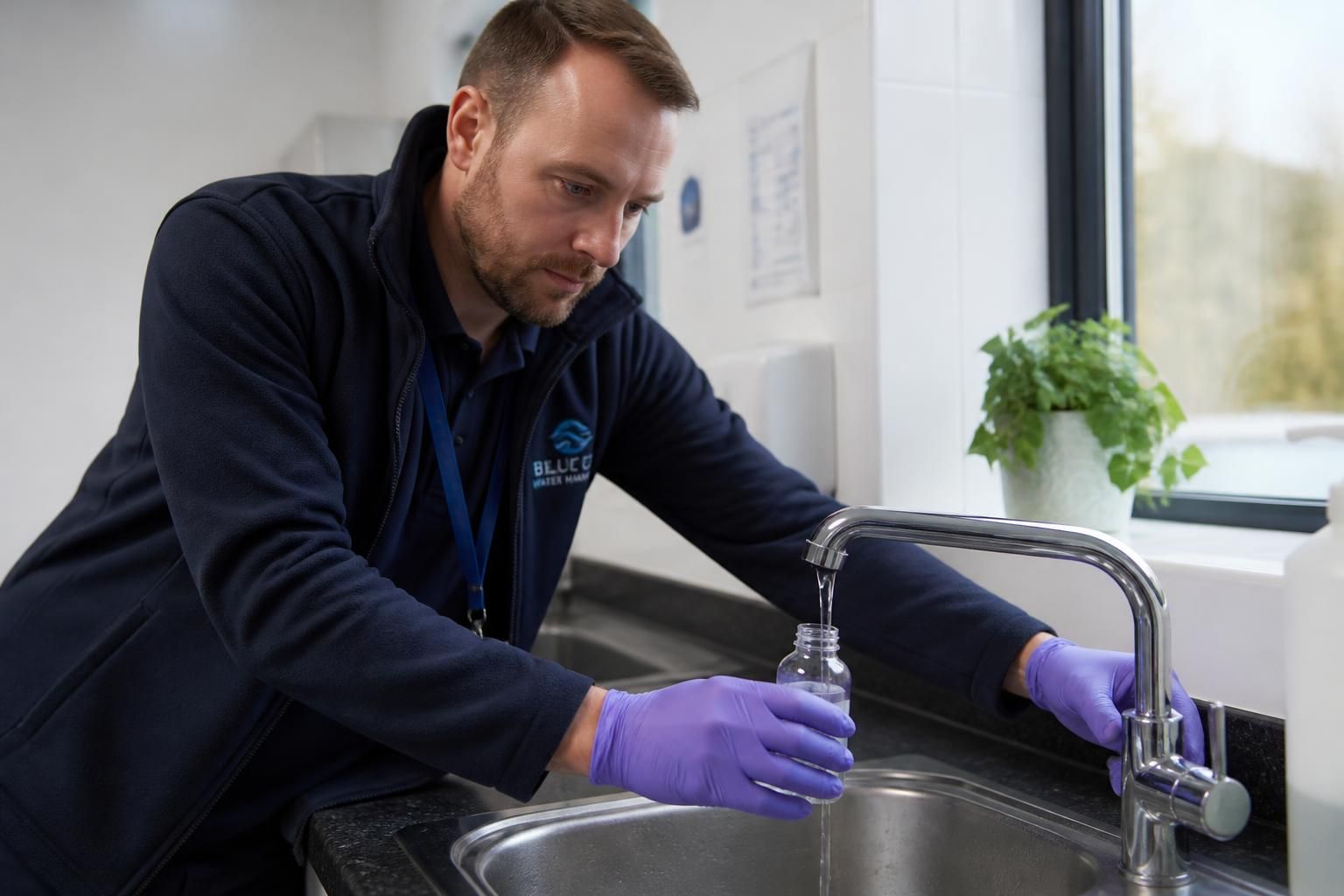
The best water sampling approach is the one that reflects the system’s physical layout, operating conditions and potential exposure points. A small, consistently used system may be assessed through a carefully selected set of representative outlets, whereas a large or complex system usually needs stratified sampling across storage vessels, distribution zones, return loops and higher-risk outlets. Where a result is unexpected, routine coverage alone may not be sufficient; targeted sampling is needed to trace the potential source.
Start with the system map
Sampling should be designed around an up-to-date schematic or survey of the water system. This should identify incoming mains or other sources, tanks, calorifiers, secondary return pipework, point-of-use heaters, outlets, dosing equipment, low-use sections and dead legs. Without this context, taking samples from convenient taps can create a misleading picture of water quality.
The sampling locations should represent the parts of the system that could differ in temperature, turnover, circulation or contamination risk. A suitable plan may include:
- the water entering the building or system;
- stored hot or cold water;
- hot-water flow and return points;
- sentinel outlets that indicate the conditions at the beginning and end of a distribution run;
- showers, spray taps and other outlets that can create aerosols;
- little-used outlets, remote branches and areas affected by stagnation; and
- outlets serving vulnerable occupants or higher-risk activities, where relevant to the premises.
Simple systems
For a small domestic, commercial or industrial system with a clear layout and limited outlets, a representative approach is often the most practical. The selected points should cover the source, stored water where present, key hot-water components and outlets at different positions in the distribution network. Testing only the nearest or most frequently used tap may fail to identify conditions further along the pipework.
Outlet selection should also consider use patterns. A frequently used tap may show the condition of a well-flushed branch, while a little-used shower or remote washroom may provide more relevant information about stagnation. The choice should therefore be based on system risk and representativeness rather than convenience.
Large or complex systems
Hospitals, care settings, hotels, educational premises, manufacturing sites and multi-occupancy buildings commonly require a more structured approach. The system can be divided into zones according to building level, use, plant arrangement, temperature profile or pipework configuration. Samples are then selected from each zone so that one area does not conceal a problem in another.
For these systems, sampling may combine several layers:
- source and storage samples to assess water before it enters the distribution network;
- plant-room samples to examine calorifier outlets, flow and return conditions or associated vessels;
- sentinel samples to monitor representative points within each circulation or distribution zone;
- high-risk outlet samples, particularly where aerosol generation or vulnerable users are involved; and
- targeted samples from low-use or poorly performing sections identified during inspection.
This layered approach helps distinguish a source-related issue from a localised outlet or branch problem. It also makes results easier to compare over time, provided the same locations and sampling conditions are recorded consistently.
Systems with variable use or stagnation
Buildings with seasonal occupancy, vacant areas, intermittent production or frequently changed room use need sampling that reflects those operating conditions. A sample taken immediately after extensive flushing may not represent the water that normally remains in an unused branch. Conversely, a sample taken after prolonged stagnation may need to be interpreted alongside the system’s normal operating pattern.
Records should state whether an outlet was used recently, whether flushing took place before collection and what temperatures were observed. These details help explain differences between samples and prevent a laboratory result being considered without the operational context.
Hot- and cold-water systems
Hot and cold-water services should not automatically be sampled in the same way. Hot-water sampling should relate to the plant arrangement, storage temperature, flow and return performance and the condition at representative outlets. Cold-water sampling should consider incoming temperature, storage, ambient heat gain, long pipe runs and areas where water may warm during low use.
Temperature measurements taken during the visit are an important part of interpreting microbiological results. They can help identify whether a sample point is affected by inadequate heating, poor circulation, heat gain, excessive storage time or another operational condition. A laboratory result should therefore be reviewed alongside the system survey, temperature records and recent control activity.
When the purpose is to trace a problem
A targeted diagnostic approach is more appropriate when there is an unusual result, a suspected contamination source, a failed control measure or a significant change in system performance. Samples may be taken upstream and downstream of a suspected source, at associated storage or plant components, and from nearby outlets. The aim is to compare locations and identify whether the issue is local, confined to a branch or distributed through a wider part of the system.
Additional samples may be appropriate after corrective work, but the timing and locations should be defined in advance. Repeating a sample from one outlet alone may not demonstrate that the wider system has been adequately reviewed. Results should be considered with details of cleaning, disinfection, temperature adjustment, outlet use and any other intervention carried out between sampling visits.
Water samples, swabs and other evidence
Water samples are suitable for assessing the organisms present in the water at the time of collection. Where contamination may be associated with an outlet, surface or biofilm, a competent sampling plan may also consider swabs or other environmental evidence. These approaches answer different questions and should not be treated as interchangeable. The selected laboratory method must match the sample type and the investigation being undertaken.
How to choose between approaches
A practical decision process is to ask:
- What part of the system could create the relevant exposure?
- Which locations represent the source, plant, circulation and furthest outlets?
- Are there low-use branches, dead legs, temperature concerns or localised conditions?
- Is the purpose ongoing verification, investigation or checking the effect of corrective work?
- Can the same locations and collection conditions be repeated for meaningful comparison?
- Will the samples be identified, stored, transported and documented in a way that preserves their evidential value?
The sampling plan should be proportionate to the risk assessment and revised when the system, occupancy, use or control measures change. Blue Fish Water Management can support businesses with water sampling design, system monitoring, laboratory testing and interpretation of results, helping align the selected approach with the actual characteristics of the site.
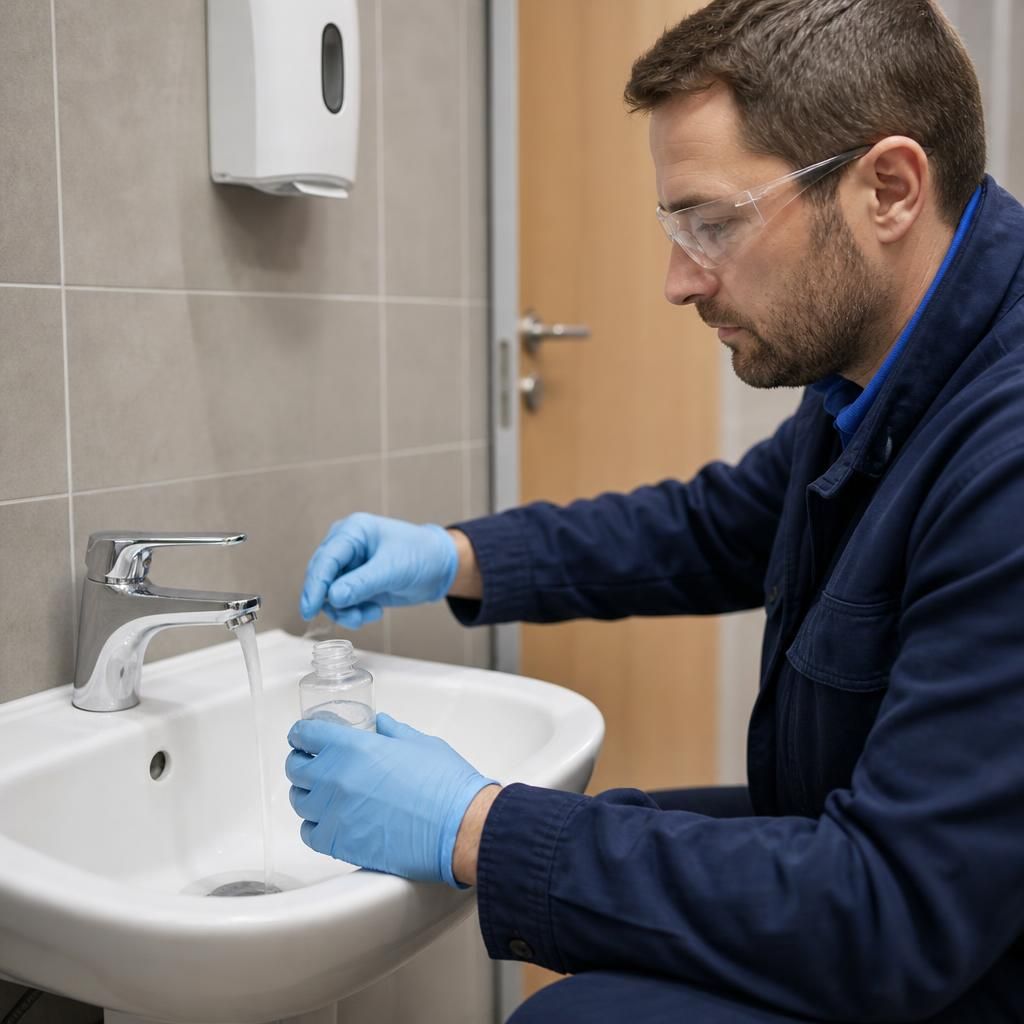
The collection condition is part of the sampling approach. A first-draw sample is taken before the outlet has been run and can indicate conditions in the fitting or nearby pipework after stagnation. A flushed sample, taken after the outlet has been run in accordance with the sampling procedure, provides different information about water entering the outlet from the distribution system. Neither approach is automatically better; the appropriate choice depends on the question being investigated.
For meaningful comparisons, the collection condition should be defined before sampling and recorded with the result. Do not compare a first-draw sample with a flushed sample as though they were equivalent. Using the same method at comparable locations helps distinguish a local outlet issue from a wider distribution problem and gives the laboratory result a clearer operational context.
Discuss the right water sampling approach for your system
Discuss your system with Blue Fish Water Management to identify a proportionate water sampling approach for your risk assessment, operational needs and compliance objectives.