
What is the difference between planned and investigative water sampling?
Planned water sampling follows a scheduled programme to verify routine control of water quality, whereas investigative sampling is undertaken to examine a specific concern, such as an unusual result, suspected contamination or a change in system conditions. The sampling points, frequency and laboratory analysis should therefore reflect whether the purpose is ongoing verification or finding the cause of a problem.
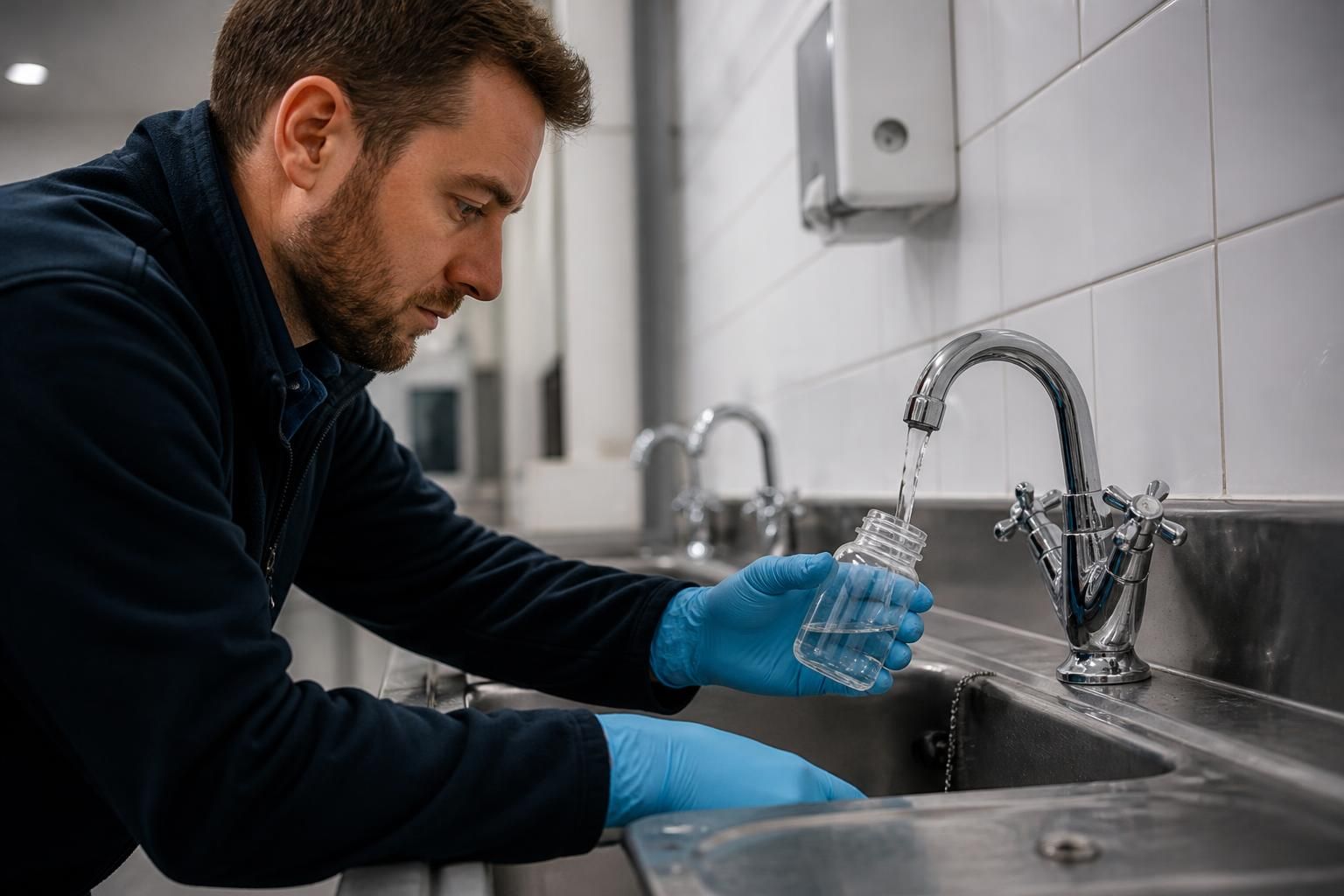
The key difference is purpose: planned water sampling provides routine evidence that a water system remains under control, while investigative sampling is designed to answer a specific question about an abnormal result, suspected contamination or a change in operating conditions. Planned sampling is therefore structured in advance; investigative sampling is selected in response to evidence or concern.
Planned water sampling forms part of a documented monitoring programme. The programme should identify the systems and outlets covered, the sampling locations, the parameters to be tested, the intended frequency and the action to take when results fall outside the expected range. Sampling points may be chosen to represent storage tanks, distribution pipework, sentinel outlets, infrequently used outlets or other parts of the system where water quality needs to be verified.
The purpose is not simply to collect a series of laboratory results. Results should be considered alongside temperature checks, cleaning and disinfection records, maintenance activity, flushing arrangements, occupancy patterns and other control measures. A consistent set of results can support the conclusion that controls are operating as intended, but it does not remove the need to review the programme when the system or its use changes.
Investigative water sampling is commissioned when routine information is insufficient to explain a concern. Typical triggers include an unexpected laboratory result, a pattern of results that differs between outlets, evidence of stagnation, a suspected failure of temperature control, remedial work or alteration to the system, or a report that requires further technical assessment. The investigation should begin by defining what needs to be established rather than by taking additional samples without a clear purpose.
An investigative plan may involve:
- reviewing the water safety risk assessment, schematic drawings, monitoring records and recent maintenance history;
- comparing results from outlets supplied by the same branch or storage arrangement;
- sampling upstream and downstream locations to help identify where a problem may be arising;
- examining low-use outlets, dead legs, tanks, calorifiers or other areas associated with stagnation or poor control;
- taking repeat samples where a result needs confirmation, while recognising that a single repeat result cannot explain the underlying cause; and
- checking whether sampling conditions, flushing, disinfection, transport or laboratory handling could have influenced the result.
The two approaches also differ in how their results are interpreted. Planned results are usually compared with the site's established control criteria and previous trends. Investigative results are interpreted as part of a wider technical enquiry. A result may show that a particular sample point contains an issue, but further evidence is normally needed to determine whether the issue is local to that outlet, present across a branch, associated with the source water or linked to a wider system condition.
Sampling technique is especially important during an investigation. The sampler should record the exact location, outlet condition, date and time, relevant flushing or pre-treatment, and any circumstances that could affect representativeness. Samples should be correctly identified, stored and transported in accordance with the laboratory's requirements. A clear chain of custody helps demonstrate who collected and handled each sample and reduces uncertainty when results are reviewed or compared.
Investigative sampling should not automatically replace planned sampling after a concern has been addressed. Once the cause has been assessed and any necessary remedial measures have been completed, targeted follow-up sampling may be appropriate to check the result of those measures. The routine programme can then be reviewed and amended if the investigation shows that existing sampling points, parameters or frequencies no longer reflect the system's risks.
In practice, a business may use both approaches at the same time. Planned sampling provides continuity and trend information, whereas investigative sampling adds detail when the normal monitoring picture changes. Keeping the two purposes distinct makes the records easier to interpret, helps prevent unnecessary testing and supports proportionate decisions about further assessment, remedial work and ongoing water system management.
Where laboratory analysis is required, the testing method and sample documentation should match the question being investigated. An appropriately qualified water hygiene specialist can help define the sampling rationale, coordinate laboratory submission, interpret results with operational records and identify whether the findings require changes to the water safety management arrangements.
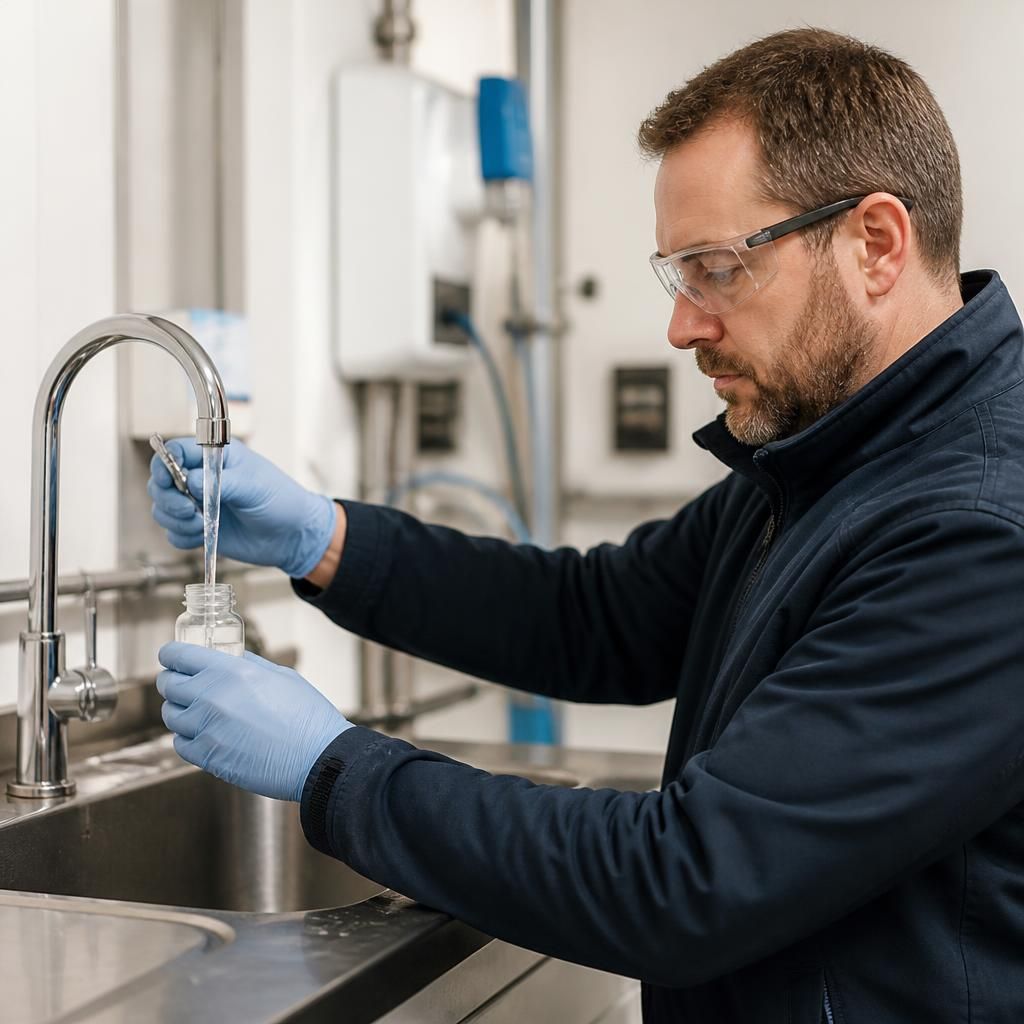
A clear record of why each sample was taken is essential when planned and investigative results are reviewed together. Planned samples should be identified as part of the routine monitoring schedule, while investigative samples should state the concern, the locations selected and the question the investigation is intended to answer.
Sampling records should also note any relevant changes at the premises, such as altered occupancy, maintenance, disruption to water use or work on the system. This context helps prevent an isolated investigative result from being treated as a routine trend, or a routine result from being taken as proof that a specific concern has been resolved.
Discuss your planned or investigative water sampling needs
Discuss your planned or investigative water sampling needs with Blue Fish Water Management Ltd to help determine an appropriate sampling scope and next steps for your system.