
What does chain of custody add to legionella water sampling?
Chain of custody adds a documented, traceable record of a legionella water sample from collection through transport, laboratory receipt and reporting. This helps demonstrate that the sample was correctly identified, handled and tested, making the resulting findings more reliable and defensible for water safety decisions and compliance records.
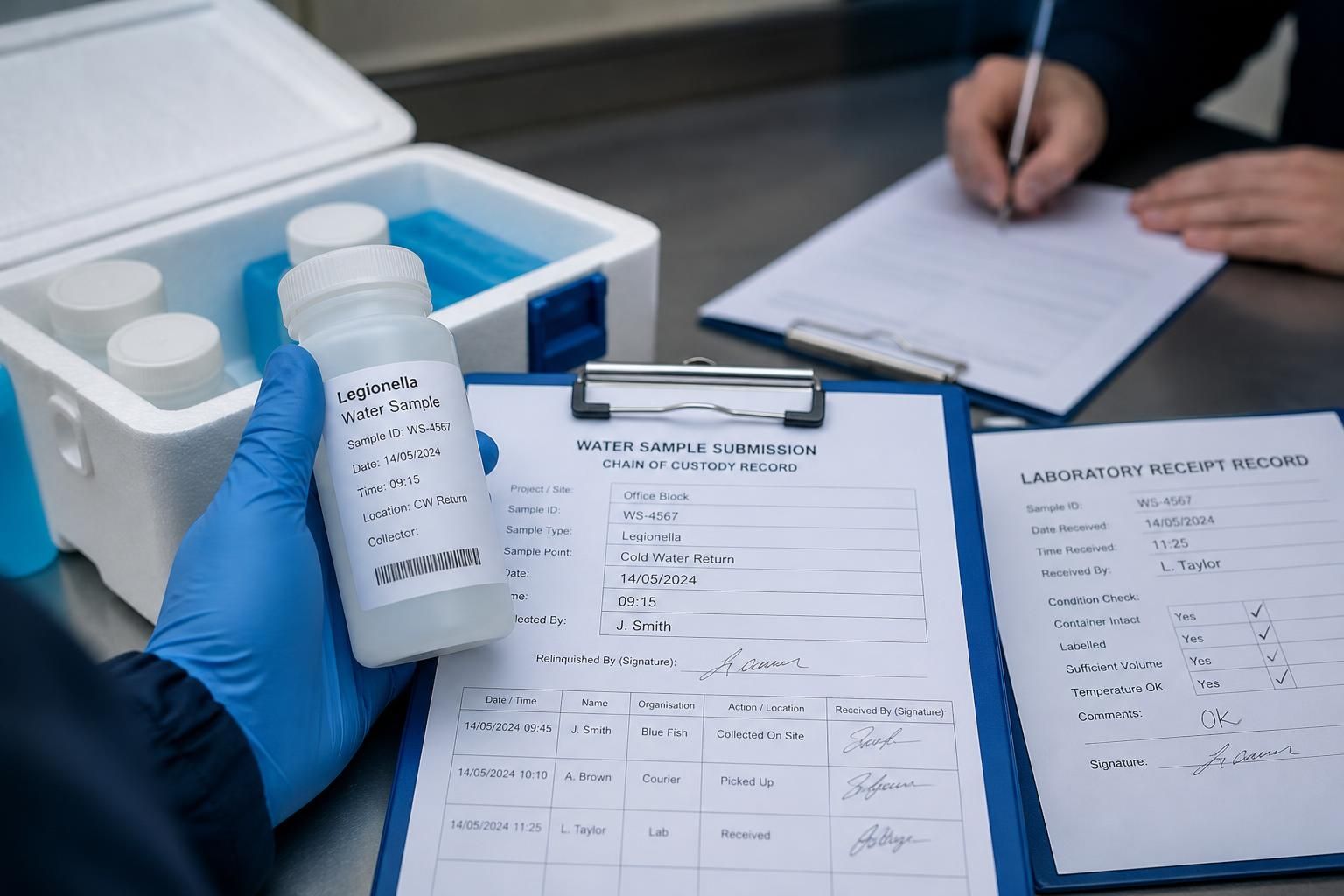
Chain of custody adds evidential control to legionella water sampling. It creates a continuous record of who collected, handled, transported and received each sample, together with the conditions and timings relevant to its analysis. This gives an organisation a stronger basis for assessing results, investigating unusual findings and demonstrating that its sampling arrangements were controlled.
A suitable chain-of-custody record will normally link the sample to:
- the site, building, water system and precise sampling point;
- the date and time of collection;
- the person who took the sample;
- the analysis requested;
- the sample container, label or unique reference;
- any preservation, packaging and transport requirements; and
- the laboratory's receipt time and condition checks.
Each transfer should be recorded so that an unexplained gap does not appear between collection and laboratory receipt. Where samples pass from a site contact to a courier and then to a laboratory, the documentation should show those handovers clearly. A laboratory may also record whether the container was intact, correctly labelled, sufficiently filled and received within the required handling conditions.
This information helps identify the significance of a problem with a result. For example, a damaged container, missing identifier, excessive transport delay or uncertain sampling point may affect confidence in the associated finding. The laboratory or responsible water safety professional can then decide whether the result should be qualified, investigated or followed by repeat sampling. Without a clear record, it may be difficult to distinguish a genuine system finding from a weakness in sample handling.
Chain of custody is particularly useful when sampling forms part of an investigation. If legionella is detected, the documented history allows the responsible person to check which outlets and system areas were sampled, whether the samples relate to the intended risk points and whether the results can be compared with other sampling events. It also supports communication between facilities teams, water hygiene contractors, laboratories and anyone reviewing the organisation's control measures.
For organisations with several buildings or multiple people involved in sampling, a consistent process makes records easier to audit. A clear reference for each sample can connect the field sheet, laboratory submission, result and any resulting corrective action. This supports orderly trend review and reduces the risk of a result being attached to the wrong location or water system.
Chain of custody strengthens a sample's traceability, but it does not make an unsuitable sample valid. It cannot compensate for choosing the wrong sampling point, using an inappropriate method, contaminating the container or failing to represent the condition of the system. The sampling plan, technique, containers, transport arrangements and laboratory method must all be suitable. Chain-of-custody documentation is therefore one part of a controlled sampling process rather than a replacement for technical competence.
When reviewing a sampling arrangement, check whether the process defines responsibilities, sample identification, handover records, transport controls, laboratory receipt checks and the treatment of deviations. The resulting documentation should be sufficiently clear for another competent person to follow the sample's history and understand any limitations attached to the result. Used in this way, chain of custody improves the quality of the evidence available for legionella risk management and compliance review.
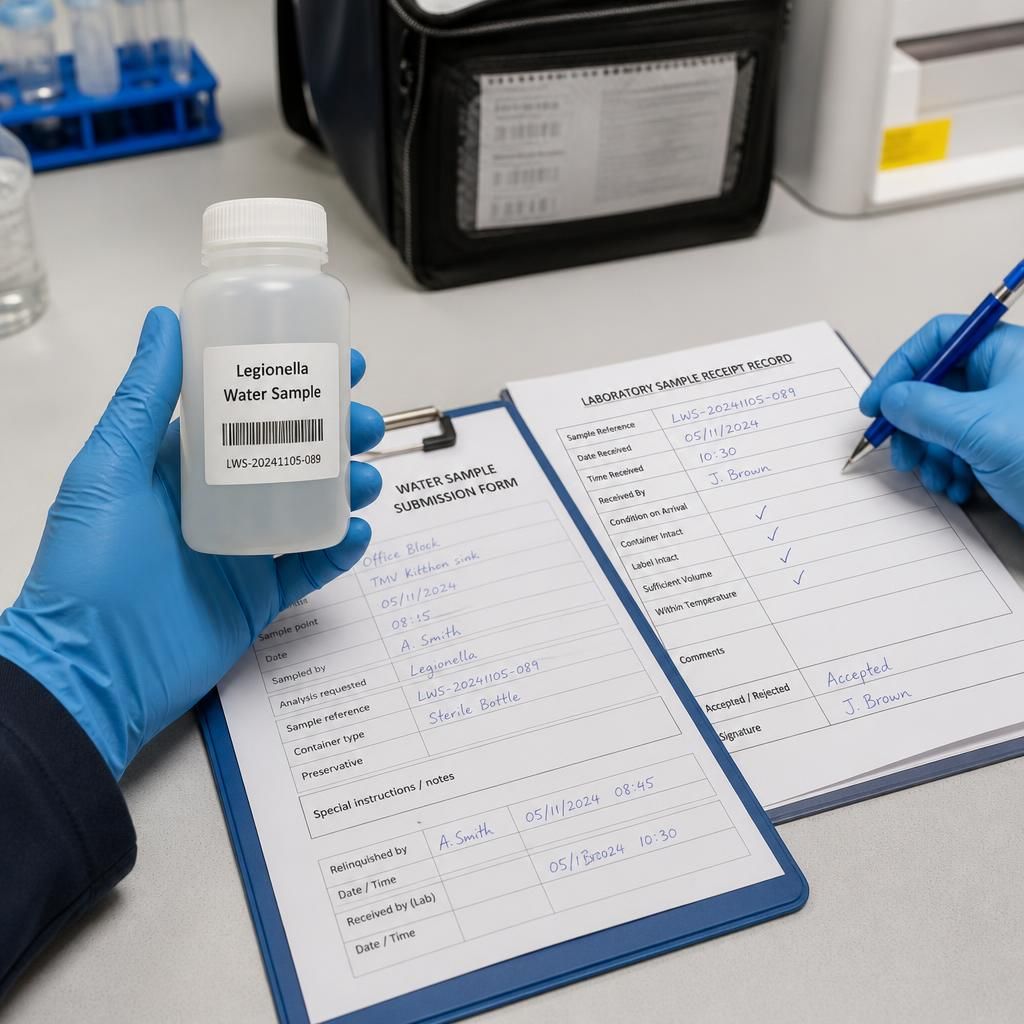
Chain of custody complements UKAS-accredited laboratory testing by controlling what happens to the sample before analysis. Laboratory accreditation concerns the laboratory’s competence and approved testing processes; it does not, by itself, confirm that a sample was collected from the correct outlet, remained identifiable or reached the laboratory in suitable condition.
This distinction matters when results are reviewed by a responsible person, auditor or enforcing body. A controlled handover record connects the field sampling activity with the laboratory report, while any irregularity can be considered separately from the analytical result. The record therefore helps an organisation assess the complete evidence behind a finding rather than relying on the laboratory report in isolation.
For practical governance, the chain-of-custody procedure should also state who is authorised to release samples, how records are retained and how discrepancies are escalated. This makes accountability clearer when sampling is carried out by site staff, contractors or a laboratory courier, and helps ensure that the reported result can be matched to the organisation’s water safety records.
Review your legionella sampling and chain-of-custody process
If you are reviewing your legionella sampling records, Blue Fish Water Management Ltd can help assess whether your chain-of-custody process supports clear, traceable results. Contact the team to discuss your organisation’s water sampling and compliance requirements.