
Which parameters can a water sample lab test for?
A water sample laboratory can test microbiological, chemical and physical parameters, with the selection determined by the water system, suspected risk and testing objective. Typical analyses include Legionella and other bacteria, pH, turbidity, conductivity, hardness, disinfectant residuals, nutrients and metals such as lead, copper and iron.

A water sample laboratory can test a broad range of parameters beyond the routine checks commonly associated with water quality. The appropriate panel may include microbiological indicators, inorganic chemistry, organic compounds, dissolved gases, physical characteristics and, where relevant, radiological or specialist contaminants. The laboratory selection should be based on the source of the water, the type of system, its use and the reason for sampling.
Microbiological parameters
Microbiological testing can assess the general sanitary condition of a supply and identify organisms that may indicate contamination or create a specific health concern. Depending on the investigation, a laboratory may examine:
- Indicator organisms used to assess faecal or environmental contamination, such as Escherichia coli and coliform organisms.
- Heterotrophic colony counts, which provide an indication of the general population of organisms able to grow under the test conditions.
- Pseudomonas aeruginosa, particularly where water is associated with healthcare, bathing or other higher-risk uses.
- Enterococci, sulphite-reducing clostridia or other specialist indicators where the source or investigation justifies their inclusion.
Microbiological results are affected by sampling technique, transport conditions and the time between collection and analysis. A result therefore needs to be considered alongside the sample location, water temperature, system history and any disinfection or maintenance work carried out before sampling.
Additional chemical parameters
Chemical analysis may investigate the composition of the water, identify changes in treatment performance or help trace a source of contamination. Possible parameters include:
- Alkalinity, chloride and sulphate, which can assist with assessing water chemistry, corrosion potential and changes in source water.
- Ammonia, nitrate and nitrite, where nutrient contamination or treatment performance is being considered.
- Total organic carbon, which indicates the quantity of carbon-based material present and can be useful when reviewing organic loading or treatment processes.
- Chlorinated by-products, such as trihalomethanes, where disinfectant use and source-water chemistry make them relevant.
- Solvents, hydrocarbons, pesticides or other organic compounds where there is a known or suspected contamination pathway.
- Calcium, magnesium, sodium and potassium, which can help characterise the water and investigate changes in its mineral profile.
Laboratories may also test for corrosion-related or naturally occurring elements such as arsenic, chromium, manganese, nickel, zinc and mercury. The choice depends on the site history, plumbing materials, ground conditions, industrial processes and any applicable regulatory or contractual requirements.
Physical and operational indicators
Some parameters describe the water's observable or measurable physical properties rather than a particular contaminant. These can include colour, odour, temperature, total dissolved solids, suspended solids and oxidation-reduction potential. Laboratories may also determine alkalinity or other characteristics that help explain scaling, corrosion or changes in treatment efficiency.
These measurements are useful when a result needs to be interpreted in context. For example, an unusual appearance may prompt analysis for suspended material, while a change in dissolved solids may indicate a change in source, blending, treatment or system condition. Physical observations should be recorded at the time of collection because some characteristics can change during storage or transport.
Specialist analyses
Some investigations require tests that are not part of a standard water quality panel. Depending on the circumstances, these may include asbestos fibres, cyanide, fluoride, bromate, chlorate, chlorite, radon or other radiological parameters. Specialist testing may also be appropriate for process water, wastewater, private supplies, water affected by an industrial activity or samples associated with a specific incident.
Not every laboratory offers every specialist analysis, and different parameters require different containers, preservatives, sample volumes and transport conditions. The laboratory should confirm these requirements before sampling. Using the wrong container or allowing a sample to exceed its permitted holding time can make a result unreliable or prevent the requested analysis from being completed.
How the testing panel is selected
A sensible panel is based on the question the sample is intended to answer:
- Routine monitoring: a defined group of microbiological, chemical and physical indicators can establish a consistent baseline and highlight changes over time.
- Investigation of an abnormal result: additional parameters may help identify whether the issue relates to contamination, stagnation, treatment failure, corrosion or an altered supply.
- Commissioning or remedial verification: testing can be selected to check whether cleaning, disinfection, flushing or other corrective work has addressed the identified concern.
- Compliance assessment: the panel should match the relevant legal, regulatory, guidance or client specification rather than relying on a generic package.
- Risk-based assessment: vulnerable occupants, unusual system design, storage tanks, industrial processes and source-water conditions may justify targeted additional tests.
Results should not be interpreted in isolation. A laboratory report normally needs to be reviewed against the applicable standard or guidance, the intended use of the water, historical results and the condition and operation of the system. Where a test identifies a potential concern, competent technical advice can help determine whether further sampling, system inspection or remedial action is appropriate.
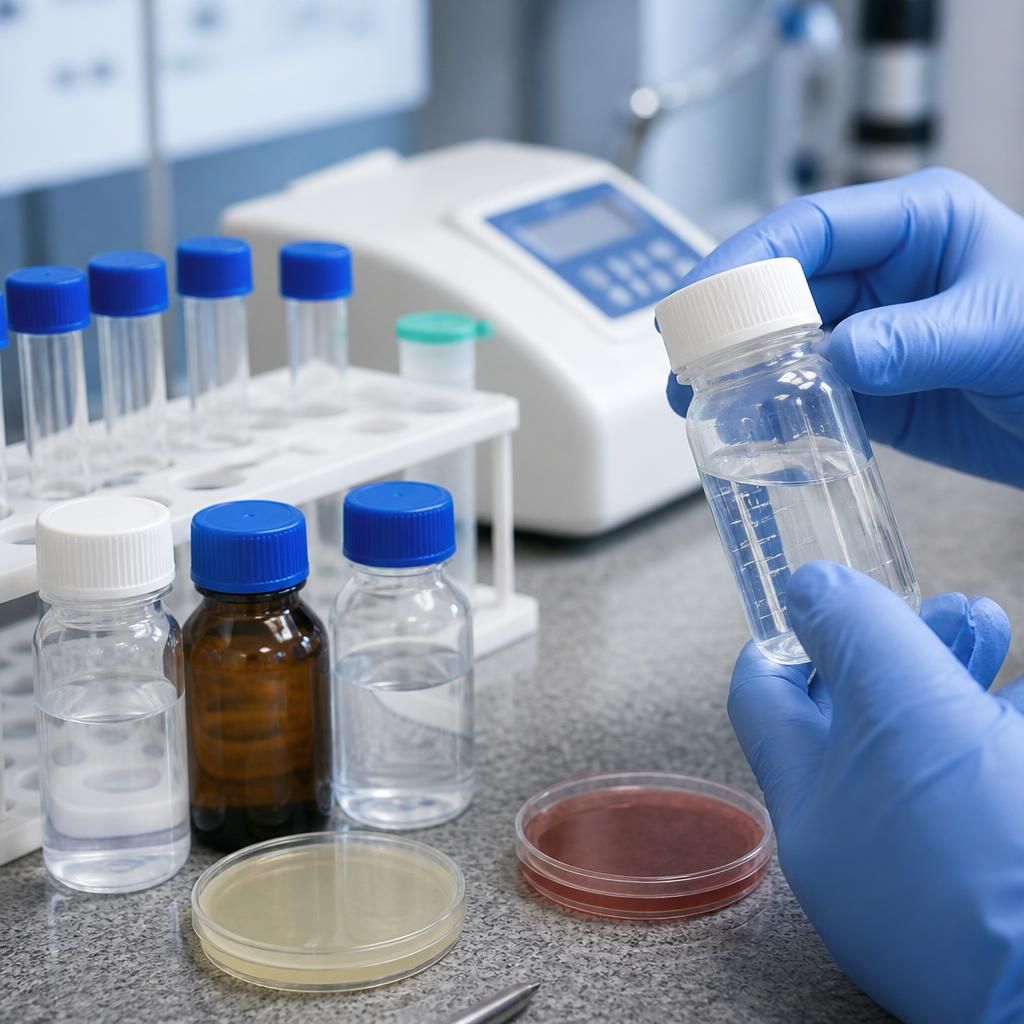
Laboratory results are reported according to the method used for each parameter, so the report may show a numerical concentration, a colony count, or a result such as “not detected”. The method’s reporting limit is important: a result below that limit does not necessarily mean that a substance or organism is completely absent, only that it was not identified at a reportable level.
When reviewing a laboratory report, check:
- the parameter tested and its unit, such as milligrams per litre, colony-forming units or a qualitative presence/absence result;
- the analytical method and reporting or detection limit;
- whether the result is below the applicable limit, within a specified range or above a reference value;
- any qualification or comment from the laboratory about the sample, method or result.
This detail helps prevent misleading comparisons. For example, two samples may both be described as having low bacterial counts, yet have been tested using different methods or reported against different limits. Results should therefore be compared using consistent parameters, methods and sampling conditions wherever possible.
Discuss which water sample tests your business needs
If you are unsure which water sample tests your business needs, discuss the system, sampling objective and relevant risk factors with Blue Fish Water Management Ltd. The right testing scope can then be defined before samples are collected.