
How should businesses choose a water sample laboratory?
Businesses should choose a water sample laboratory by checking relevant UKAS accreditation, suitable testing methods, clear sample-handling requirements and reports that provide actionable results. The laboratory should also understand the organisation’s water systems and explain findings clearly enough to support proportionate Legionella control decisions.

Businesses should choose a water sample laboratory by matching its technical capability, quality controls and interpretation of results to the water safety decisions the organisation needs to make. The right laboratory is not necessarily the one offering the lowest price; it is the one that can reliably examine the relevant sample types, use suitable methods and provide data that can be used within the organisation’s wider control programme.
Start with the intended purpose of the testing. A laboratory should understand whether samples are being taken for routine monitoring, investigation of an unusual result, verification after remedial work, validation of control measures or support for a formal risk assessment. These purposes may require different parameters, sampling frequencies and methods. A laboratory that only processes samples without understanding their purpose may produce technically valid results that are difficult to apply.
The enquiry should explain the types of systems and water sources involved. For example, a business may need testing associated with domestic hot and cold water systems, cooling systems, process water, spa facilities or other higher-risk environments. Ask whether the laboratory routinely deals with the relevant water matrix and whether it can test the parameters required for that setting. Experience with similar systems is useful because unusual results may need to be considered alongside temperature records, system design, occupancy, maintenance and previous findings.
Examine the laboratory’s technical scope in detail. A general claim that a laboratory tests water is not enough. The business should confirm that the particular organism, chemical or physical parameter, sample type and method required are covered by the laboratory’s current technical capability. This is especially important where the organisation needs Legionella testing, as different techniques answer different questions.
- Culture-based testing can be used to investigate viable organisms capable of growing under the conditions of the method.
- Molecular methods can detect genetic material, but the result may not have the same meaning as a culture result when assessing whether organisms are viable.
- Chemical, physical and indicator parameters may help assess general water quality or system performance, but they do not all provide direct evidence of Legionella control.
The laboratory should explain why a particular method is appropriate rather than allowing the business to select a test solely by its name or price. It should also state any important limitations, including situations where a result may be affected by the sample matrix, low organism levels, inhibition or the time between sampling and analysis.
Assess how the laboratory demonstrates quality. Useful questions include how it verifies methods, monitors analytical performance, deals with failed quality checks and records corrective actions. Participation in relevant proficiency testing or inter-laboratory comparison schemes can provide evidence that performance is assessed against external expectations. The laboratory should also be able to explain how it controls changes to methods, equipment and trained personnel.
Ask how the laboratory handles results that are outside expected ranges or appear inconsistent with the sample history. A robust process should distinguish between a genuine analytical result, a possible contamination event, a quality-control failure and a result requiring further investigation. The laboratory should make clear who is responsible for technical review and how any amendment to a result is controlled.
Check the people behind the analysis. Laboratory staff should have suitable training and defined technical responsibilities. The business does not need every laboratory employee to be a water hygiene consultant, but it should be able to identify a competent person who can discuss method selection, limitations and unusual findings. This is particularly valuable when results form part of a wider Legionella investigation rather than a simple pass-or-fail exercise.
Independence also matters. A laboratory should have arrangements for identifying and managing conflicts of interest, particularly where the same organisation, or a connected party, is involved in remedial work or makes recommendations based on the test results. Clear separation between analysis and commercial decisions helps preserve confidence in the findings.
Review the data and reporting arrangements before appointing the laboratory. Confirm who owns the results, how historical data can be accessed and whether results can be supplied in a format suitable for the organisation’s compliance records. Businesses managing several buildings may need consistent sample identifiers, site references and result formats so that trends can be reviewed over time. Ask how corrected reports, invalid results and amended sample details are recorded.
The laboratory should also explain how it communicates urgent technical concerns, without presenting laboratory results as a substitute for a competent risk assessment. A numerical result needs to be considered with the sampling location, system conditions, previous results and control measures. Where interpretation falls outside the laboratory’s role, it should say so clearly rather than implying that a single result determines the whole risk position.
Compare the practical and commercial arrangements. Before sending samples, obtain written details of the tests included, any additional charges, the information the laboratory needs, sample acceptance criteria, arrangements for rejected or compromised samples and the process for requesting further analysis. A comparison should consider the complete service rather than the headline charge for one test. The cheapest option may not represent good value if the business later needs to repeat testing because the original analysis was unsuitable for its purpose.
It is also sensible to confirm how the laboratory manages workload, technical queries, records and confidential business information. Larger organisations should ask whether the laboratory can maintain consistent processes across multiple sites and whether it can support an agreed monitoring schedule. The aim is not to outsource responsibility for water safety, but to appoint a laboratory whose work can be incorporated reliably into the organisation’s own governance arrangements.
Finally, retain evidence of the selection process. Record the laboratory’s relevant technical scope, agreed methods, quality information, commercial terms and any limitations explained during the enquiry. Review the arrangement if the water systems change, new parameters are needed, results become difficult to interpret or the laboratory changes its methods. Choosing a water sample laboratory should be treated as a quality and risk-control decision, not simply as a procurement exercise.
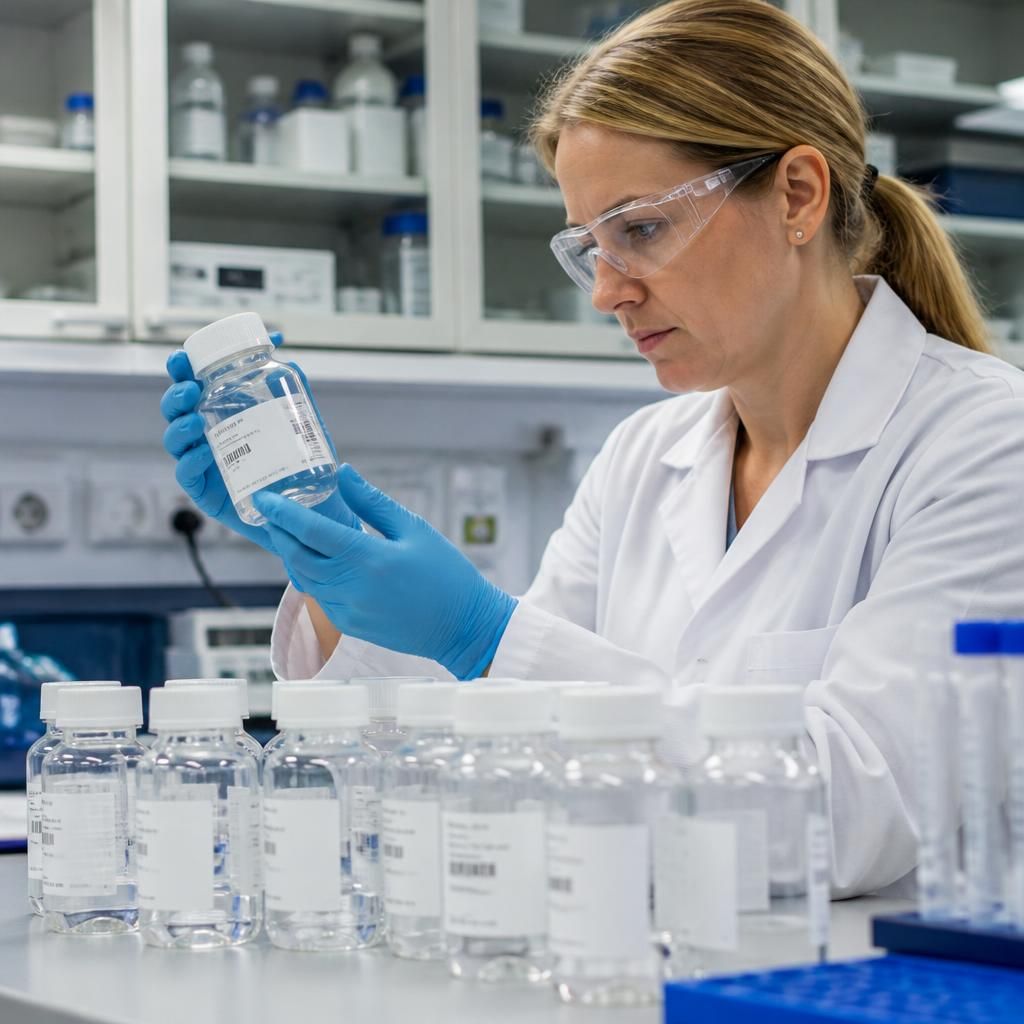
Businesses that may change laboratories should also assess whether results will remain comparable with their existing records. Different methods, reporting limits, sample-processing procedures or result formats can make a change in laboratory appear to show a change in water quality when the difference is analytical rather than genuine.
Ask the laboratory how it would support a transition from an existing provider and whether it can document method equivalence, reporting units and any limitations affecting trend analysis. Where historical results inform Legionella control decisions, retaining the original reports and recording the date and reason for any laboratory change will help responsible persons distinguish a real change in system conditions from a change in testing arrangements.
Get Advice on Choosing a Water Sample Laboratory
If you need help assessing whether a water sample laboratory is suitable for your organisation’s testing requirements, Blue Fish Water Management Ltd can provide practical advice on laboratory selection and water hygiene compliance.