
When should landlords or dentists consider remedial water safety work?
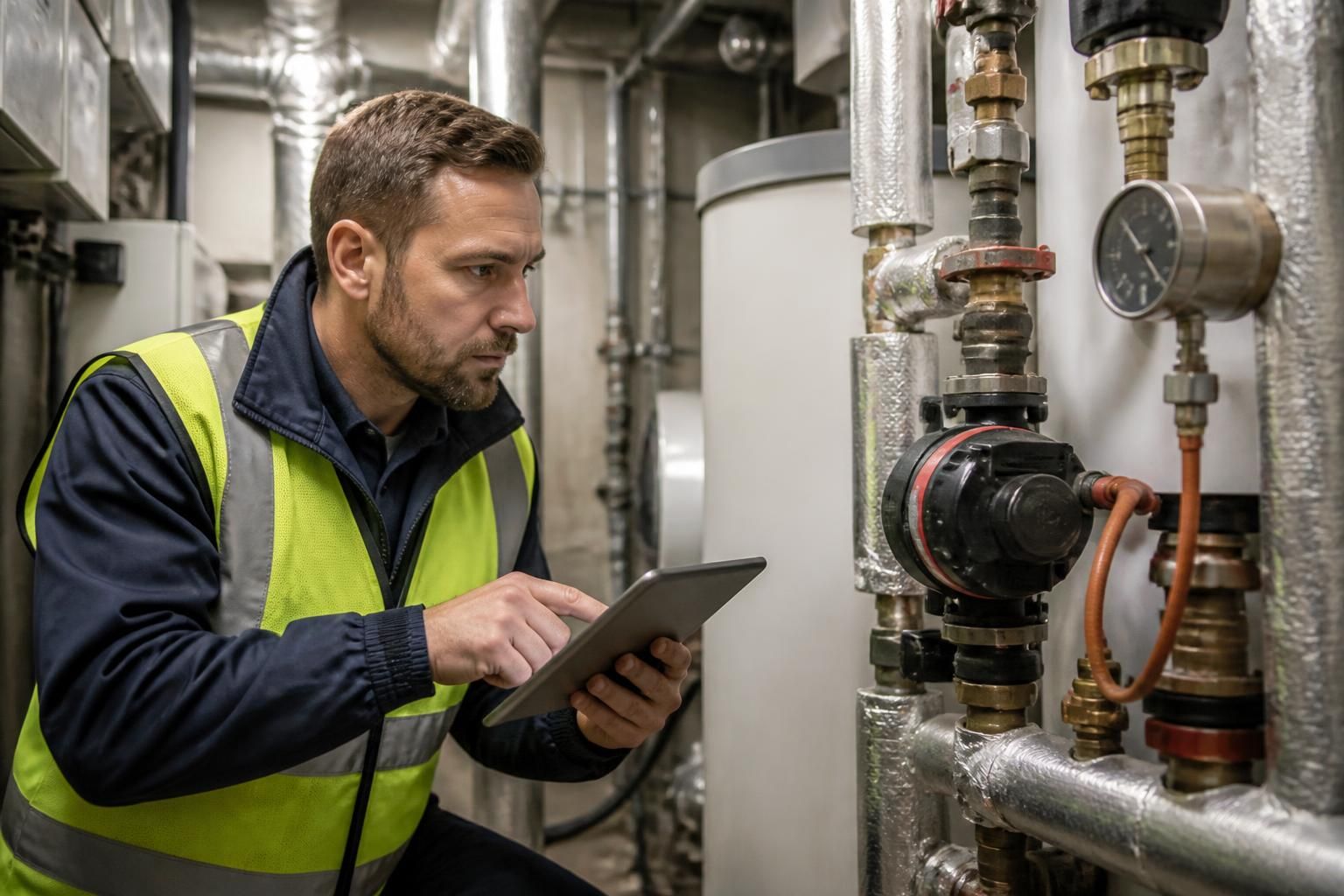
Remedial water safety work is appropriate when evidence shows that a water system, its management arrangements or the condition of associated equipment is allowing legionella risk to remain inadequately controlled. The need for remedial action may be identified during a legionella risk assessment, planned inspection, water test, compliance audit, maintenance visit or review of monitoring records. The action should address the underlying cause rather than rely solely on repeated testing.
Typical indicators that remedial work should be considered include:
- Repeated results showing elevated legionella or other relevant contamination, particularly where investigation cannot demonstrate that the issue was isolated or satisfactorily controlled.
- Hot or cold water temperatures that consistently fall outside the levels specified by the system’s control strategy.
- Infrequently used outlets, redundant pipework, capped branches or other sections where water can stagnate.
- Defective valves, tanks, insulation, thermostatic mixing valves, calorifiers, pumps or other components affecting circulation, storage or temperature control.
- Accumulated scale, sediment, biofilm or corrosion within tanks, outlets, pipework or plant.
- Inadequate cleaning, disinfection, flushing or maintenance arrangements.
- Changes to occupancy, room use, plumbing configuration or equipment that have altered the original risk profile.
- Missing, inconsistent or unreliable monitoring records, where managers cannot show that critical controls are being checked and acted upon.
A single unsatisfactory observation does not automatically determine the precise remedy. The significance depends on the type of system, the extent and persistence of the issue, the people exposed and the effectiveness of existing controls. For example, a rarely used outlet may require a documented flushing regime, removal from service or physical alteration, while a persistent circulation problem may require investigation of pipework design, balancing, pumps or plant capacity.
For landlords, remedial priorities should be considered across the whole property and in relation to the responsibilities of the landlord, managing agent, occupier and maintenance contractors. Work may be indicated where a communal system serves several dwellings, where tenants report temperature or water-quality concerns, or where access arrangements prevent required outlets and plant from being inspected or maintained. Any proposed alteration should account for occupied homes, vulnerable residents, tenant communications and the need to preserve safe water services during the work.
For dental practices, the assessment should include the practice’s operational water systems and equipment, including outlets and areas where water may be aerosolised. Remedial decisions may be prompted by contamination findings, poor condition of components, ineffective disinfection arrangements, unsuitable tubing or difficulty maintaining the system in accordance with its documented controls. The practice should also consider how treatment rooms, decontamination activities, staff and patients are affected, and whether the proposed work needs to be coordinated with equipment servicing or infection prevention procedures.
Remedial work commonly follows a staged process:
- Confirm the issue. Review the original observation, sample results, temperature records, inspection findings and relevant system history. Where appropriate, investigate sampling technique, sample locations and recent maintenance before drawing conclusions.
- Assess the risk. Establish which outlets, components or groups of users may be affected and whether interim precautions are needed while the cause is being investigated.
- Define the corrective action. Specify the work required, its scope, responsible person, completion criteria and any controls needed during implementation. A competent water hygiene professional or suitably qualified contractor should be used for technical work.
- Complete and document the work. Keep records of repairs, cleaning, disinfection, alterations, replaced components, dates, contractors and any deviations from the planned method.
- Verify effectiveness. Recheck the relevant temperatures, flow, condition, usage or other control measures. Further sampling may be appropriate where contamination was identified or where the risk assessment requires evidence that the intervention has been effective.
- Update the management system. Revise the risk assessment, schematic drawings, asset information, written control scheme, monitoring instructions and staff responsibilities where the system or its controls have changed.
Not every deficiency requires major plumbing alterations. Some problems can be managed through improved flushing, cleaning, temperature monitoring, access arrangements or clearer responsibilities. However, repeating the same short-term control without addressing a persistent structural or operational fault can leave the underlying risk in place. Remedial work should therefore be proportionate, technically justified and followed by checks that demonstrate whether the chosen control is working.
Urgent professional advice is appropriate where there is confirmed or suspected significant contamination, loss of temperature control across a substantial part of the system, failure of critical plant, widespread stagnation, or uncertainty about the safety of water used by patients, tenants, staff or visitors. Until the situation is assessed, the responsible person may need to apply interim measures identified by a competent adviser, while avoiding unplanned alterations that could create further stagnation or compromise other controls.
Blue Fish Water Management can support landlords and dental practices with investigation, water hygiene advice, testing, compliance review, monitoring and remedial planning. The appropriate intervention should be based on the evidence from the specific property and system, with completion and verification recorded so that ongoing water safety management remains clear and auditable.

Remedial water safety work should correct the reason a control has failed, rather than simply replace a component or repeat a treatment. Before approving work, landlords and dental practices should establish whether the problem is isolated, recurring or caused by the wider design, use or management of the system.
- Is the defect repairable? A damaged or poorly performing component may need repair or replacement, but the proposed solution should restore the intended temperature, circulation, storage or flow control.
- Will the system remain manageable? An alteration is less effective if staff or contractors cannot access the relevant plant, maintain the equipment or carry out the required checks afterwards.
- Does the proposed work create a new risk? Changes to pipework, outlet use or equipment can introduce additional areas of low use, disrupt circulation or alter the documented control strategy. These effects should be considered before work begins.
- Can completion be demonstrated? The success criteria should be clear in advance, such as restored operating conditions, confirmed flow, improved access or completion of a defined cleaning procedure.
This approach helps distinguish a durable correction from a temporary response. It is particularly relevant where a landlord is deciding whether work affects a communal installation or individual dwelling, and where a dental practice must coordinate changes with treatment areas, equipment and infection prevention arrangements. The final decision should be recorded with the evidence considered, the reason for the chosen remedy and any follow-up checks required.
Discuss your remedial water safety requirements
Share your assessment, monitoring or testing findings with Blue Fish Water Management to discuss whether remedial work is justified and what evidence should define its scope. This can help landlords and dental practices plan a proportionate, documented next step.