
Do landlords need legionella testing after remedial water system work?
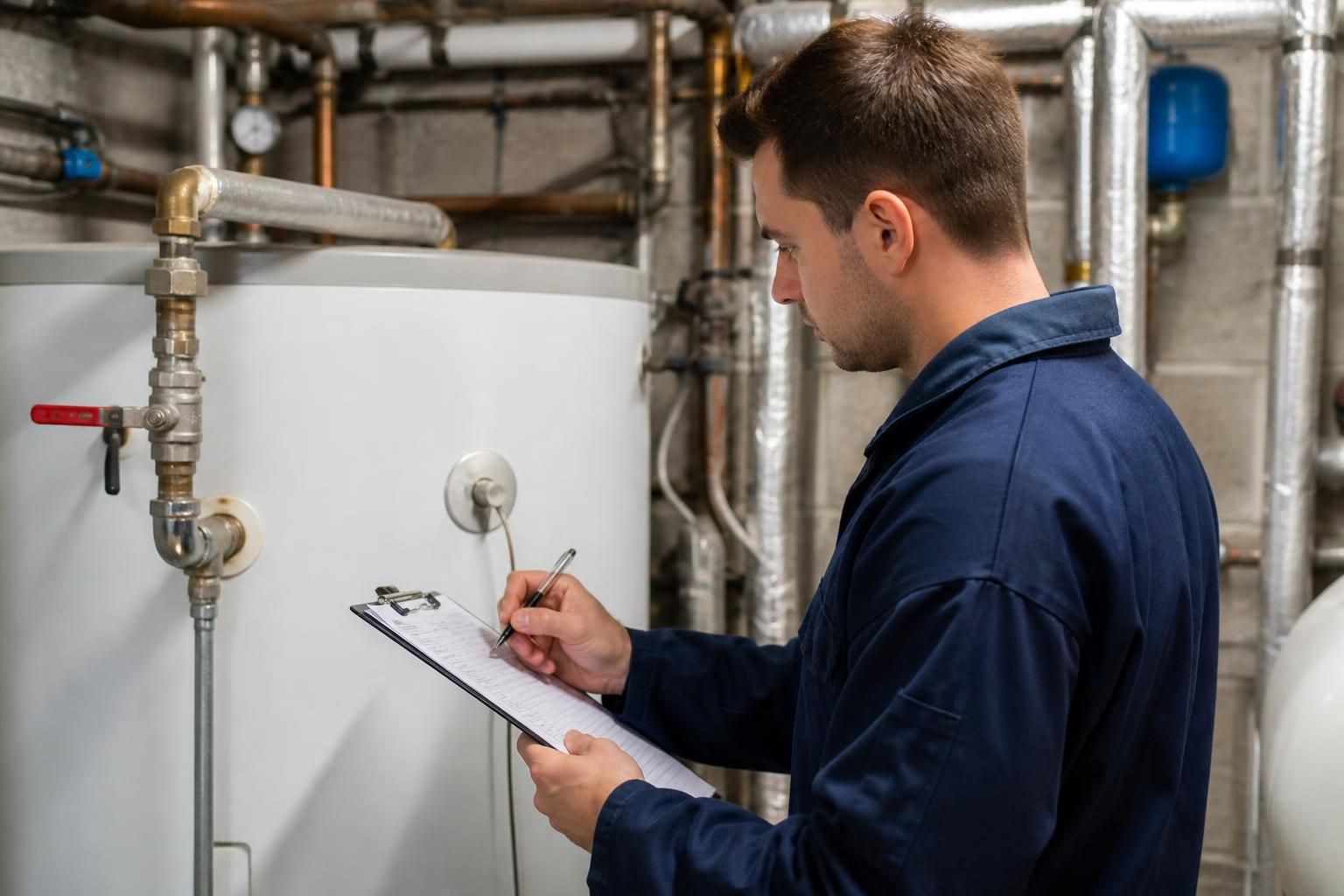
Legionella testing is not automatically required after every remedial job. It is appropriate when the work could have altered the risk profile, disturbed deposits or biofilm, introduced contamination, affected temperatures or disinfectant levels, or when testing is needed to confirm that a control failure has been corrected. The decision should be recorded in the property’s updated legionella risk assessment and control plan.
Remedial work can change how a water system operates. Examples include replacing or altering storage vessels, heaters, pipework, thermostatic mixing valves, pumps, outlets or other components; removing dead legs; modifying circulation; carrying out tank cleaning and disinfection; or correcting persistent temperature problems. Work may also involve opening parts of the system that had not been disturbed for a long period. These circumstances can justify targeted sampling, particularly where the original issue involved suspected contamination or ineffective control.
Testing is more likely to be needed where:
- the remedial work was undertaken because legionella was detected or suspected;
- a storage cistern, calorifier, hot-water circuit or distribution pipework was cleaned, disinfected, replaced or substantially modified;
- the work changed flow, temperature, storage capacity or the configuration of outlets;
- the system was taken out of use, drained or left stagnant during the work;
- there is evidence that control measures have not yet returned to their required operating conditions;
- the property contains higher-risk occupants or has a more complex shared water system; or
- the risk assessment, written scheme or competent water hygiene professional identifies verification sampling as necessary.
By contrast, a minor repair that has no material effect on the water system may not require a legionella sample. For example, replacing an isolated fitting may only require the relevant outlet to be checked and the maintenance record updated. However, the judgement should be based on the actual system and the work completed, rather than on the label given to the job. A seemingly small alteration can affect stagnation, blending, circulation or temperature control.
Where testing forms part of the post-remedial process, it should support—not replace—physical checks. The responsible person or appointed competent contractor should confirm that the remedial work was completed as specified and that key control measures are working. Depending on the system, this can include checking hot and cold-water temperatures, confirming circulation, inspecting storage vessels, verifying disinfection records, removing redundant pipework and ensuring outlets are being used or flushed in accordance with the control scheme. A laboratory result on its own cannot demonstrate that the underlying cause of a problem has been resolved.
The timing and scope of sampling should be considered carefully. Taking a sample immediately after work may provide useful evidence in some situations, but it may not show whether the system remains controlled once it has returned to normal operation. Conversely, delaying all verification may be unsuitable where there is a known contamination concern or an urgent need to establish whether corrective action has worked. The sampling plan should therefore reflect the type of work, the condition of the system, the reason for the intervention and the findings of the updated risk assessment.
Samples should be collected from locations that help answer the specific question being investigated. These might include storage tanks, calorifiers, return loops, representative outlets or points associated with the original problem. Sampling should be carried out using a suitable method by a competent sampler, with proper identification, handling and laboratory analysis. A single sample from one tap may not represent a large or complicated system, while routine sampling of every outlet may be unnecessary where the risk assessment does not support it.
Landlords should retain evidence of the decision and the work undertaken. Records may include the pre-work risk assessment, the reason for the remedial action, contractor reports, cleaning or disinfection certificates, temperature and inspection results, the post-work assessment, laboratory reports and any further corrective measures. If a result is unsatisfactory, the response should be documented and may include investigating the source, repeating checks or sampling, improving temperatures or circulation, cleaning and disinfecting again, and reviewing the management arrangements.
Landlords remain responsible for managing the risk in their rented properties, even where maintenance or testing is delegated. In practice, this means appointing a suitably competent person, following the principles in the Health and Safety Executive’s approved guidance for legionella control, and ensuring that actions identified by the risk assessment are completed and reviewed. Testing can provide valuable verification, but it is not a substitute for a suitable and sufficient assessment, effective control measures, competent maintenance or accurate records.
For a property that has undergone remedial water system work, the most defensible approach is to ask what changed, why the work was necessary, whether contamination or loss of control was involved, and what evidence is needed to demonstrate that the system is safe to manage. A competent water hygiene professional can use those factors to define an appropriate post-remedial inspection and, where justified, a targeted legionella testing programme.
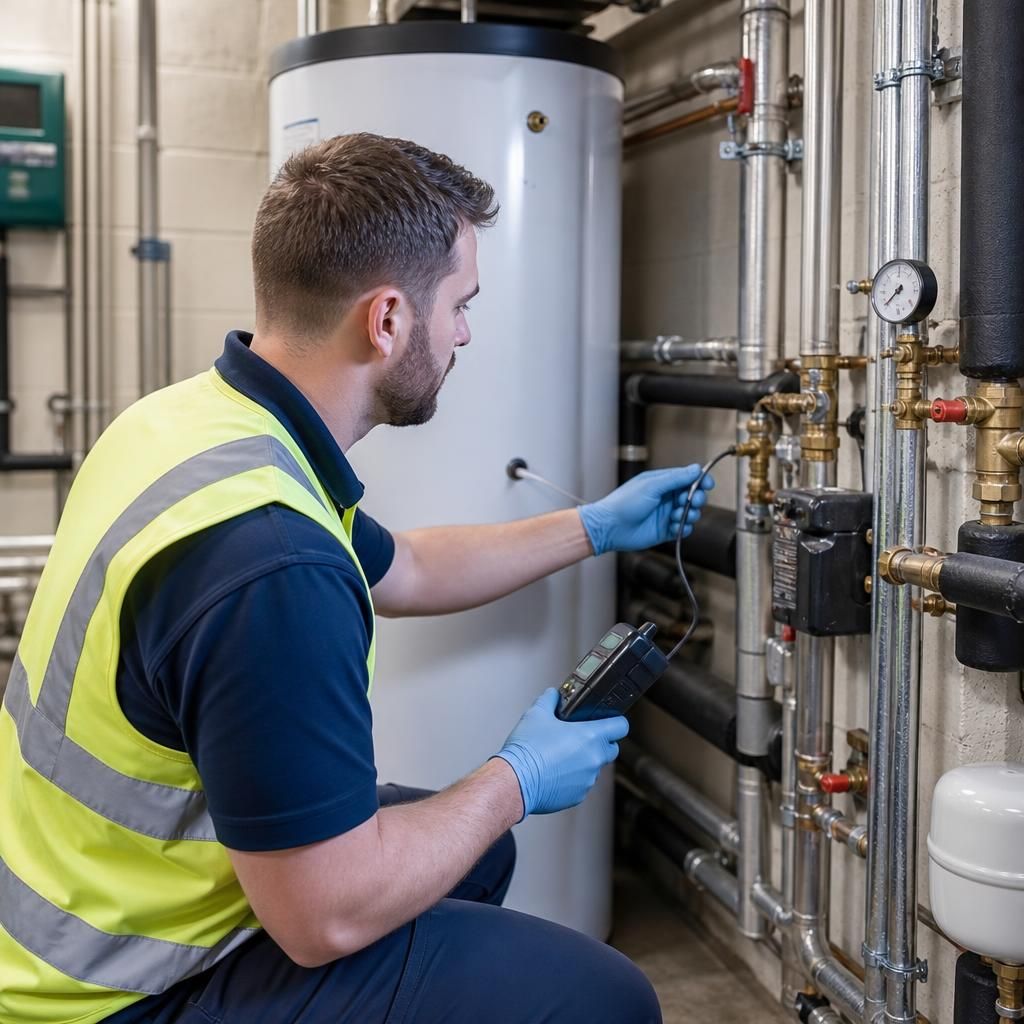
A post-remedial legionella test result is evidence about the water collected at a particular location and time; it is not, by itself, a certificate that every part of the property is free from risk. The result should be considered alongside the sample point, whether the outlet was hot or cold, the system’s operating conditions and the reason the work was carried out.
A result showing no legionella in one sample does not remove the need to maintain temperature control, circulation, cleaning and other measures identified by the risk assessment. Conversely, a positive result should be interpreted in context rather than treated as proof that every outlet is affected. The responsible person should ask whether the sampling locations and method adequately addressed the original concern and whether further investigation is needed.
This approach helps landlords avoid relying on a laboratory report in isolation. The useful question is not simply whether a sample was positive or negative, but what the result demonstrates about the specific remedial issue and what action, if any, is required next.
Discuss Post-Remedial Legionella Testing
Discuss the completed remedial work with Blue Fish Water Management to determine whether a post-remedial legionella testing plan is appropriate for the property. Their water hygiene specialists can help review the available records and identify suitable next steps.