
Can legionella testing replace a landlord’s water risk assessment?
No. Legionella testing cannot replace a landlord’s water risk assessment: testing provides evidence about water samples at a particular time, while the assessment identifies hazards, evaluates risk and sets out the control measures required for the property.
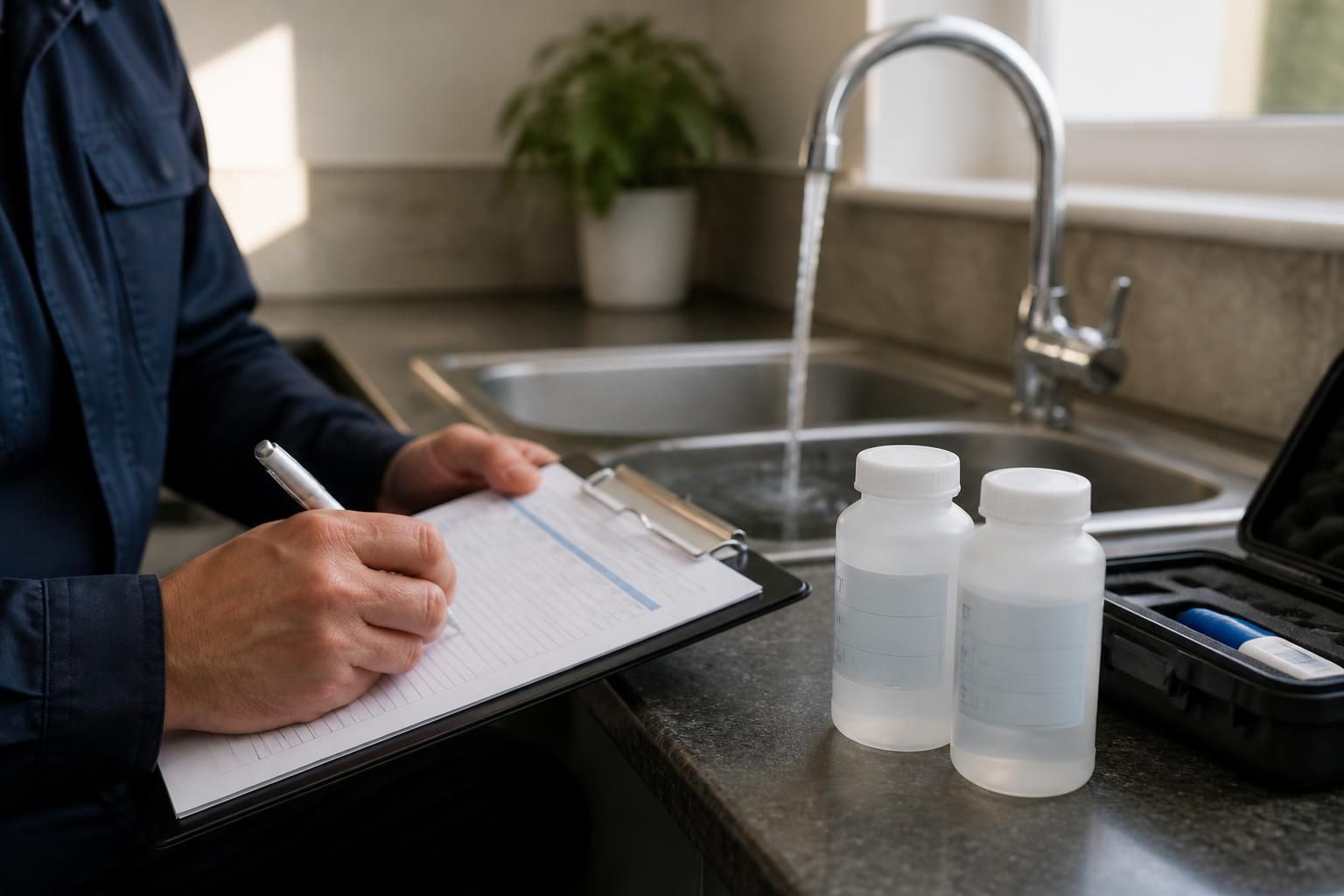
The legal and practical decision should be based on the property’s water-system risks and the effectiveness of its controls, not on whether a single laboratory sample is negative. Legionella testing can support a landlord’s water safety arrangements, but it does not identify every hazard or demonstrate that the system is being managed appropriately.
What a water risk assessment covers
A competent assessment considers how the property is occupied, how water is stored and distributed, and whether conditions exist that could allow legionella to grow or spread. Depending on the premises, this may include:
- Stored hot or cold water, including tanks, cylinders and low-use outlets.
- Dead legs, redundant pipework, infrequently used showers and other areas where water can stagnate.
- Hot and cold water temperatures and whether they can be maintained within suitable control parameters.
- The condition, design and cleanliness of tanks, pipes, calorifiers, showers and other relevant equipment.
- The possibility of exposure through showers, taps, spa facilities or other outlets that create aerosols.
- Occupants or users who may be more vulnerable to serious illness.
- Existing monitoring, cleaning, flushing, maintenance and remedial arrangements.
- The responsibilities of the landlord, managing agent, maintenance contractor and occupier.
The outcome should be a written record of the significant risks, the control measures required, who is responsible for them and when the assessment should be reviewed.
What legionella testing can and cannot show
A sample provides information about the water collected from a particular outlet at a particular time. It may help identify contamination, assess whether a control measure appears to be working or support decisions after remedial work. It does not inspect the whole installation or establish whether other outlets, tanks or sections of pipework present a risk.
A negative result is therefore not proof that legionella is absent from the property. Results can be affected by the sampling point, sample handling, system use, water temperatures and conditions within parts of the system that were not sampled. Conversely, a positive result needs to be considered alongside the system design, operating conditions and previous results rather than treated as a complete description of the overall risk.
Testing also does not determine whether a landlord has identified stagnation, unsuitable temperatures, poor maintenance or inadequate control arrangements. Those are assessment and management issues.
Is routine testing legally required?
For an ordinary domestic rented property, there is not generally a blanket requirement to arrange routine legionella sampling simply because the property is let. Landlords nevertheless need to consider the health risks associated with the hot and cold water systems and take reasonably practicable steps to control them. The appropriate approach depends on the property, its water installation and how it is used.
Different considerations may apply where the premises include workplaces, communal or commercial facilities, care settings, student accommodation, holiday accommodation or other non-domestic areas. In those circumstances, duties under health and safety legislation and relevant HSE guidance may apply to the responsible person. The legal position can also vary across the UK, so a landlord should consider the rules applying in the relevant nation and obtain competent advice where the arrangement is complex.
When testing may be appropriate
Although it cannot replace the assessment, testing may be a proportionate part of the control programme where the assessment identifies a reason for it. Examples include:
- Complex hot and cold water systems with storage, multiple outlets or difficult-to-manage distribution networks.
- Buildings that have been vacant or only partly occupied.
- Repeated concerns about water temperatures, stagnation, contamination or system condition.
- Occupants who may be particularly susceptible to legionnaires’ disease.
- Suspected cases or advice from a competent health and safety professional.
- Verification after cleaning, disinfection, alterations or other remedial water system work.
- Monitoring a known issue while longer-term corrective measures are implemented.
The sampling plan should be based on the assessment. It should specify which outlets or parts of the system are to be sampled, why they have been selected, how samples will be handled and what action will follow different results. Testing without a defined purpose can produce data without improving control.
What landlords should do in practice
- Arrange a suitable water risk assessment by someone with the knowledge, experience and competence relevant to the property and its systems.
- Put the identified controls into operation, such as temperature checks, flushing, cleaning, maintenance, outlet management or removal of redundant pipework.
- Use legionella testing where the assessment indicates that it will add useful evidence.
- Record test results with sampling details, system conditions and any actions taken.
- Investigate unsatisfactory results and review the controls rather than relying on repeat sampling alone.
- Review the assessment when the system, occupancy, usage or control arrangements change, and after significant remedial work.
A laboratory report can form part of a landlord’s evidence, but it should sit within a documented management process. Where the property has unusual water systems, vulnerable occupants, persistent results or substantial remedial requirements, specialist water hygiene advice is appropriate.

A legionella test report is not a compliance certificate or a pass-or-fail statement for a rented property. It records the laboratory finding for the samples submitted, while legal and management decisions depend on the wider condition and operation of the water system.
Landlords should therefore avoid using a test certificate as the sole evidence that their duties have been met. The report is most useful when retained alongside the relevant assessment, sampling rationale and records of any corrective action, creating a clear account of how the water-system risk has been managed.
Arrange a landlord’s water risk assessment
Arrange a landlord’s water risk assessment to establish the appropriate controls for the property and determine whether legionella testing is justified.