
What should dentists look for in a Legionella testing provider?
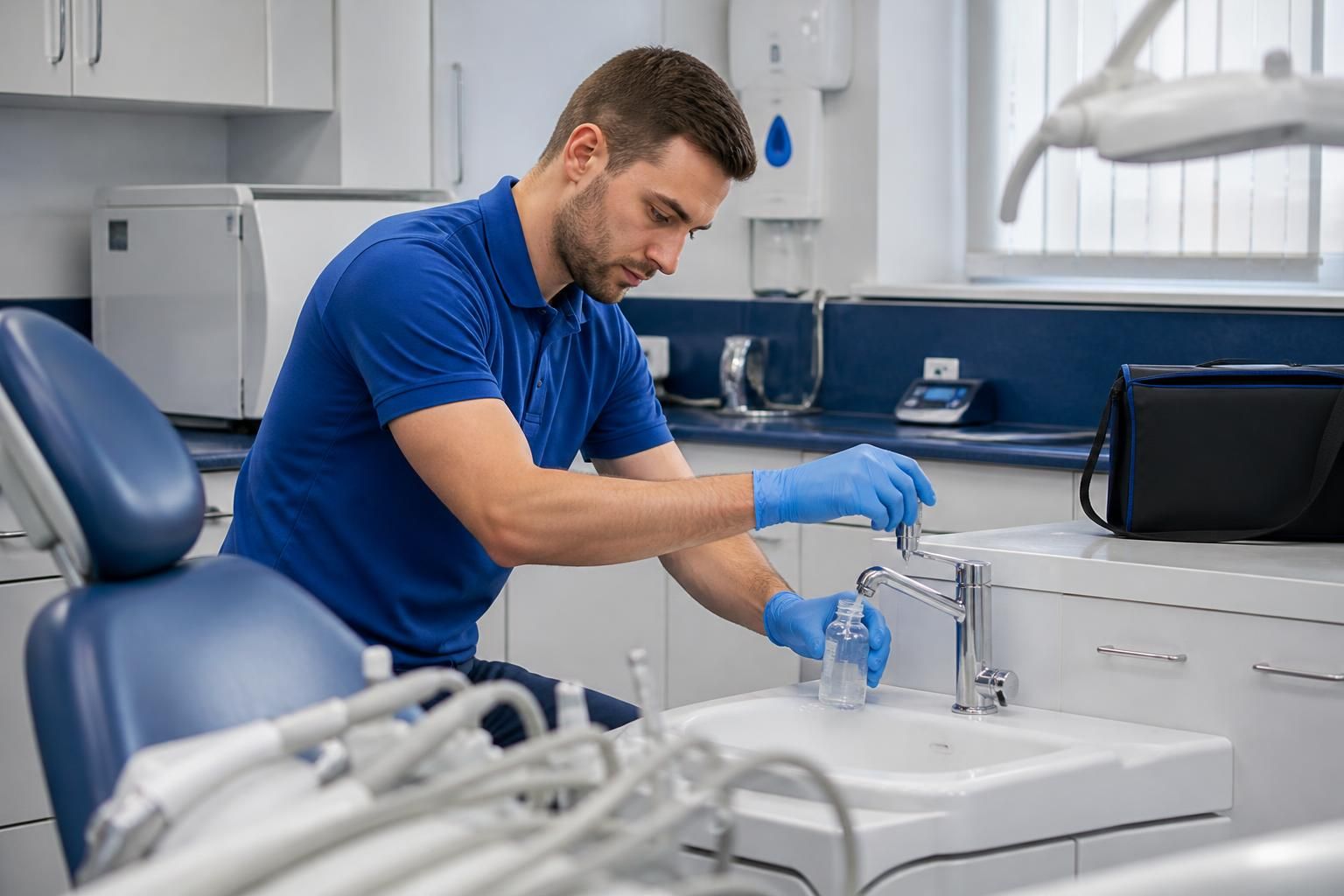
Dental practices should choose a Legionella testing provider that understands the characteristics of dental water systems, can justify its sampling plan, and provides evidence that results will be handled, interpreted and recorded consistently. The right provider is not simply a laboratory: it should connect sampling findings with the practice’s water safety arrangements and explain what, if anything, needs to happen next.
Look for relevant dental water-system experience
Dental practices contain features that can affect water hygiene, including dental unit waterlines, infrequently used outlets, treatment rooms with different patterns of use, and equipment that may create aerosols. A suitable provider should be able to discuss these features before sampling rather than applying an identical schedule to every site.
Ask whether the provider has considered:
- the location and use of dental chairs, sinks, taps, showers and other outlets;
- how often individual outlets and treatment rooms are used;
- the source and distribution of hot and cold water;
- dead legs, redundant pipework, storage vessels or areas with low flow;
- maintenance, disinfection and flushing arrangements; and
- any changes to the premises, equipment or patient services that could affect the water system.
This information helps determine which outlets to sample and prevents the results from being viewed in isolation from the system that produced them.
Check how the sampling plan is developed
A provider should explain why particular outlets and water points have been selected, what the samples are intended to establish, and whether additional samples may be appropriate if the initial findings raise questions. The plan should be proportionate to the practice’s system and usage, while still accounting for representative and higher-risk locations.
It is also reasonable to ask how samples are identified, transported and tracked from collection to analysis. Reliable records should link each result to the correct outlet, room, date and sample type. This is especially important where several dental surgeries or buildings are included in one assessment.
Assess the quality of the information supplied
Useful results should identify the sample location, the analysis undertaken, the reported finding and any relevant limitations. Reports should distinguish between a laboratory result and the wider judgement about water-system risk. A provider should be willing to explain technical terms, discuss results alongside previous records where available, and identify when a result may need further investigation rather than presenting an unsupported conclusion.
Ask how the provider deals with results that are unexpected, inconsistent with earlier findings or difficult to interpret. Clear escalation arrangements are important: the practice should know who will review the matter, what information may be needed, and whether repeat sampling or a wider system review is appropriate.
Consider the provider’s approach to records and governance
Legionella testing forms part of a broader water safety management process. The provider should make clear how test records can be incorporated into the practice’s existing documentation, including the relevant water safety plan, risk assessment, monitoring records and maintenance history. Reports should be sufficiently detailed for the practice, its responsible person and contractors to understand what was sampled and why.
Good record keeping also makes trends easier to identify. Repeated findings at the same outlet, differences between treatment rooms, or changes following maintenance may be more informative than a single isolated result. A provider should explain how it can support this review without treating routine testing as a substitute for managing the underlying system.
Ask about impartiality and scope
Before appointing a provider, confirm exactly what is included in the proposed service. Important points include the number and type of samples, sampling locations, laboratory analysis, reporting, interpretation, travel or site charges, and whether follow-up discussions are included. The practice should also understand which activities sit outside the agreed scope.
There should be a clear separation between evidence from testing and recommendations for remedial work. Where action is suggested, the provider should explain the reason for it and distinguish necessary control measures from optional improvements. This allows the practice to make informed decisions and obtain further advice where specialist work is required.
Use the initial discussion to test the provider’s competence
A credible provider should ask informed questions about the dental practice before proposing a sampling programme. Be cautious of a service that offers a fixed package without asking about the number of surgeries, water-system layout, outlet use, previous findings or existing control measures. A useful initial discussion should result in a defined scope, identified responsibilities and a clear explanation of how the findings will be used.
For a practice comparing providers, the most useful questions are:
- What experience do you have with dental water systems?
- How will you choose sampling points for our premises?
- How will sample identity and handling be documented?
- What information will appear in the final report?
- Who will explain results that require further review?
- How will the findings fit into our existing water safety records?
- What is included in the quoted service, and what would require separate instruction?
The best choice is therefore a provider that combines dental-sector understanding with a disciplined sampling process, traceable records, impartial interpretation and useful communication. Those qualities enable a practice to understand what its test results mean and to manage any necessary next steps as part of an ongoing water safety system.
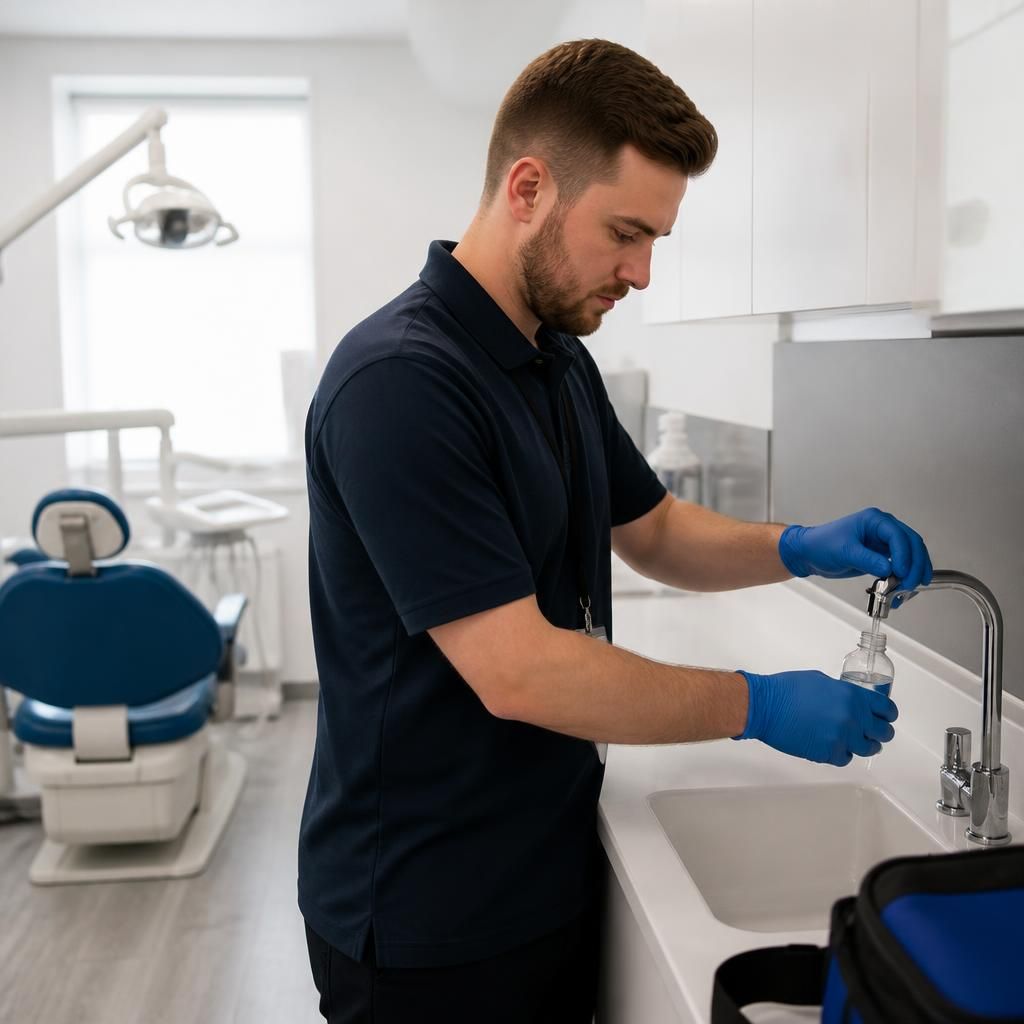
A Legionella testing provider should be able to carry out sampling without undermining the dental practice’s infection prevention arrangements. Before the visit, confirm how the provider will coordinate access to treatment rooms, protect clean areas, use appropriate personal protective equipment and leave work surfaces and outlets suitable for normal clinical use.
This is particularly important where sampling involves dental unit waterlines, surgery sinks or outlets located close to clinical equipment. The provider should explain any precautions the practice needs to take before and after sampling, including whether an outlet must be taken out of use temporarily or whether routine flushing and disinfection procedures need to be coordinated with the visit.
A clear arrangement with the practice manager or infection prevention lead helps prevent confusion between water sampling, dental equipment maintenance and clinical decontamination. It also shows that the provider understands testing as part of the practice’s wider infection control arrangements, rather than as an isolated technical task.
Discuss Your Dental Practice’s Legionella Testing Requirements
Discuss your dental practice’s Legionella testing requirements with Blue Fish Water Management Ltd to clarify the most appropriate approach for your premises and water safety arrangements.