
How should dentists interpret Legionella test results?
Legionella test results should be interpreted alongside the sample location, water-system conditions, risk assessment and previous results, rather than treated as a standalone pass-or-fail measure. A positive or concerning result should prompt review by a competent person, appropriate remedial action and follow-up testing in line with the practice’s control scheme and UK guidance.
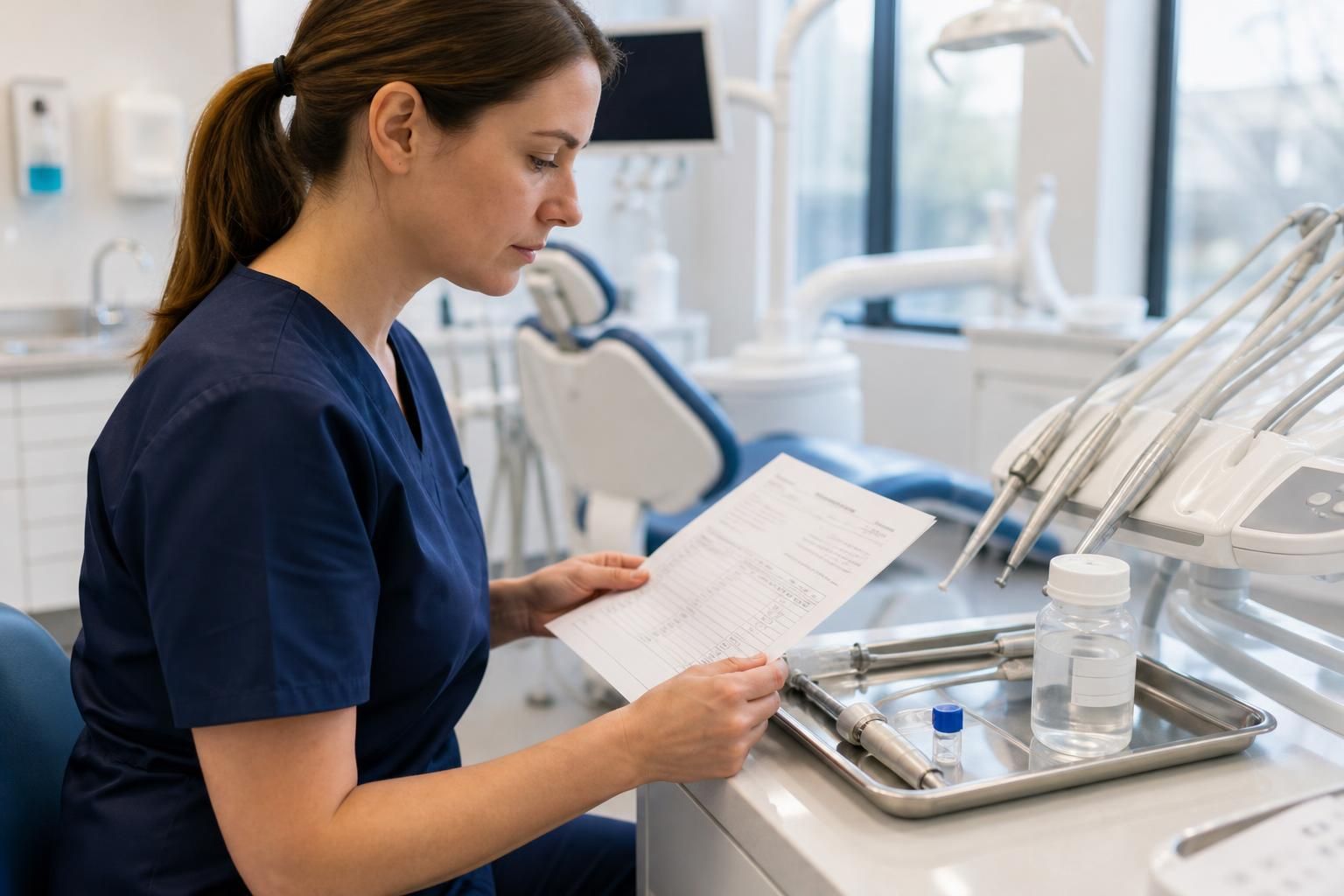
Legionella test results should be read as part of the practice’s wider water safety evidence. The meaning of a result depends on the organism identified, the quantity reported, the sample point, the sampling method, the condition of the system and whether the finding is isolated or repeated. A result marked “not detected” does not prove that Legionella is absent from every part of the dental water system.
Start with the sample details. Check the date, sample location, water type and whether the sample was taken from a mains-fed outlet, storage vessel, hot-water return, thermostatic mixing valve or dental unit waterline. The location can be as important as the laboratory result. Water at an incoming supply point may not represent the condition of water after it has passed through hoses, reservoirs, valves or other components within a dental unit.
The report should also state whether the sample was a routine water sample, a follow-up sample after cleaning or disinfection, or part of an investigation into a suspected problem. Compare like with like where possible. Results from different outlets, sampling methods or laboratory methods may not provide a reliable trend when placed side by side.
Understand what the laboratory has reported. Culture results may be expressed as colony-forming units in a specified volume of water. This is an estimate of viable organisms recovered under the laboratory conditions used; it is not a complete count of every organism present in the system. A result can therefore be low even where contamination or biofilm remains in parts of the installation.
Look for the species identified, not just the numerical result. A report may distinguish Legionella pneumophila from other Legionella species, and may record a confirmed finding, a presumptive finding or no Legionella detected. Where the report is unclear, the practice should ask the testing laboratory or competent water safety adviser to explain the terminology before deciding what it means operationally.
Do not treat “not detected” as a permanent clearance. Legionella levels can vary because of water movement, temperature, stagnation, maintenance activity and disturbance of biofilm. A negative sample may be reassuring for the sampled point at that time, but it does not remove the need to maintain the control measures in the practice’s written scheme. It is particularly important to examine negative results critically if there have been earlier positive findings, repeated system problems or weaknesses in sampling coverage.
Consider the dental unit waterline separately. Dental unit waterlines are narrow, complex and prone to conditions that can support biofilm, particularly where water remains stagnant or treatment is inconsistent. A result from a supply outlet does not automatically demonstrate that the water delivered through a handpiece, ultrasonic scaler or air-water syringe is equivalent. Interpretation should take account of the unit’s design, reservoirs, non-return protection, chemical treatment, flushing arrangements and the manufacturer’s maintenance instructions.
Where procedures generate aerosols, the practice should give particular attention to any result associated with water supplied to the relevant dental equipment. The risk assessment should consider who may be exposed, how the equipment is used and whether vulnerable patients or staff could be affected. This does not mean that every positive result has the same significance, but it does mean that the exposure route must be considered alongside the laboratory finding.
Use the result to review controls. Depending on the finding, a competent person may review:
- hot and cold water temperatures and whether they are being achieved consistently;
- stagnant sections, infrequently used outlets, dead legs and poorly circulated pipework;
- storage tanks, calorifiers, thermostatic mixing valves, hoses, reservoirs and other components;
- flushing records and whether flushing is being completed effectively;
- the condition of dental unit waterlines and evidence of biofilm or scale;
- the suitability and concentration of any waterline treatment product;
- recent plumbing, maintenance, filter changes, equipment replacement or remedial work; and
- whether the sample locations provide a representative picture of the system.
A raised result may lead to further sampling, cleaning or disinfection, improvements to temperature and circulation control, changes to flushing or waterline treatment, isolation of affected equipment, or remedial plumbing work. The appropriate response should be proportionate to the result and supported by the practice’s risk assessment and control scheme. Disinfection alone may not resolve a problem if biofilm, dead legs or defective components remain.
Interpret trends rather than isolated results. Repeated findings at the same outlet can indicate a persistent local problem. Results that vary between outlets may point towards localised contamination, while findings across several points may suggest a wider issue with the incoming supply, storage or distribution system. A sudden result after maintenance should be considered in the context of what work was carried out and whether the system was adequately flushed afterwards.
Follow-up testing should be planned around the corrective action taken. Sampling too soon may measure the immediate effect of an intervention rather than demonstrate stable control; delaying action while waiting for another result is also inappropriate where the initial finding indicates a significant concern. The competent person should determine the timing, sample locations and criteria for closing the investigation.
Keep an auditable interpretation record. The practice should retain the laboratory report with the risk assessment, sampling plan, temperature and flushing records, remedial-work details and follow-up results. The record should explain what the result meant, who assessed it, what action was taken and why the system was considered suitably controlled afterwards. This gives the practice evidence that results were actively managed rather than filed without review.
Where a result is positive, unclear, inconsistent with previous findings or associated with a dental unit used for aerosol-generating procedures, it should be escalated to a competent person with relevant water hygiene and dental-system experience. Blue Fish Water Management Ltd can support practices with legionella testing, interpretation, compliance audits, system monitoring and remedial advice, helping to link laboratory findings with practical water safety controls.
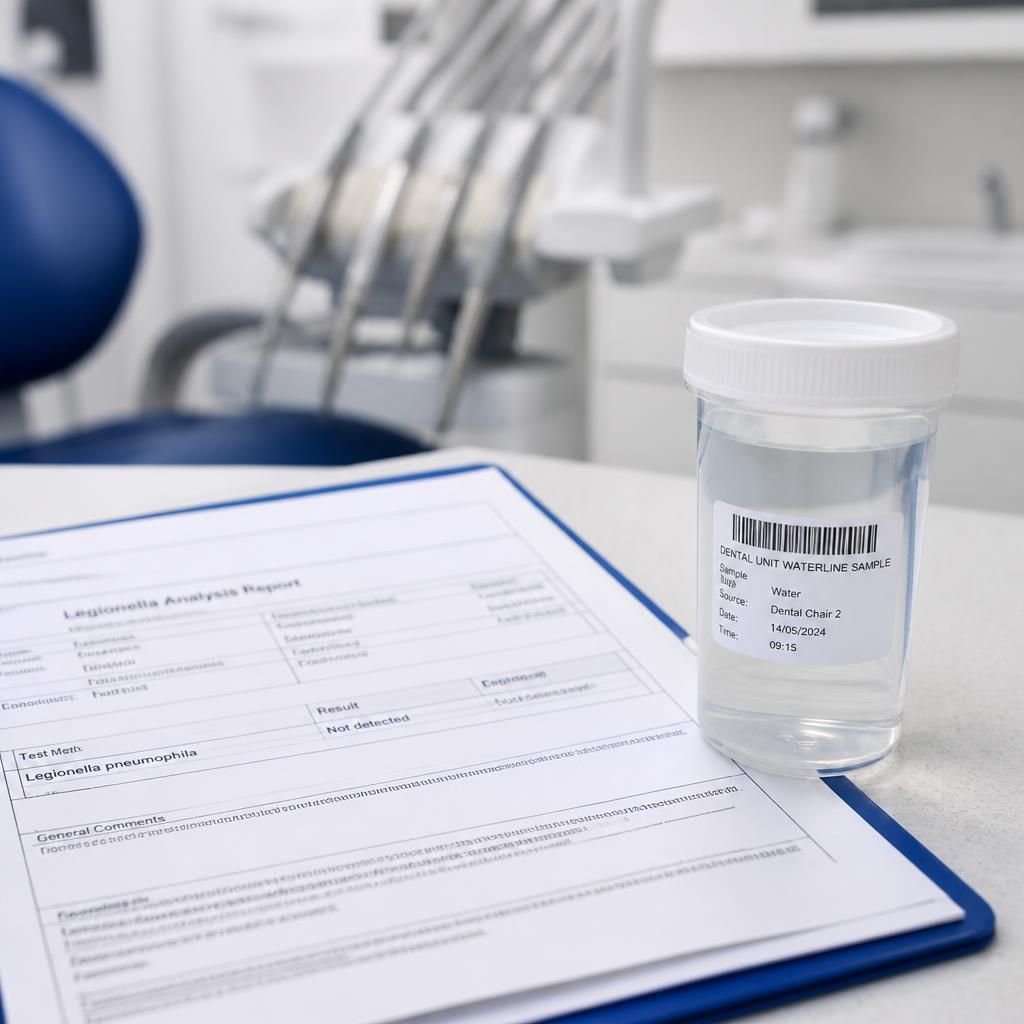
A Legionella laboratory report gives an analytical finding, not a standalone compliance decision. The laboratory reports what was detected in the submitted sample using the stated method; the practice’s competent person must then assess the result against the water-system risk assessment, exposure circumstances and existing control measures.
Before recording the result as satisfactory or requiring corrective work, confirm the sample reference, method, reporting limit, organism identified and any laboratory comments. If these details are unclear, obtain clarification from the laboratory and record the explanation alongside the report. This helps prevent a result being misunderstood when it is reviewed during a compliance audit or after a change to the dental water system.
Get expert help interpreting your Legionella test results
If you need an independent review of a dental practice Legionella report, contact Blue Fish Water Management Ltd to discuss the findings and appropriate next steps.