
How is Legionella testing tailored to dental practice water systems?
Legionella testing for dental practices is tailored to the site’s water system, including hot and cold-water services, dental unit waterlines, seldom-used outlets and any point-of-use equipment. Sampling locations and test frequency should reflect the practice’s risk assessment, water usage, temperature control, stagnation risks and previous findings, rather than follow a standard template.
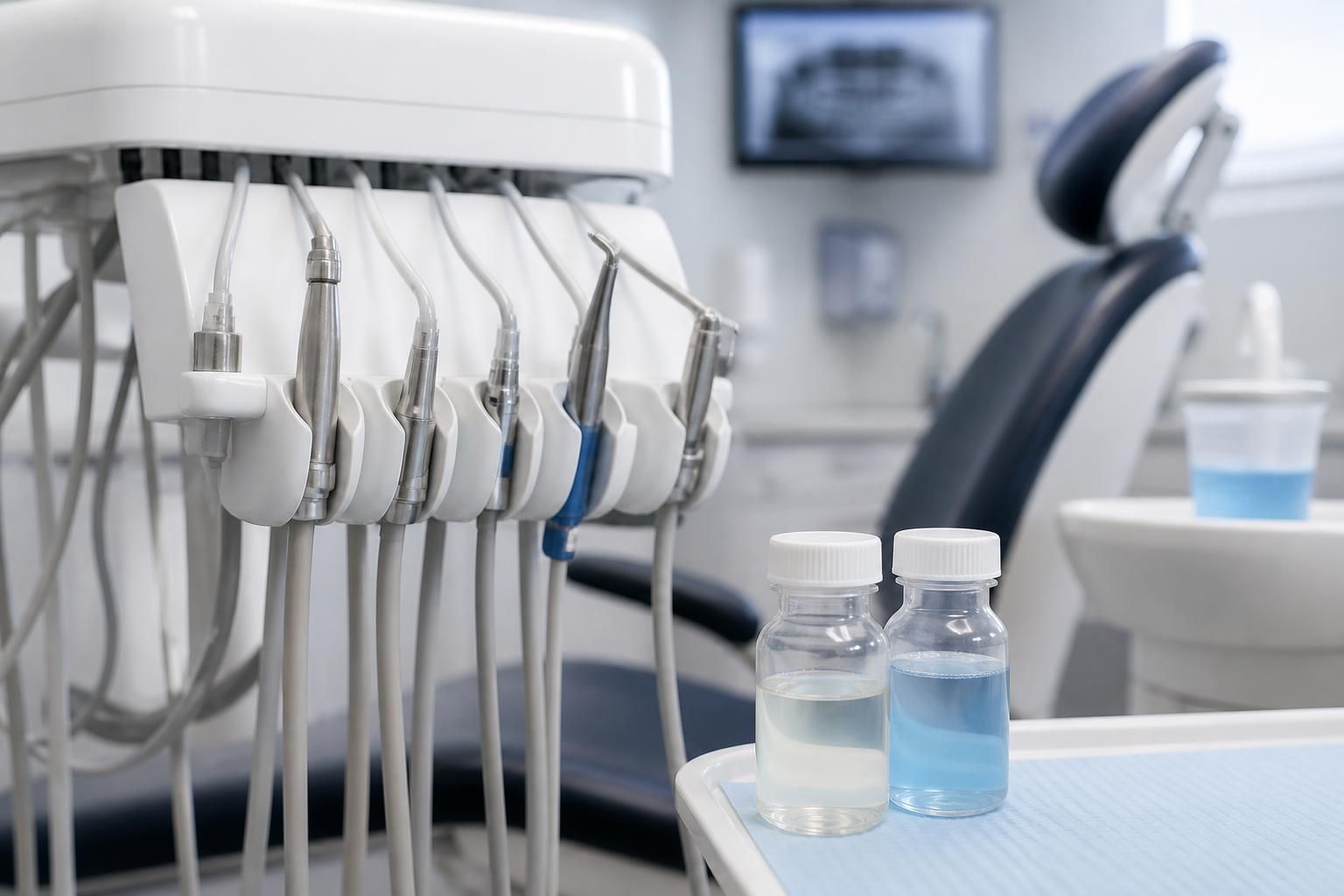
Legionella testing for a dental practice is tailored by separating the building’s domestic water services from the equipment and procedures that create patient or staff exposure. A suitable programme therefore considers the practice’s incoming water, storage and distribution arrangements, dental unit waterlines, independent reservoirs, outlets and clinical activities rather than relying on samples from a single tap.
The main areas considered are:
- Dental unit waterlines: Narrow-bore tubing, handpiece lines, air-water syringes, ultrasonic scalers and cup fillers can retain water and develop biofilm. Where these systems are connected to the mains supply, sampling may assess the water entering and leaving the unit. If a unit has an independent bottle or reservoir, that source and its filling, cleaning and disinfection arrangements need separate consideration.
- Domestic hot and cold-water services: Samples may be taken from representative outlets, storage vessels, calorifiers, return loops and other parts of the system where water can stagnate or remain at temperatures favourable to bacterial growth. The selection depends on the plumbing design and the findings of the site risk assessment.
- Low-use and vulnerable outlets: Taps, showers, utility sinks, sluice facilities and other outlets that are used infrequently may require attention, particularly where they are close to treatment rooms or staff facilities. Their use pattern can affect both the decision to sample and the interpretation of results.
- Point-of-use equipment: Water-fed equipment, filters, softeners and treatment devices can alter water quality or create additional sections of pipework. The sampling plan should record these components and establish whether they are maintained in accordance with the manufacturer’s instructions and the practice’s water safety procedures.
Sampling technique is especially important in a dental setting. The person taking samples should identify each location clearly, use suitable sterile containers and prevent contamination during collection, transport and handling. The record should distinguish between a sample taken before flushing and one taken after an appropriate flush. A first-draw sample can indicate water that has been standing in an outlet or local pipework, while a flushed sample can provide information about the wider supply. The correct approach depends on what the investigation is intended to establish.
Dental unit waterline samples also need careful interpretation. A result from a handpiece line may reflect conditions inside that line rather than the quality of the incoming building supply. Conversely, a satisfactory mains sample does not by itself demonstrate that every dental unit, reservoir or narrow-bore tube is well controlled. Sampling points should therefore be linked to the system diagram, equipment configuration and cleaning regime, with the exact unit and outlet recorded for each sample.
Testing normally involves laboratory examination for Legionella, with the selected laboratory and method appropriate to the purpose of the investigation. Using a UKAS-accredited testing service can support confidence in the laboratory process and reporting. However, a laboratory result is only one part of control. Results should be considered alongside water temperatures, stagnation, biofilm risk, maintenance records, disinfection history, outlet use, system changes and any previous remedial work.
The frequency of testing should be justified by the practice’s written risk assessment. More frequent investigation may be appropriate where there has been a positive result, a change to plumbing or dental equipment, prolonged closure, evidence of poor temperature control, repeated maintenance issues or uncertainty about the effectiveness of cleaning and disinfection. A stable system with documented controls may require a different sampling approach. The objective is proportionate monitoring based on risk, not testing every outlet without a clear reason.
Where a result indicates Legionella, the practice should not treat the laboratory report in isolation or assume that replacing a filter will resolve the cause. A competent review should trace the affected section, check related outlets and equipment, examine the control measures and decide whether further sampling, cleaning, disinfection or plumbing work is necessary. Any action should be recorded, including the responsible person, completion date and evidence used to confirm that the issue has been addressed.
For dental practices, a well-designed testing report should therefore include the sampling locations, sample conditions, equipment identifiers, laboratory method, results, relevant system observations and recommended actions. This creates an auditable connection between the test result and the practice’s water safety arrangements, helping the dutyholder demonstrate that testing has been selected and acted upon according to the actual risks of the dental water system.
Legionella testing for dental practice water systems should be designed around the decision the result needs to support, rather than treated as a routine exercise with the same samples at every visit. A practice may need to establish a baseline after a system change, investigate an unexpected result or verify that corrective work has addressed a specific source of risk.
- Baseline testing: provides documented evidence of conditions after new equipment, plumbing alterations or changes to water management arrangements.
- Diagnostic testing: examines a concern by linking the affected sample to the relevant outlet, dental unit, reservoir or section of pipework.
- Verification testing: checks whether cleaning, disinfection, component replacement or other remedial work has achieved the intended control.
Defining this purpose before samples are taken helps the assessor select evidence that answers the practice’s question. It also prevents results from unrelated outlets being treated as proof that a particular dental unit or water service is controlled. The final record should state why the samples were collected, what decision they inform and what further action follows from the findings.
Discuss Your Dental Practice Water Testing Needs
Discuss your dental practice water testing needs with Blue Fish Water Management Ltd to identify the most appropriate next step for your water system and current concerns.