
Does every dental practice need routine Legionella testing?
No, not every dental practice needs the same routine Legionella testing schedule. The need for testing should be determined by a documented water-system risk assessment, taking account of system design, control measures, use of the premises and the vulnerability of patients and staff; testing is then arranged where the assessment identifies it as necessary to verify control or investigate a concern.
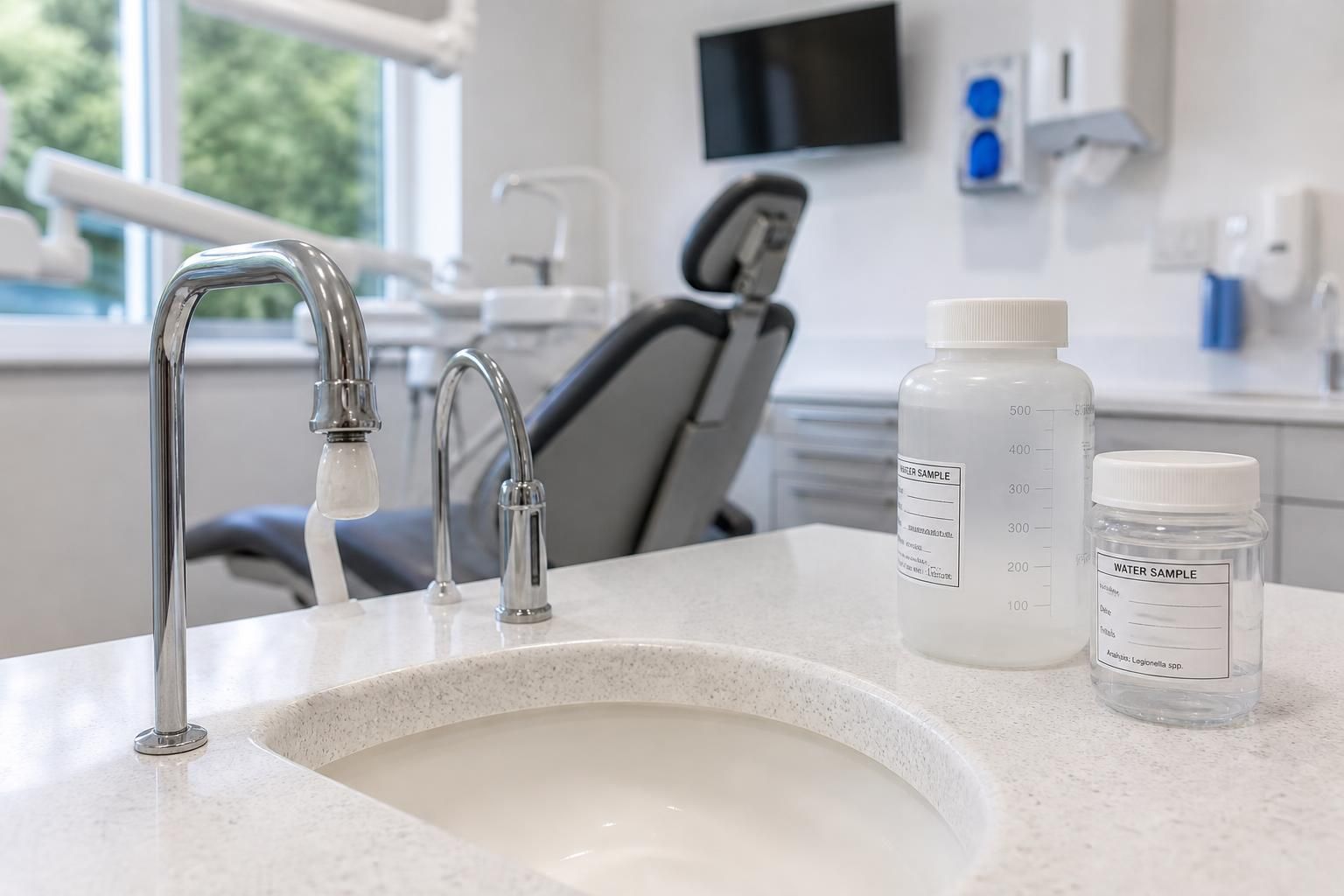
For a dental practice, routine Legionella testing should form part of a risk-based control programme rather than being treated as an automatic annual requirement. The appropriate approach depends on the water systems present, how they are operated, the effectiveness of existing controls and whether patients, staff or visitors could be particularly vulnerable to infection.
UK health and safety duties require risks from work-related exposure to Legionella to be assessed and controlled. The relevant assessment should identify the sources of risk within the premises and set out how those risks will be managed. It should also state whether microbiological sampling is needed, what will be tested, and what action will follow different results. A generic testing package applied to every practice may produce data without demonstrating that the underlying risks are controlled.
Factors that may justify planned testing include:
- Stored hot or cold water, including tanks, calorifiers or other systems that can allow water to stagnate or remain within temperatures favourable to bacterial growth.
- Complex pipework, infrequently used outlets, dead legs, redundant branches or areas that are difficult to flush.
- Dental units, ancillary equipment or waterlines where water can remain static, become contaminated or generate aerosols during treatment.
- Evidence that temperature control, flushing, cleaning, disinfection or other management measures are not consistently effective.
- Changes to the building, plumbing, equipment, occupancy or pattern of use that may alter the original risk assessment.
- A history of abnormal results, suspected contamination, confirmed exposure or illness that requires investigation.
- The presence of people who may be more susceptible to Legionnaires’ disease, considered alongside the nature of the water systems and the control measures in place.
Dental practices should distinguish between routine operational monitoring and microbiological testing. Operational monitoring may include checking hot and cold water temperatures, confirming that outlets are being used or flushed, inspecting tanks and recording maintenance. Laboratory testing measures Legionella in samples from selected points. Testing can help verify whether controls are working, but a negative result is only evidence about the samples taken at that time. It does not prove that every part of the system is free from Legionella or remove the need for ongoing control.
Where testing is considered appropriate, the sampling plan should be designed around the risk assessment. Samples may need to represent the incoming supply, storage arrangements, representative outlets, low-use points and parts of the system with known vulnerabilities. The purpose of each sample should be clear. Sampling only the easiest or most frequently used tap can give an incomplete picture, particularly where the system includes concealed pipework, storage or dental equipment with separate water management arrangements.
The timing of repeat tests should also be justified by the assessment and previous findings. Some practices may require periodic verification because of the complexity or vulnerability of their systems. Others may need sampling after remedial work, a period of closure, changes to equipment or an unexplained deterioration in control. A fixed interval should not be adopted simply because it is common practice if it does not reflect the actual risk.
Results must be interpreted with the wider control record. The significance of a detected level depends on the sample location, sampling method, system design, water temperatures, recent flushing or disinfection, and whether related samples show a consistent pattern. A result should therefore be reviewed by someone competent to assess Legionella risks rather than considered in isolation. The appropriate response may include checking sampling quality, increasing monitoring, reviewing the risk assessment, cleaning or disinfecting affected components, correcting temperature or flushing failures, and taking further samples to verify the action.
When no Legionella is detected, the practice should still retain evidence that control measures are being carried out. When Legionella is detected, the result should not automatically be treated as proof of an imminent health risk, but it should not be ignored. The response should be proportionate, documented and linked to the system’s risk profile. Any suspected case of disease should be managed through the appropriate clinical and public health channels; environmental sampling alone cannot diagnose Legionnaires’ disease.
A useful testing record should identify the sampling date, locations, sample type, laboratory, method, results, relevant operating conditions and any corrective action. The practice should also be able to show who is responsible for water hygiene, how staff maintain dental waterlines and outlets, and when the assessment and written control scheme are reviewed. UKAS-accredited laboratory testing can support reliable analysis, but accreditation does not replace competent sampling, suitable locations or sound interpretation.
In practical terms, a dental practice is more likely to need planned Legionella testing where its systems are complex, poorly used, difficult to control or subject to significant change. Where the systems are simple and effective controls are demonstrated, the assessment may conclude that routine laboratory sampling adds little value, provided that the decision is recorded and reviewed when circumstances change.
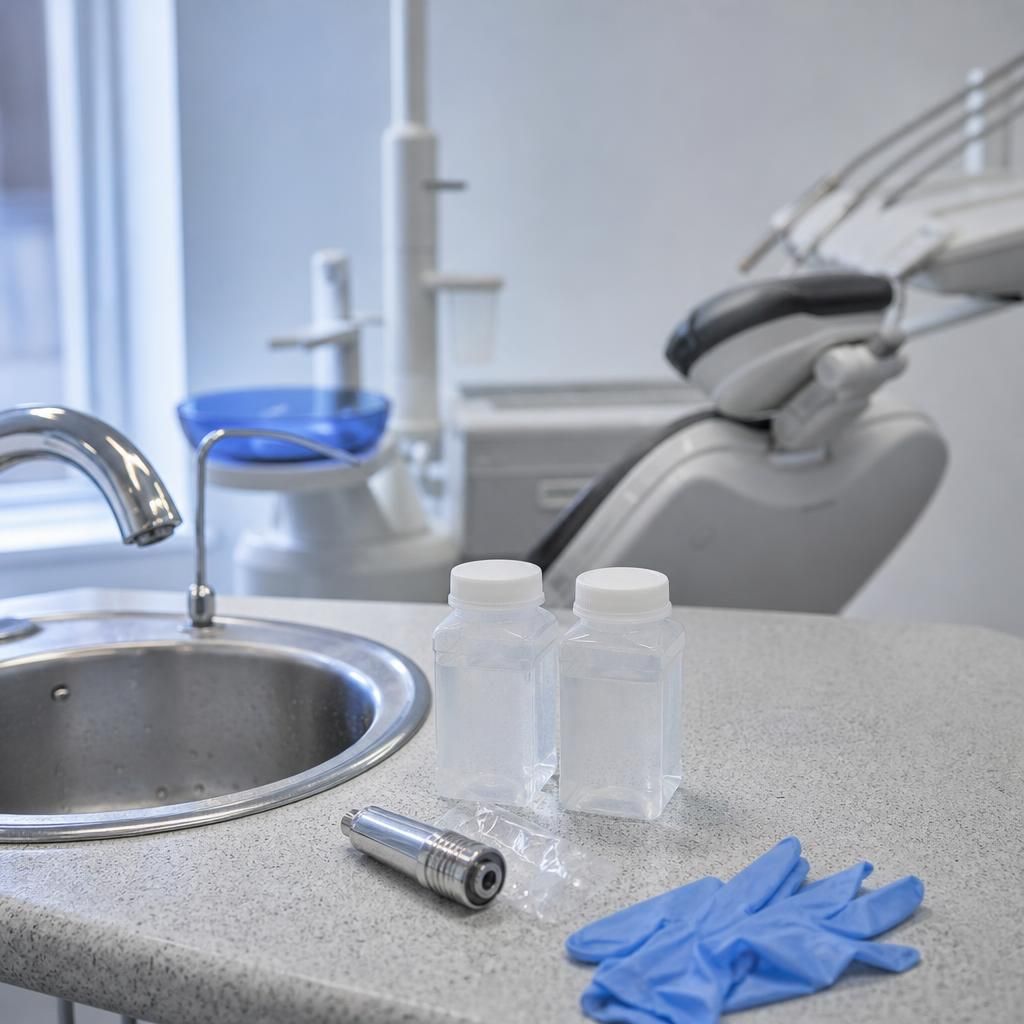
Routine Legionella testing of a dental practice’s building water system does not, by itself, confirm that dental unit waterlines are adequately managed. Waterlines may have different internal conditions, usage patterns and maintenance requirements, so a sample from a nearby tap should not automatically be treated as representative of water delivered through a dental unit.
Practices should therefore keep dental unit waterline management distinct within their written procedures. This may include following the equipment instructions, controlling stagnation, completing required cleaning or disinfection, and retaining maintenance records. Where there is a specific concern about a dental unit, the assessment should identify whether separate sampling or technical investigation is justified, rather than relying solely on routine samples from the wider premises.
Review your dental practice’s Legionella testing needs
If you are unsure whether your dental practice needs routine Legionella testing, arrange a competent review of the premises, water systems and existing control arrangements. Blue Fish Water Management Ltd can help assess the testing approach appropriate to your practice and document the next steps.