
Which water quality monitoring approach suits your system?
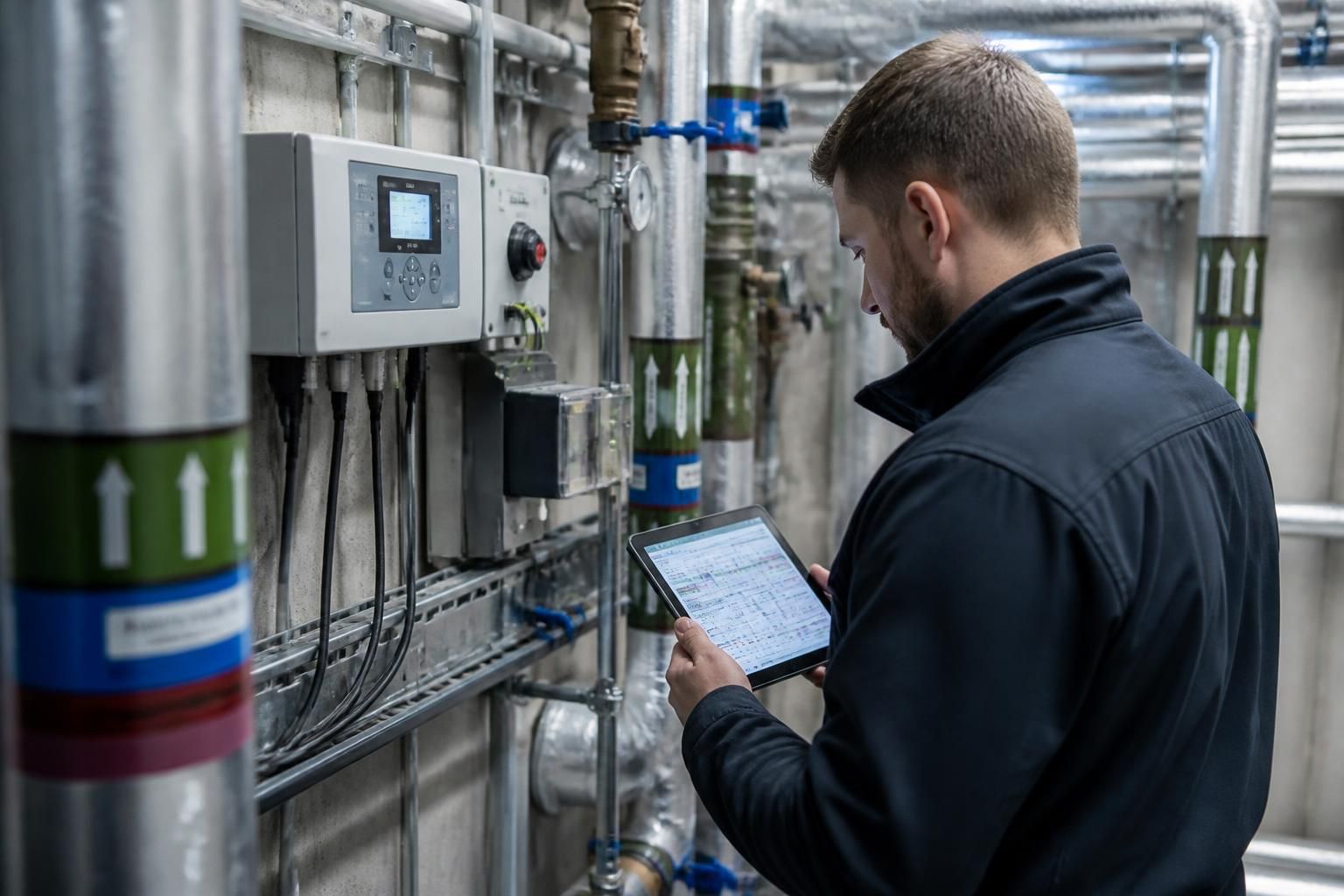
The right water quality monitoring approach is the one that gives responsible people dependable evidence about the hazards in their system and supports timely corrective action. In practice, this usually means choosing between routine manual checks, targeted sampling, continuous monitoring, or a proportionate combination of these methods.
Start with the decisions the monitoring must support. A monitoring programme should not collect data simply because it is easy to record. Each check should relate to a defined control measure, such as confirming that stored water remains within an acceptable temperature range, identifying deterioration in water quality, verifying flushing arrangements, or demonstrating that remedial work has been effective. The method is suitable only if the resulting information can be interpreted and acted upon.
Manual monitoring is generally appropriate where systems are straightforward, observations are needed at defined intervals and trained personnel can access the relevant points. A typical programme may involve recorded temperature checks, inspection of storage and distribution components, observations of outlets and visible conditions, and scheduled water samples. It can be practical for smaller premises or systems with stable operating patterns, provided the frequency is justified by the risk assessment and records are completed consistently.
Manual checks have limitations. They describe conditions at the time of inspection and may miss changes occurring between visits. Results can also be affected by inconsistent sampling technique, unsuitable equipment, poor access or incomplete records. Written procedures should therefore specify where checks are made, how equipment is used, what constitutes an unacceptable result and who is responsible for escalation.
Targeted monitoring is more suitable when there is a particular uncertainty, suspected problem or higher-risk part of the system that requires closer investigation. Samples or measurements can be directed towards areas such as infrequently used outlets, sentinel points, storage tanks, return loops, vulnerable departments or locations associated with previous results. Targeted work may also be used after changes to the system, occupancy patterns, plant operation or control measures.
This approach is valuable because it concentrates resources on the locations most likely to provide useful evidence. It should not be confused with selecting only convenient sampling points. The sampling locations need to reflect the system design and the hazard being investigated. A targeted programme should state why each point was selected, what the result will show and what action will follow from an adverse or unexpected finding.
Continuous monitoring can suit complex systems, critical control points or premises where changes may occur too quickly for periodic checks to identify them. Sensors can provide a persistent record of parameters such as temperature, flow, disinfectant concentration or other defined indicators. This may reveal trends, interruptions and excursions that would not be visible from occasional readings.
Continuous monitoring is not automatically the most appropriate or complete option. Sensors require correct installation, calibration, maintenance and verification. The measured parameter must also be a meaningful indicator of the risk being controlled. A live reading cannot replace inspection, sampling or competent assessment where those are needed to identify contamination, system condition or wider management failures. Alarm thresholds should be defined in advance, with clear arrangements for investigating alerts and recording the response.
Consider the system’s operating characteristics. The following questions help determine which method is proportionate:
- Is the system simple and stable, or does it contain multiple tanks, loops, temperature zones, treatment stages or specialist equipment?
- How frequently do occupancy, demand, outlet use or operating conditions change?
- Are there vulnerable people, unusual exposure routes or areas where a failure could have serious consequences?
- Can staff safely access the points that need checking, and do they have the competence and equipment to obtain reliable results?
- Would a periodic check identify a problem soon enough, or could conditions change materially between checks?
- What evidence is required to demonstrate that controls are operating as intended?
For many commercial and industrial premises, a combined approach is more defensible than relying on one method. Routine manual checks can establish normal operation, targeted sampling can investigate specific risks, and continuous devices can track important variables where rapid change is possible. The methods should complement one another rather than duplicate the same measurement without a clear purpose.
Match the approach to the quality of the evidence. Results should be traceable to the date, location, method, equipment and person responsible. Analytical samples should be collected and handled according to an appropriate procedure, while field measurements should use suitable, maintained and checked instruments. Where results are generated electronically, the monitoring system should preserve an auditable record and identify any gaps in data.
Records should also show the interpretation and resulting action, not merely the original reading. An isolated result may require confirmation, investigation or a review of control measures, depending on the parameter and system. Repeated marginal results, missing checks or unexplained changes can be as significant as a single clearly unacceptable result because they may indicate that the monitoring process or underlying control is unreliable.
Review the programme when circumstances change. Alterations to plant, changes in use, periods of low occupancy, refurbishment, new tenants, water treatment changes and repeated adverse findings can all affect whether the chosen method remains suitable. A competent review should consider whether monitoring points, frequency, technology, responsibilities and action limits still reflect the actual system. Water quality monitoring records, laboratory reports and compliance audits can then be used together to support that review.
Blue Fish Water Management can help organisations assess their monitoring requirements through water quality checks, UKAS-accredited testing, records review and practical compliance advice. The appropriate solution is determined by the evidence needed for the particular system, rather than by selecting the most technologically advanced method in isolation.
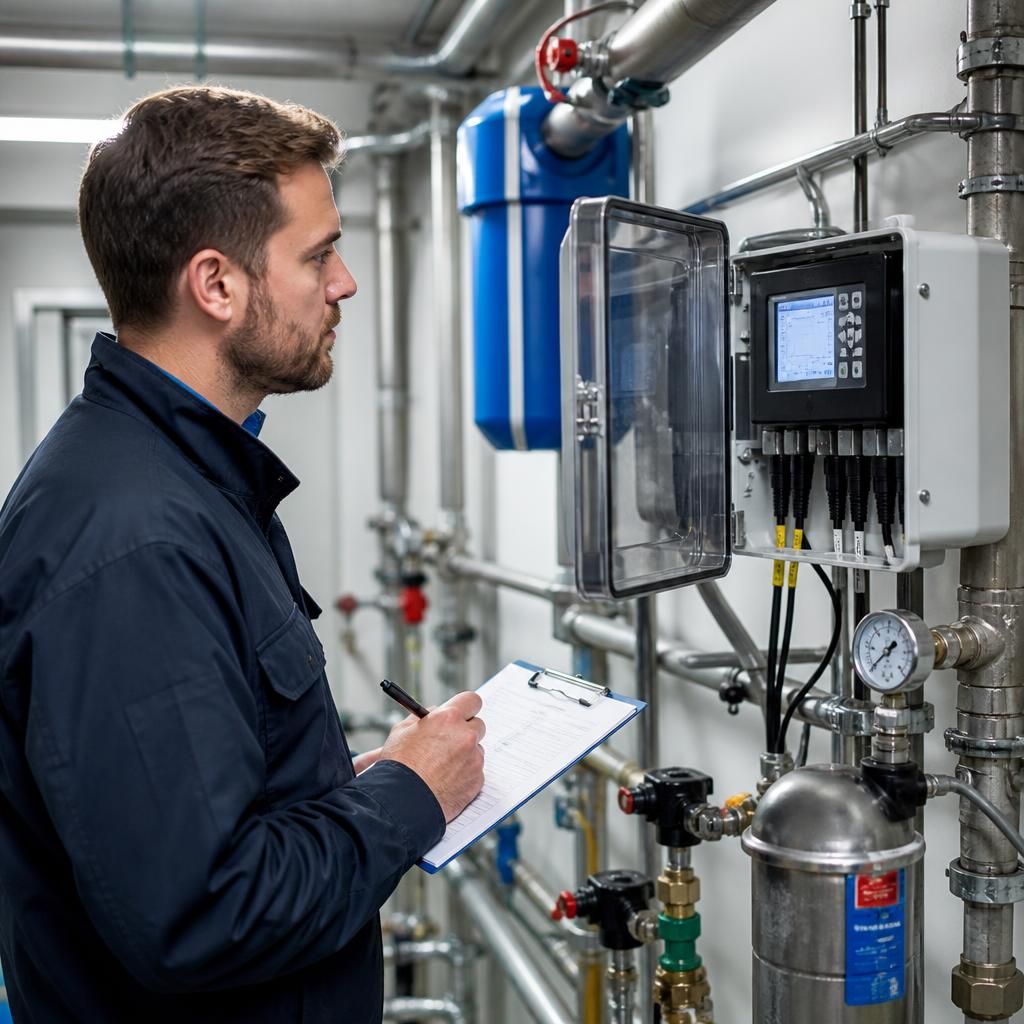
A continuous monitoring system is only suitable when the organisation can manage the information it produces. Before selecting it, define who receives alerts, who investigates them, how sensor faults are identified and what manual check or alternative record is used if the device stops reporting. Without this supporting process, additional data may not improve control of the water system.
For systems using automated monitoring, assess the practical requirements alongside the technical benefits:
- clear ownership of alarms and follow-up actions;
- documented arrangements for calibration, maintenance and fault detection;
- secure retention of readings and an auditable record of changes;
- a defined fallback method during sensor failure or planned maintenance; and
- periodic review to confirm that the measured parameter still represents the relevant risk.
Where these arrangements cannot be maintained reliably, a well-designed manual or targeted programme may provide more dependable evidence than an automated system that is not properly managed.
Discuss the right monitoring approach for your system
Contact Blue Fish Water Management to discuss your system and the information your monitoring programme needs to produce. Their team can help you identify a practical next step based on your water safety responsibilities.