
What should water quality monitoring records include?
Water quality monitoring records should identify the site, system or outlet checked, date and time, person carrying out the check, monitoring method, parameters measured and recorded results. They should also document any abnormal findings, corrective actions, follow-up results, relevant equipment or laboratory details, and the person who reviewed or authorised the record.
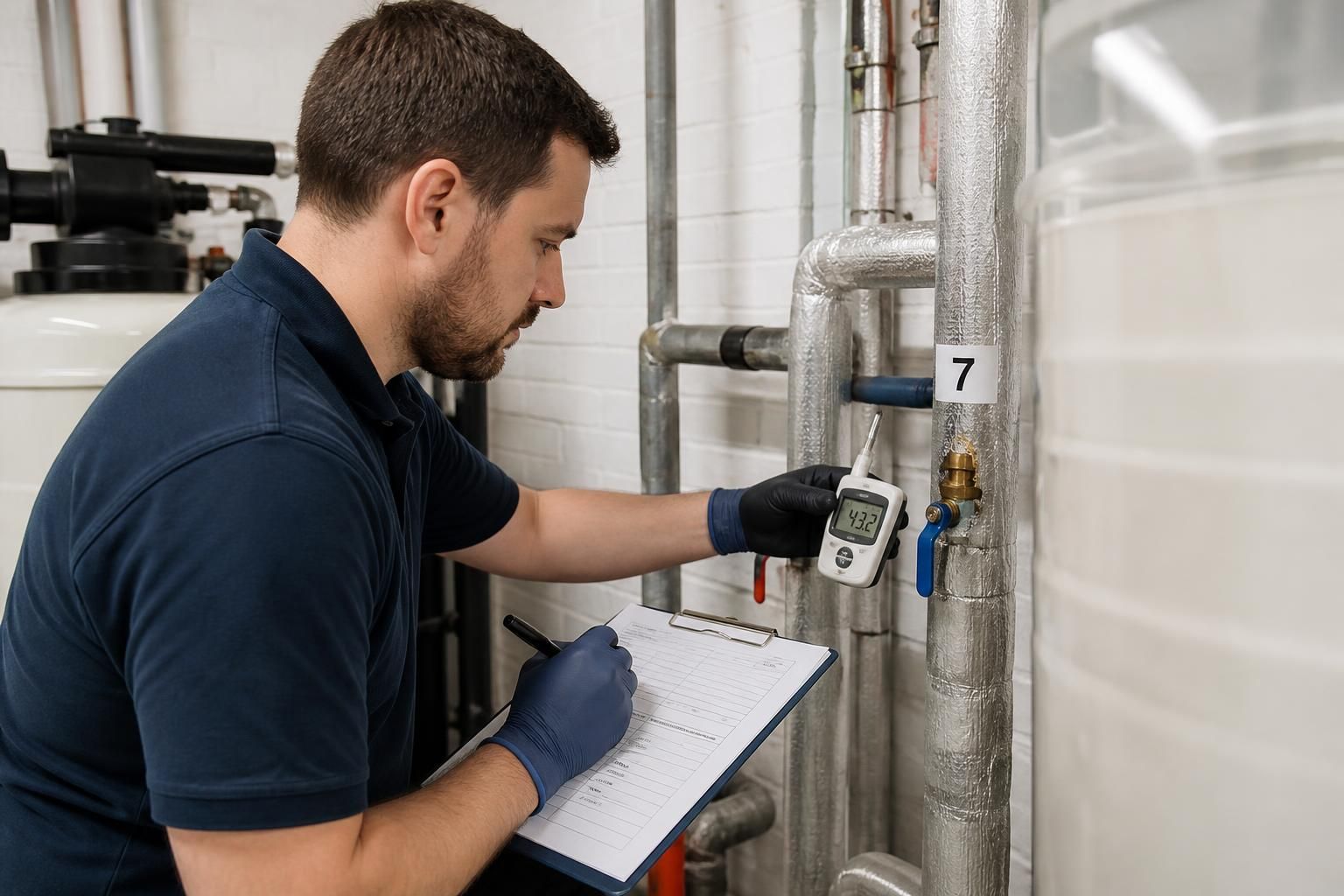
A complete water quality monitoring record is an auditable account of what was checked, why it was checked, how the result relates to the system’s control measures, and what happened afterwards. It should allow another competent person to understand the condition of the system and verify that monitoring was carried out in accordance with the site’s written water safety arrangements.
Records should also include the monitoring context. This normally means:
- the relevant monitoring schedule, procedure or control measure;
- the reason for the check, such as routine verification, investigation of an issue or confirmation of remedial work;
- the sampling location or monitoring point’s role within the system, particularly where outlets are identified by an asset or location code;
- the applicable acceptance criteria, action limits or operating limits; and
- any conditions that could affect interpretation, such as an outlet being unused, a system being partly isolated, unusual occupancy or recent maintenance.
Recording the expected range or action threshold is important. A result has limited value if it cannot be compared with the site’s agreed limits or with a relevant control standard. Where a result is outside the expected range, the record should show whether it was treated as an alert, an action level exceedance or an investigation trigger.
Good records preserve the integrity of measurements and samples. Depending on the monitoring method, they may need to show:
- the identification number of the meter, probe or other instrument;
- the instrument’s calibration or verification status;
- any quality-control checks completed before use;
- sample identification and the point at which the sample was taken;
- sample preservation, storage and transport information where laboratory analysis is involved;
- the laboratory or testing method used, including the relevant method reference where applicable; and
- any deviation from the approved sampling or testing procedure.
For laboratory samples, the paperwork should link the field collection record to the laboratory report without ambiguity. A chain-of-custody reference, sample receipt information and any qualification placed on the result can be important when results are reviewed during an investigation or compliance audit.
Records should make trends visible. Individual readings can be misleading when considered alone, so the monitoring system should support comparison with previous results. This may be achieved through a results log, trend chart or linked report. Where a pattern is developing, the record should identify it rather than merely filing each result separately. Examples include repeated readings near an action limit, progressive deterioration at one outlet or a recurring failure after maintenance.
Where a check was missed, delayed or could not be completed, that fact should be recorded with the reason and the revised action. A blank entry does not show whether monitoring was forgotten, prevented by access restrictions or unnecessary because the system was isolated. Clear records distinguish between a valid result, a not-applicable entry and a missed control.
Follow-up information should be traceable. In addition to describing the corrective measure, the record should link it to the relevant work order, maintenance report, investigation or management decision. It should show whether the underlying cause was considered, whether temporary controls were introduced and what evidence was required before the point or system returned to normal monitoring. A repeat check should not overwrite the original adverse result; both records should remain available so the sequence can be followed.
Document control is another essential element. Paper and electronic records should have a consistent naming or numbering system, identifiable revisions and controlled access. Changes to a record should leave an audit trail or be made in a way that preserves the original entry, including the date and reason for amendment. Records should be protected from unauthorised alteration, loss or premature disposal and retained in line with the organisation’s documented policy and applicable legal or regulatory expectations.
Review and approval should be evident. The person responsible for checking the record should confirm that it is complete, that exceptions have been assessed and that required actions have been assigned. The review should identify outstanding actions rather than simply sign that the document has been seen. Where results are reported to a responsible person, contractor or management group, the communication and any resulting decision should be linked to the record.
In practice, a useful record is not necessarily the longest form. It is one that provides a reliable audit trail from the monitoring plan, through the observation or test, to interpretation, action and verification. Site procedures should define the required fields for each monitoring activity, while periodic reviews should check that the records remain suitable when the system, equipment, use or risk profile changes.
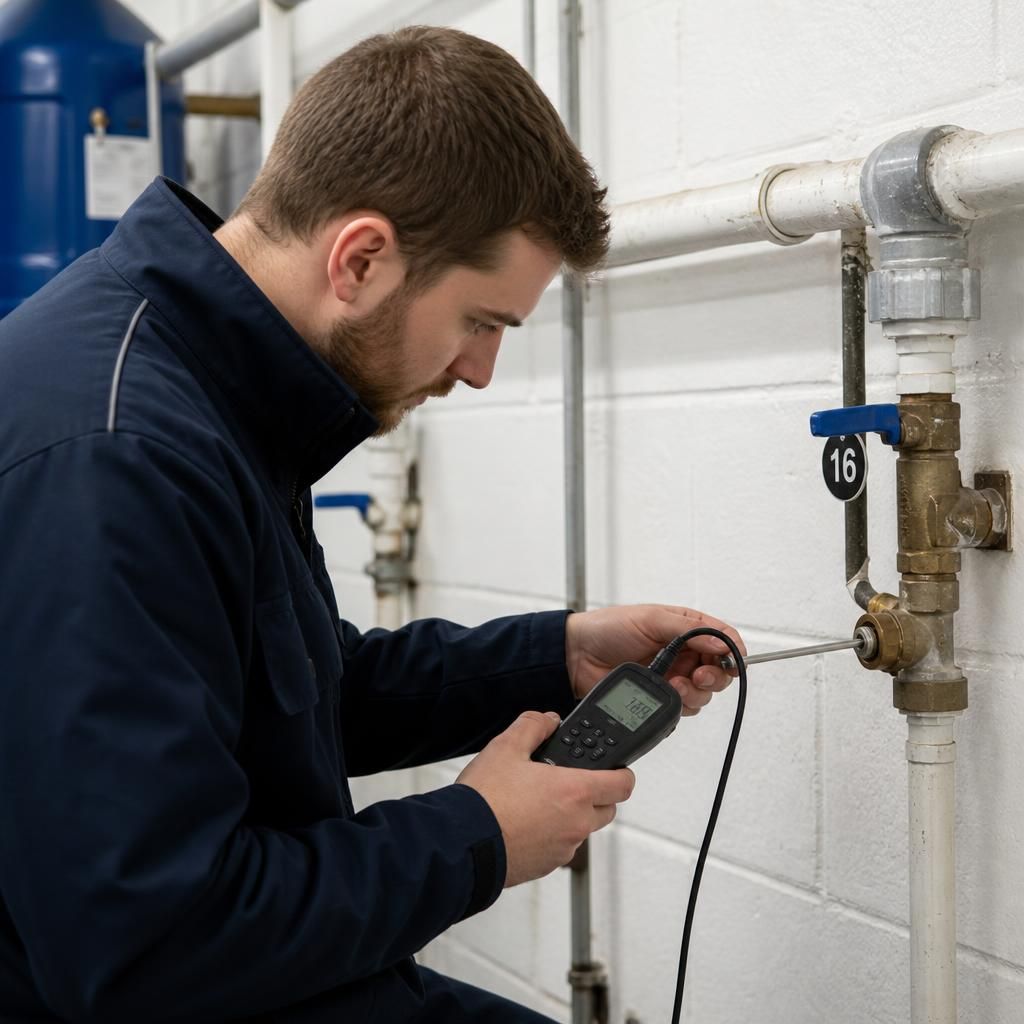
Water quality monitoring records should use clear, unambiguous entries rather than shorthand such as “checked” or “OK”. For an observational check, describe the condition that was found—for example, “outlet running clear with no visible debris” or “storage tank insulation damaged”. For a measured result, record the value with its unit and the agreed level of precision, such as temperature in °C or disinfectant residual in mg/l. A consistent format helps different reviewers interpret the record in the same way and prevents a completed tick from being mistaken for an acceptable result.
Review your water quality monitoring records
If you need to check whether your records meet your written water safety arrangements, speak to Blue Fish Water Management Ltd about a water hygiene compliance audit.