
Who should review a business water quality check report?

The appropriate review is a structured assessment of what the report means for the building’s water systems, users and existing control measures. It should be carried out by someone with enough authority to initiate action and enough technical understanding to interpret the findings, rather than treated as a laboratory result that can be filed without further consideration.
Internal review should establish:
- which outlets, tanks, calorifiers, showers or other system components were examined;
- the date and conditions of sampling, including whether the system had been operating normally;
- which tests were completed and whether any requested samples or locations are missing;
- whether results are within the relevant control limits or require investigation;
- whether the findings are consistent with previous reports and the site’s water safety plan;
- what corrective actions have been recommended, who is responsible for them and how completion will be verified.
The reviewer should also consider the limitations of the report. A sample represents the location and conditions at the time of collection; it does not necessarily describe every part of a complex water system. A satisfactory result does not remove the need for routine control measures, while an adverse result needs to be assessed in context. The distribution of results, the type of system, water temperatures, stagnation, maintenance history and the vulnerability of exposed individuals may all affect the appropriate response.
Different people may have different review responsibilities. The person overseeing the premises should confirm that the report has been received and that actions are recorded. Facilities or maintenance personnel can check whether practical issues, such as poor circulation, low use, temperature control or defects, may have contributed to the findings. Compliance or health and safety personnel may need to confirm that the investigation and resulting actions are documented within the organisation’s wider arrangements.
A competent water hygiene or legionella adviser should be involved where results are elevated, inconsistent, difficult to interpret or outside the scope of the reviewer’s knowledge. Specialist input is particularly important where there are repeated adverse results, suspected contamination, significant changes to the system, vulnerable building users or uncertainty about the correct remedial measure. The adviser may recommend further sampling, a system survey, cleaning and disinfection, temperature or flow checks, engineering work, or a review of control procedures. The action should be based on the evidence rather than on a single result considered in isolation.
The report should be reviewed alongside the current risk assessment, monitoring records, maintenance information and details of any recent alterations or periods of limited use. If the report identifies a problem at a particular outlet, the review should establish whether it is localised or indicates a wider system issue. If results have changed over time, trend information can help identify deterioration that may not be apparent from one report.
After the review, the organisation should retain a clear record of the decision, actions, responsible persons and follow-up checks. Closing an action should mean that the underlying issue has been addressed and, where appropriate, that subsequent monitoring demonstrates effective control. If the report is unclear or does not contain enough information to support a decision, the reviewer should obtain clarification from the testing provider or seek advice from a suitably competent specialist before relying on its conclusions.
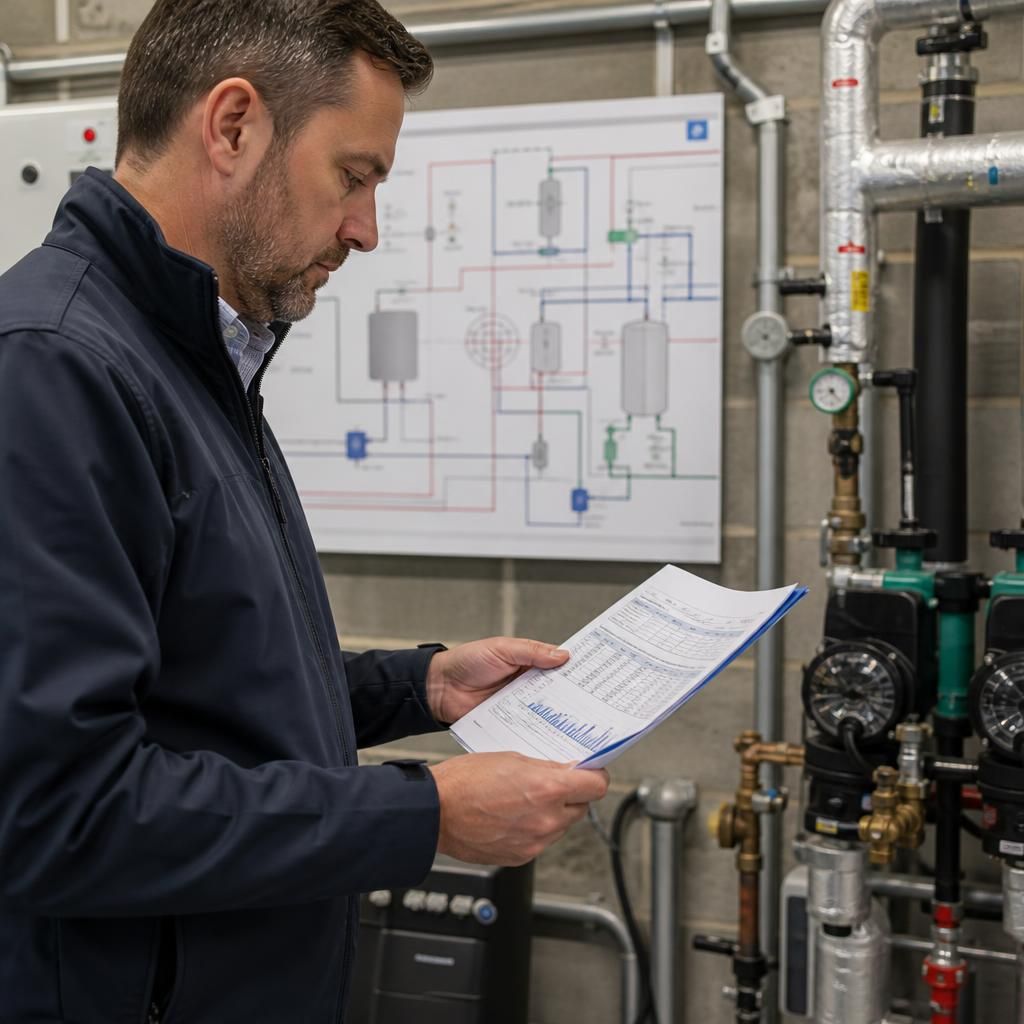
Where a business premises is leased or managed by more than one organisation, the report should be reviewed by each party whose responsibilities may be affected. The landlord or property owner may oversee central plant and fixed water systems, while the tenant or occupier may control outlets, operational practices and access to the building. A managing agent or facilities provider may coordinate these duties, but should not be treated as the sole decision-maker unless the contract and management arrangements give it that responsibility.
The review should therefore identify who is accountable for each finding and ensure that relevant parties receive the information needed to act. This is particularly important where a result relates to shared systems, landlord-maintained equipment or work that requires access to another organisation’s area. Written clarification of responsibilities can prevent a report being acknowledged without the necessary corrective action being assigned.
Need help reviewing your business water quality report?
If a business water quality report leaves uncertainty about the significance of a finding or the appropriate next step, ask Blue Fish Water Management Ltd to review the results in relation to the site’s water systems and control arrangements.