
Which water quality check is suitable for a business premises?
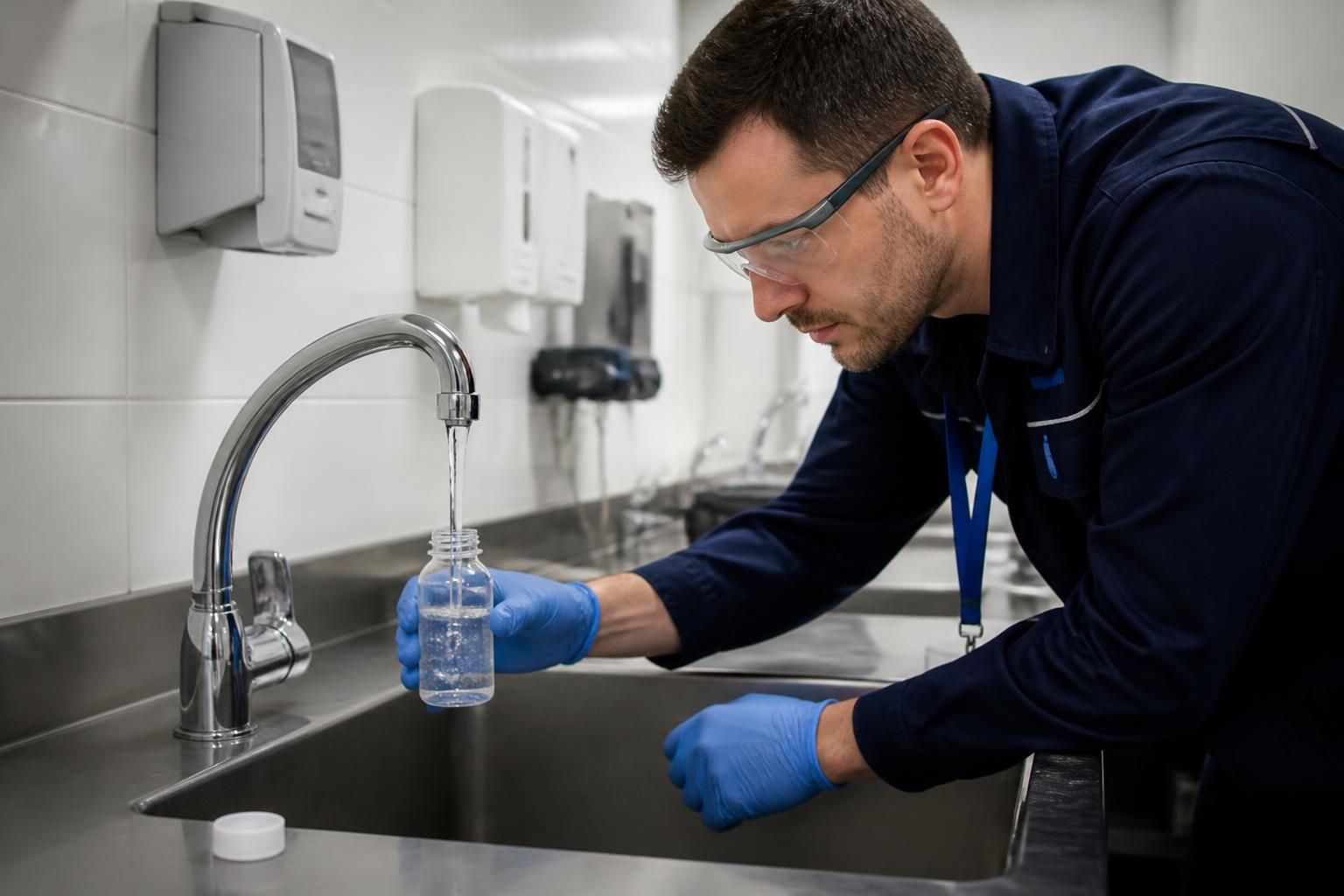
The appropriate check is determined by the purpose of the investigation and the water systems present, rather than by the type of business alone. A small office with a straightforward mains-fed supply may need a different programme from a care setting, hotel, school, manufacturing site, healthcare premises or building with cooling towers, showers, spa facilities or complex hot-water services.
For most business premises, the choice falls into one or more of four categories:
- Microbiological testing examines water for organisms or indicator results that may show contamination or inadequate control. The parameters selected should reflect the supply, the system and the reason for sampling. Legionella sampling may be appropriate where the water system creates conditions that could support growth and exposure.
- Chemical testing checks specific substances or characteristics, such as metals, pH or other parameters associated with the incoming supply, pipework, tanks, treatment processes or site activities. The correct panel should be selected for the suspected source of the issue; a broad panel is not automatically more useful.
- Legionella control assessment examines how the water system is designed, operated and maintained, including storage, distribution, temperature control, outlets, dead legs, usage and management arrangements. A sample result alone cannot demonstrate that the system is being effectively controlled.
- Follow-up or verification sampling is used to check whether a known issue, maintenance activity, cleaning process or corrective measure has produced the intended result. It should be planned around the specific finding rather than treated as a generic repeat test.
Routine microbiological testing may be suitable where a business needs evidence about general water quality or where its risk assessment identifies regular sampling as part of ongoing control. The sampling locations should represent the parts of the system used by people, including relevant outlets, stored water and sections where water may remain stagnant. Results are more useful when interpreted alongside temperature records, outlet usage, cleaning schedules and any changes to the system.
Legionella sampling is more focused than general drinking-water testing. It is considered where there is a credible route from system conditions to inhalation of contaminated aerosols, for example through showers, spray-producing outlets or certain process equipment. The sampling plan should account for the system’s configuration and points of exposure. Testing every outlet is not necessarily the correct approach, and a negative result at one point does not remove the need to manage the underlying risks.
Chemical analysis should be matched to the material, process or complaint being investigated. For example, changes in taste, colour or odour may require a different investigation from suspected corrosion, contamination from a storage tank or a concern about process chemicals. Where water is used in manufacturing, laboratories, food preparation or specialist equipment, the required specification may also be set by the process or by a client contract. The laboratory or water hygiene specialist should identify the relevant parameters before samples are taken.
A legionella risk assessment is the better starting point when the main question concerns exposure or system control. It can identify deficiencies that sampling cannot show, such as inadequate hot-water temperatures, poor access for maintenance, infrequently used outlets, redundant pipework, unsuitable storage or unclear responsibilities. It can then inform whether sampling is necessary, which locations should be sampled and how results should affect the control scheme.
The premises’ occupancy and users also affect the suitable check. Sites used by people who may be more susceptible to infection, or where exposure to aerosols is more likely, generally require a more carefully documented assessment of water systems and control measures. A building with intermittent occupation may need particular attention to stagnation, flushing arrangements and the way water systems are returned to use. These factors should influence the sampling plan rather than being dealt with through an identical schedule for every site.
Where a building has been newly occupied, refurbished or altered, an initial review should establish what systems exist and whether drawings, asset records and maintenance information are accurate. Testing may be appropriate as part of commissioning or an investigation, but it should not be used as a substitute for checking system design, operation and management. The same principle applies after plumbing changes, tank work, disinfection or other remedial activity.
A suitable testing programme should specify the purpose of each sample, the sample points, the parameters required, the collection method, any preservation requirements and the action to take if a result is unsatisfactory. Samples should be handled by a competent provider and, where laboratory analysis is required, UKAS-accredited water testing can provide an appropriate level of confidence in the testing process. The significance of a result still depends on the sample location, method, timing and site conditions.
In practice, the most useful selection process is to:
- List the hot- and cold-water systems, storage arrangements, outlets and water-using equipment.
- Identify how people may be exposed and whether any users require additional consideration.
- Review operating conditions, including usage patterns, temperatures, maintenance and previous findings.
- Define whether the objective is baseline information, investigation, legal or contractual evidence, legionella control, or verification after remedial work.
- Select only the microbiological, chemical or system-control checks that answer that objective.
- Record the findings in the site’s water safety and maintenance arrangements, with responsibilities for any corrective action.
For a straightforward premises, this may result in a relatively focused programme. More complex premises usually need a combination of assessment, monitoring and laboratory testing, reviewed as the systems or their use changes. The appropriate check is therefore the one that produces evidence about the particular water risk the business needs to understand and control, rather than a standard test selected solely because it is commonly used.
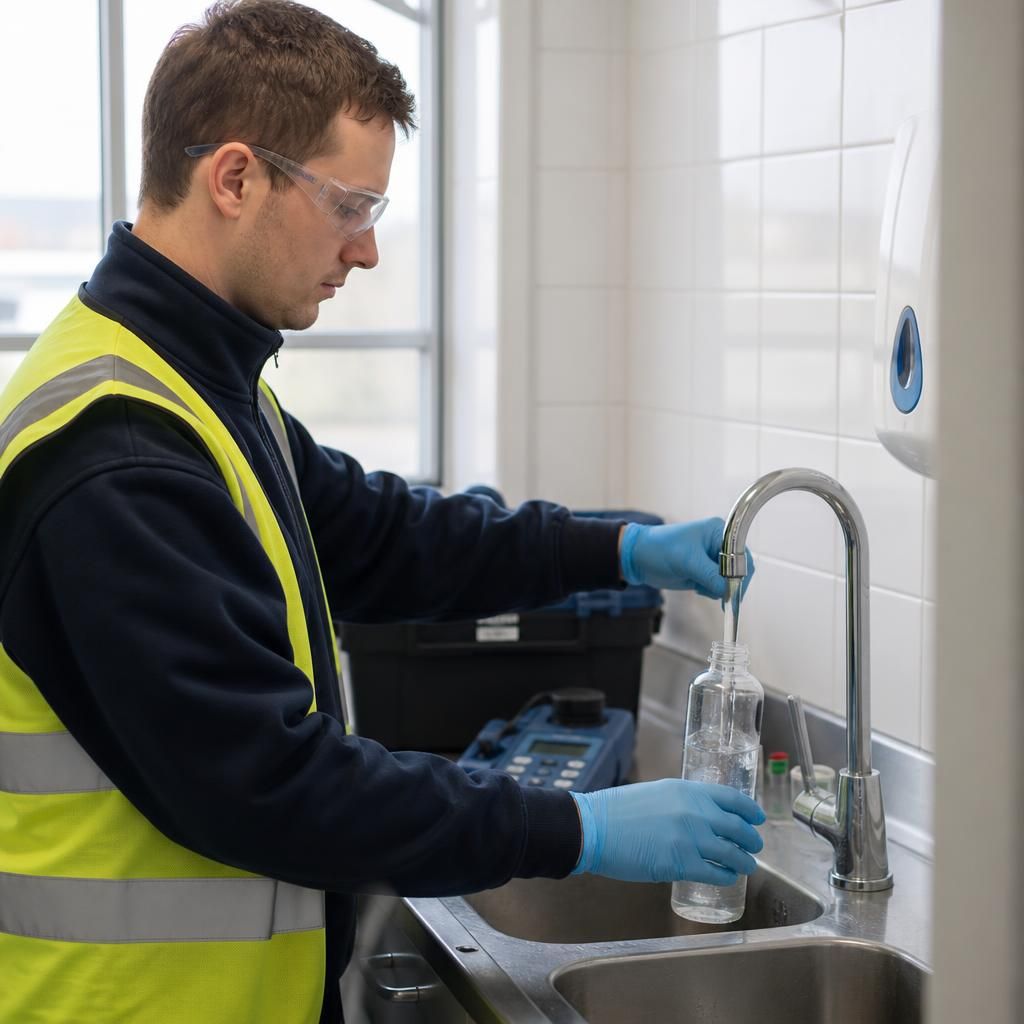
In a leased or multi-occupied building, the suitable water quality check also depends on who controls each part of the water system. A tenant may occupy the outlets but not manage the incoming supply, storage tanks, shared distribution pipework or central hot-water plant. Testing a single workplace tap may therefore provide limited evidence about risks elsewhere in the building.
Before arranging checks, the business should confirm the division of responsibility with the landlord, managing agent or other relevant dutyholder. Establish which systems serve the premises, whether water is stored or centrally heated, and whether existing monitoring records, risk assessments or maintenance reports are available. The testing scope can then cover the parts of the system relevant to the business’s use and exposure, while avoiding gaps between different parties’ responsibilities.
Discuss the right water quality check for your premises
If you are unsure which water quality check your premises requires, discuss the systems, intended purpose and available records with Blue Fish Water Management. Their team can help determine a proportionate testing or assessment approach for your business.