
When is a water quality check needed?
A water quality check is needed when a business starts using a premises, changes how its water system operates, suspects contamination, or records an unusual result or water-related incident. It may also form part of routine monitoring where the system’s risk assessment identifies a need for ongoing sampling and review.
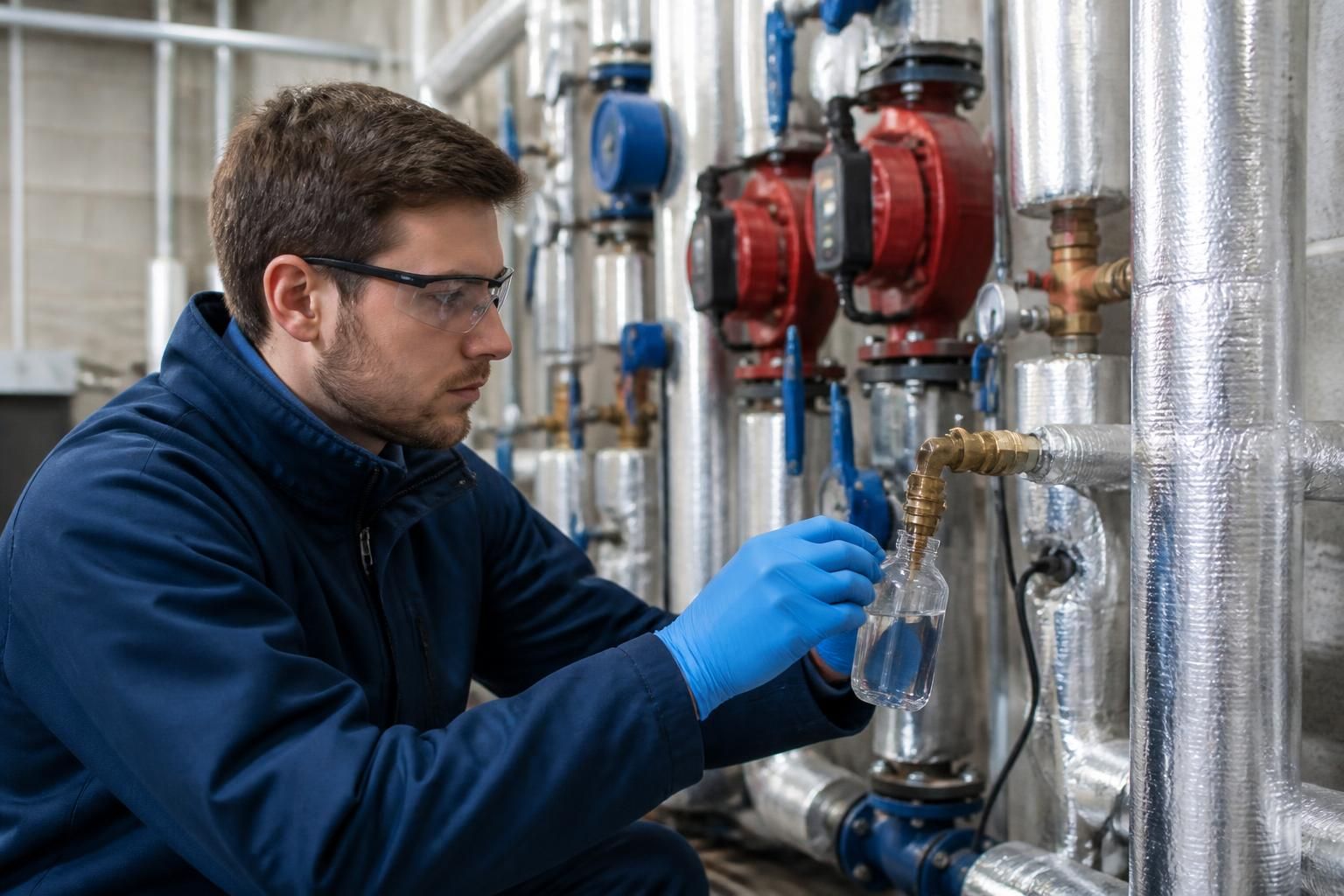
The deciding factor is whether the condition of a business water system could affect health, regulatory compliance or the reliability of the supply. A check is therefore appropriate when a risk assessment identifies a meaningful hazard, when users may be particularly vulnerable, or when available evidence does not demonstrate that the system remains under control.
Risk factors that can justify a check include:
- stagnant or infrequently used outlets, long pipe runs, redundant branches or areas with low occupancy;
- water storage tanks, calorifiers, boosted systems or other installations where temperature and circulation require active management;
- poorly maintained tanks, damaged insulation, sediment, scale, corrosion or visible deterioration;
- unusual taste, colour, odour or appearance, even where no illness has been reported;
- premises used by people who may be more susceptible to infection, including healthcare, care, residential or supported-living settings; and
- evidence that flushing, temperature control, cleaning, disinfection or other control measures are not being completed as intended.
A check may involve more than sending a sample to a laboratory. The appropriate scope depends on the suspected hazard and the type of supply. It can include an inspection of storage and distribution arrangements, temperature measurements, review of maintenance records, microbiological sampling, chemical analysis or targeted testing for Legionella. Testing should answer a defined question; a general sample taken without understanding the system may not represent the areas of greatest risk.
For Legionella control, sampling is not automatically required for every premises. The need should follow the findings of the water hygiene risk assessment and the control scheme. Sampling can be useful where risk is elevated, control results are uncertain, susceptible people are exposed, or a competent assessor needs evidence that remedial measures have been effective. It should support, rather than replace, measures such as suitable temperature control, regular use of outlets, cleaning and disinfection, and removal of unnecessary pipework.
Businesses should also consider a water quality check when taking responsibility for an unfamiliar building. Existing records may be incomplete, system drawings may not reflect the installation, and previous monitoring may not show whether all outlets and plant are being controlled. Establishing a reliable baseline can help identify priorities and provide evidence for the premises water safety arrangements.
The result should be interpreted alongside the system information, sampling location, collection method and relevant control records. A single result does not always explain the condition of the whole installation. Where a result is unsatisfactory, the response may include confirming the sample, investigating the cause, inspecting connected areas and carrying out proportionate remedial work. Follow-up checks can then help establish whether the corrective action has addressed the underlying problem.
Records should show why the check was commissioned, what was examined, where samples were taken, which methods were used, the findings, and any actions assigned. This creates an auditable link between the risk assessment, the control measures and the decision to sample. Water testing should be carried out by a competent provider using an appropriately accredited laboratory where the test requires it.
Blue Fish Water Management can advise businesses on the suitable scope of a water quality check, including risk-based sampling, water hygiene monitoring, compliance audits and interpretation of results. The aim is to select checks that provide useful evidence about the actual system rather than testing without a clear management purpose.
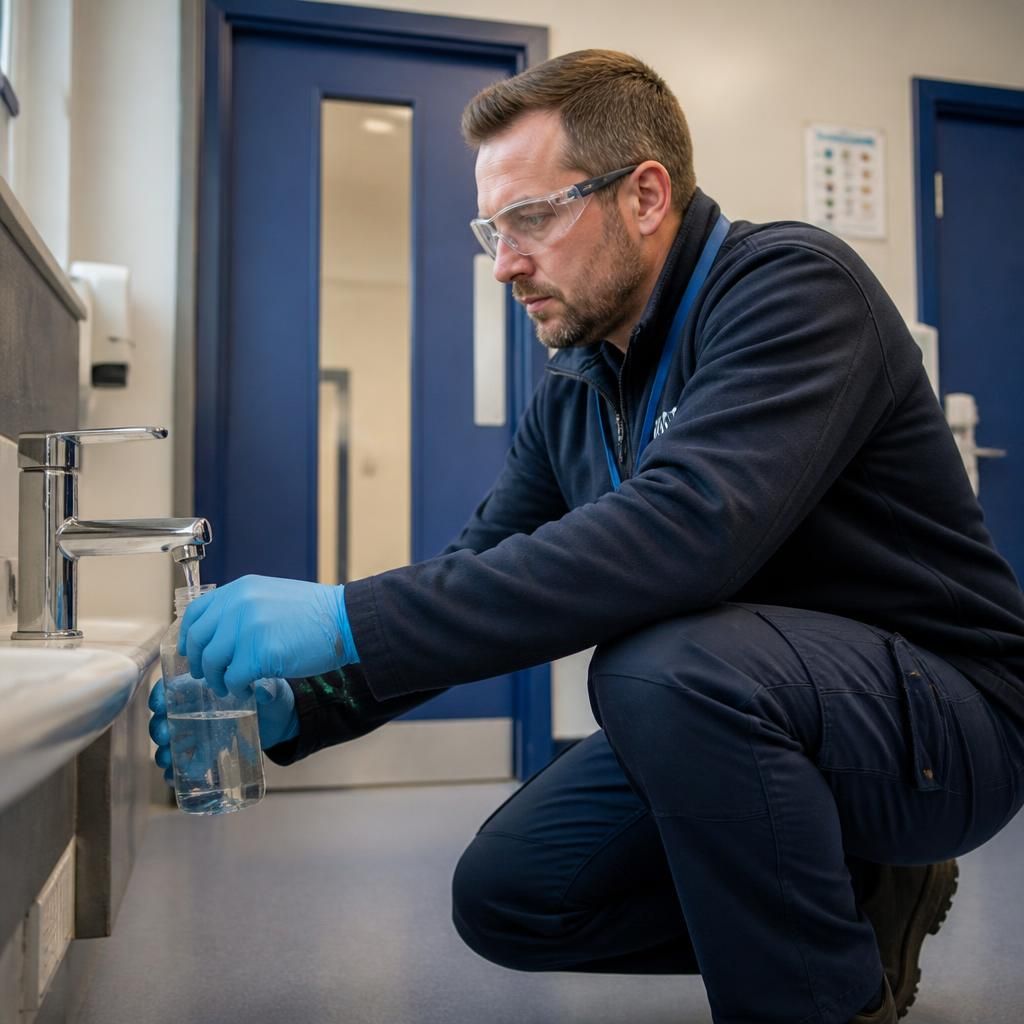
A water quality check may be appropriate after plumbing works, plant replacement or alterations to a building’s water system, before the affected outlets return to normal use. Cutting, jointing, flushing and reconnecting pipework can introduce debris or disturb existing deposits, while changes to storage, circulation or outlet configuration can alter the system’s risk profile.
The scope should reflect the work completed. It may include inspection of the modified section, flushing records, temperature verification and targeted laboratory analysis where the risk assessment identifies a need. The findings can provide commissioning evidence and confirm whether any additional cleaning, disinfection or operational controls are required before the system is placed back into service.
Discuss your water quality check requirements
Discuss your water quality check requirements with Blue Fish Water Management to identify an appropriate scope for your premises and supporting records.