
How often should businesses arrange water quality checks?
There is no single interval suitable for every business; water quality checks should be scheduled according to the findings of the premises’ legionella risk assessment, the type of water system, its use and the level of risk. Testing may need to be more frequent where systems are complex, occupancy changes, control measures are uncertain or results indicate a concern, with the schedule reviewed whenever conditions change.
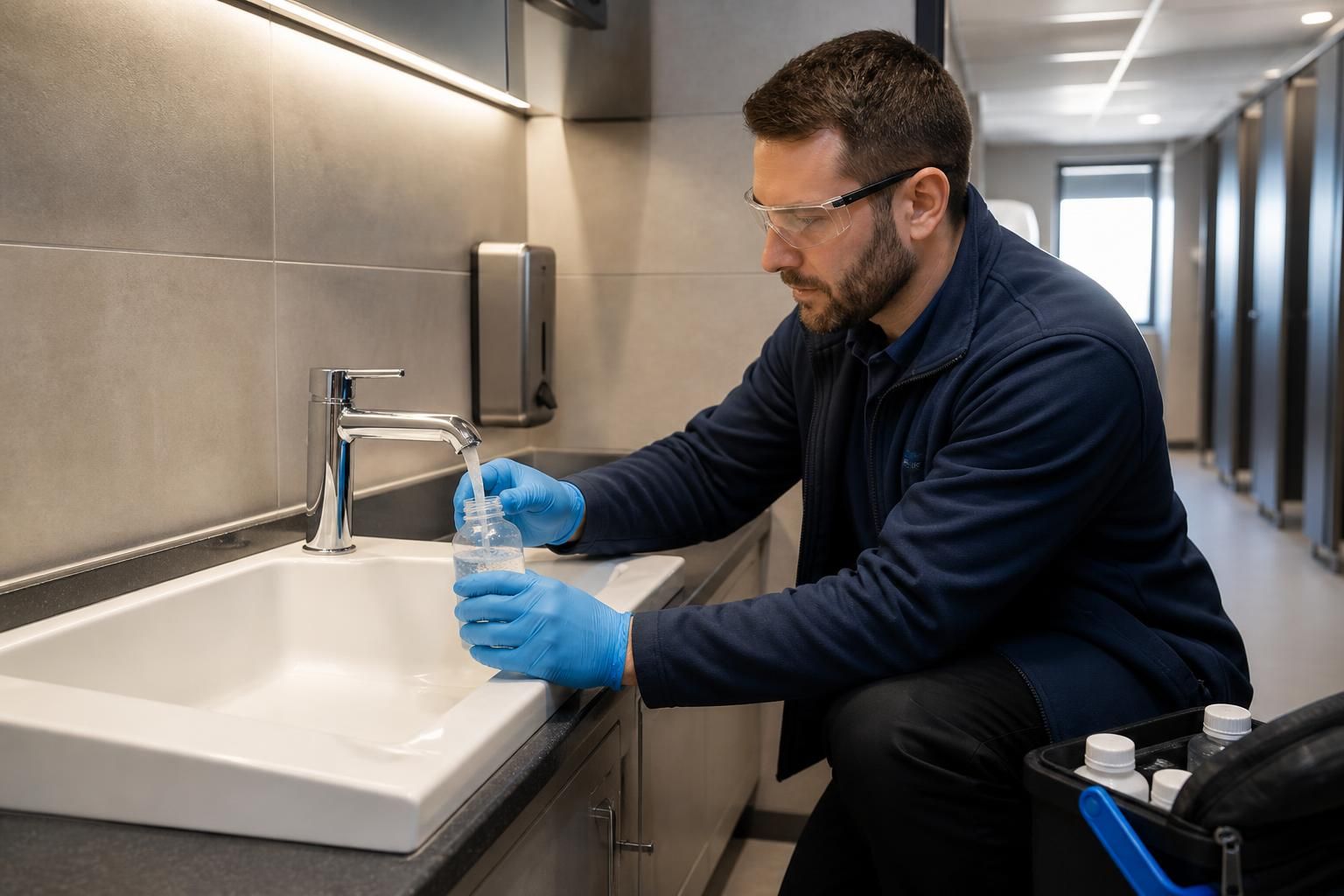
Businesses should use a documented water quality monitoring schedule based on the findings of their water hygiene risk assessment, rather than applying one fixed testing interval to every premises. The schedule should distinguish between routine checks carried out by site staff, planned sampling by a competent water hygiene professional and laboratory analysis where results or the system’s risk profile make it appropriate.
A water quality programme commonly includes several different types of check:
- Operational checks: inspection of outlets, tanks, calorifiers and other relevant equipment; checks for stagnation, visible contamination, unusual colour or odour, and signs of poor maintenance.
- Control monitoring: recording temperatures, disinfectant residuals or other control parameters where these are relevant to the system. These checks help confirm that measures intended to control bacterial growth are working.
- Microbiological sampling: laboratory testing for Legionella or other organisms where the risk assessment identifies a need, where control results are unsatisfactory, or where there has been a known or suspected incident.
- Chemical and physical testing: analysis of parameters such as metals, hardness, pH or other contaminants where the water source, treatment process, plumbing materials or intended use makes them relevant.
Routine control monitoring is often required more regularly than laboratory sampling because it provides an ongoing indication of whether the system remains within its control limits. For example, a business may need planned temperature checks and records at identified outlets, while microbiological sampling is arranged at intervals set by the risk assessment and adjusted in response to findings. A laboratory test should not be treated as a substitute for managing temperatures, flow, storage, cleaning and maintenance.
The appropriate interval is influenced by the system’s design and condition. Factors include stored hot or cold water, the number and type of outlets, low-use areas, dead legs, showers, water treatment equipment, the age and complexity of the installation, and whether the premises has experienced refurbishment or periods of limited use. Healthcare settings, care environments, accommodation and workplaces serving people who may be more susceptible to infection may require a more cautious monitoring approach.
Sampling should also be reconsidered after events that could alter water quality. Relevant triggers include:
- changes to the water system, plumbing, plant or treatment arrangements;
- building works, commissioning, recommissioning or extended periods of reduced occupancy;
- failure of temperature, disinfection or other control measures;
- poor results from previous checks or a trend towards deterioration;
- complaints about taste, odour, colour or skin irritation;
- evidence of stagnation, contamination, flooding or equipment failure; and
- a suspected case of a waterborne infection or advice from public health professionals.
Results should be reviewed as a series rather than considered in isolation. A single acceptable result does not prove that every part of a distribution system is controlled, while an unexpected result should be assessed alongside sampling locations, temperatures, recent maintenance and the reliability of the sampling process. Repeated or significant findings may require additional samples, remedial cleaning or disinfection, repairs, changes to the monitoring regime and a formal review of the risk assessment.
The written schedule should state what is checked, where it is checked, who is responsible, how results are recorded and what action follows an unsatisfactory finding. Sampling locations should represent the parts of the system most likely to present a risk, including outlets that are infrequently used or distant from the point of storage or treatment. Samples need to be collected, transported and interpreted using suitable procedures, with laboratory work undertaken by a UKAS-accredited facility where accreditation is applicable to the test.
There is no value in arranging tests at a nominal interval if the business does not act on the results. Records should be available for inspection and used to demonstrate that monitoring is taking place, control measures are maintained and corrective action is closed out. The responsible person should review the programme whenever the premises, occupants, water system or risk assessment changes, and obtain competent advice where the findings are difficult to interpret.
A suitable schedule therefore combines regular on-site checks with risk-based sampling and documented reviews. The risk assessment, system monitoring records and previous laboratory results should be considered together before deciding whether the existing frequency remains suitable.
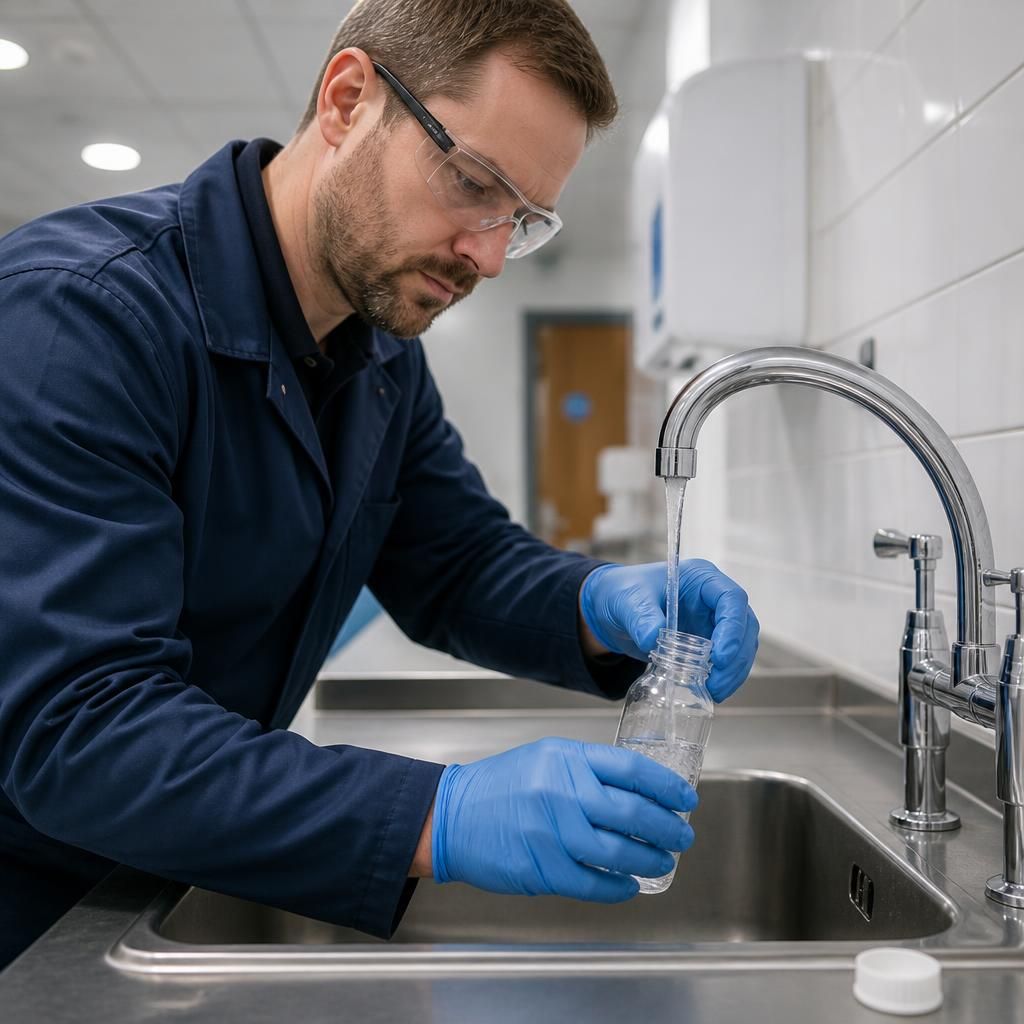
UK businesses should not treat water quality checks as a fixed legal tick-box exercise. The required frequency depends on the risks identified in the premises’ assessment and on whether the control measures are working. A recurring calendar date can support administration, but it does not replace competent monitoring, accurate records or action when conditions change.
For this reason, a suitable programme should explain why each check is carried out at its chosen frequency. It should link the check to a specific risk, such as stored water, low-use outlets or vulnerable occupants, and define what would trigger an earlier review. This makes the schedule easier to justify during a compliance audit and helps the responsible person distinguish genuine control from testing that is simply being repeated out of habit.
Review your water quality check schedule
If you are unsure whether your current testing frequency remains appropriate, ask Blue Fish Water Management Ltd to review your water quality monitoring schedule against the risks at your premises. Their team can help identify whether further assessment or sampling is needed.