
How do manual, targeted and continuous water monitoring differ?
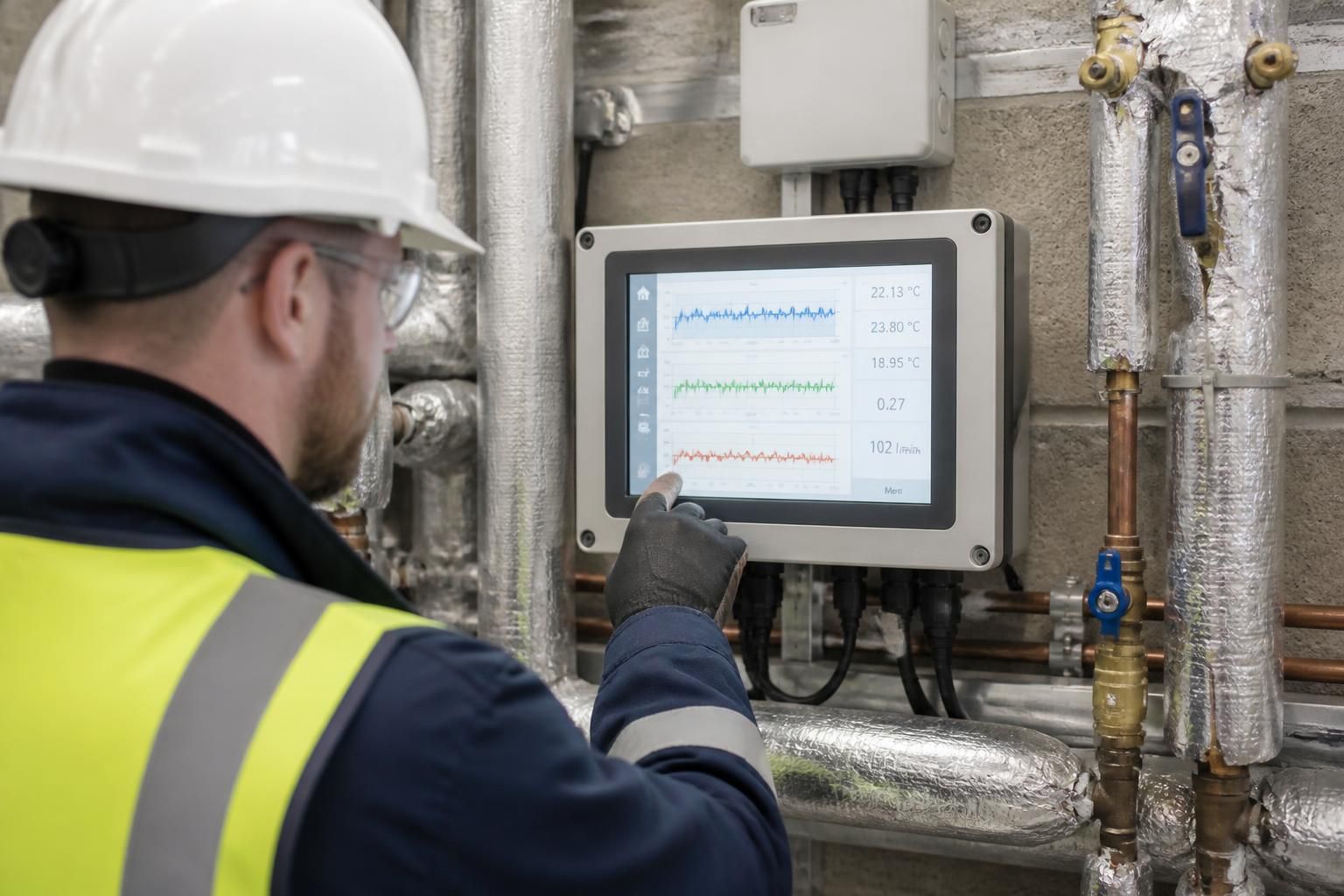
Manual, targeted and continuous monitoring differ mainly in how measurements are collected, where attention is directed and how often information is generated. Manual monitoring is carried out by a person at planned intervals; targeted monitoring concentrates on selected outlets, assets or conditions; continuous monitoring uses installed equipment to record chosen parameters repeatedly or in real time. These approaches can be used separately or combined within the same water safety management plan.
Manual monitoring relies on a competent person visiting the system, carrying out observations or measurements and recording the findings. Typical activities may include checking temperatures at sentinel outlets, inspecting tanks and plant, reviewing appearance or odour, and taking samples for laboratory analysis where required. The person performing the check can also identify physical issues that a sensor may not detect, such as poor insulation, damaged components, unusual use patterns or signs of stagnation.
Its main strength is the opportunity to assess the wider condition of the system rather than simply capture a numerical reading. It can also be appropriate where measurements are needed at a limited number of points or where installing permanent equipment would not be proportionate. However, manual results represent the condition at the time of the visit. They may not show changes occurring between checks, and the quality of the record depends on consistent procedures, suitable equipment and accurate data entry.
Targeted monitoring is directed at the parts of a system that present a particular risk or require closer verification. This may include outlets with low use, remote or infrequently accessed areas, blending valves, storage vessels, return loops, vulnerable accommodation or points associated with previous findings. The selection should be based on the written scheme, risk assessment, system design, usage and monitoring history rather than on convenience alone.
Targeted monitoring is not necessarily a separate type of technology. It describes the focus of the monitoring. A targeted check can be manual, laboratory-based or supported by a permanently installed device. For example, a site may use routine manual checks across representative outlets while applying more frequent or continuous observation to a high-risk area. This allows resources to be concentrated where information is most useful without treating every point in a large system identically.
Continuous monitoring uses fixed sensors or other connected equipment to measure selected conditions at repeated intervals. It is commonly used for parameters that can be measured electronically, such as temperature, flow, level or certain water chemistry indicators. The system may store readings, display trends and generate an alert when a configured limit or pattern is reached. This can provide visibility of gradual drift, intermittent faults or events that occur between scheduled visits.
Continuous monitoring does not mean that every aspect of water safety is measured continuously. Sensors cover only the parameters for which they are designed and installed, and an alert is not the same as a confirmed cause. Equipment requires appropriate positioning, calibration, maintenance and review. A reading that appears abnormal may need investigation, a physical inspection, corrective action or laboratory testing. Continuous data therefore supports, rather than replaces, competent assessment and a suitable written scheme.
The three approaches can be compared across several practical criteria:
- Frequency: manual monitoring produces readings during planned visits, targeted monitoring increases attention at selected points or under selected conditions, and continuous monitoring produces an ongoing stream of data for the parameters covered.
- Coverage: manual checks can assess a wide range of physical features, targeted checks provide depth at chosen risk points, and continuous systems provide detailed time-based information from their installed locations.
- Human observation: manual work allows the operator to notice contextual or physical issues, while automated systems depend more heavily on sensor performance and the interpretation of recorded data.
- Record type: manual checks commonly produce completed forms, sample documentation and inspection notes; targeted programmes produce focused records linked to selected risks; continuous systems produce time-stamped readings, trends and alarm histories that must be retained and reviewed.
- Maintenance needs: manual programmes require competent personnel and reliable procedures, whereas continuous systems additionally require sensor verification, calibration, connectivity checks, alarm testing and planned maintenance.
The correct choice depends on the risk assessment and on the question the monitoring is intended to answer. If the purpose is to verify routine temperatures and inspect the condition of accessible assets, a structured manual programme may be suitable. If a risk is concentrated in particular outlets or parts of the distribution system, targeted monitoring may provide more relevant evidence than applying the same checks everywhere. If conditions can change materially between visits, continuous monitoring may help reveal those changes, provided the equipment is suitable and the data is acted upon.
Monitoring method should also reflect the parameter itself. A temperature reading may be suitable for electronic logging, but microbiological testing generally involves sampling, controlled handling and laboratory analysis rather than relying on an in-line sensor. Similarly, a single reading may confirm a condition at one point without explaining why it occurred. Trends, repeat checks and examination of related parts of the system may be needed before deciding on corrective action.
In practice, a layered programme is often more informative than choosing one method exclusively. Manual inspections can provide physical context, targeted checks can verify known or emerging risks, and continuous devices can identify changes between visits. The written scheme should define what is measured, where, by whom, using which method, at what frequency and against which action criteria. It should also explain how exceptions, missing data, alarms and adverse results are investigated.
Records need to show more than a collection of readings. They should identify the location and asset, date and time, measurement or sample type, result, equipment where relevant, person completing the check and any action arising. For continuous systems, the record should also make clear the monitoring interval, sensor identity, alarm settings, data gaps and review process. Evidence that results have been examined and followed up is important because monitoring only contributes to legionella control when findings inform management decisions.
Manual, targeted and continuous monitoring are therefore complementary approaches rather than a simple hierarchy from least to most advanced. A continuous system is not automatically better, and a manual check is not automatically sufficient. The appropriate combination is the one that produces reliable, relevant evidence for the actual water system, its identified risks and the control measures set out in the written scheme.
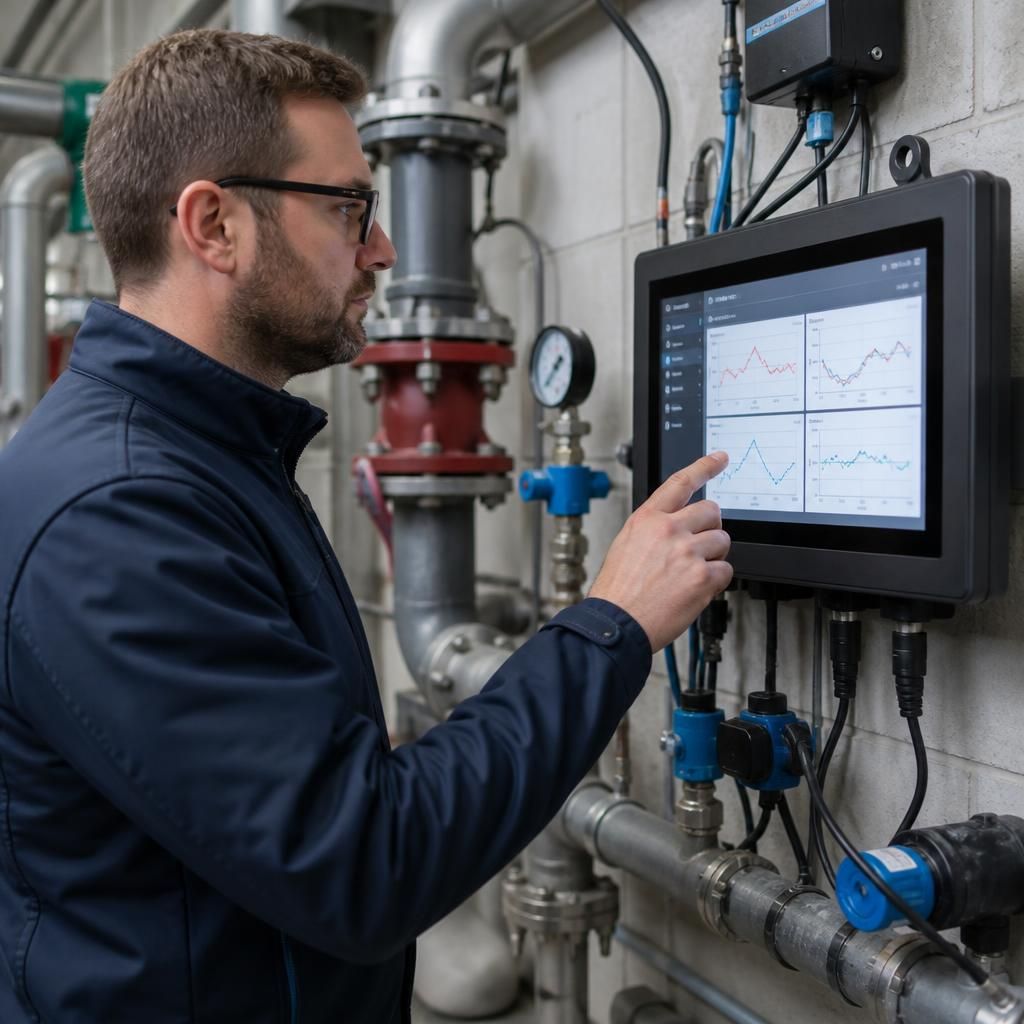
Targeted monitoring can be particularly useful after a change to the water system or its use. Alterations to pipework, periods of low occupancy, changes in outlet use, plant replacement or remedial work may justify a temporary programme focused on the affected parts of the system. The purpose is to verify that the change has not introduced an unexpected condition or altered an established control measure.
Any temporary monitoring should have a defined reason, scope and review point. Records should link the checks to the relevant change, identify the locations assessed and explain how the findings will influence the ongoing monitoring plan. Once the evidence has been reviewed, the programme can either return to its routine arrangements or be revised if the change has created a continuing risk.
Discuss the right monitoring approach for your system
Need to determine whether your monitoring arrangements provide suitable evidence for your water safety plan? Discuss your system’s monitoring objectives and risk profile with Blue Fish Water Management Ltd to identify a practical next step.