
Which drinking water approach best suits your compliance and treatment requirements?
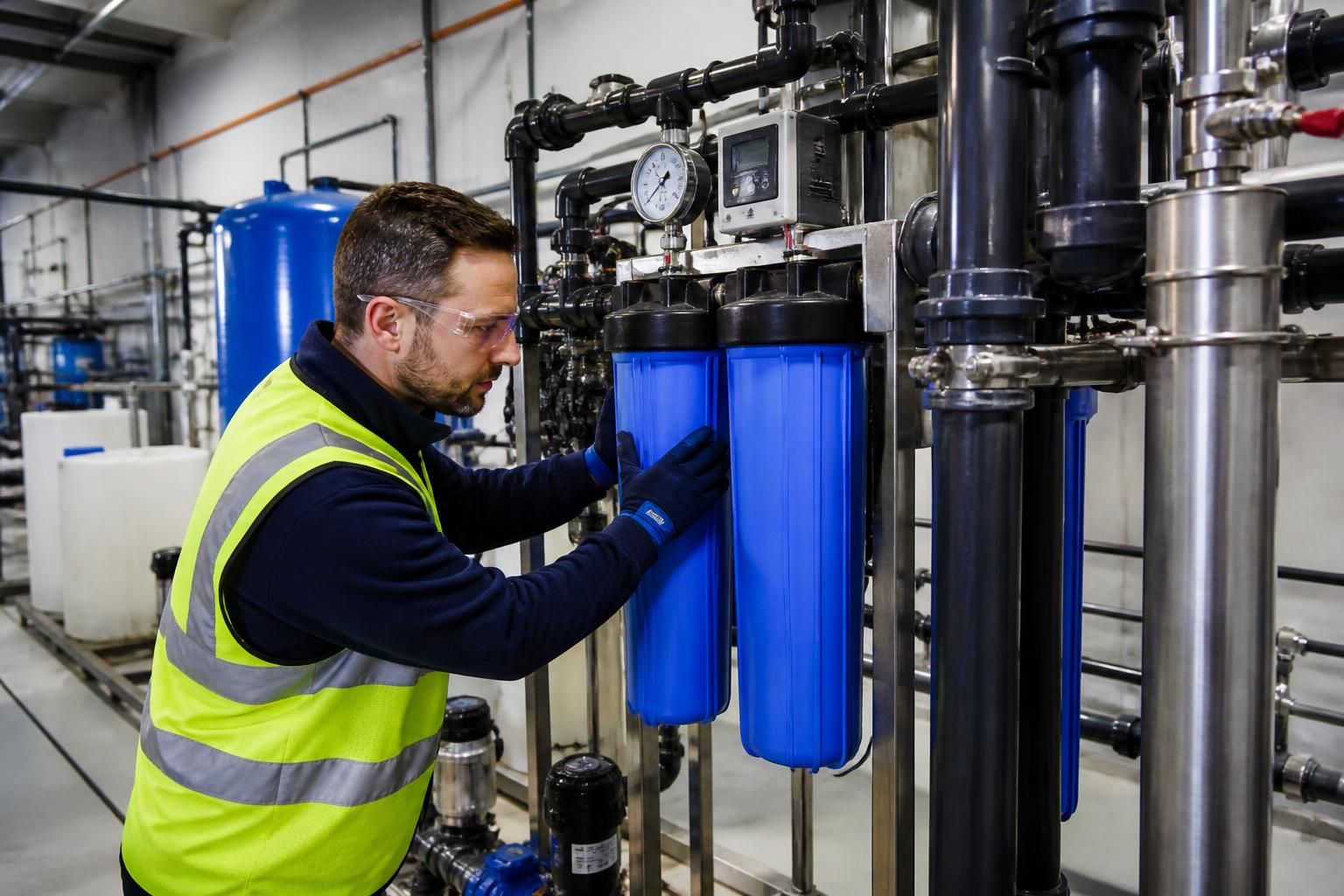
The most suitable drinking water approach is the one matched to the water source, the confirmed hazard and the point at which water is used. Filtration is appropriate for some physical or chemical contaminants, conditioning addresses properties such as hardness, and disinfection is used where microbiological control is required. These methods are not interchangeable, and a treatment train may be necessary where more than one risk is present.
Begin with the source and intended use. Mains water, private supplies, stored water and process water can present different control requirements. Consider whether the water is used for drinking, food preparation, hygiene, manufacturing or more than one purpose. The required standard may also depend on whether water is supplied directly to people, incorporated into a product or used in a process where contamination could affect operations.
Testing should be planned around the source and the risks associated with the site. A representative sample can help establish whether the concern relates to bacteria, metals, sediment, taste, odour, hardness, turbidity or another parameter. Results should be interpreted alongside the history of the system, storage arrangements, pipework, usage patterns and any changes in the supply. A single result may identify a symptom without explaining the underlying cause, so investigation is important before equipment is selected.
Choose filtration when the target is removable by a filter. Particle filters can reduce suspended solids and sediment, protecting downstream equipment and improving appearance. More specialised media may be used for particular dissolved substances, but their suitability depends on the contaminant, its concentration and the water chemistry. A filter does not automatically remove every contaminant, and a nominal filter rating or cartridge change alone does not demonstrate that the water is safe to drink.
Filtration also requires operational controls. The system should be sized for the required flow, pressure and volume, with suitable provision for cartridge replacement, cleaning or media renewal. As a filter collects material, pressure loss can increase and performance can decline. Poorly maintained equipment can also become a point of contamination, particularly where water remains stagnant or components are changed without suitable hygiene controls.
Use conditioning where the issue is a water property rather than a direct contamination hazard. Water softening can reduce hardness and help control scale in equipment, hot-water systems and pipework. It is not a substitute for microbiological treatment or general contaminant removal. Other conditioning methods may alter taste, corrosion potential or mineral balance, but their value should be linked to a defined operational problem and verified through appropriate testing.
Use disinfection when microbiological control is required. Options can include ultraviolet treatment or chemical disinfection, subject to the source, system design and required control regime. Ultraviolet systems require suitable water clarity and correctly maintained equipment; they do not provide a lasting disinfectant residual throughout downstream pipework. Chemical approaches require control of concentration, contact time, dosing and any resulting by-products. Storage tanks, outlets and distribution pipework must be considered because treatment at one point may not control risks introduced later.
Combine processes only where each stage has a defined purpose. A system might use sediment removal to protect a subsequent treatment stage, conditioning to reduce scale, and disinfection to manage microbiological risk. The order of treatment matters: for example, excessive turbidity can affect some disinfection methods, while hardness can reduce the performance or service life of certain equipment. A combined system should therefore be designed as a connected process rather than assembled from unrelated devices.
Compliance involves more than installing treatment equipment. A suitable approach should include documented operating parameters, maintenance responsibilities, sampling arrangements and action levels for abnormal results. Consider who will inspect the equipment, how faults will be identified, how records will be kept and what happens if testing shows that performance has deteriorated. Where a treatment system changes the water chemistry, further testing may be needed to confirm that the treated water remains suitable for its intended use.
Site conditions can determine whether an otherwise suitable method is practical. Assess available space, drainage, electrical requirements, access for maintenance, inlet pressure, peak demand and the consequences of a treatment failure. Storage and bypass arrangements need particular attention: bypassing treatment may restore supply but could also allow untreated water to reach drinking-water outlets unless the procedure is controlled.
The final specification should be based on evidence rather than on a general preference for a particular filter or treatment technology. Blue Fish Water Management can support this process through water quality testing, compliance-focused assessment and practical advice on monitoring and remedial requirements. This helps link the selected approach to the identified risk, the operating environment and the documentation needed to manage drinking water safely.
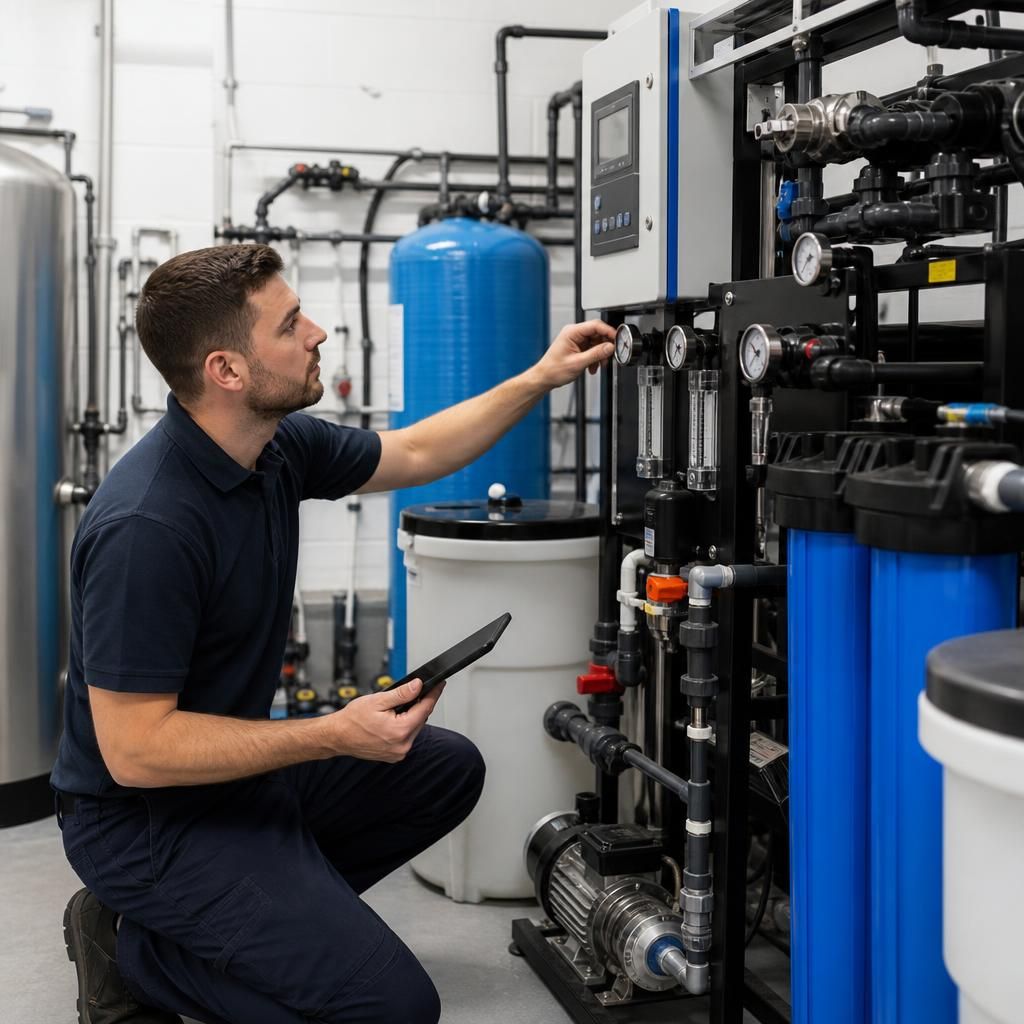
The treatment location is as important as the treatment method. Point-of-entry treatment is applied where water enters a building or process and can address a site-wide requirement, while point-of-use treatment is installed close to a particular outlet or application. The appropriate arrangement depends on whether the identified concern affects the incoming supply, the internal distribution system or only a defined use.
Point-of-use equipment may be suitable where a specific outlet needs additional control, but it does not automatically address water quality elsewhere on the premises. Conversely, treating the incoming supply may be unnecessary where the issue is limited to one process or outlet. The specification should therefore define which outlets require treated water, how treated and untreated supplies will be identified, and how each treatment point will be monitored and maintained.
Discuss your drinking water treatment requirements
If you need to translate water quality findings into a documented treatment plan, contact Blue Fish Water Management to discuss your site requirements and compliance objectives.