
What does potable water testing identify before filtration or treatment is specified?
Potable water testing identifies microbiological, chemical and physical contaminants that may affect drinking-water safety, quality or regulatory compliance. The results provide the evidence needed to decide whether filtration is appropriate, whether additional treatment is required, and which treatment objectives the system must meet.
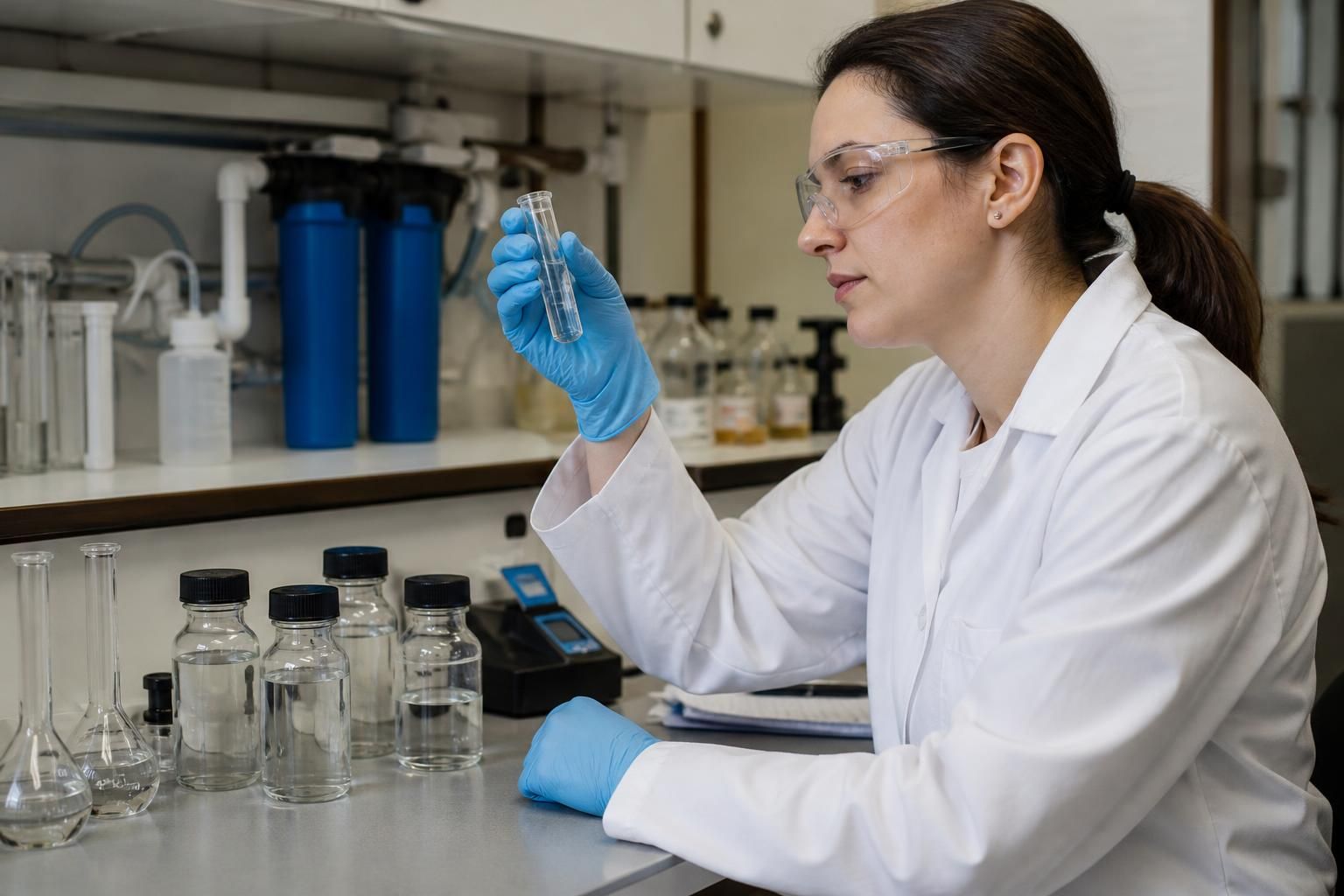
Potable water testing establishes the water’s starting condition, the significance of any detected parameters and the treatment objectives that a proposed system must achieve. It helps distinguish a genuine water-quality issue from a problem caused by plumbing, storage, sampling or occasional changes in the supply.
It can identify the following before equipment is selected:
- Microbiological indicators: results may show evidence of faecal contamination, general bacterial growth or loss of control within storage and distribution systems. The significance depends on the organism or indicator detected, the sample location and whether the result is isolated or repeated.
- Specific chemical constituents: analysis can identify substances such as nitrate, nitrite, metals, iron, manganese, chloride, sulphate or other chemicals relevant to the source and intended use. These findings may point towards adsorption, ion exchange, oxidation, membrane treatment or a combination of processes rather than simple particulate filtration.
- Physical and aesthetic conditions: turbidity, colour, suspended matter, taste and odour can indicate sediment, corrosion, organic material or changes within the supply system. A visible or sensory issue does not, by itself, confirm that the water is unsafe, so laboratory analysis is needed to establish its cause.
- Water chemistry affecting treatment: pH, alkalinity, hardness, conductivity and related measurements influence how treatment equipment operates. They can affect scaling, corrosion, disinfectant performance, media life and the suitability of certain filtration methods.
Sampling location is essential to interpretation. A sample taken at the incoming supply may describe the source water, while one collected from a storage tank, outlet or process area may reveal a local issue. Comparing locations can help determine whether a result originates with the incoming water, an internal pipework system, a tank, a fitting or a treatment unit already in use. Sampling technique, container type, transport and timing also matter, particularly for microbiological analysis.
A single result provides a snapshot rather than a complete picture of water quality. Results may vary with source conditions, weather, operational activity, storage time, maintenance and changes in demand. Where the consequences of an abnormal result are significant, repeat or additional sampling can help establish whether the finding is persistent, intermittent or confined to one point. A suitable sampling plan should therefore reflect how the water is obtained, stored, distributed and used.
Testing also identifies whether the proposed treatment problem has been defined correctly. For example, sediment may justify pre-filtration, but a filter designed only for particles will not address a dissolved chemical constituent. Hardness may require conditioning or softening, whereas a microbiological concern may require a validated disinfection approach and investigation of the underlying source. Where several parameters are present, one process may affect another, making process order and pre-treatment important.
Results should be assessed against the standards, guidance or contractual requirements applicable to the premises and its use. Interpretation should consider the concentration, detection limit, duration, sample point and potential exposure, rather than relying solely on a pass-or-fail conclusion. A result below a reporting limit does not necessarily mean that a substance is absent; it means that it was not measured above the laboratory’s stated reporting threshold.
Testing can also expose issues that filtration will not correct. A contaminated tank, damaged pipework, stagnant branch, unsuitable fitting or ineffective existing treatment may require cleaning, repair, operational change or further investigation. Specifying a filter before checking these factors can lead to the wrong media, inadequate capacity, unnecessary treatment or continued non-compliance.
A sound pre-treatment assessment therefore combines laboratory results with information about the water source, demand, flow, pressure, temperature, storage, intended use and required output quality. The final specification should state which parameters are being controlled, the target level, the design conditions, monitoring arrangements and how performance will be verified. Potable water testing supplies the evidence for those decisions; it does not replace a risk assessment or guarantee that one treatment method will address every identified issue.

Potable water testing can identify indicators of microbiological risk, but a routine result is not automatically a complete search for every pathogen. The organisms and methods included in the analysis should reflect the water source, how the supply is used and the relevant risk assessment. A satisfactory result therefore means that the tested parameters were not detected above the laboratory’s reporting threshold under the sampled conditions; it does not establish that every possible hazard is absent.
This distinction matters when deciding whether treatment is necessary. If testing identifies an indicator of contamination, the appropriate response may include investigating the source and system condition before specifying disinfection or filtration. If no relevant indicators are found but the supply remains vulnerable to contamination, preventive controls and a suitable monitoring plan may still be required. Testing provides evidence for the decision, while the scope of analysis determines how much that evidence can establish.
Discuss your potable water testing requirements
Discuss your potable water testing requirements with Blue Fish Water Management Ltd to clarify the appropriate analysis and how the findings should inform your treatment specification.