
What distinguishes drinking water testing, filtration and treatment?
Drinking water testing measures whether water meets required quality criteria, while filtration removes specific particles or contaminants and treatment uses chemical, physical or other processes to control identified risks. Testing should therefore inform the choice and verification of filtration or treatment, rather than being treated as a substitute for either process.
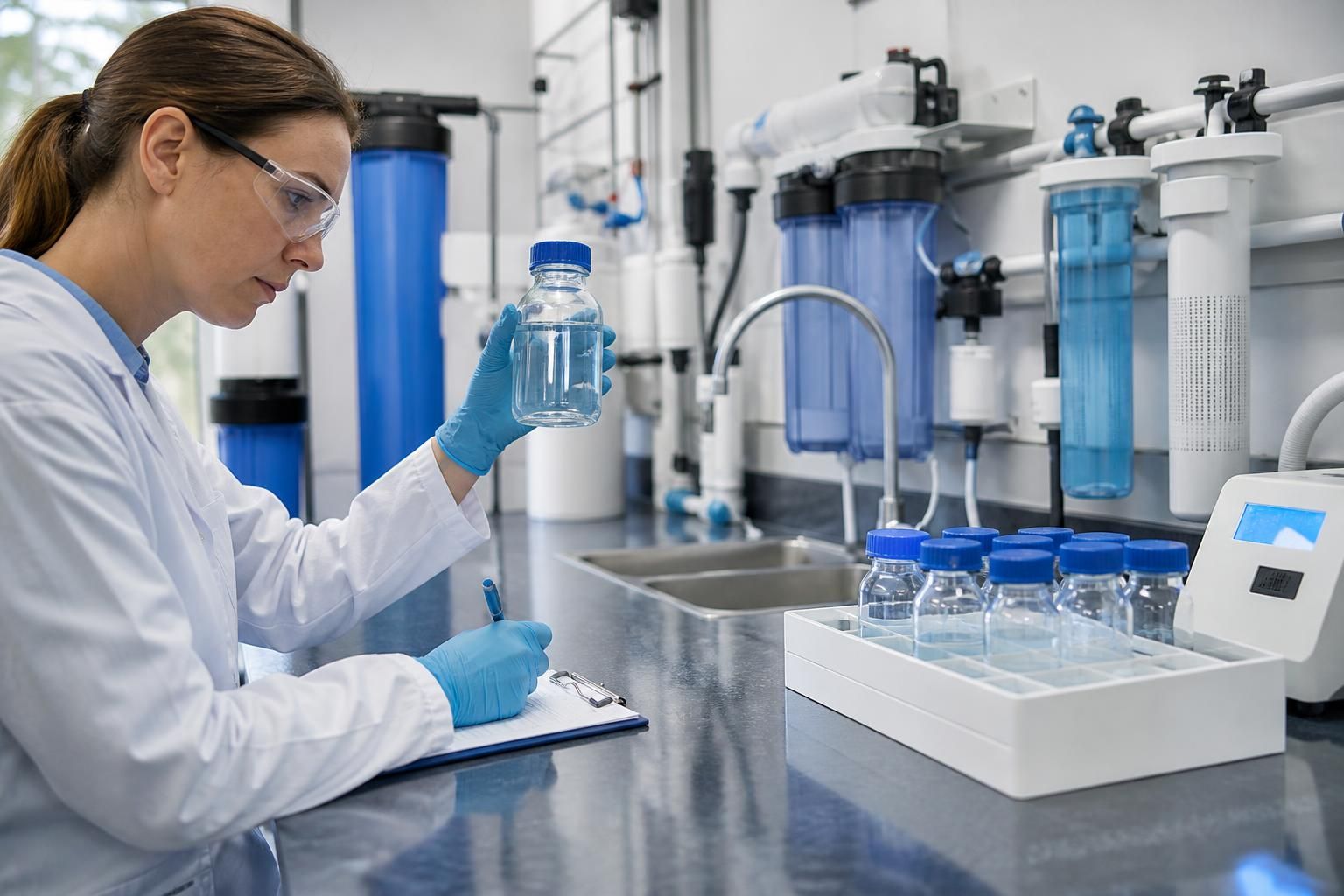
Drinking water testing, filtration and treatment are separate but connected controls. Testing establishes the water’s quality and identifies particular risks; filtration provides a physical barrier or separation process; treatment changes or controls the water through methods such as disinfection, conditioning or chemical adjustment. The appropriate combination depends on the source, intended use, distribution system and evidence from the assessment.
Testing provides the evidence base. A drinking water test may examine microbiological, chemical, physical or aesthetic parameters. The relevant selection depends on the water source and the concern being investigated. For example, a sample might be taken to investigate suspected bacterial contamination, unusual taste or odour, elevated metals, hardness, suspended matter or changes in water quality following work on a system.
Sampling has to be planned properly for the results to be meaningful. Locations should represent the system being assessed, and the sampling method, container, preservation and transport arrangements must be suitable for the parameters required. A result also needs interpretation in context: one sample is evidence from a particular point and time, not necessarily a complete picture of every outlet or the underlying cause of a problem. UKAS-accredited water testing can provide a suitably controlled laboratory route where reliable analytical evidence is required.
Filtration is selected for a defined removal objective. Filters differ in construction, pore size, capacity and operating requirements. Some are intended to reduce visible particles or sediment, while others are designed for particular substances or applications. A filter therefore cannot be judged simply by its presence or by a general claim that it improves water quality. Its performance must relate to the contaminant of concern, the flow demand, the incoming water condition and the required outlet quality.
Filtration can also have limitations. A system designed to remove particles will not automatically control dissolved chemicals or microorganisms. A filter that becomes loaded may restrict flow or provide conditions in which contamination is more difficult to manage. Cartridges, housings and associated components need inspection and replacement in accordance with the system’s assessed requirements. Poorly maintained filtration can undermine rather than support a water safety arrangement.
Treatment addresses a wider range of control needs. Depending on the identified hazard, treatment may involve disinfection, chemical dosing, ultraviolet processes, temperature control, corrosion management, hardness reduction or another engineered intervention. These approaches are not interchangeable. The method must be compatible with the source water, pipework, storage arrangements, equipment and intended use, while avoiding unintended effects on water quality or system operation.
For example, softening may address hardness and scaling but is not a substitute for microbiological control. Disinfection may be relevant where organisms are the concern, but it must be properly specified and monitored. Conditioning may alter how water behaves within a system without removing every contaminant. The distinction matters because choosing a process for a visible symptom does not necessarily control the underlying hazard.
The practical relationship between the three stages is usually:
- Assess: understand the source, system design, users, points of use, storage, changes in quality and any known hazards.
- Test: select representative samples and parameters that can confirm or clarify those hazards.
- Specify: choose filtration or treatment based on the evidence, required performance and operational constraints.
- Verify: test or inspect after installation, adjustment, cleaning or remedial work to establish whether the control is working as intended.
- Maintain: monitor performance, complete servicing and keep records so that deterioration or recurring issues can be identified.
This process is important in commercial and industrial premises because water quality can vary between the incoming supply, storage tanks, internal pipework and individual outlets. A treatment unit fitted at the point of entry may not address a local issue downstream, while a point-of-use filter may protect one outlet without resolving a wider system condition. The location of the control is therefore part of the specification.
Compliance also depends on more than installing equipment. Businesses should be able to demonstrate why a particular test, filter or treatment method was selected, what it is intended to control, how it is monitored and what action follows an unsatisfactory result. Records may include sampling information, laboratory results, maintenance activities, replacement dates, treatment settings, corrective actions and follow-up verification.
Where results indicate contamination or a deterioration in potable water quality, the response should be proportionate to the finding. Further investigation may be needed before equipment is specified, particularly where the cause could be a storage, plumbing, temperature, stagnation or operational issue. Remedial work should then be followed by appropriate verification rather than assuming that the work has resolved the risk.
In summary, testing tells an organisation what is happening and whether the intended standard is being met; filtration provides targeted physical separation; and treatment applies a controlled process to manage a defined water-quality issue. Using them in the correct sequence helps avoid unsuitable equipment, incomplete controls and maintenance arrangements that cannot be supported by evidence.
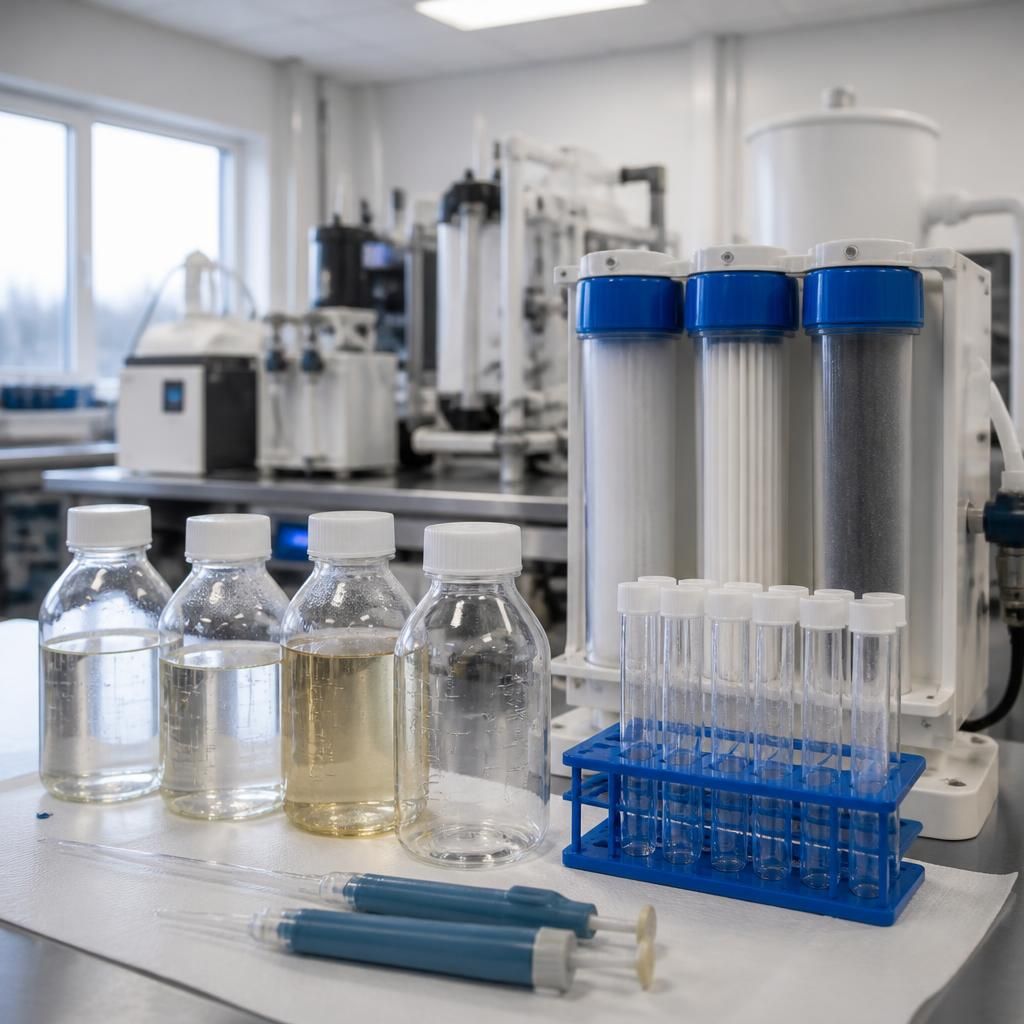
Appearance, taste and odour do not by themselves establish whether drinking water is safe. Clear water may still contain a microbiological or dissolved chemical hazard, while discolouration or an unusual taste may indicate sediment, corrosion or another issue that requires investigation rather than immediate selection of a filter.
This distinction matters when deciding between testing, filtration and treatment. Testing can separate an aesthetic complaint from a potential health or compliance concern; filtration may then address suspended material or a specified contaminant, while treatment may be needed where the cause involves microorganisms, hardness, chemical conditions or system operation. The appropriate response should follow the evidence, not the water’s appearance alone.
Discuss your drinking water testing, filtration and treatment requirements
Discuss your drinking water testing, filtration and treatment requirements with Blue Fish Water Management Ltd to identify the information needed for a suitable, evidence-based approach.