
Which businesses need potable water testing?
Businesses that provide, store or use drinking water for employees, customers, residents or service users may need potable water testing, particularly care homes, healthcare facilities, schools, hotels, restaurants, offices, industrial sites and commercial landlords. Testing helps verify that water is safe and suitable for consumption where risk assessments, building use, private water supplies or changes to the system indicate it is necessary.
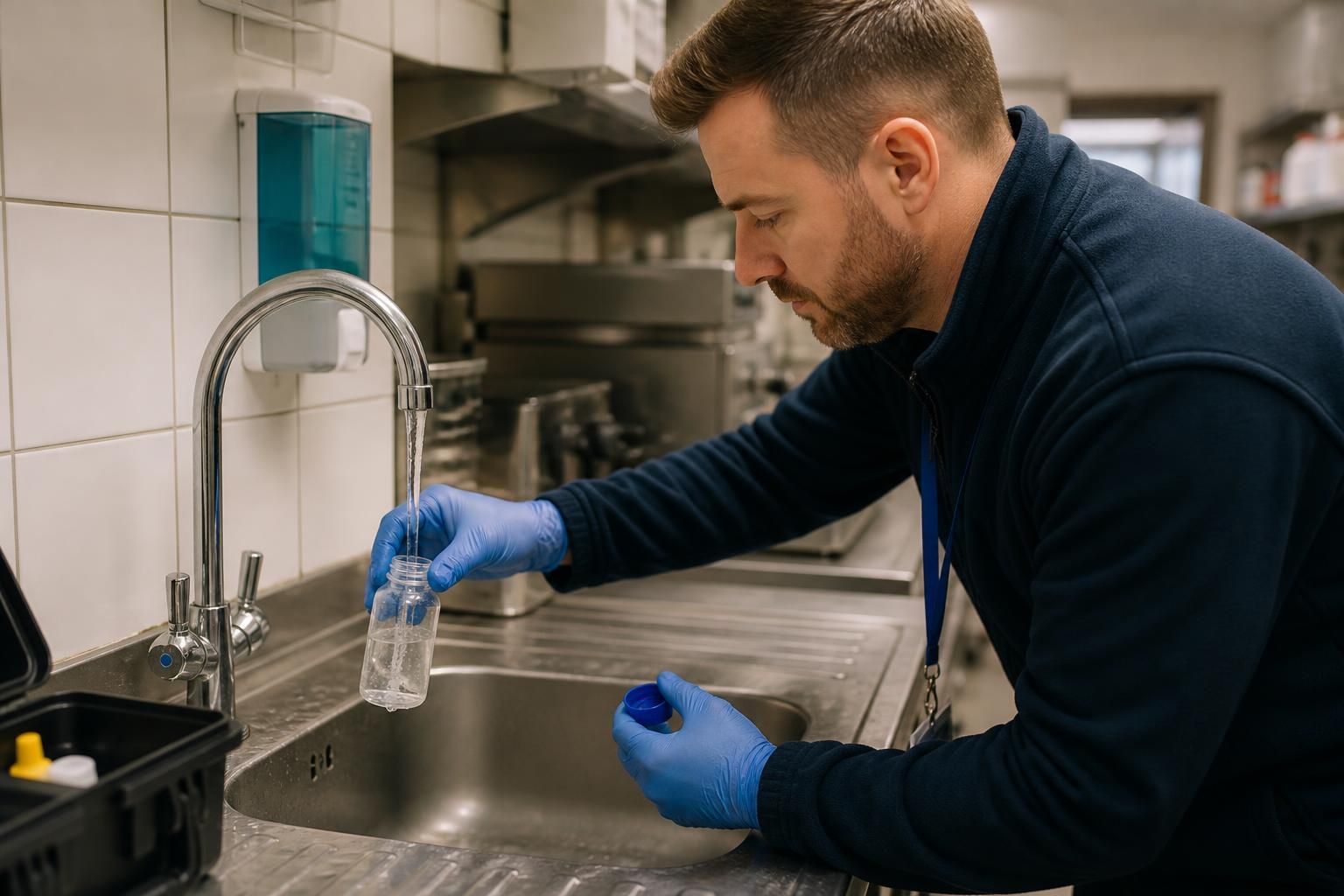
Businesses need potable water testing when they are responsible for water used for drinking, food preparation, hygiene or other purposes where contamination could affect people’s health. The need is determined by the water source, how the premises and water system are used, the people exposed, and the findings of a suitable risk assessment; there is no single testing schedule that applies to every business.
Some organisations receive treated mains water and may reasonably rely on the water supplier’s monitoring for the incoming supply. However, responsibility does not necessarily end at the boundary of the premises. Storage tanks, long internal pipe runs, dead legs, point-of-use equipment, water softeners and infrequently used outlets can alter water quality after it enters the building. Businesses should consider whether their own system could introduce or support contamination.
Potable water testing is particularly relevant for the following types of organisation:
- Businesses with private water supplies. Commercial premises supplied by a borehole, spring, well or other private source may require regulatory monitoring and additional risk-based testing. The relevant local authority can set or oversee sampling requirements, depending on the supply and its use.
- Landlords and property managers. Residential or commercial buildings with communal supplies, storage tanks or shared facilities may need to demonstrate that water provided to occupants is suitable for use. Responsibility should be clearly allocated between the owner, managing agent, facilities team and maintenance contractors.
- Food and beverage operators. Water used as an ingredient, for food-contact cleaning, ice production or utensil washing needs to be suitable for that purpose. Testing may form part of wider food safety controls, especially where the supply is private or the internal system has changed.
- Businesses with complex or low-use plumbing. Large premises, multi-occupancy buildings and sites with seasonal areas can contain outlets where water stagnates. Sampling can help verify conditions at representative points rather than relying only on the incoming supply.
- Organisations using specialist water equipment. Vending machines, drinking-water dispensers, treatment units and other point-of-use equipment can require maintenance, cleaning and verification in line with the equipment’s risk assessment and operating instructions.
- Premises following building or system changes. New pipework, refurbishments, changes of occupancy, reconnection after closure or alterations to storage and treatment arrangements can justify testing before normal use resumes.
A business should also review its testing position after a water quality complaint, an unusual taste or odour, visible discolouration, a known supply interruption, flooding, a plumbing failure or any suspected contamination event. Testing may be appropriate after remedial work as well, although a clear result from one sample does not replace investigation of the underlying cause.
The test itself should reflect the identified risk. Microbiological analysis may be used to check for indicators of faecal contamination or general bacterial quality. Chemical and physical parameters can be relevant where there is a concern about metals from plumbing, treatment performance, agricultural influence, industrial activity, turbidity, pH or other characteristics of the source. Testing every possible parameter is not normally necessary; the selection should be justified by the supply, premises and intended use.
Sampling arrangements matter as much as the laboratory analysis. Samples should be taken from suitable locations, using an appropriate method, and recorded with enough information to identify the outlet, date, conditions and any relevant system observations. A competent sampler and a UKAS-accredited laboratory can help provide confidence that the result is technically reliable and traceable.
Results should be assessed against the applicable requirements for the supply and use of the water. Where a result is unsatisfactory, the business should establish whether the issue relates to the source, storage, distribution system, a particular outlet or the sampling process. Corrective action may include cleaning or disinfection, repairs, removing stagnation points, reviewing treatment equipment, increasing monitoring or restricting use until the risk has been addressed.
Blue Fish Water Management can support businesses by helping to assess their potable water testing needs, arrange UKAS-accredited water testing and interpret results alongside the wider water hygiene risk. This approach helps ensure that sampling is proportionate to the business’s actual exposure rather than based on a generic testing package.
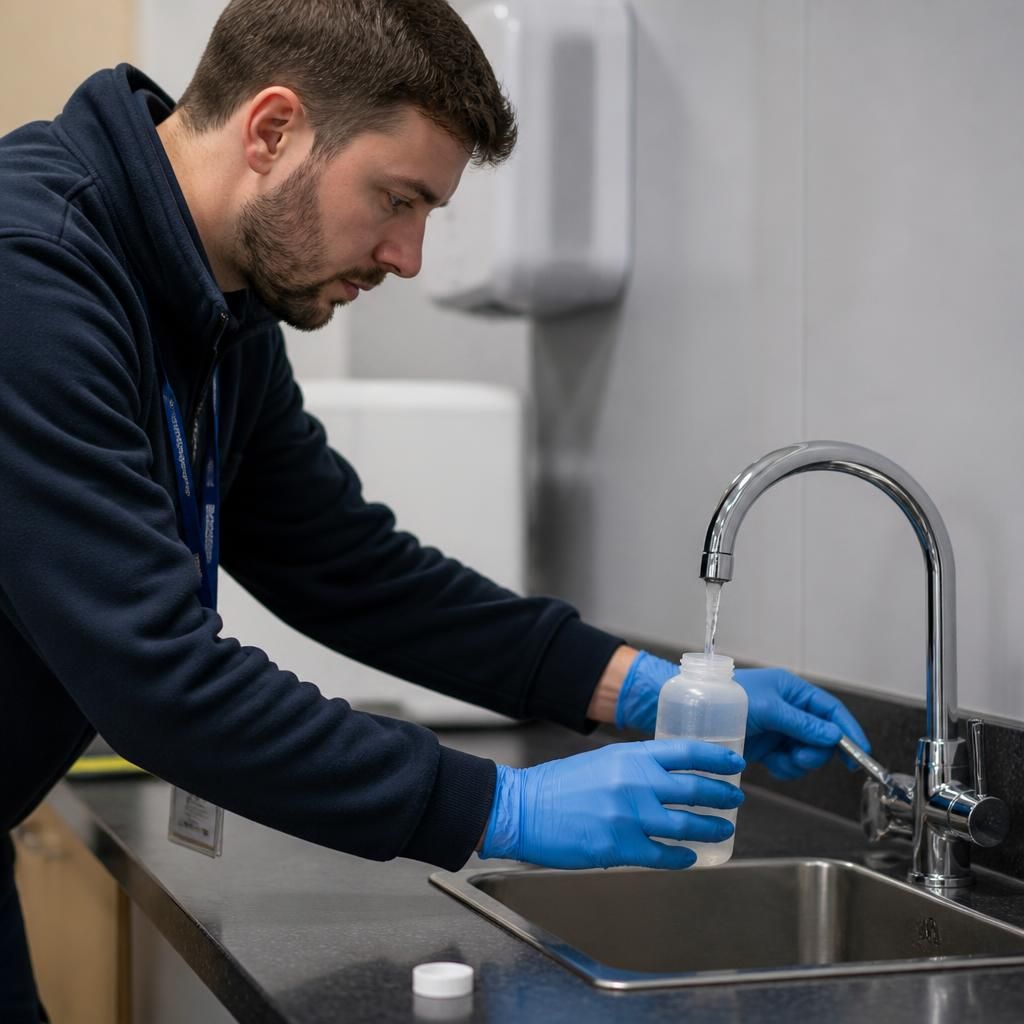
Potable water testing and legionella monitoring address different risks, so a business may need both. Potability testing examines whether water is suitable for drinking, food preparation or other intended uses, while legionella control focuses on conditions within water systems that may allow Legionella bacteria to grow and spread.
This distinction matters in premises with hot and cold water services, storage vessels, showers or other aerosol-producing outlets. A business should define each testing and monitoring requirement through its water hygiene risk assessment rather than treating one satisfactory result as evidence that every aspect of water safety has been verified.
Discuss your business’s potable water testing needs
Discuss your business’s potable water testing needs with Blue Fish Water Management to identify an appropriate, risk-based approach for your premises. Contact the team to explore the next steps for your water quality assessment.